- Статьи
- Culture
- Under the Major's feet: Metaphysicians lead the investigation in a philosophical detective story

Under the Major's feet: Metaphysicians lead the investigation in a philosophical detective story

The detective genre game, started by Evgeny Vodolazkin in his new novel, quickly reveals its true meaning — it is an occasion to speculate about what makes a person human and what distinguishes natural intelligence from artificial intelligence. Critic Lidia Maslova presents the book of the week specifically for Izvestia.
Evgeny Vodolazkin
"Major Chistov's last case"
Moscow: AST Publishing House: Edited by Elena Shubina, 2026. 384 p.
The AI carrier in the novel is one of the most original characters, the robot Ivan Ivanovich. This common name for artificial intelligence has long been ingrained among people who constantly resort to its services or simply curiously observe its habits.
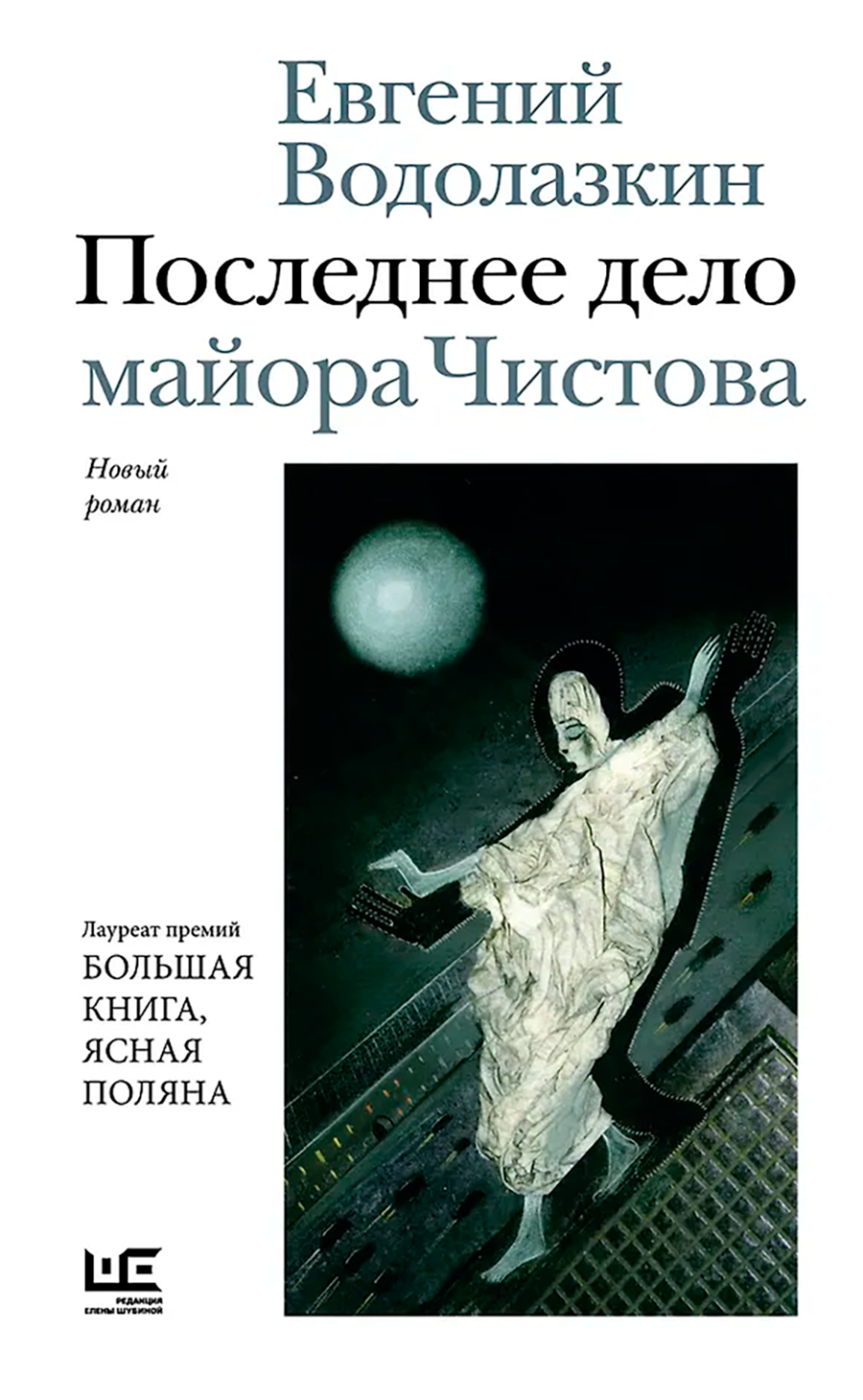
"Major Chistov's Last Case" can add a lot to these observations, since among the central characters are Ivan Ivanovich's "parents", St. Petersburg twins, neurophysiologists Grigory and Georgy Litvin, as well as their common wife Galina, forming a long—term love triangle that could become the decoration of the most exciting television series. The murder of one of the Litvin brothers, found in his apartment in a bizarre pose with a bullet hole in his forehead, becomes the reason for the high—profile "last case", which is being investigated by Major Chistov, an obese 41-year-old man who looks a little like Hercule Poirot.

Vodolazkin draws a direct analogy with Agatha Christie's character: "He would have played Hercule Poirot well," notes the artistic and artistic nature of Chistov, an "actor by vocation," 22-year-old Lieutenant Egor Vedernikov, who leads the narrative. He himself is no stranger to a certain verbal artistry, is the secretary of a police book club and has a mentor in literary skills — a retired colonel, the author of the novel "A Quiet Shot" by the name of Prokhlada. The latter, indeed, periodically cools the temperature of the text, serves as a tool of estrangement, arising when the lieutenant self-critically evaluates the merits of his story. For example, he reflects on how accurate he got someone's portrait or description of nature, or how timely certain lyrical and philosophical digressions are: "I think Coolness would say: here - or rather, a little earlier — it was possible to give a description of St. Petersburg in June. To describe, you know, how summer finally came to the city, sticky lime leaves rustling in the Summer Garden above the great Russian fabulist Ivan Andreevich Krylov." Such reflections, sometimes quite funny, constantly enliven the narrative: the narrator examines the text from the side, carefully recording its features for the record, just as Major Chistov examines a dead body.

At such moments, Vedernikov becomes a bit like Ivan Ivanovich, whose way of thinking is also based on sorting through and combining samples of other people's experiences pumped into his head, including personal, subjective memories that do not seem to carry any valuable information. There are many such memories, belonging not only to the central characters, but also to the elderly patients of the Litvin brothers, who have nothing to do with the main detective line, attached to the "Last Case of Chistov." It is these memories, obtained by analyzing the behavior of neurons, that are given the most important importance in the "humanization" of Ivan Ivanovich, which the Litvin neurophysiologists have not lost hope of until recently. (The interaction between the twins is built in such a clever way that Gregory and George constantly seem to transform, flow into each other, sometimes merging into a whole, sometimes painfully demanding isolation, and at some point you have to make a strong-willed effort to distinguish and differentiate them).
In the terminology of neurophysiologists involved in artificial intelligence, reality is divided into the "substantive part" and "gaps" — those seemingly uninformative, random impressions from banal, eventless everyday life that are inexplicably stored in any human head: "The substantive part implied events, and the gaps, respectively, — the absence of events. <...> Spaces, thus, separate one event from another, but they themselves, not being events, do not seem to have any meaning — they serve as something like a buffer."

Reflecting on this, the neurophysiologist reveals a fundamental flaw in the methodology used to train Ivan Ivanovich: "Trying to humanize our Ivan Ivanovich, we invested in him only knowledge about events and forgot about the gaps. The fact that we failed may be a consequence of this very thing. I am increasingly coming to the conclusion that gaps are the main ones in the formation of a person, that is, the normal, "invisible" state of things."
The imaginative lieutenant-narrator picks up the theme: "No one notices the gaps, and no one values them, but they are the mother earth of human consciousness. They are the ones who separate one significant event from another, and they define everyday life. Describing events alone is like describing ships, forgetting about the ocean."

The theme of human identity formation and humanization turns in "Major Chistov's Last Case" in different aspects, not only in terms of the ability to develop human qualities in a robot, for example, a sense of humor that is categorically inaccessible to Ivan Ivanovich, despite all his efforts. In addition, the twinning motif (there are different reflections of it in the novel) leads Major Chistov to metaphysical reflections on whether it is possible to appropriate a person's name, "changing subjectivity," thereby appropriating his personality, and possibly his soul. Chistov thinks so intensely about the soul in all sorts of ways that fans of traditional detective stories who are interested in who the killer is after all may worry by the end of the novel whether the sacramental final "scene by the fireplace" will take place at all, in which Hercule Poirot usually brings the criminal to light, to the delight of the assembled suspects.

But Chistov copes with an outlandish case no worse than his Belgian colleague, and although, after clarifying all the circumstances, the murder may seem somewhat pretentious, it is possible that Agatha Christie herself would pay tribute to turtleneck ingenuity. To the reader who has already suspected even the simple-minded (or, strictly speaking, soulless) Ivan Ivanych, it will not be so easy to guess in what sophisticated and symbolic way Vodolazkin managed to send one of the twins to the next world.
However, the brilliantly solved case does not please Chistov too much, who from the very beginning is looking not so much for the murderer as for the soul of the murdered man, as well as answers to metaphysical questions related to death. As Lieutenant Vedernikov admits, these questions were repeatedly raised long before the major, but their relevance does not decrease from this: "What is the meaning of our life? Or, phrasing the same thing in a different way: What is a soul that continues to live even when the body has crumbled to dust?..> Everyone answers this question according to their mindset and occupation. Everyone answers — believers and non-believers, workers and collective farmers, princes and beggars. The lack of an answer makes everything else meaningless."
Переведено сервисом «Яндекс Переводчик»
