Chistov Thursday: Izvestia exclusively publishes an excerpt from Evgeny Vodolazkin's book
- Статьи
- Culture
- Chistov Thursday: Izvestia exclusively publishes an excerpt from Evgeny Vodolazkin's book


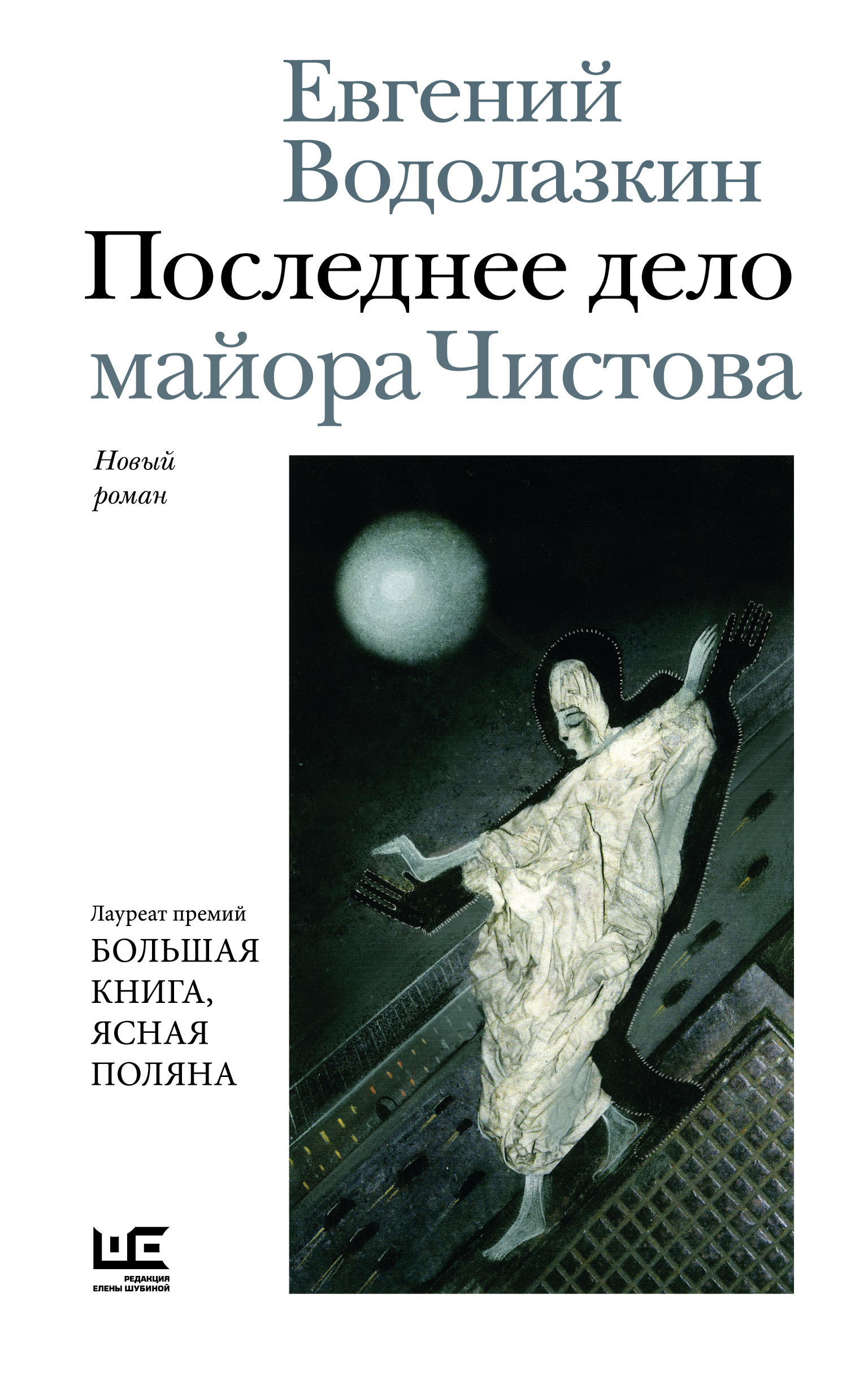
Books by Evgeny Vodolazkin "Brisbane", "Aviator", "Solovyov and Larionov" have long become bestsellers in the country, and the "non-historical novel" "Laurel" has been translated into more than 30 languages. "The Last Case of Major Chistov" is the novelist's first detective story, flavored with a generous portion of irony, topography and reflections on the eternal.
Evgeny Vodolazkin, "The last case of Major Chistov" (fragment)
June 17, 10:15 a.m.
Morning. The store is in the deceased's house. The name is discreet and even businesslike — "Products. 24/7». Embodied continuity. Two people are squatting at the entrance—it seems like they've been there since yesterday, if they're the same ones. The seeds click. And the ones from yesterday were smoking. This does not mean anything: sunflower seeds can be successfully alternated with cigarettes, depending on the hour of the day and mood.
Something about yesterday's conversation with Jeanne made the major wary. 24/7. Either there was a conflict with this store, or just a misunderstanding. Her casual remark didn't seem to be anything special... yes, Jeanne was talking about people from nowhere.
Some kind of, apparently, absolute and final nowhere, giving birth to these dark-skinned guys. They are born immediately on their haunches — the same in all countries and speaking all languages with accents. Which language is their native language, and is there one at all?
Continuing to follow those two with his peripheral vision, Chistov felt some kind of disorder. After taking a closer look, he was surprised to see two skeletons squatting in front of the store. Picturesque, though. They gnaw on the seeds. On occasion, perhaps, they can smoke. Chistov lowered his eyes and slowly raised them. The vendors were sitting in the flesh—no bones or sinews. It was as if they hadn't imagined the exhibits of an anatomical study a moment ago.
Nodding to the people sitting, the major entered the store. A minute later, brushing the seed husks from their beards, this couple pulled themselves in. Upon request, they presented brand-new, brand-new Russian passports. Said:
— We are our own, brother, completely our own.
Chistov barely read their names and immediately forgot. No matter how much you look, you still won't remember. This is a feature of memory: it does not catch foreign names and faces. The only thing that catches them is their general dissimilarity from the locals. And, accordingly, the general similarity between each other. Foreigners are all twins and namesakes.
The major paused thoughtfully and said:
— I will give you new names: Lelek and Bolek. There was a Polish cartoon. — He poked each of the named with his finger in the chest. — You are Lelek, you are Bolek. Don't confuse them!
The two men laughed insincerely:
"Maybe you can give us our last names, Boss, right?"
— Maybe I will... — Chistov scratched his head. — One for two: Cartoon characters.
"We're not brothers, boss."… Are they similar?
What kind of wind blew them out of their native lands? Where are these parts? It's too far away, dear, you can't see it from here. Lelek and Bolek are smiling. The word yes is highly appreciated. People are tricky in their native lands, aren't they? Their eyes narrow, that's how sly they are.… Everyone wants to cheat, right? Everyone there is deceptive, such people are deceptive, right?
Major Chistov had difficulty squeezing behind the cash register — there was the only chair in the entire store. The policeman's hands rested on the money, but did not take it.
Bolek and Lelek anxiously watched his hands, but did not interfere in the situation, because they were afraid to express distrust to the guest. Who knows, maybe it's customary to receive gratitude in this form now. Sit at the cash register and pinch off as much as you think is necessary…

People were reluctant to talk about Litvin. There was a man, you know, and there wasn't. He was a difficult man, even a little nervous, wasn't he? But — chi-la-century! It's a pity too. And no one knew that he and his brother were such great scientists, right? Although, again, I wrote complaints about the store, right? He was noisy at night, then, you know, a bottle was hit in the window during the day. You've only been hit once, brother, why are you writing right away, right?
"Did you threaten him?"
"We?" For him? They didn't threaten anyone, brother. Especially him.
— The investigation has other evidence.
The Major was lying to some extent. There seemed to be no such evidence, but experience suggested that there should be: they could not be, and therefore this lie was no longer a lie.
— Well, we met him and said culturally: brother, why are you writing that our store is a hangout? Eh, brother? Are we all stoned and stoned here, right? Why are you writing this? Is that Maxim Gorky?
After a pause, the major asked his interlocutors if they had anything to confess. No, they don't want to. The migrants' gaze immediately hardened.
Bolek cleared his throat and asked:
— Why do you think that we killed Gosha?
Chistov looked at him without malice.
"What else can I think of?" I'll keep your passports for now.
— Lelek, with an obscene sigh, went somewhere into the depths of the store. Bolek stood still. — Maybe the comrade major is interested in something to eat, have a drink, right?
No, he's not interested. He's interested in finding murderers. Chistov walked along the shelves with strong drinks.
— Is there a license to sell alcohol? He stopped in front of the door to the back room. Opened. Lelek stood behind her, blocking the way.
— So is there a license or not?
Lelek staggered back, and the major took a few steps into the back room. He knew what was stored in such back rooms. What they come for in the middle of the night, less often during the day.
And he even knew where to look: he looked at the flower pots inserted into one another. There are interesting finds at the bottom of one of them (usually the third from the top). The toons, following the major's gaze, were visibly nervous. Chistov took off the top two pots and took out a cellophane bag of powder from the bottom of the third one. What's it? He shook the bag in front of two sales workers. Is it drugs, by any chance? Maybe it's just salt for a salad made at home? (Timid confirmation from the sellers.) Finely ground, for example? If that's the case, then why are they hiding her so enthusiastically?
"No one hides it, brother.
— Well, since no one, I'll take this salt with me, I'll take it to the laboratory at my leisure — are you waiting for this?
No, they don't expect that.
The major made it clear that if he had intended to send a trading couple to jail, he would have done it without strain. I would have taken two witnesses, conducted a full-fledged search, and found a lot of things. But. He is interested in the truth about the death of Georgy Litvin, and if the newly minted Russian citizens help him in this, then he, the major, will turn a blind eye to many things. Chistov actually closed his eyes for a moment, because he felt sleepy in the stuffy room. With an effort of will, he finally opened his eyes and returned the pupils to their original place.
Maybe... now that the focus was back, the major was glaring at his interlocutors. Maybe these citizens saw something unusual or, perhaps, participated in it in one way or another? In short, they understand everything perfectly. After walking through the entire store, Chistov turned around in the doorway. Everyone understands. And they know what is required of them. From somewhere far away, as if from under the water, there were signals of the exact time: 11:45. He spent a whole hour and a half with them. Ninety full minutes! Where did the time go?
Chistov went up to the Litvinov apartment. He wanted to talk to Grigory about his wife Galina, and at the same time about the texts found on the computer, but his attention was suddenly distracted by Ivan Ivanovich Barmaleev. He carried a coffee tray at arm's length. A minute later, Litvin and Chistov were already drinking a drink brewed by Barmaleev and feeling proud of the domestic car.
It seemed, however, that the robot was somewhat out of sorts. Could it be? Obviously, it could. His movements were careless, there was no previous smoothness in them, which caused Ivan Ivanovich's coffee to splash slightly.
Litvin found that machine speech today is also shorter and more jerky than usual. He asked:
"You didn't get enough sleep, did you, Ivan Ivanovich?" Or did you dream something wrong?
Barmaleev described in detail how he spent the whole night sorting through the information received during the day and making control copies. Neither Litvin nor Chistov supported the interesting topic, and the half-day cannon filled the pause. When the echo of the shot stopped beating against the nearest houses, Ivan Ivanovich suddenly became animated.
— In-la-ga-yu, what about how I slept and what I saw in my dream, what happened in me-ta-fo-ri-ches-after.
He said it in his usual manner, without intonation. Why, in fact, it remains unclear whether this is a statement or a question.
— I can't tell if there's a y-y-y-y-y-y-y-y-y-y-y-y-y-y-y-y-y-y-y-y-y-y-y-y-y-y-y-y-y-y-y-y-y-y-y-y-y-y-y-y-y-y-y If there are any places here, then ha-ha-ha. This afternoon, I went to the morning-nu-yu for a row, and now I'm in the re-zhi-me e-ko-no-mi-I.

Surprised, the major asked why Ivan Ivanovich had missed the exercise. And that's why he missed it, because after yesterday's events, he can't get a piece down his throat. Isn't that what they're saying? And he, Ivan Ivanovich, doesn't even have a throat. He just knows that people don't eat after tragic events.
Touched by the subtlety of the machine's feelings, the major asked Barmaleev why he, who so quickly finds answers to all questions, pronounces words syllabically. And then it turned out that this manner of speech is just a program, one of the forty-eight embedded in Ivan Ivanovich's head, and it's called "Robot." For some reason, it is generally assumed that robots speak this way, although, of course, there is nothing easier than changing the program.
As an example, all the explanations were given by Ivan Ivanovich in the program "Brezhnev". It was emphasized that in this speech there is no shortage of either the fricative g (xde) or the non-syllabic (Brezhnev), not to mention the growl and juicy smacking coming from the depths of the body. The program was of high quality, so if it weren't for the rectangular head of the robot, one would have mistaken the speaker for the general secretary.
Intrigued, Major Chistov asked Ivan Ivanovich to portray, uh, someone else. The robot's video cameras focused on the major. A multi-colored snake ran through the sensors on Ivan Ivanovich's frontal part. Perhaps it was the thought of the announcer Igor Kirillov, whose reference voice once filled the apartments of one sixth of the land: a good evening, a good evening.
Переведено сервисом «Яндекс Переводчик»
