Orthodox Christians celebrate Holy Saturday before the Resurrection of Christ

Holy Saturday is a special day in the Orthodox tradition, ending Holy Week and preceding Easter. This day combines sorrow for the sufferings of the Savior and the expectation of the main Christian celebration — the Resurrection of Christ. In 2026, Holy Saturday falls on April 11. About the spiritual meaning of the day, church traditions, as well as what believers can and cannot do on the eve of Easter — in the material of Izvestia.
What events are associated with Holy Saturday?
According to the gospel narrative, after the crucifixion, the body of Jesus was taken down from the cross and buried in a cave. At that time, as the church teaches, Christ descended into hell to bring out the souls of the departed. He brought Adam, Eve, and all the righteous men of the Old Testament out of there, thereby defeating death and opening the way to salvation for people.
Despite the outward sorrow, Great Saturday is filled with the expectation of joy: believers are reminded that Christ has already conquered hell and death, so the worries about His sufferings are gradually giving way to the bright news of the Resurrection. This combination of sadness and hope makes the day special and sets it apart from other Holy Week days.
For believers, Holy Saturday is accompanied not only by participation in church services, but also by internal preparations for Easter. It is important to tune in to prayer and meditation in order to face the Resurrection of Christ consciously and with a sense of spiritual renewal. Confession and communion are also recommended, if this has not been done before.
How is the divine service on Holy Saturday?
The divine services of this day are distinguished by their special solemnity and depth. In the morning, the Liturgy of St. Basil the Great is celebrated in churches, combined with the evening Liturgy. During the service, Old Testament prophecies are read, indicating the coming Resurrection of Christ. A special place is occupied by the reading of 15 paremias, passages from the Holy Scriptures that reveal the meaning of salvation and the renewal of the world.
During the day, Easter treats are consecrated in temples — Easter cakes, eggs and cottage cheese. Believers bring them in special baskets decorated with towels and candles. Sanctification is perceived not only as a blessing of food, but also as a sign of readiness to face the Resurrection of Christ with gratitude and faith.
Late on Saturday evening, Midnight Mass is celebrated, a special service that anticipates Easter. It usually starts no later than 23:00 and ends at midnight. At this time, the temple is in semi-darkness, the space is illuminated only by a few candles, which creates an atmosphere of expectation and silence. During the service, the Shroud symbolizing the buried Christ is carried to the altar, which marks the end of the mournful period of Holy Week.

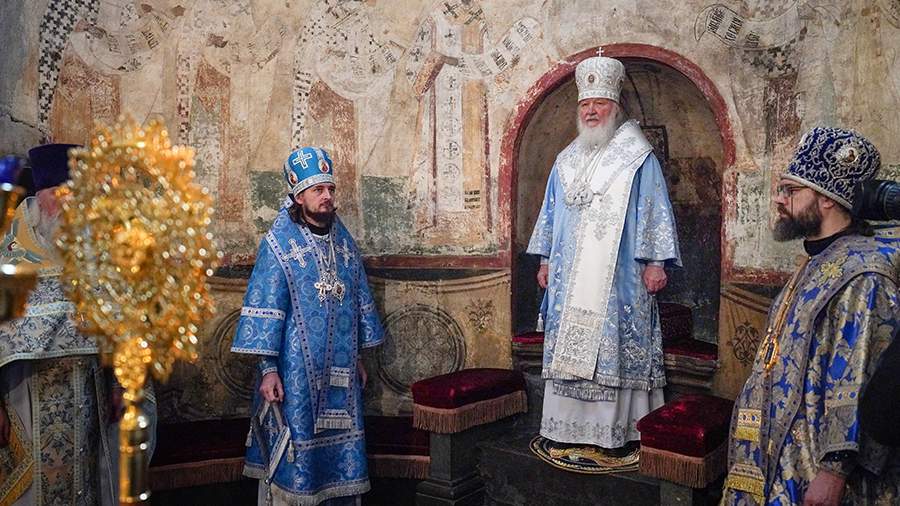
It is on Holy Saturday that the clergy change the dark clothes in which they served all week to light ones, which indicates the approach of the main Christian holiday.
"White-robed services are held on Holy Saturday and at the beginning of the Easter service, which marks the victory of life over death. And if during the days of Great Lent the emphasis is on repentance, reflection on one's actions and correction, then the night service is a time of joy," Priest Alvian Tkhelidze, head of the Youth Department of the Stavropol Diocese, told Izvestia.
Thus, the divine services on Great Saturday become the most important transitional moment connecting the memory of the Savior's sufferings with the joy of His Resurrection.
What can and cannot be done on Holy Saturday
Holy Saturday is a day of silence and inner peace, ending Holy Week. During this period, it is important for believers to focus on the spiritual side of life: to forgive all offenses, to reconcile with loved ones and, if necessary, to ask for forgiveness. Easter should be celebrated with a pure heart and a calm soul, freed from negativity and anxiety.
The church tradition allows on this day only light household activities related to the preparation for the holiday, such as cooking. At the same time, it is recommended to complete all the basic work — cleaning, laundry, household chores — in advance, even before Good Friday.
It is strictly forbidden to quarrel, show aggression or use rude expressions. Profanity and conflicts on this day are considered as a serious spiritual violation. Just like on all other big holidays, it is not recommended to engage in heavy physical labor.
The meaning of these restrictions lies not only in tradition, but also in the need to free up time and energy for spiritual preparation for Easter, which begins on Saturday night.
During the service itself, it is important to follow certain rules so as not to cause inconvenience to the audience: do not make noise, do not jostle, turn off your mobile phone or switch it to silent mode when entering the temple.
"In the temple, you need to behave yourself, not defiantly. If a person is not particularly oriented in worship, does not know which moments are particularly important and which are less important, he can focus on others and do the same," said Alvian Tkhelidze.

Folk traditions and signs of Great Saturday
In Russia, Great Saturday was closely connected with folk customs and way of life. On this day, they tried to avoid discord in the family and not to show irritation — according to beliefs, any quarrels that occurred on the eve of Easter could "spread" throughout the year. They tried to complete all the household chores in the morning in order to prepare for the evening service.
Shortly before the exit, the final preparations were completed: pre-prepared festive clothes were taken out, baskets with cakes, eggs and other treats were collected for consecration. After that, we went to the temple. There was a belief that celebrating Easter in church was a special blessing that brought peace, joy, and spiritual renewal to the home.
Helping others was an important part of the tradition. The people believed that the good deeds done on this day have a special spiritual power. Therefore, we tried to take care of those who needed support: we shared food, treated neighbors, helped the elderly and lonely, brought food to those who could not prepare for the holiday themselves.
Special folk signs were also associated with Great Saturday. People listened attentively to the surrounding sounds. Silence on Holy Saturday was perceived as a sign of future well-being and tranquility in the house, while harsh sounds or noise could be alarming. Our ancestors also washed their faces with water containing a consecrated egg: this ritual helped preserve youth, beauty and health.
Special importance was attached to observing nature. A clear and warm day was considered a good harbinger — a good harvest, a successful summer and prosperity in the household were expected. If the weather was cloudy or windy, it could be attributed to the variability of the coming season.
Earlier, Izvestia told how many Russians plan to celebrate Easter in 2026.
Переведено сервисом «Яндекс Переводчик»
