- Статьи
- Science and technology
- Save and downplay: 10,000 years of memory and the first vaccine against smallpox of monkeys

Save and downplay: 10,000 years of memory and the first vaccine against smallpox of monkeys

The preclinical stage of the creation of the world's first vaccine against smallpox in the Gamaleya Center will be completed by the end of the year. For the first time, Microsoft scientists have used miniature plasma blasts to encode data equivalent to 2 million books into a device the size of a flat cup holder. This method will allow you to save information for thousands of years with minimal storage costs. American researchers have found that one of the largest viruses, mimivirus, is able to hack the host's protein production mechanism and use it for its own reproduction. These and other news from the world of science can be found in the weekly Izvestia column.
Preclinical studies of the monkey pox vaccine will be completed by the end of the year.
Preclinical studies of the world's first specialized vaccine for the prevention of smallpox in monkeys have begun at the Gamaleya National Research Center for Epidemiology and Microbiology. Unlike existing smallpox drugs, which are still the only means of protection against infections of this type, the new development does not contain a live virus, which avoids severe side effects.

Scientists already have a candidate substance, but the final composition of the vaccine will be determined during animal experiments — they must show which combination of components will be the most effective and safe. It is planned to complete the preclinical stage by the end of the year, after which, if successful, specialists will be able to start clinical trials involving humans.
— The question is to make a modern and less reactogenic vaccine. We are conducting such a study based on recombinant technologies and will determine the composition of the drug in the near future. We do not use live inactivated or attenuated virus. And we need to understand which antigenic composition is most effective. There are several key proteins, the use of which in the vaccine will provide protective immunity. We are looking for the best combination of them. This work should be completed by the end of the year," said Vladimir Gushchin, Head of the Epidemiology Department at the N.F. Gamaleya Center.
The monkey pox virus is considered one of the most complex: it has a large genome and a large number of proteins, and also has an inner and outer shell, which is important for creating an effective drug, he said.

The smart fabric will clean itself of dirt and repel bacteria.
With the help of a new technology proposed by NUST MISIS researchers, ordinary cotton fabrics can be turned into a material that destroys bacteria, repels pollution and self-cleanses under the influence of sunlight. The applied coating has shown high effectiveness against dangerous bacterial strains and is completely biocompatible and does not cause skin irritation or inflammation. In the future, it will be possible to create medical uniforms, sportswear and household textiles from the material, the developers told Izvestia.

Previously, scientists were able to give tissues either antibacterial or water-repellent properties. Until now, it has not been possible to combine these characteristics in one material, ensure their long-term stability and at the same time maintain complete safety for humans. According to the NUST MISIS researchers, this is the first time they have managed to solve this problem.
— Nanotextile materials are widespread, however, their main problem remains the loss of functionality during use. Previously, we developed a technology using DEET, which allowed us to keep more than 50% of the particles on the surface even after 40 washes. Nevertheless, the fabric still lost the desired characteristics, since detergents contain a large amount of surfactants that envelop the particles, thereby preventing them from performing their functions," said Elizaveta Permyakova, a junior researcher at the Inorganic Nanomaterials Research Center at NUST MISIS.
The purpose of this work was to obtain materials that, having antibacterial activity and hydrophobicity, are able to be cleaned of pollutants in an alternative way, in this case by sunlight, she noted.
DNA analysis has helped to restore the appearance of people from the early Middle Ages
For the first time, MIPT scientists have deciphered DNA and restored the appearance of the speakers of the Ryazan-Oka culture of the 5th–6th centuries. It is known to archaeologists due to the preserved burial grounds in Central Russia. However, the exact details of her origin and lifestyle remain a mystery to historians. The study showed that the population was characterized by a complex composition that combined Western and Eastern European features, and also allowed us to identify its characteristic external features.
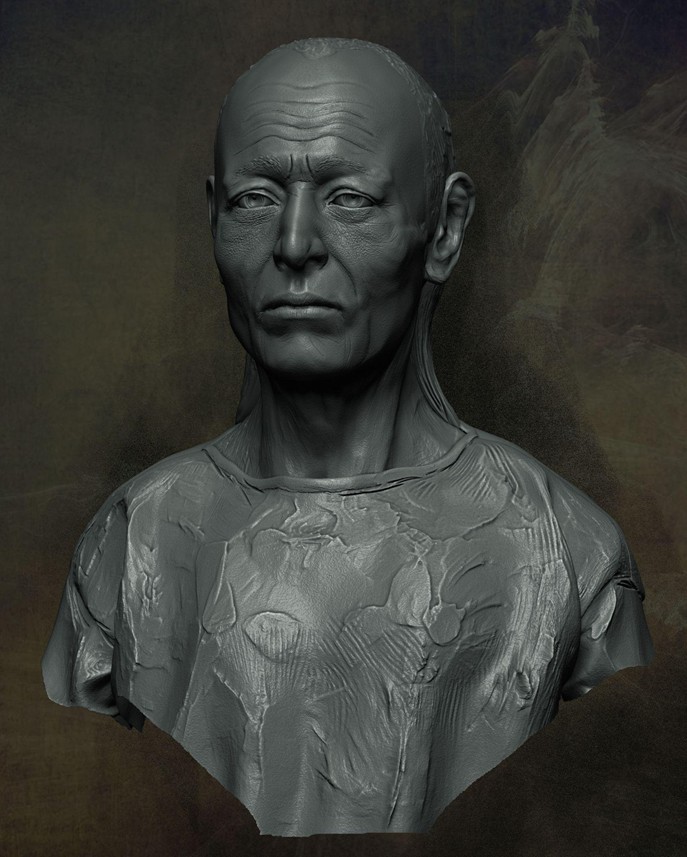
— We see that it was a heterogeneous population formed at the junction of different genetic streams — the Ural and Northeastern. The data obtained is an important contribution to the study of the ethnogenesis of the population of Central Russia during the Great Migration period," said Haris Mustafin, co—author of the study and head of the Laboratory of Historical Genetics, Radiocarbon Dating and Applied Physics at MIPT.
The Ryazan-Oka culture existed in the middle reaches of the Oka River. Its bearers maintained active contacts with the population of the Volga region, the Baltic States, the Black Sea region and Central Europe, as evidenced by the numerous objects found in the burials.

Memory based on plasma explosions will save data for 10 thousand years.
Microsoft researchers used miniature plasma blasts to encode data equivalent to 2 million books into a device the size of a flat cup holder. This method will allow you to save information for thousands of years.

Modern magnetic tapes and hard drives are poorly suited for long-term data storage, as they degrade in about ten years. A new development solves this problem.
"Our development can serve as an almost permanent archival repository for backup of important data," said Mark Bate, a biological engineer from the Massachusetts Institute of Technology in Cambridge.
A team of scientists used a high-energy laser to apply deformations to a three-dimensional piece of glass used in baking dishes. Each deformation encodes data that can be read using a microscope.

A giant virus hacks the mechanism of protein synthesis in cells for uncontrolled reproduction
Mimivirus Acanthamoeba polyphaga is a giant both in terms of physical size and the size of its genome. Scientists have proved for the first time that it is able to multiply uncontrollably, capturing the protein-synthesizing mechanism of its host cell. The virus produces a complex of three proteins, which is integrated into the system, after which the cell begins to produce viral proteins instead of its own.

Giant viruses are very common. They usually affect the simplest single-celled organisms, including amoebae. These life forms are common everywhere, said Eugene Kunin, an evolutionary biologist at the National Center for Biotechnology Information in Bethesda, Maryland.
To understand how the virus affects the protein assembly pipeline in the host body, the researchers isolated viral proteins that interact with important cell organelles, ribosomes.
Переведено сервисом «Яндекс Переводчик»
