
Air alert: Europe is looking for new ways to escalate the conflict in Ukraine

The incident with drones in Poland is a provocation to prolong the conflict in Ukraine, Russian Foreign Ministry Ambassador Rodion Miroshnik told Izvestia. Warsaw plans to bring up the idea of a no-fly zone over Ukraine, but there is no unity in NATO. Romania has stated that it is not ready for such a step. Against the background of the consultations, the alliance announced Operation Eastern Sentry. Experts believe that it can distract attention from the protracted negotiations on the 19th package of EU sanctions. Its introduction was postponed again amid disagreements with the United States. Read the Izvestia article about how Russia will react to the possible creation of a no-fly zone and why EU countries cannot accept the 19th package of sanctions.
The provocation with drones in Poland drags out the conflict in Ukraine
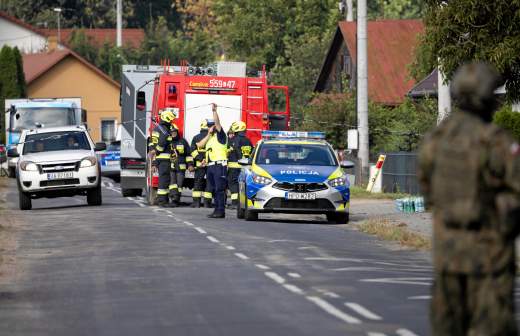
The incident that happened on the night of September 10, when allegedly Russian drones violated Polish airspace, is a provocation in which Kiev and Warsaw are interested, Rodion Miroshnik, the Russian Foreign Ministry's ambassador—at-large for crimes of the Kiev regime, told Izvestia.
— We clearly understand that what happened on the territory of Poland is a provocation in which the Ukrainian regime is solely interested. Perhaps partly Polish, which expects to lure more money, attention, and weapons to the territories of both Poland and Ukraine," he said.

Against the background of these events, an EU Council meeting was held in Brussels on September 16. Formally, the participants prepared the agenda of the upcoming summit on October 23-24 and discussed legislation. Informally, under the "Miscellaneous" negotiating point, the Warsaw delegation decided to raise the topic of the drone incident. The Polish side intended to request increased air defense and drone countermeasures from its partners, RMF FM reported.
Moreover, on the eve of the Polish Foreign Minister Radoslaw Sikorski proposed to discuss with NATO allies the introduction of a no-fly zone over the territory of Ukraine. At the same time, Romania, in whose airspace a drone was also recently spotted, is not ready to shoot down targets over Ukraine. President Nicusor Dan said that such actions could lead to the country's involvement in the conflict with Russia, which Bucharest is not ready to do.
— What is Poland going to participate in and what is the purpose of these discussions? It seems to me that this is a desire for escalation and for the main goal that European representatives have been declaring over the past months, namely, to prolong the conflict [in Ukraine] as much as possible and to prevent options for a negotiated settlement of the conflict through political and diplomatic means," Miroshnik stressed.
The creation of a no-fly zone over Ukraine was already on the agenda during the administration of former US President Joe Biden, but then Washington, along with other NATO members, rejected this proposal due to the high risk of a clash with the Russian Federation. Recall that Russian President Vladimir Putin said back in March 2022 that any attempts by the alliance countries to establish a no-fly zone over Ukraine would be regarded by Moscow as participation in the conflict.

In September, the Russian leader warned Western countries once again: the appearance of NATO troops in Ukraine would be considered a legitimate target for the Russian Armed Forces to defeat.
— The Poles really want to become the center of European decision-making on all military and political issues. Hence all these interesting blanks (on drones. — Ed.) and less interesting ones. Therefore, to this (to the proposals for a no-fly zone. We should be very skeptical," Grigory Karasin, chairman of the Federation Council's International Affairs Committee, told Izvestia.
Strengthening of NATO's eastern flank
After the incident with the drones, the Russian Ministry of Defense stated that it strikes exclusively at targets on the territory of Ukraine. The ministry added that the range of the UAVs, which, according to the Polish side, entered the airspace on the night of September 10, does not exceed 700 km, which excludes their use against targets on Polish territory. Moreover, the Ministry of Defense even offered Warsaw to hold consultations, but there was no reaction. Meanwhile, the newspaper Rzeczpospolita, citing sources, wrote that the damage to an apartment building in the town of Vyryki could have been caused by an F-16 missile of the Polish Air Force. Before that, Warsaw claimed that the destruction was caused by the fall of a Russian drone, without providing any evidence.

Warsaw's consent to such consultations may dilute the determination and unity of the EU countries in opposing Russia, says Prokhor Tebin, an expert at the Valdai Club and head of the international military-political and military-economic problems sector at the Central Research Institute of Higher School of Economics.
— So far, the Polish authorities are not going to negotiate with the Russian Federation and, apparently, they will not go without the sanction of Brussels. Despite the fact that, in fact, they take a rather contradictory, but relatively restrained position there," he said.

So, immediately after the incident with the drone crash, the Polish authorities invoked Article 4 of the NATO Charter, which implies consultations of all participants. As a result, NATO announced the launch of Operation Eastern Sentry to strengthen the alliance's positions on the eastern flank. At the first stage, Denmark, France, Germany and the United Kingdom publicly confirmed their participation. Copenhagen allocates two F-16s and an anti-aircraft frigate, Paris — three Rafale aircraft, Berlin — four Eurofighter. London is sending Typhoon planes for air defense missions over Poland.
The countries of the eastern flank of NATO, namely Poland, Latvia, Lithuania and Estonia, will use alarmist sentiments towards the Russian Federation as a reason for further militarization of Europe, Vasily Klimov, Candidate of Political Sciences, researcher at the IMEMO RAS Center for International Security, told Izvestia.
— The tendency to strengthen the eastern flank with military contingent and military equipment has been observed for ten years now. And very clearly - after the beginning of ITS. Apparently, the old pace was not enough for the Poles, and NATO Secretary General Mark Rutte adheres to the same position," he said.

Europe will try to make the most of this incident. That is why the representative of the European Commission, Thomas Rainier, said on Wednesday that the EU would accelerate the creation of the so-called "drone wall" on the border of the union. To this end, EU countries will be able to borrow and purchase components directly from the Ukrainian industry.
On the same day, Reuters, citing sources, reported that the administration of US President Donald Trump approved the first deliveries of military aid to Ukraine for $ 500 million under the PURL program. And these weapons will be paid for from the "pocket" of Washington's allies. The head of the White House has to maneuver between the need for a constructive dialogue with the Russian Federation and at least visible support for a hostile European course.

The Baltic states continue to militarize the border as part of the "Baltic Line of Defense." Estonia is in the process of creating a 40-kilometer anti-tank trench on its southeastern border and 600 bunkers by 2027. Lithuania has announced the completion of the installation of "dragon's teeth" at the junction with the Kaliningrad region and is ready to spend €1.1 billion on counter-mobility equipment, including anti-tank mines. Latvia has adopted a five-year plan for €303 million in budget funds, which it intends to use for the purchase of sensors, mining equipment, anti-tank "hedgehogs" and obstacles. In total, they plan to spend about €1.5 billion on this program in the next 10 years.
Why can't the EU accept the 19th package of sanctions
Operation Vostochny Sentinel may temporarily sideline the EU countries' disagreements over the 19th package of anti-Russian sanctions, Klimov believes. Initially, the ambassadors of European countries were supposed to discuss its terms on Wednesday, but suddenly this issue was removed from the agenda. The NATO military operation may distract attention, but contradictions about restrictions will remain.

In order to adopt a new package of sanctions, all European countries need to coordinate restrictions with the priorities of the G7. The Trump administration is demanding that the EU abandon Russian energy supplies faster and is promoting the idea of high tariffs against China and India for purchases of Russian oil. At the same time, the United States is directly signaling that it is waiting for such steps from the EU before proceeding on its own. There is no benefit for Europe yet, Tebin stressed.
"Technically, of course, they can refuse, switch, for example, to American oil, but there will be only losses for Europe," he said.

At the same time, if Hungary and Slovakia traditionally act as obstacles to the imposition of sanctions on Russian gas, then the US demand for tough measures against China and India causes indecision in a much larger number of EU countries. According to Reuters, skepticism about tariffs is due to the high risks of retaliatory measures and legal nuances.
Interestingly, the 19th package of sanctions discussed the introduction of new restrictions on the issuance of visas to Russian citizens, but Greece, Hungary, Spain and a number of other European countries refused to do so. The Greek Portal pronews.gr I came to the conclusion that this was the first time since 2022 when Athens blocked an EU proposal unfavorable to Moscow.
Переведено сервисом «Яндекс Переводчик»
