- Статьи
- Science and technology
- Solid State Physics: Electric field will help restore tooth enamel without fillings

Solid State Physics: Electric field will help restore tooth enamel without fillings

Scientists have proposed a way to repair damaged tooth enamel by controlling the growth of its artificial counterpart using a weak electric field. This approach makes it possible to form a protective layer on the tooth surface in just a few hours, close to natural enamel, not only in composition, but also in the internal structure of the crystals. In the future, the technology may become the basis for more durable and gentle treatment methods, allowing for the abandonment of traditional fillings and the use of a drill. Doctors interviewed by Izvestia note that the proposed method can be a breakthrough in dentistry, but its implementation in practice will require a full cycle of research, including clinical trials.
Restoration of enamel using electricity
Researchers from Voronezh State University (VSU), the Brazilian Center for Energy and Materials Research and al-Azhar University in Egypt have proposed a new way to restore tooth enamel using an external electric field. This is the hardest tissue in the body, but it can hardly recover on its own. In case of serious damage, dentists usually use fillings: they close the defect, but remain a foreign material and eventually need to be replaced. Therefore, scientists strive to recreate a material as close as possible to natural enamel.
The main difficulty is that enamel is not just a mineral layer, but a finely organized structure where hydroxyapatite crystals are strictly oriented. In their work, the scientists used a system based on hydroxyapatite and a biopolymer matrix, achieving orderly crystal growth during coating formation. Due to this, not just a mineral deposit forms at the site of the defect, but an inhomogeneous layer, which in its architecture is closest to natural enamel.
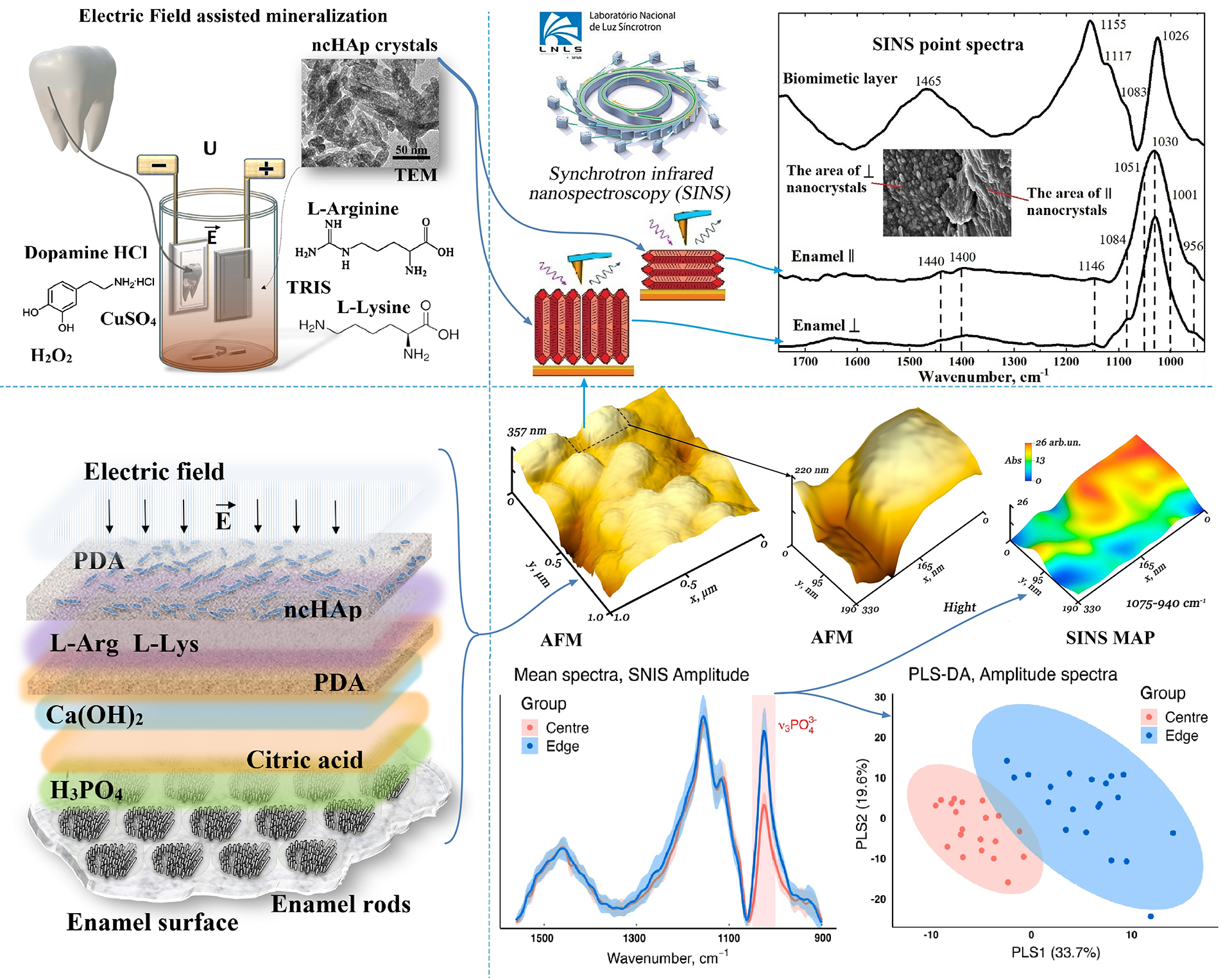
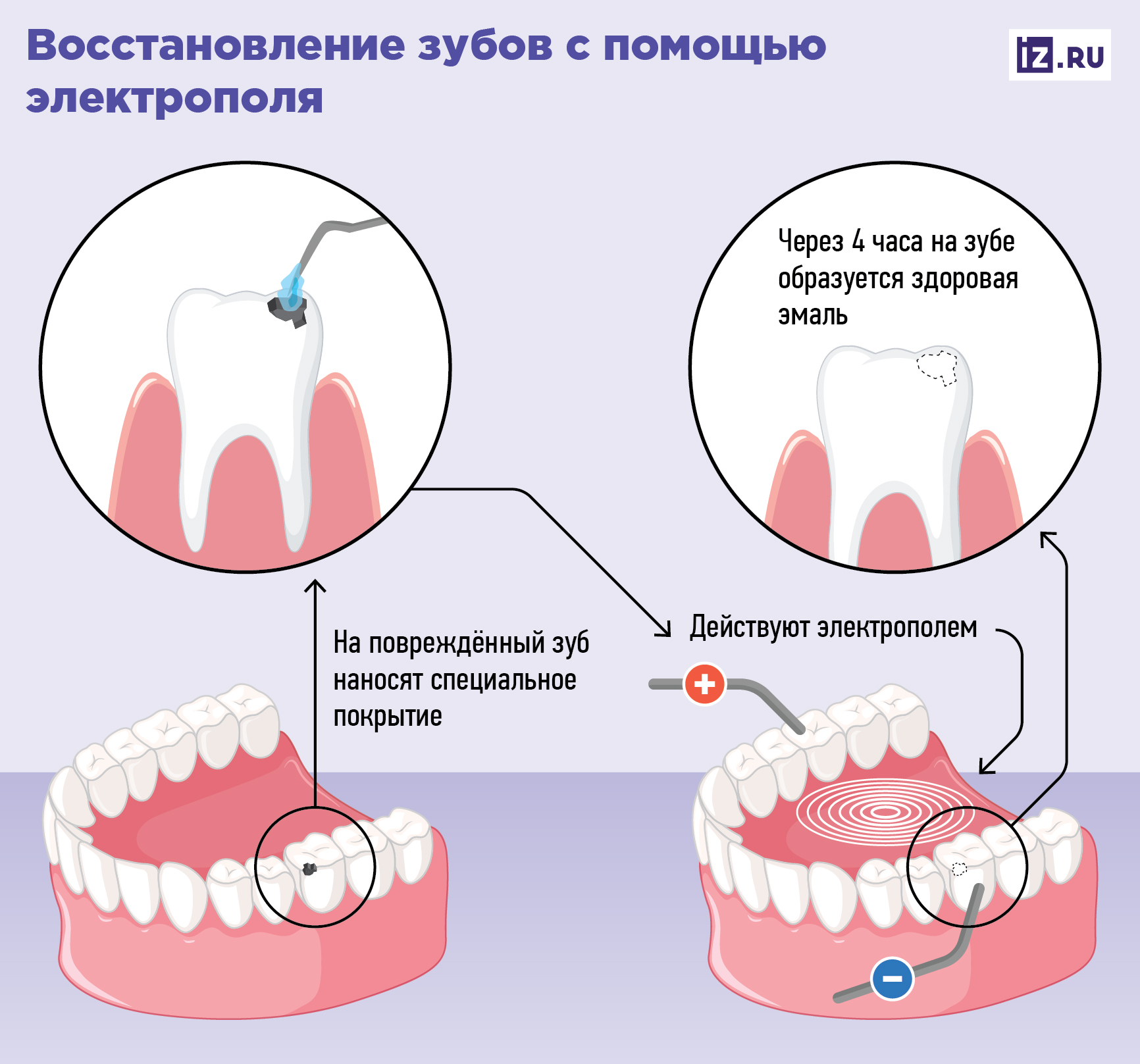
During the experiment, samples of teeth with damaged surfaces were placed in a mineralizing solution and exposed to a weak electric field. After four hours, a layer formed on the enamel that was chemically close to the natural tissue. At the same time, the field set the direction of crystal growth, making their structure more orderly and increasing the hardness of the coating.
According to scientists, it is the correct organization of crystals that largely determines the mechanical properties of enamel, so this approach allows us to bring the artificial material closer to the natural one not only in composition, but also in structure.
— Our research is an important step towards the creation of methods for non—invasive tooth restoration, when the lost enamel layer can not be replaced with a filling, but formed directly on the tooth surface. Currently, the technology has been tested only in laboratory conditions, but the results show that controlled mineralization really makes it possible to obtain durable and structurally organized coatings," Pavel Seredin, Doctor of Physico—Mathematical Sciences, head of the Department of Solid State Physics and Nanostructures at VSU, told Izvestia.

Research participant Pavel Seredin
The new work continues a series of studies by this scientific group on the creation of artificial coatings for tooth enamel. Previously, the authors showed that hydroxyapatite layers close to natural enamel can be quickly formed on the tooth surface and given antibacterial properties. In the current study, the scientists have taken the next step: they have managed to control the internal organization of the coating crystals using a weak electric field, which makes it possible to create a more functional and durable analogue of natural enamel.

The prospect of a new approach in dentistry
Tooth enamel is a unique "bulletproof vest" of the body, which is practically incapable of regeneration, Maxim Kopylov, founder of maxTreat dental clinic, PhD, dental surgeon, told Izvestia. According to him, the technology can be a breakthrough in dentistry: the authors managed to find a way to control the architecture of crystals that repeats the natural biomimetic process.
— If it is possible to completely recreate the structure of the enamel prisms, we will get a material that not only "seals" the hole, but fuses with the tooth at the structural level. In the future, this will make it possible to restore enamel without a drill, which radically reduces stress for the patient — this is what all modern medicine strives for," said the doctor.

Experimental setup
Despite the encouraging laboratory results, it is important to understand that in vitro conditions there is no aggressive saliva environment, constant temperature fluctuations and a chewing load of up to 70-100 kg, the expert added. Therefore, the study will have to go through a full-fledged clinical testing stage.
— Recently, revolutionary steps have been taken in dentistry: scientists are trying to grow teeth in the laboratory, as well as the beginnings of teeth for subsequent planting and cultivation. There are companies that repair enamel, as well as special reagents that allow enamel to be restored naturally," explained Magomed Dakhkilgov, PhD, Chief Physician of the German Implantology Center, implantologist. — Such methods have not yet received clinical approval in Russia, although they are already being used in the USA. The method proposed by the authors is unique and interesting, and if it can be brought to the clinic, it will be a real breakthrough.

Working in the laboratory
In the future, the researchers plan to test the stability and biocompatibility of the coating in conditions close to the real environment of the oral cavity, as well as optimize the modes of electrical action in order to control crystal growth even more precisely. In addition, the team hopes to combine the achieved structural order of the coating with the antibacterial properties demonstrated in previous work.

The authors note that such approaches may be in demand not only in dentistry, but also in materials science, where thin wear-resistant coatings with a controlled internal structure are required.
The results of the study, supported by a grant from the Russian Science Foundation, are published in the journal ACS Biomaterials Science & Engineering.
Переведено сервисом «Яндекс Переводчик»
