Not hidden glucose: scientists create the first Russian artificial "pancreas"
- Статьи
- Science and technology
- Not hidden glucose: scientists create the first Russian artificial "pancreas"


Russia is developing a portable device for patients with type I diabetes mellitus. The device will allow you to automatically monitor glucose levels and adjust the dose of insulin, which will greatly simplify the lives of hundreds of thousands of patients. The key difference between the domestic system is a reusable sugar monitoring sensor, which should make the technology more accessible compared to its foreign counterparts. The first prototypes are scheduled to be presented in August 2027. For more information about medical innovation, see the Izvestia article.
Reusable artificial "pancreas"
Scientists at the Institute of Bionic Technologies and Engineering at Sechenov University, together with the Radioelectronic Technologies Concern (KRET), have begun creating an artificial "pancreas" for people with type I diabetes. The development is a portable device that will automatically monitor blood glucose levels and adjust the dose of insulin without patient intervention. There are no similar Russian systems simulating the work of a healthy pancreas in our country yet.
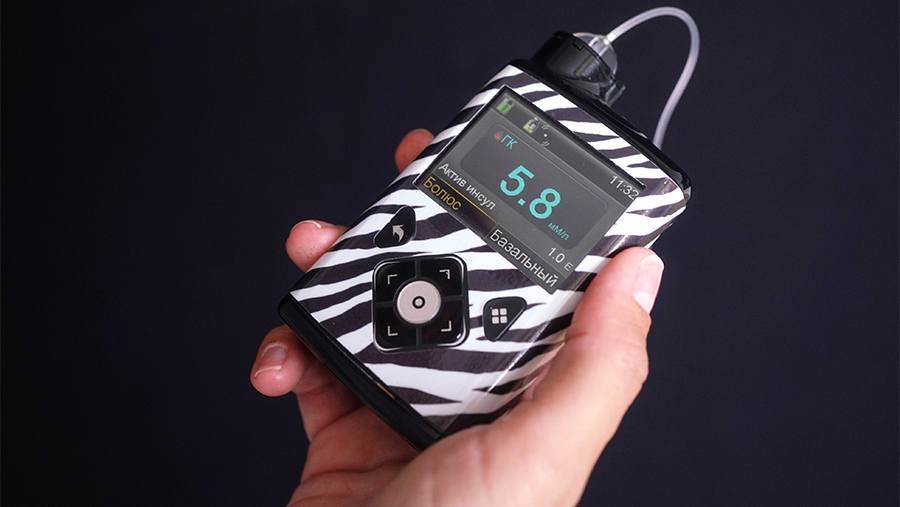
The device includes three key components: a sensor for continuous glucose monitoring, a miniature insulin pump and a computer algorithm. The device operates on a "closed loop" principle: the algorithm analyzes data from the sensor and predicts changes in blood sugar levels, after which the insulin pump automatically adjusts the dose of the hormone. This will allow the user to avoid sudden spikes in glucose and hypoglycemia, a dangerous decrease in sugar levels in the body. In addition, the device will help improve the quality of life of patients by automating the selection of insulin doses, which previously had to be done manually.
The key know-how of the development is a reusable continuous glucose monitoring sensor, said Dmitry Telyshev, director of the Institute of Bionic Technologies and Engineering at Sechenov University.
Unlike its foreign counterparts, which are designed for an average of 14-16 days of operation, the device does not require a complete replacement. Only the patch and the implantable part with a thin needle will be replaceable, whereas the case with microelectronics can be reused. The authors of the project expect that it will last at least a year.

— The housing with microelectronics will not be glued into the patch, as with other sensors, but will snap into place. This will allow it to be used repeatedly, replacing only the elements in contact with the body," Dmitry Telyshev explained. — Thus, we expect to significantly reduce the cost of continuous monitoring systems. Our sensor will cost approximately 4.5 thousand rubles.
It is planned that the first prototypes of the artificial pancreas will be ready by August 2027. After completing all scientific research, the development will be transferred to an industrial partner who will work on the technology and launch mass production.
"Our task is not just to repeat foreign devices, but to make them more accurate, compact, reliable and easy to operate," said Alexey Yadykin, General Director of the KRET design company.

Prospects for the introduction of an artificial "pancreas"
Such devices are certainly one of the most promising areas in the treatment of type I diabetes. In this disease, due to the autoimmune destruction of beta cells of the pancreas, the body stops producing insulin, and the patient is forced to control glucose levels for life and inject the hormone from the outside, Albert Rizvanov, head of the Personalized Medicine Center of Excellence, told Izvestia.
— The concept of an artificial "pancreas" with a closed circuit, combining a sensor, a pump and an algorithm, is already actively developing in the world. The integration of AI algorithms can significantly improve the accuracy of glycemic control and reduce the risk of hypoglycemia. At the same time, the most interesting element of the development is a new type of continuous glucose monitoring sensor, especially given its reusability, which can potentially significantly reduce the cost and increase the availability of the technology," he noted.
At the same time, we are still talking about the early stage of development: the first prototypes are expected only by August 2027, so there is still a significant way to go before the clinical application of the technology, the expert added. According to him, at this stage such systems are unlikely to be able to completely eliminate the need for patients to control the disease, but they can significantly reduce the burden and frequency of manual interventions.
There are about 300,000 patients with type I diabetes in Russia who need to constantly monitor their glucose levels and inject insulin, said Andrey Martyushev-Poklad, market expert at the National Technology Initiative Helsnet and the Union of Healthy People. In total, according to official statistics, about 6 million people suffer from diabetes mellitus of various types, as many more have latent forms of the disease, and they have not been diagnosed.
According to the expert, the main problem is that a person cannot always accurately and timely calculate the dose, which increases the risks of both hyper- and hypoglycemia. According to him, transferring this task to an electronic device will significantly reduce the likelihood of sudden fluctuations in glucose levels.
— In general, the prospects and benefits of creating the device are beyond doubt. However, it is important to keep in mind that the functions of the pancreas are not limited to the production of insulin: in type I diabetes, the production of digestive enzymes, the so—called exocrine function, also suffers. The new device will not be able to solve this problem. Therefore, it remains relevant for patients not only to replace insulin, but also to influence the process of destruction of the pancreas itself," the specialist noted.
According to him, the development will not be a panacea and should be considered as part of an integrated approach to the treatment of the disease.
Переведено сервисом «Яндекс Переводчик»
