The war in the Persian Gulf may lead to a shortage of drinking water. What you need to know
- Новости
- World
- The war in the Persian Gulf may lead to a shortage of drinking water. What you need to know

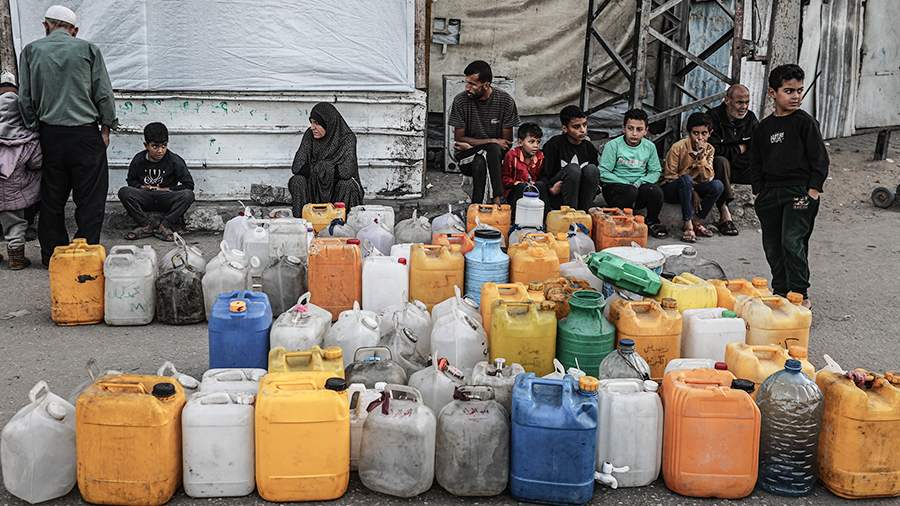
In response to the US ultimatum and the threat of attacks on energy facilities if Iran does not open the Strait of Hormuz, Tehran promised retaliatory attacks on energy infrastructure and American desalination plants in the Middle East region. The shortage of fresh water is the main vulnerability of the Persian Gulf countries, and such attacks can put them on the brink of a humanitarian catastrophe. Whether Iran will decide to strike at desalination plants, who benefits from it and what the consequences will be — in the Izvestia article.
A precedent has been set
• Attacks on desalination plants have already been recorded during the current conflict. The Iranian Foreign Ministry said on March 7 that the United States had set a precedent by hitting a desalination plant on Qeshm Island, leaving 30 villages without water. Washington has neither confirmed nor denied this information: US President Donald Trump said he "knows nothing about the desalination plant." Israel said that the UAE had struck the infrastructure.
• Already on March 8, Bahrain reported damage to a desalination plant in the country as a result of an Iranian strike. The country's Foreign Ministry said there was material damage, but did not specify where the station was located or the extent of its damage. Iran has not commented on the attack on Bahrain. In fact, these were the first deliberate attacks on desalination infrastructure in the region during the conflict — previously, all damage occurred as a result of falling debris from downed missiles and drones.

• Desalination plants have already been the target of attacks in previous years. During the 1991 Gulf War, the Iraqi armed forces invaded Kuwait and destroyed several desalination plants in the country. During the military operations, Iraq also dumped 816 thousand tons of crude oil into the waters of the Gulf and set fire to more than 700 oil wells, which led not only to the shutdown of desalination plants sensitive to the oil content in the water, but also to groundwater pollution in the region. In 2019 and 2022, the Yemeni Houthis also tried to attack desalination plants in Saudi Arabia with drones and missiles, but did not cause significant damage.
• The strikes on desalination infrastructure during the conflict obviously did not cause much damage, and the affected countries preferred not to escalate the situation. For the region, the safety of desalination plants is a very sensitive issue, because damage to them can lead to a humanitarian catastrophe, and the restoration of plants can take months. The mirror actions of the affected party will leave the region without desalination facilities, and after the onset of peace there will be no opportunity to use the resources of neighboring countries to cover the shortage of drinking water.
The situation with water in the Persian Gulf countries
• Only Iran and Iraq have renewable sources of fresh water, where there are large rivers and lakes, but even in these countries there is a shortage due to drought and increased water consumption. Other Gulf countries are even more dependent on seawater processing: in Saudi Arabia, desalination plants provide 70% of drinking water, in Oman — 86%, in the UAE — 42%, in Kuwait — 90%. Even Israel uses water from five large coastal desalination plants to supply most of its population and sell it to neighboring countries, as well as to restore the shallow Sea of Galilee, an inland freshwater source.

• As early as 2010, American intelligence warned of the risks to the critical desalination infrastructure in the Middle East in the event of military action. Installations are difficult to secure: to ensure access to seawater and electricity, they are located on the coast. But this location makes desalination plants an easy target for attacks.
• Unlike fuel resources, water is of existential importance for the Persian Gulf countries, since there is nothing to replace the deficit — the region already imports not only drinking water, but also agricultural products, the production of which also requires a lot of resources. Therefore, a blow to desalination plants is also a blow to the food security of the Gulf countries, especially in conditions when the Strait of Hormuz is virtually blocked and food imports are suspended.
• Attacks on energy facilities also ultimately affect water desalination. In the Middle East, two technologies are used to process seawater into drinking water: heating water to high temperatures and collecting condensate, and the principle of reverse osmosis, when pressurized water is passed through a membrane that retains impurities. Both options are energy-intensive: in Saudi Arabia, about 30 desalination plants consume 300,000 barrels of crude oil per day.

Who benefits from strikes on desalination plants
• The possibility of attacks by Tehran on the desalination infrastructure of US allies in the Persian Gulf is being actively discussed in the foreign press. On March 22, Iran vowed to respond to Washington's threat to destroy Iranian power plants if the Strait of Hormuz was not opened within 48 hours by attacking all American energy and communications facilities in the region, including desalination plants. Foreign analysts suggest that Iran may attack desalination plants in order to sway the situation inside the countries and force the population to put pressure on governments to cease fire in the region.
But carrying out such attacks poses a great risk for Iran, since the country has almost no allies left in the region, and escalation in relations with its neighbors may lead to Middle Eastern states viewing Tehran's actions as an existential risk. In this case, the Gulf states can present a united front against Iran, which may be beneficial to the United States and Israel, but undesirable for Iran. In light of this statement about possible attacks on desalination plants, this is rather political blackmail by Tehran, which warns that if the situation in Iran worsens, everyone will have problems.
• It is noteworthy that Israel and the United States, even in the event of an attack on desalination infrastructure, do not formally violate international law, since both countries have signed but not ratified Additional Protocol I to the Geneva Conventions of 1977, prohibiting the use of starvation and the destruction of facilities necessary for the survival of civilians as a method of warfare. Tel Aviv has already had experience with attacks on desalination plants in the region: in October 2023, in response to the Hamas attack, Israel attacked the Palestinian infrastructure, which led to the shutdown of most of the Gaza water supply system, including desalination plants.
Having such a serious ally as Washington, Tel Aviv may decide to take similar aggressive steps in this conflict. But it is not profitable for Israel and the United States to spoil relations with the Persian Gulf countries, which became more complicated after the outbreak of war with Iran. Therefore, if attacks on desalination infrastructure from Israel will occur, then most likely these will be operations under a false flag.
• The United States, in response to Iran's accusations of an attack on a desalination plant on Qeshm Island, did not deny its involvement, but also did not take responsibility for the strikes — this preservation of "strategic uncertainty" on the one hand creates the feeling that Washington has practically no "red lines" in the use of force against Tehran, On the other hand, it avoids condemnation from the international community.
Переведено сервисом «Яндекс Переводчик»
