The Porcelain Army: how the figures of Bagration, Suvorov and Konev were cast


The figures of Suvorov, Alexander II, Zhukov, Stalin. All are handmade from a fragile but very valuable material. The collection was created by the masters of the Imperial Porcelain Factory (IFZ) for the 80th anniversary of Victory in the Great Patriotic War and was first shown at the St. Petersburg Economic Forum. Now they can be seen by the metropolitan public at the exhibition "History in Porcelain. Patriotic sculpture of IFZ" in the Historical Museum. Izvestia appreciated the unusual approach to the history of Russian victories.
Defenders made of porcelain
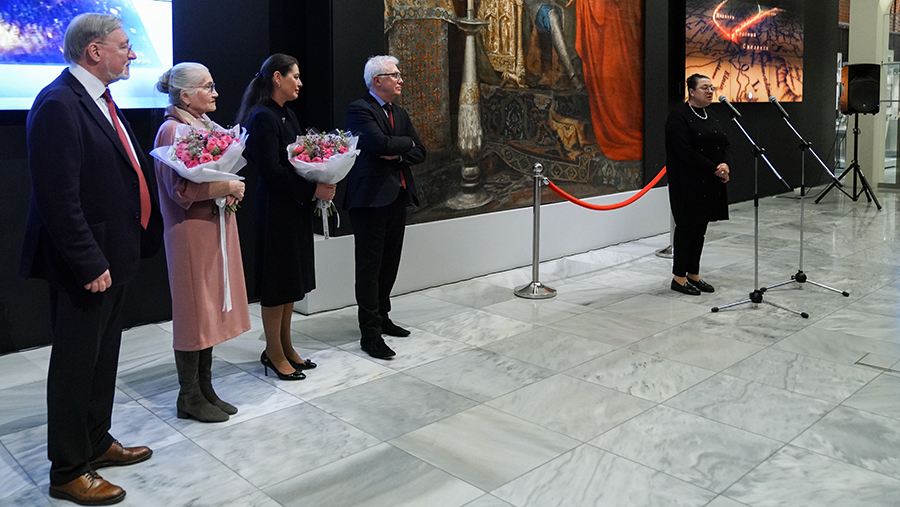
A series of sculptures presented at the State Historical Museum (GIM) depicts generals and soldiers, starting from the reign of Ivan the Terrible and ending with the marshals of the Great Patriotic War. Alexey Levykin, General Director of the Historical Museum, believes that porcelain is not just jewelry, but a powerful tool for learning. And the fact that the exhibition dedicated to the valiant Russian soldiers opens on the eve of Defender of the Fatherland Day and is located in the exposition of the Museum of the Patriotic War of 1812 (one of the buildings of the State Museum of Fine Arts) is symbolic.
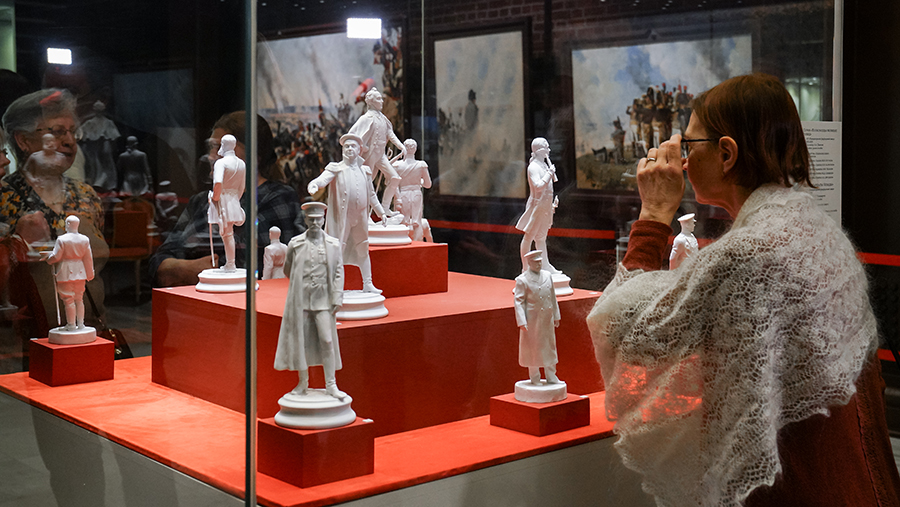
— Creating a sculpture from porcelain is quite a difficult thing. At first glance, it may seem that it is monolithic, but it is not," said IFZ CEO Tatiana Tylevich. — Each work consists of 8-12 parts. Even such small items as decorations, hats, and weapons are cast separately. Then they are glued using a special porcelain paste.

The artists tried to achieve a portrait likeness of the characters, working with archival documents, observing accuracy in the details of uniforms. But when working on a work of art, you can't do without a creative component. The main role in the process was played by sculptors Anatoly Danilov and Alexey Nicheporchuk, but each piece passed through many hands before appearing in its final form. Modellers, molders, and kilners used their skills.… Porcelain casting is a very complex technological process.
Tragic Bagration and Suvorov in the Alps
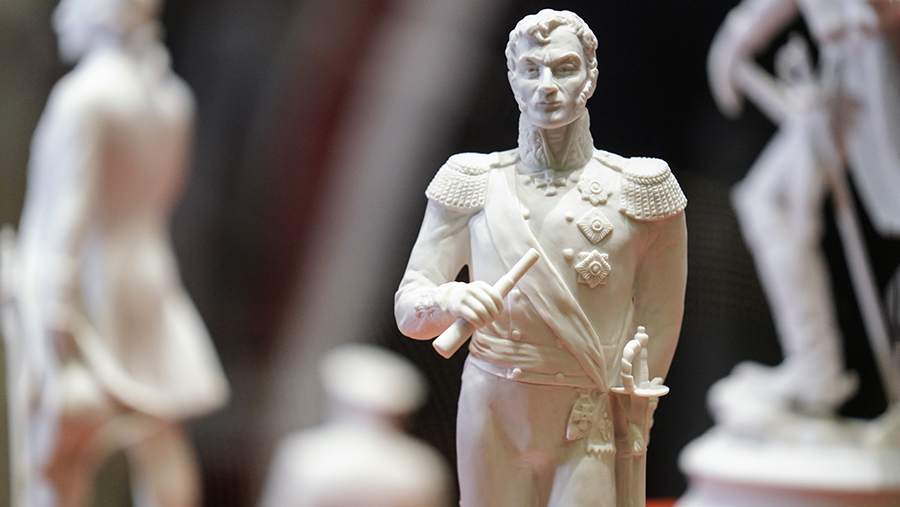
For Anatoly Danilov, the leading sculptor of the Imperial Porcelain Factory, the most difficult and therefore favorite work is Marshal Bagration. After learning that the fate of the commander was tragic, the master decided to capture Bagration before the last battle in a determined pose. All the characters in the series should stand in different ways, Anatoly Anatolyevich is sure.
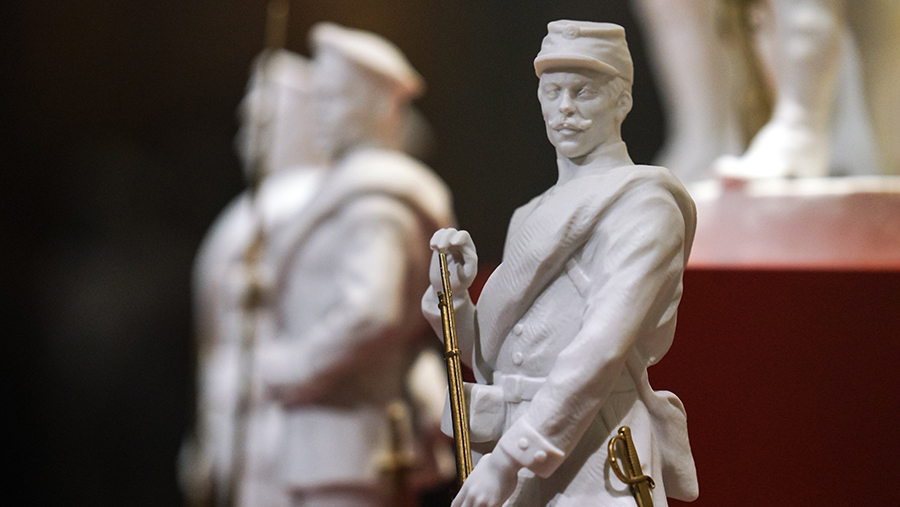
— It is necessary to prevent self—plagiarism and look for options so that it would be interesting to look at an individual sculpture and the entire series, - says Danilov. — For example, Brusilov put his hand behind his back. One character has a field pipe in his hands, the other has a sea pipe, and they differ not only in size, but also in small details. There are several sculptures of Suvorov, but nowhere have I seen him standing with his foot on a stone. After all, he conquered the Alps, but how can this be conveyed in one composition? Hence the fluttering tails of the cloak, hinting at the gusts of wind in the mountains.
The sculptor studied in the archive not only the construction of telescopes, but also the details of uniforms. For example, it was difficult to find Suvorov's cloak. Only the museums managed to get accurate information. But to create porcelain works of art, it was necessary to know for sure how many buttons there were on the tunic and the curls on the epaulettes, at what angle the pockets were sewn, and what kind of plaits the fringes had.
Together with his wife Galina Belash, Anatoly Danilov worked on creating chess from biscuit porcelain in the form of soldiers on the battlefield. Their name means "Russia–France. The year is 1812."
Human Marshals
One of the ideological inspirers of the exhibition was Natalia Koneva— the daughter of a marshal of the Soviet Union. She came to the opening day to congratulate the craftsmen and see her father's sculpture. It was at the suggestion of the Koneva Historical Museum, which has a large collection of porcelain in its collections, that initiated the organization of an exhibition of patriotic sculpture by IFZ.
— The masters tried to create an image, and this is not just a similarity, but also character, inner content, and the magic of personality, — Natalia Koneva told Izvestia. — To create the sculpture of Ivan Konev, they used photographs and newsreels from 1945. That's how my father was at the Victory Day Parade. This is the most significant moment in his biography.
The marshal was depicted as bald — as Natalia Ivanovna says, his father invented such a hairstyle for himself. He shaved under zero, although there were no problems with his hair.
—Ivan Stepanovich was very slim, slimmer than this sculpture depicts," says the marshal's daughter. — I remember him being quite tall, 180 cm, very fit. Even the boots that I keep show that this man had an easy step.

Leonid Govorov, the grandson of another marshal of the Soviet Union, is confident that the collection will become a bridge between the heroes of the army of the past and today. And the new generals will also inspire artists to create works of art.
— The most important thing is to make these figures human, so that they have their own appearance, their own peculiarity, — said Leonid Govorov. — I think the artists succeeded. The exhibition is about popularizing our victories and heroes. And the tradition of creating patriotic sculptures will be continued.
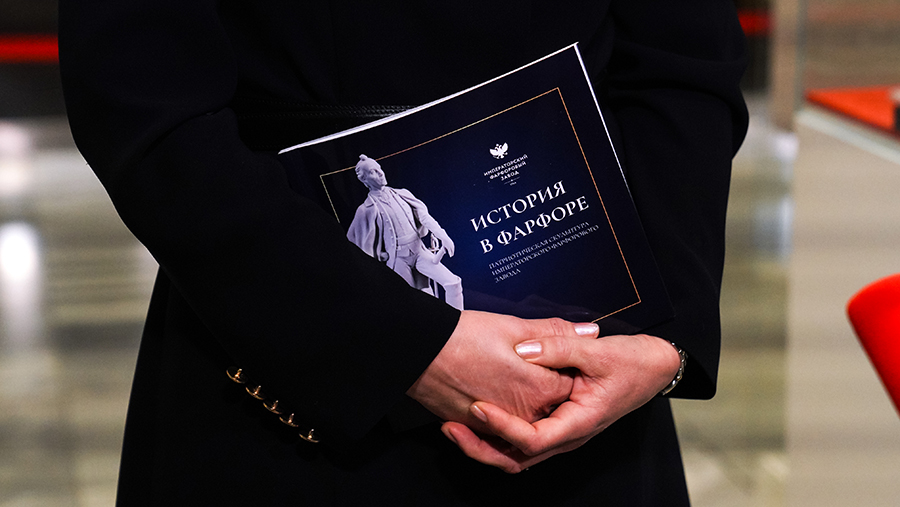
One of the sculptures on display will remain in the museum's collection forever. IFZ Director Tatiana Tylevich handed Alexey Levykin the documents for a porcelain figure of a hussar from the era of Alexander I.
Porcelain works have appeared in the world's largest collections since the beginning of the Imperial factory in the middle of the 18th century. The products have one drawback — they are fragile. But if you treat them carefully, they last forever.
The exhibition is open to the public from February 18.
Переведено сервисом «Яндекс Переводчик»
