Masks thrown on: Carnival exhibition covers a century of entertainment


Harlequins and Pierrot, young ladies and peasant women, tsars and emigrants. The exhibition "Under the Mask", which opened at the Museum of Russian Impressionism, is only at first glance devoted to carnivals and similar entertainments involving disguise. In fact, its subject matter is much broader, and the desire to take on someone else's appearance is considered not only as a carefree game, but also as a life strategy. Izvestia was among the first to look "Under the mask."
Jubilee scope
This year, the Museum of Russian Impressionism celebrates its first anniversary — ten years since its opening. And the project chosen for this is symbolic.
Strictly speaking, all these years the institution, registered in the former Bolshevik factory, under the guise of Russian impressionism (the term, admittedly, still causes controversy) shows the widest range of Russian art, focusing on the period of the early 20th century, but by no means limited to it.
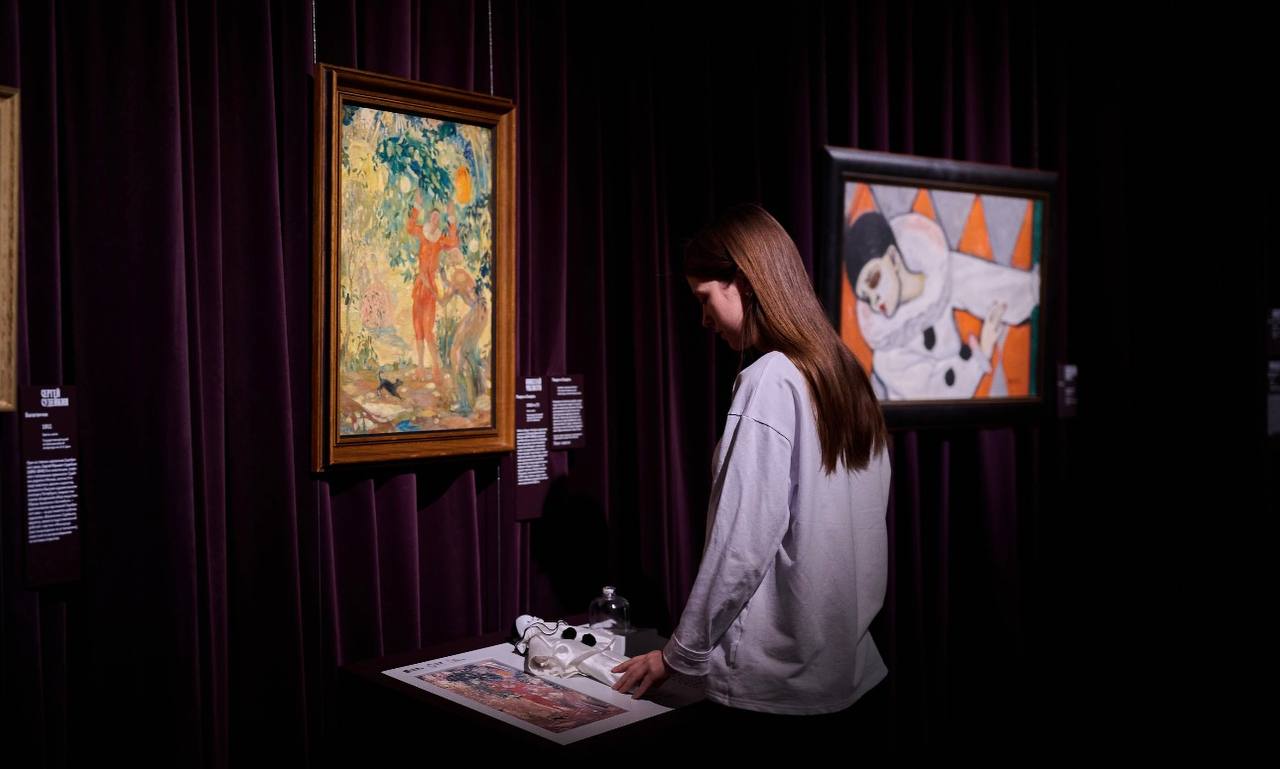
Over the years, the museum has managed to form its own individual approach to exhibition activities.
Firstly, it is an unusual subject, whether it is "Russian Wild" (about the intersection of French and our Fauvism) or "The Magazine of Beautiful Life" about the first Russian gloss.
Secondly, the widest range of collections: it is not a problem for MRI to bring works from dozens of public and private collections from all over the country.
And finally, the emphasis is on figures half-forgotten, left in the shadows, or even completely unknown (as in the exhibition, where paintings with unidentified authorship were presented).
"Under the mask" meets all these characteristics. Including the last one.
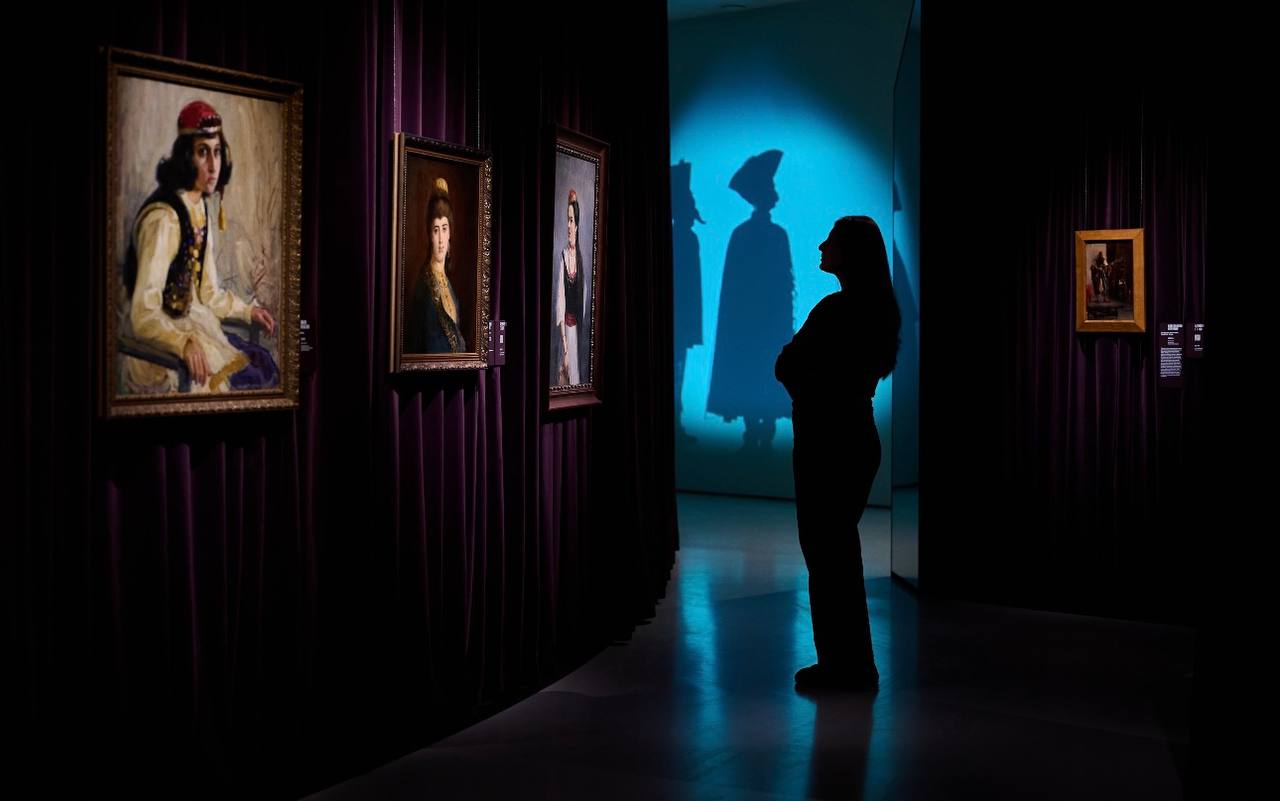
Viewers who expect to see a lot of mischievous and blue—collar people — led by Konstantin Somov, Nikolai Sapunov and Sergey Sudeikin - will be at least surprised.
No, the listed figures are still represented (though Somov is only one statuette, not graphics and paintings), but by no means as voluminous as one might expect from an exhibition with such a theme.
But there are a number of works by completely unexpected authors. For example, the etching of Somov's father, Andrei, known not as an artist, but as a curator of the Hermitage, "Lady with a Mask in her hand" (1870). It seems to be a realistic, even academic, but playful image.
Is there such a great distance between him and the piquant "Book of the Marquise" by Somov-son? The latter is not on display, but art lovers can easily mentally complete the visual range.

From palaces to Soviet parks
But it's not even this thing that is more surprising, but, for example, the "Portrait of an Unknown Woman in a pink Dress" by Vladimir Makovsky, Konstantin's brother and also a wanderer. It is assumed that the artist depicted his wife, and this is the most delicate, airy painting.
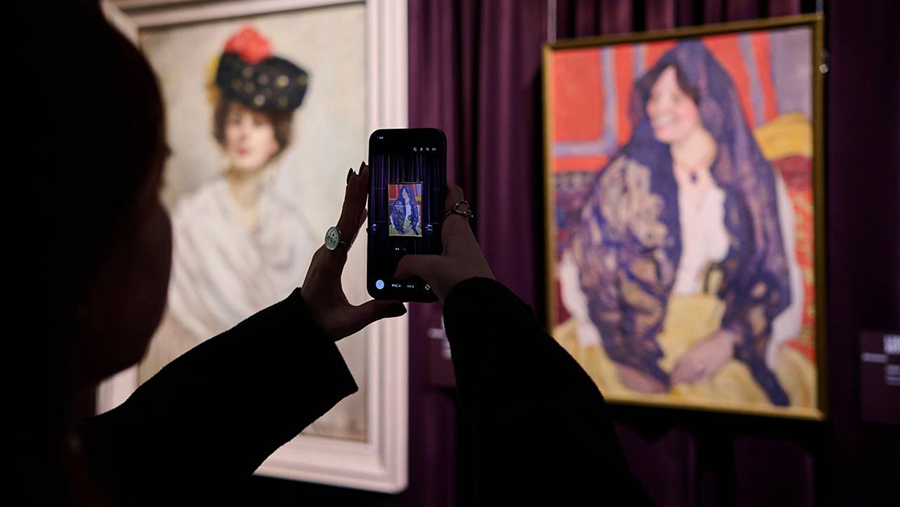
However, it's not the outfit in the name that intrigues the most, but the carnival masks on the table. The date of creation of the work — April 27, 1908 — falls on the day after Easter. And, probably, the lady is preparing for the masquerade that is about to happen.
There are many such surprises in the exhibition. They begin with a portrait of Nicholas I in knight's armor — the emperor personally introduced the fashion for dressing up in the spirit of other eras in Russia.
They end in the Soviet period, although the years of Lenin and Stalin are hardly associated with carnivals. For example, the gouache of 1935 by Boris Timin is striking not so much for its artistic merits as for the information about the depicted event itself. It depicts a masquerade in the Moscow Park of Culture and Recreation (now named after Gorky) in honor of the draft constitution of the USSR.
Moreover, a year later, they decided to repeat the event and sold about 100 thousand tickets (and in addition, various carnival equipment, since in 1935 many showed up without masks and special costumes, causing dissatisfaction with the organizers).
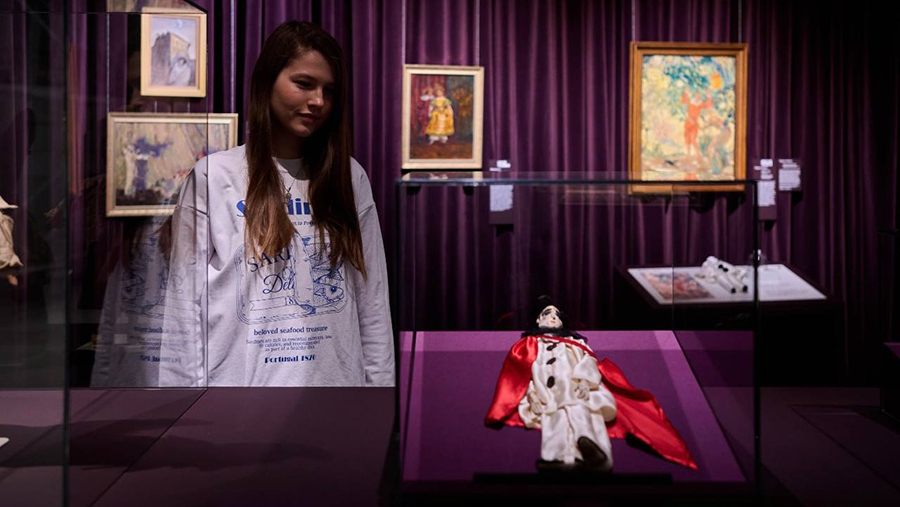
There are a lot of similar subjects at the exhibition. And looking at the strings of carnival images illustrating them — realistic and cubist, stylized for some era or timeless - you involuntarily catch yourself thinking that all this is, ultimately, an escape from reality. An attempt to hide anxiety behind fun, and your true self behind an outfit, an image.
And in this context, things like "In the Mask Workshop" by Abram Arkhipov look different, which depicts an obviously poor artisan making masquerade equipment. While some are having fun, others are working hard to provide them with this brilliant leisure time.

Disguises and appearances
But the real shock is caused by an exhibit placed towards the end of the exhibition — a 1920 poster from Barnaul. An ad is displayed in elegant font under the image of a dancing couple: "A merry society holds a masquerade ball in a concentration camp."
It's about a prison organized by the White Guards at the height of the civil war. Admittedly, the expression "concentration camp" did not yet have such terrible connotations as during the Second World War. And yet: there is no better illustration of the expression "feast during the plague."
Instead of a serene, courtly, gallant immersion into the world of balls and celebrations of the Russian elite, something else turned out — perhaps even more valuable: an exhibition of reflection, an exhibition of reflection on the theme of changing faces.
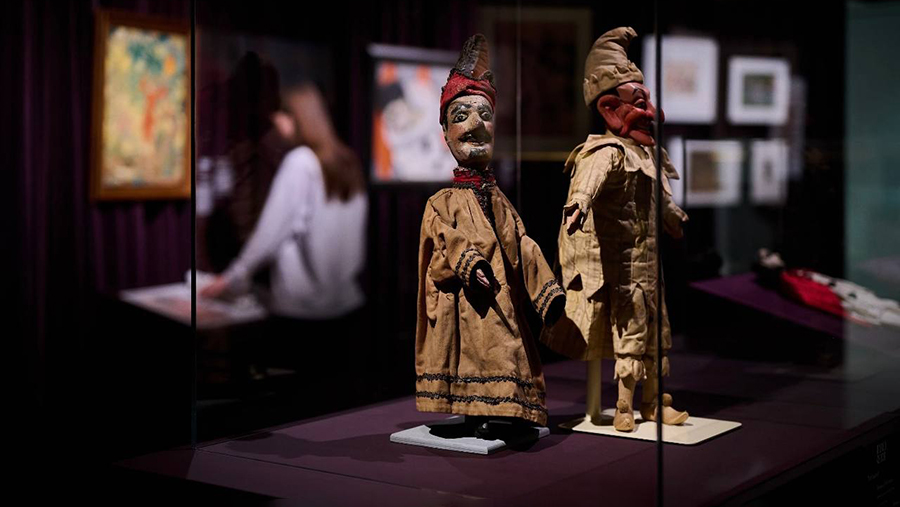
Art itself appears here as a chameleon's tool, a way to try on other people's images.
In the context of this concept, it turns out that a block of paintings with images of Gypsies, Japanese women, Turkish women, and so on is quite logical. After all, models of other nationalities often posed for artists. What can we say about the young ladies of the late 19th and early 20th centuries who dress up (or are dressed up by painters) in old Russian dresses — as if there are no revolutions and inexorably impending progress on the threshold.
The viewer, admiring the works (mostly little—known) of Milioti, Nesterov, Kulbin, Goncharova, even Chelishchev, as well as many beautiful but half-forgotten masters, remains to answer the question of himself, which is better - in the world of illusion and in a mask or without these lifebuoys.
Переведено сервисом «Яндекс Переводчик»
