- Статьи
- Economy
- Accelerating trend: oil consistently gains in price amid threats from the United States

Accelerating trend: oil consistently gains in price amid threats from the United States
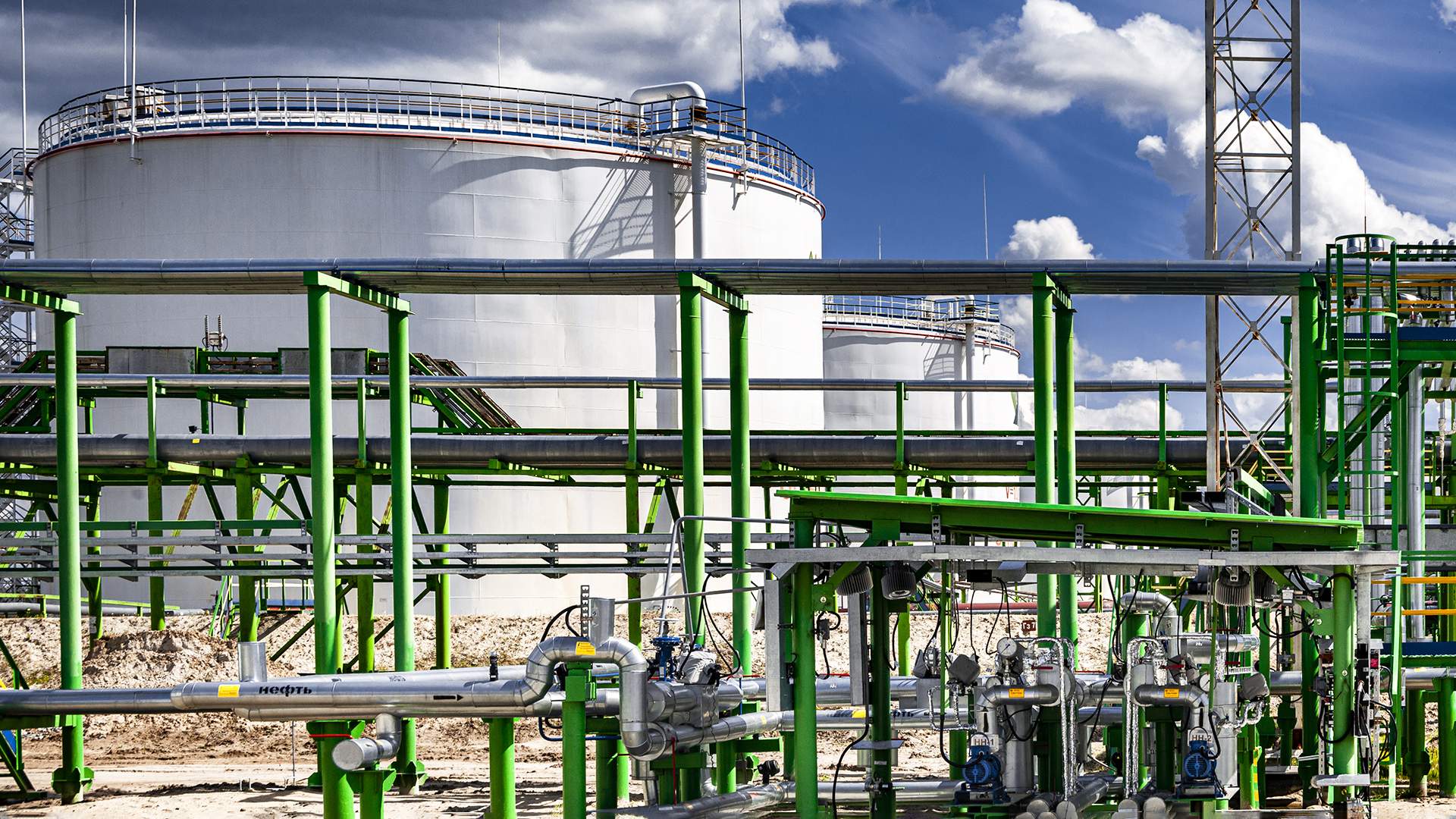
Oil prices have been rising for two days following statements by US President Donald Trump regarding the Russian-Ukrainian conflict. How the geopolitical perturbations and energy prices are related, why oil has risen in price and what will happen to quotes in the medium term, we will discuss in the Izvestia article.
Against the background of threats
US President Donald Trump has issued a harsh statement on the settlement of the Russian-Ukrainian crisis. The head of the United States called for an end to the conflict and reduced the deadline for this to 10 days instead of the previous 50 — until August 7. If the countries do not agree, Trump threatened to impose duties of "about 100%" on countries cooperating with Russia. In particular, we are talking about the largest counterparties — India and China.

Recently, Indian Oil Minister Hardeep Singh Puri announced the possibility and willingness to diversify supplies by abandoning Russian oil. However, Indian Ambassador to the UK Vikram Doraiswamy, on the contrary, said that his country is significantly dependent on energy imports.: India ranks third in the world in terms of energy consumption, but imports more than 80% of energy sources.
China, in turn, assured that, despite the threat of high tariffs, China would defend its energy sovereignty and continue to buy Russian oil.

The Kremlin reacted cautiously to the attack from the White House: the statement of the American president was "taken into account."
On the contrary, global stock exchanges reacted instantly: on Tuesday, Brent was trading at around $72.51 per barrel (an increase of 3.53%), and on Wednesday morning the dynamics slowed down and a barrel of oil was already worth $ 72.68, however, by Thursday the price had increased to $72.76 per barrel, to give a slight correction by the end of the day.
The main beneficiary
Brent rose in price against the background of harsh rhetoric from the United States, which claims that it is ready to impose trade restrictions and additional sanctions on supplies of Russian raw materials and Russian counterparties for transactions, including from China and India, said Dmitry Alexandrov, head of the analytical research department at AVI Capital.

— If this leads to a shortage of oil or petroleum products on the markets, the United States is ready to increase its own shipments. Naturally, this may require a time lag, so oil prices are going up due to fears of a small local shortage," the expert believes.
Trump said that he did not care about the consequences of his decision in the form of rising oil prices, since there was a lot of oil in the country and the United States could increase production if necessary. Nikolay Dudchenko, an analyst at Finam Financial Group, critically evaluates this remark.
— First of all, if we focus on the latest data from the EIA, then the so-called strategic reserves in the United States are really enough. Although the available SPR of 402.5 million barrels is still less than it was, say, five years ago, when the SPR exceeded 600 million barrels. Secondly, the United States can also increase oil production, but not simultaneously. Thirdly, there may be a problem with the composition and properties of oil produced in the United States," the expert explained.
According to him, light grades are mainly produced in the United States, part of the resulting volume is sent to foreign markets, and in return, grades intended for American refineries are imported. In addition to the United States, a number of OPEC+ countries may benefit from the rising cost of oil. The upward trend in the oil market will make it possible to finally and painlessly withdraw from the agreement on voluntary production cuts. Saudi Arabia and the UAE, according to the International Energy Agency (IEA), have a high enough potential to increase production.

Fourth, the probability that the entire volume of Russian oil will leave the market is very low, Nikolai Dudchenko is sure. Russian varieties can be traded at a more significant discount, and some volume of Russian raw materials will simply "fade into the shadows." Therefore, so far the threats are questionable, and the impact of possible new sanctions on the market is far from clear, the analyst argues.

Among the factors supporting the market and affecting prices now, Dudchenko called the OPEC+ meeting, which will be held at the end of this week, as well as trade deals.
— So, the United States managed to agree on the extension of the trade truce with China for another three months. A trade agreement on tariffs of 15% was concluded with the EU. Reducing uncertainty is pushing oil prices up," he added.
The natural course of things
Oil prices were bound to start rising sooner or later after the fall, says Olga Orlova, head of the Industry department at the Institute of Oil and Gas Technologies.
— Currently, world oil reserves are at their lowest levels in the last five years, as the head of Rosneft, Igor Sechin, said at the last SPIEF. The sanctions (imposed and promised) against Russia as a major oil exporter cannot but affect the market. These are long—term factors that will push prices up," she says.

According to the expert, the market is currently subject to factors that support low oil prices, but they are of a short-term nature.
— The lifting of restrictions for OPEC+ countries, a temporary lull in the hot spots of the Middle East, and even an eco—crisis - all this only accumulates contradictions. Most Middle Eastern countries operate at a loss to keep their budgets full, as they do not want to give up market share. Geopolitical conflicts in this area are also inevitable. And no eco—friendly resource is even close to being equal in efficiency to traditional fuel, and the promises of politicians to abandon oil are nothing more than populism," Orlova believes.

Forecasts
After a surge in volatility due to the military conflict in the Middle East, the oil market has completed a decline cycle since the beginning of the year and formed a correction corridor with the boundaries of $61-80 for Brent, says Spartak Sobolev, head of the Alfa Forex Investment Strategy research department.
— In the medium term, quotes are likely to gain a foothold in this corridor, and the geopolitical factor will periodically support the market. The increase in production by OPEC+ countries will continue to balance the oil market," he says.

Before the expiration of Trump's ultimatum or before any further statements by the American president, the price of oil may continue to remain at elevated levels, says Nikolai Dudchenko. According to the forecasts of FG Finam, the price range will be set in the range of $69-74/b.
"In the future, a downward correction cannot be ruled out after the event," he added.
According to Ekaterina Kosareva, managing partner of the analytical agency VMT Consult, a fair oil price is about $80 with the potential to grow to $100 in the medium term due to the high demand for energy resources.
— All kinds of data processing centers now consume electricity in huge quantities, comparable to the mining industry. Moreover, giant corporations do not always advertise this in order to preserve the image of a company aimed at achieving sustainable development goals. However, investments in IT infrastructure can be measured as a percentage of turnover, the analyst believes.
Переведено сервисом «Яндекс Переводчик»
