- Статьи
- Economy
- Unknown heroes: which countries are breaking into the elite of the global oil industry

Unknown heroes: which countries are breaking into the elite of the global oil industry
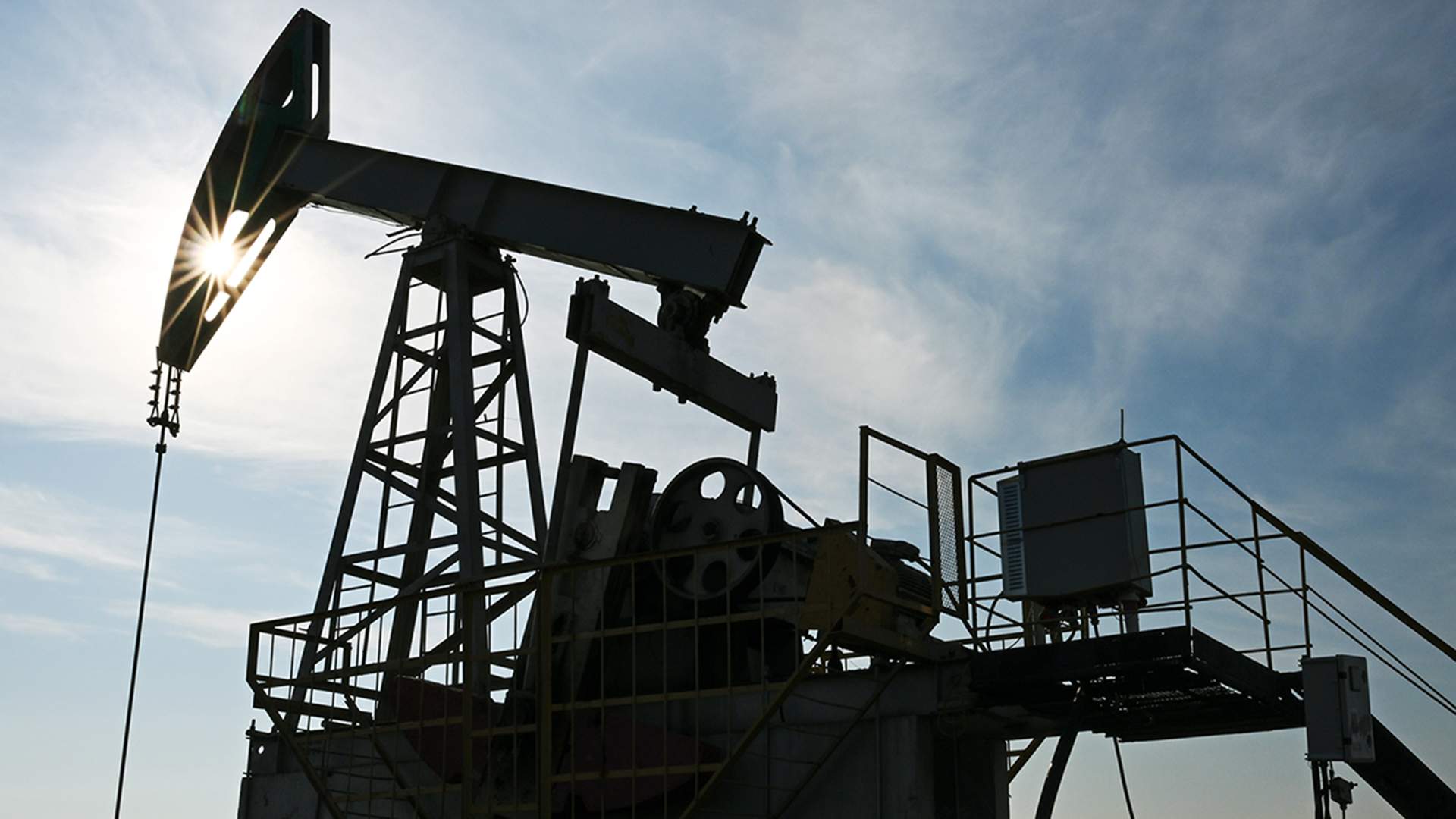
It is believed that most of the world's oil has already been discovered, and the increase in production is due to additional exploration of existing fields. At the same time, everything happens in the same countries — there are barely more than two dozen of them, and they completely control the global market. Although this statement is generally true, there are nuances: unexpected players sometimes appear on the market, threatening to seriously upset the balance. Moreover, these often turn out to be countries that until recently did not exist at all on the global oil and gas map.
Caribbean Sea Platforms
Guyana is a classic example of the hydrocarbon Klondike of recent decades. Hydrocarbons have been sought on the territory of the republic and the adjacent shelf since independence in the 1960s, but they have not achieved much success. Finally, in 1999, the government signed a contract with the heavyweight of the global oil market, ExxonMobil. The Stabrook site in the Caribbean Sea with a total area of over 25 thousand square kilometers has been developed.
Once again, the Americans have been searching for oil for quite a long time, not least because of the border conflict between Guyana and Venezuela. For many years, neighboring warships appeared in the Guyana exclusive economic zone, so it was difficult to work.

For a long time, there was no agreement on the delimitation of the water area with Trinidad and Tobago, which is also a relatively large mining country. All this did not contribute to investor confidence. It wasn't until 2015 that ExxonMobil announced the discovery of a field with proven reserves of several hundred million barrels, which was named Lisa.
In 2019, mining finally started. Its growth was exceptionally fast and by the end of 2024 it amounted to 600 thousand barrels per day ("pennies" compared to giants like the USA, Russia or Saudi Arabia, but decent considering the size and population of the country — only 835 thousand people live in Guyana — and its economy.
Production is expected to reach 700,000 barrels in 2025 and 1.3 million barrels by 2030. This is already approaching the level of oil-producing giants like Algeria and Nigeria. So within just 10 years, a new oil power emerged.

Too much optimism
Guyana's success has inspired oil companies around the world. On the other side of the Atlantic, in Namibia, the race for promising deposits began in the 2010s. Both major players participated in the process: Chevron, Shell, Total, as well as many smaller companies. Soon, however, they were greatly disappointed. The geological conditions of the country from southwestern Africa turned out to be much less favorable due to rocks with low permeability, which significantly complicates mining.
In addition, the high ratio of gas to oil in the rock forces companies to pump huge amounts of natural gas back into the formations — a procedure that is extremely expensive even under normal conditions, not to mention the deep-water deposits that are being developed in Namibia. Three leading companies have admitted failure in the last year alone: Total announced the termination of the exploration campaign, Chevron reported that a promising well turned out to be "dry", and Shell wrote off $ 400 million, recognizing that one of the discovered fields was unprofitable.

The end of the story? No, it's just that the initial optimism was excessive. Apparently, there will be less oil in Namibia than in Guyana, but these are by no means zero values. It is expected that by the end of the year, the two mining corporations will be able to confirm the profitability of their work.
In early July, Portuguese oil and gas group Galp Energia announced that it had received several offers to purchase a stake in the Mopane field and had begun negotiations with potential buyers. The overall project, according to preliminary data, involves the creation of two floating oil storage facilities (FPSO) with production of about 120 thousand barrels per day each.

As for Total, it will make a final investment decision on the Venus field no later than the beginning of 2026. The project provides for one FPSO with production of 150 thousand barrels per day and a cost of $20 per barrel. The company plans to persuade the Namibian government to reduce the level of expected production, but increase the service life.
Thus, by the end of this decade or the beginning of the next, oil production in Namibia may reach 300-400 thousand barrels per day. These are not the most impressive figures against the background of global oil production (102 million barrels per day), but in an environment where new deposits are rarely discovered, and almost never in new countries, this is a big event.

Oil in the country of football
An increase in production in a country from scratch is rare, since some kind of oil is produced almost everywhere. Another thing is to increase or restore production in countries that were already "second—tier" producers. This happens a little more often. For example, production of crude oil and natural gas in Argentina in 2024 approached historical highs due to the growing production at the Vaca Muerta shale field, which compensates for the decline in production at traditional fields.
According to the Argentine Ministry of Energy, from January 2021 to September 2024, oil production in the country increased by 50% and gas by 27%, approaching the record levels of the early 2000s. In the spring of this year, Argentina equaled Colombia in terms of oil production, which last year produced 150,000 barrels per day more.
On average, the Argentine oil industry is currently growing by 15-20% per year due to shale sources. Most likely, all-time highs will be achieved this year. Vaca Muerta will continue to account for the main growth. It is estimated that there are about 10 trillion cubic meters of technically recoverable shale gas and 16 billion barrels of shale oil and condensate.

Turkey is a less striking example of promising growth. The republic is located close to the oil fields of the Middle East, but there are no large deposits in its depths. At least that's what was previously thought. More than 95% of the country's oil was imported. The situation began to change in 2021, when the Gabar field began to be developed. By 2025, thanks to him, the Turkish oil industry began to produce about 120 thousand barrels per day. This is still small compared to the total consumption of black gold, which exceeds one million barrels per day, but progress is significant.
Turkey is now reporting the discovery of shale oil — about 6 billion barrels in the basin near the city of Diyarbakir in the south-east of the country. In its potential, this is already a much more serious area. If the field turns out to be as rich as expected, it could completely close Turkey's oil needs for a couple of decades, although it will not make this country a major exporter. Nevertheless, on a global scale, reaching even 500,000 barrels per day will be a major event.
In general, it can be stated that miracles do not happen: the largest fields have already been explored, and the leaders of the oil industry in the next few decades are unlikely to be moved by anyone. At the same time, seemingly "small" discoveries that allow relatively small countries to become significant exporters and larger economies to achieve self—sufficiency are gradually becoming a significant factor in the international hydrocarbon market.
Oil supply and demand are in a rather delicate balance, and even seemingly insignificant discoveries in the future can swing it in one direction or another.
Переведено сервисом «Яндекс Переводчик»
