
In a passing fellow: why men check paternity
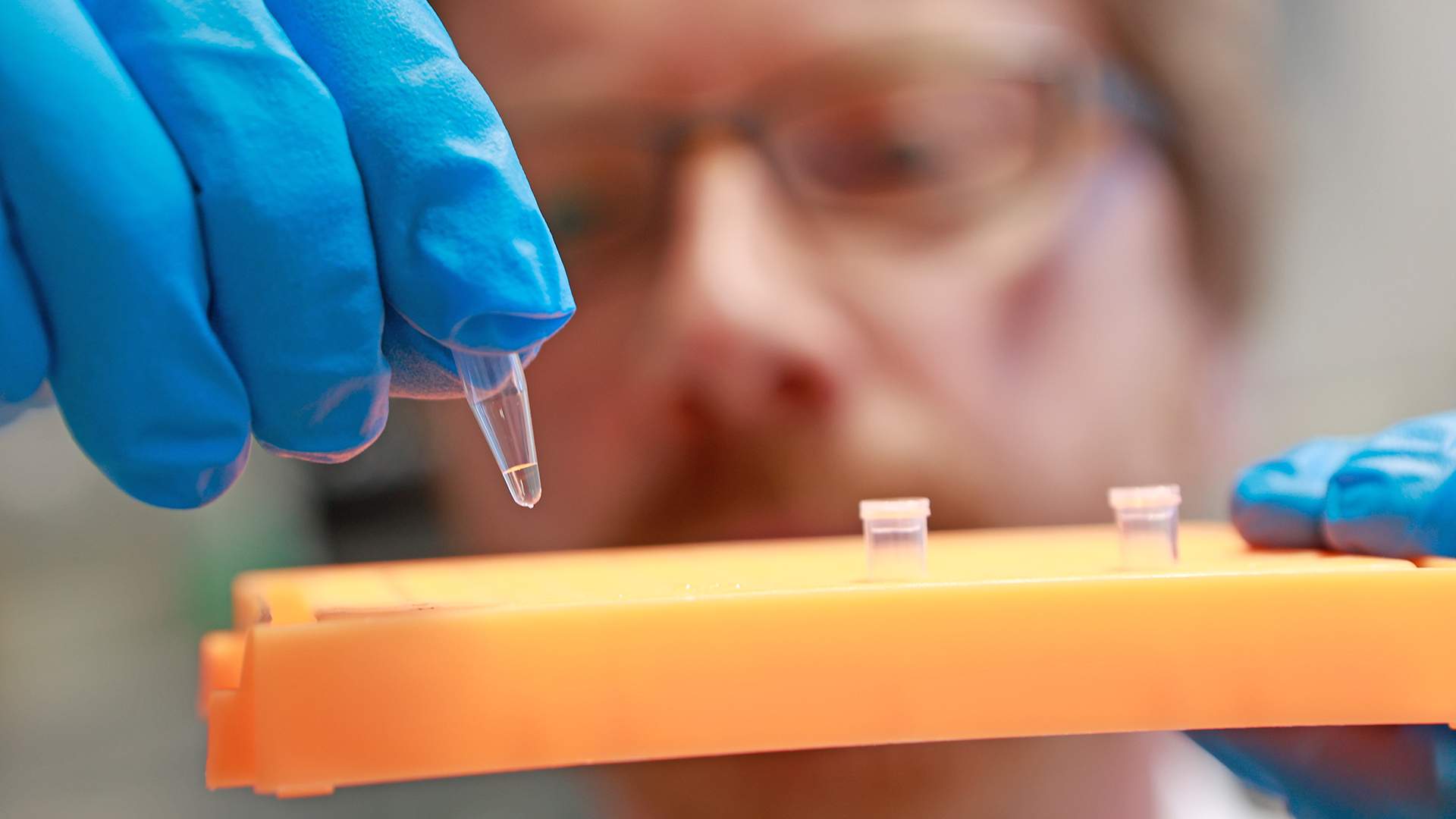
The popular phrase "I'll show you who the father is" is relevant for men who turn to specialists for confirmation of paternity. The reasons for this study range from doubts about marital fidelity to offensive comments from others that the child does not look like dad. Izvestia learned about scientific methods that help geneticists establish the truth, and also found out in which cases, in Bulgakov's words, "the deck is bizarrely shuffled" and from which parent we inherit appearance, intelligence and gender.
The Gold Standard
According to a geneticist at the National Center for Genetic Research (MyGenetics) According to Anastasia Sivakova, modern specialists use DNA testing to establish paternity, based on comparing certain sections of the child's genes and the alleged father.
— The standard is the analysis of STR markers (short tandem repeats, that is, sequentially repeating DNA fragments in a row). The method is based on the study of polymorphic loci — STR regions of DNA that are unique to each individual. The analysis compares a set of alleles (repeat variants) of a child with similar ones from the alleged father, and, if necessary, from the mother," explains Anastasia Sivakova.
The material for the study can be taken from blood, saliva, hair with a bulb and other biological samples. The DNA in the body's cells is constant and does not change with age, the expert explains.

Irina Kolesnikova, a geneticist and head of the clinical diagnostic laboratory with the laboratory of rapid diagnostics at the National Research Medical Center "Treatment and Rehabilitation Center" of the Russian Ministry of Health, emphasizes that STR analysis is considered the gold standard due to its high sensitivity.
— The standard delivery time is 3-5 business days (when using real—time PCR and capillary electrophoresis), — says Kolesnikova. — Rapid testing (using accelerated DNA amplification) reduces this time to 24 hours.

The geneticist cites the reasons why men most often take a paternity test. First of all, these are legal issues (establishment of alimony obligations, inheritance law), as well as doubts about partner fidelity, suspicion of illegitimate paternity. Parents also turn to specialists if there are medical and genetic indications.

In the most controversial cases or when the quality of the biomaterial is low, additional methods are used. One of them is the so—called SNP analysis, when scientists look for DNA sequence differences in regions of a certain size — single nucleotide polymorphisms. The second is new generation sequencing (NGS): It is a technology that allows you to examine millions of DNA fragments and find matches or differences.
If a man doubts whether he is the parent of an unborn child, then it is possible to establish the truth even before the baby is born. Science has already moved to the level of prenatal paternity.
— Two methods are used for this, — says geneticist Sivakova. — The first is non—invasive: fetal (circulating in the mother's blood) DNA is analyzed. It is used from the 10th week of pregnancy. A woman's blood is taken for examination. Another option is invasive methods: amniocentesis and biopsy of chorionic villi (the outer shell of the fetus), requiring fetal or placental cell sampling. The noninvasive test is safe and accurate (approximately 99.9%), whereas invasive methods carry risks for pregnancy.
On the neighbor
Does the term "partial paternity" have a scientific basis, when biological material is allegedly given to a child by two fathers?
— The term "partial paternity" is not recognized in scientific genetics in the literal sense, — says Anastasia Sivakova. — It is impossible for a child to inherit nuclear genetic material from two men. "Two fathers" is more of a metaphor or the result of errors in the analysis or collection of biomaterial.

But, according to the expert, there are rare cases that can cause confusion during the study. So, in biology there is such a thing as a chimera — an organism consisting of genetically heterogeneous cells. For example, due to the fusion of two embryos at an early stage of pregnancy, a person receives two sets of DNA.
— If one of the alleged fathers is a chimera himself, then part of his germ cells may carry genetic information different from the main DNA line. In extremely rare cases, this complicates paternity tests," Sivakova comments.

According to the geneticist, another exceptional rarity is mosaicism in the fetus, when one organism consists of cells with different genetic composition. The so-called mitochondrial DNA, which is transmitted only from the mother, can also cause confusion in the study. Errors in the interpretation of tests also appear during bone marrow transplantation. But eventually, after careful research, paternity is established anyway.

Lyubov Yerofeyeva, a gynecologist and senior lecturer at the Medical Faculty of the Synergy University, calls the theory of "partial paternity" old wives' tales. Men who have been in close contact with a woman before or after her pregnancy cannot transfer their biological material to the child along with the baby's real father.
"If a sperm cell fertilizes an egg, then its tail is cut off, after which no other "competitor" can get into the egg," comments Lyubov Yerofeyeva. — It is predetermined by human nature. It is impossible to influence the genetic material that has already entered the egg.

Sometimes the results of a genetic examination can confound spouses whose life together is not characterized by a clean relationship, but the dates of close communication seem to correspond to the timing of pregnancy.
"Women usually assume that they know well when there was a sexual relationship that led to pregnancy,— Lyubov Yerofeyeva continues. "But they often make mistakes because they don't know that viable and active spermatozoa can wait up to five days for an egg to mature. If on the day of ovulation a woman with reduced social responsibility had sexual contact with one man, and 4-5 days before that she had another, then it is not known which sperm will fertilize the egg.
Who determines the sex of the child
The appearance of offspring is shrouded in a multitude of myths that are shattered by scientific evidence. For example, sometimes a man is whispered that something is wrong with his wife, who only gives birth to girls. However, it is the father who is responsible for the sex of the child, because there are two types of spermatozoa — with the X chromosome (and then a girl is born after fertilization) and with the Y chromosome, which guarantees the appearance of a boy. There are two sex X chromosomes in a woman's egg. Although in nature it happens the other way around.: The rooster has XX chromosomes, and the hen has X, the expert emphasizes.
Another assumption boils down to the fact that children may look like a man with whom a woman was deeply in love many years ago.
— Here we are talking only about behavioral traits, — Lyubov Yerofeyeva comments. — Sometimes a woman unconsciously, and sometimes consciously, shapes a child into an ideal image of a man with whom she once had a bad relationship. For example, this is manifested in the son's involvement in specific sports, art, or the choice of certain dishes. But even the strongest feeling, of course, has no effect on genetics.

The phenotype (external signs) of a non-native father cannot be inherited biologically. Genetics is passed down only from biological parents.
— A child inherits DNA exclusively from an egg and a sperm cell. Upbringing, habits or environment do not change the genetic code that is passed on to descendants," explains Kolesnikova. — Phenotypic imitation is possible, but without inheritance. Behavioral traits (gestures, facial expressions, speech) can be copied through learning.

According to Irina Kolesnikova, if a non-native father influences a child's diet and lifestyle, then this may indirectly affect the expression of his genes (for example, obesity, posture). But these changes are not fixed in DNA and are not passed on to children, the expert summarizes.

The scientist mentions the effect of "false inheritance", which can confuse or generate a lot of rumors.
— If a child, having matured, chooses a partner who resembles a non-native father, then his children may accidentally inherit similar traits. But it will only be a coincidence, not a biological transmission," warns Irina Kolesnikova.
Thus, resemblance to a non-native father is possible only on a social or behavioral level. Genes are unchangeable, and the "adopted" phenotype will not enter the DNA of future generations.
Beware of fakes
It happens that a child does not look like his biological father at all. And this circumstance also forces a man to turn to geneticists. According to Anastasia Sivakova, several factors are important here.:
— the genetic lottery. Each parent passes half of their DNA to the child, and the combinations are very different. The child may receive more signs from the mother, her parents, etc.;
— dominance and recessivity. Dominant genes (for example, dark eyes, curly hair) can "suppress" paternal traits.;
— polygenic signs. Facial features, height, intelligence, and voice are the result of multiple genes, not just one. This involves the genes of not only parents, but also great-grandmothers, great-grandfathers and other, earlier generations.;
— epigenetics. The influence of the environment and the regulation of gene activity change the manifestation of hereditary traits.

Irina Kolesnikova also cites the main mechanisms of inheritance that exist in genetics.:
— autosomal dominant inheritance (for example, dark hair color or brown eye color) — if at least one parent has passed on the dominant allele, the trait will manifest;
— autosomal recessive inheritance (blonde hair, blue eyes) — the trait is manifested if both parents have passed on the recessive allele;.
— polygenic inheritance (height, face shape, figure) — depends on many genes (for example, more than 700 genes affect height), their interactions and environmental factors (nutrition, hormones);
— incomplete dominance and codominance — for example, parents with different eye color may have an intermediate shade in their child.;
— eugenetics — external factors (stress, parental nutrition) can affect gene expression without altering DNA.

The expert emphasizes that sometimes some signs appear after a generation. For example, grandfather's genes (tallness) can "wake up" in a grandson.
— Yes, there are cases when a child is phenotypically (outwardly) completely different from his biological father, being his genetic descendant. This can happen for several reasons related to the laws of genetics, DNA recombination, and random factors," says Irina Kolesnikova.
Fathers are in a hurry to doubt their "authorship" if, literally, there is a dominance of maternal genes.
— Random recombination of chromosomes also plays a role. During the formation of germ cells (gametes), there is a crossing—over exchange of sites between chromosomes. As a result, a child may receive an unexpected combination of genes that "masks" paternal traits," Kolesnikova comments.
Sometimes the so-called recessive genes inherited from the ancestors "shoot out". In order for them to make themselves known, it is necessary that the body receives a copy of this gene from each parent.
—The father may be a carrier of recessive alleles, which he did not manifest, but passed on to the child," explains expert Kolesnikova. — If the mother also has such a recessive gene, then the child may develop a trait that the father does not have (for example, blond hair in dark-haired parents).

According to Irina Kolesnikova, spontaneous mutations may occur in spermatozoa that are not present in the father's somatic cells. This can lead to the appearance of unique features in the child, such as unusual shaped ears or fingers. Features such as face shape or figure depend on hundreds of genes, the expert emphasizes. Their combination can give a completely new phenotype. Even if the father passed on his genes, their interaction with the mother's can "block" the father's appearance.
And random variations in gene expression (stochastic effects) make even identical twins not completely identical.
— An external resemblance to one of the parents does not mean that his genetic material is "stronger". This is just the result of a combination of inherited alleles and their expression," comments Irina Kolesnikova. — But the genes of one parent may, for example, be more actively "turned on" due to environmental factors (in particular, nutrition or hormonal background during pregnancy).

Is it possible to "order" a child's appearance in the future, or are these just bold assumptions? Anastasia Sivakova believes that it is still unrealistic to "design" a baby with a given eye color or certain intellectual abilities. Too many genes are responsible for most traits.
"Genetic engineering in this field is based on ethics and a huge scientific risk: interference with the embryo can lead to unpredictable consequences," Sivakova emphasizes. — At the current stage, this is fiction, ethically controversial and scientifically extremely limited. But now, with IVF, you can choose an embryo with certain characteristics, but from existing ones. This is called preimplantation genetic diagnosis, which is possible only within the existing set of embryos.
What does a child inherit from his father and mother
Переведено сервисом «Яндекс Переводчик»
