
Slop machine: Russians are buying up literature about neural networks

Yesterday, neural networks seemed like a toy for IT specialists, but today they argue with artists, help doctors, write texts and become colleagues of lawyers. The world is changing literally before our eyes, and with it the book market. Russians are buying specialized books en masse, trying to understand the new technological era. But there is an irony in this race: while the manuscript is being edited, typeset, and printed, artificial intelligence manages to take the next step forward — and the book is already catching up. Together with the experts, Izvestia investigated the situation.
The ABC of neural Networks
A few years ago, books about AI were niche literature for programmers and enthusiasts. Today, they have become almost a must-read for anyone who is afraid of one day discovering that neural networks understand the world better than they do themselves. Readers want to understand what it is, how to apply artificial intelligence in the profession, and what the words "promt", "token", "deepfake" and "slop" mean from each reel.

At the same time, the market is struggling to keep up with the times.
— The number of books about artificial intelligence has increased significantly. But it is developing so fast that some of the books are already outdated at the preparation stage. Therefore, such texts are selected very carefully," Pavel Podkosov, editor—in-chief of Alpina Non-Fiction publishing house, told Izvestia.
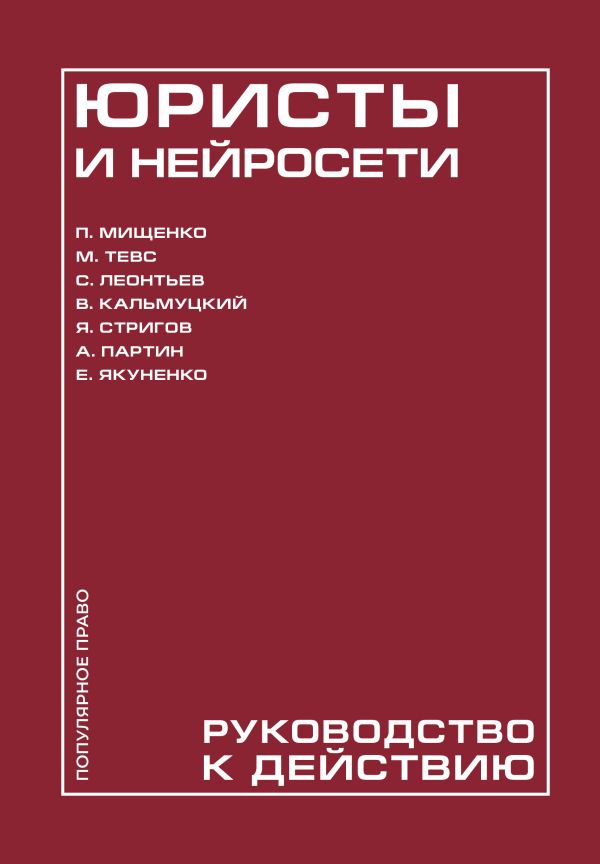
Nevertheless, the audience's interest continues to grow. Evgenia Larina, director of AST non-fiction, told Izvestia that total sales in the first half of 2026 increased by 293%— which is almost three times. One of the leaders was the imprint's book "Storehouse. Yuridika" — "Lawyers and neural networks. A Guide to Action", dedicated to the practical use of AI in the work of human rights defenders.

According to the federal network of bookstores "Chit-gorod – Bukvoed", for five and a half years — from the beginning of 2022 to June 2026 — readers have purchased books about AI for more than 20 million rubles. Moreover, the most noticeable surge in demand occurred in 2023.
This year's bestsellers include textbooks on machine learning, programming, and industrial engineering: "Neural Networks in Python. Fundamentals of AI and Machine Learning" by I. Kulikova, "Query Wizard for AI" by Alexander Lazarenko, "500 Concepts for Life and Business" by Alexey Onosov, "Programming using Artificial Intelligence" by Tom Towley and "Machine Learning for Absolute Beginners" by Oliver Theobald.
The industry is confident that what is happening can no longer be called a short-term fashion. An interest in such literature is a stable professional need.
— We see that readers want not only theory, but also ready-made tools for work. In 2025, sales of AI books increased by 40% compared to the previous year, and demand increased significantly in the segment of practical manuals on generative models and industrial engineering. The current dynamics of the first months of 2026 also remains positive, which confirms the long-term trend towards digital literacy and the introduction of AI into everyday tasks," Inna Kasenova, commercial director of the LFS "Chitai—Gorod - Bukvoed", told Izvestia.
Impressive demand is also recorded in one of the largest bookstores in Russia, Biblio-Globus. According to their data, sales of books about artificial intelligence increased by at least 25%. Moreover, not only the literature on neural networks in the field of information technology is of interest, but also specialized areas— such as the use of AI in medicine. Among the most sought—after publications are "Basic Mathematics for Artificial Intelligence" by Hala Nelson, "Artificial Intelligence. A Brief History of the Future" by Toby Walsh and "Medical Education with Artificial Intelligence" by Alexander Dreval.

Is AI a tool or a collaborator?
Liters also notes a similar trend. In 2025, revenue from sales of non-fiction books about AI increased by 98% compared to the previous year, and in the first half of 2026 - by another 11% compared to the same period in 2025.
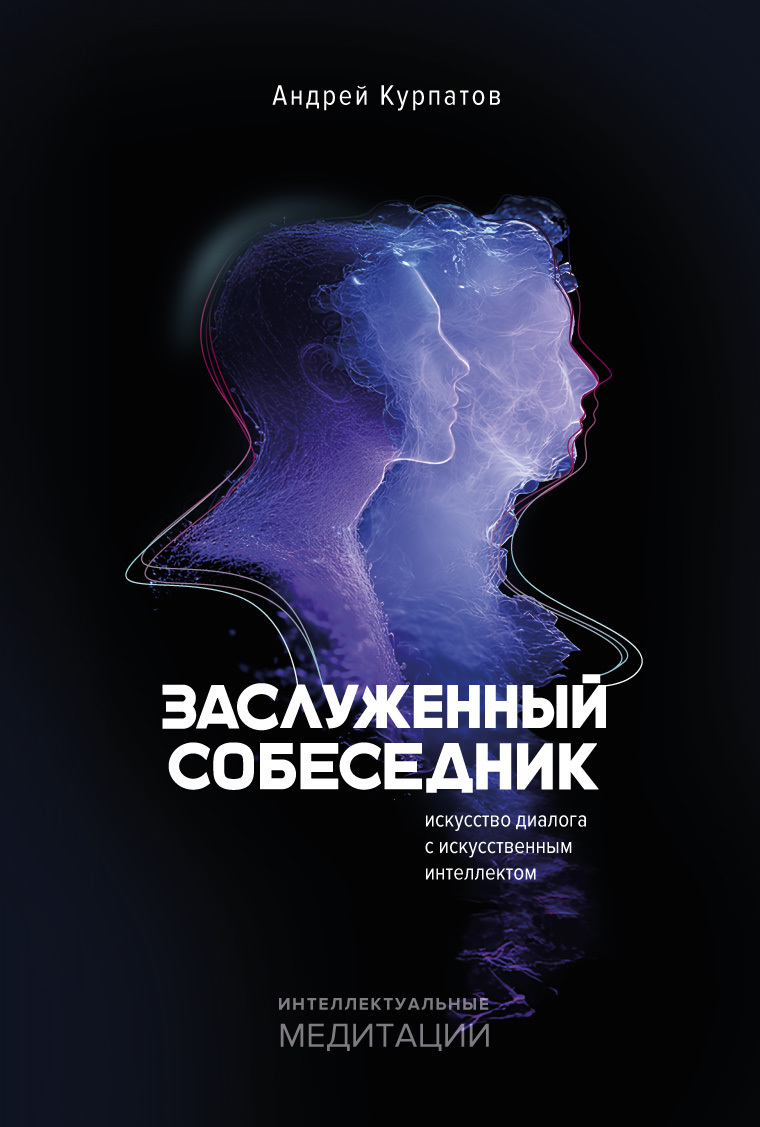
The leader was Andrey Kurpatov's book "The Honored Interlocutor. The art of dialogue with artificial intelligence". The top five most popular also included his "Deepfake. Where are you? Wake up!", "AI-2041. Ten images of our Future" by Kai-Fu Li and Chen Qiufan, "ChatGPT. The Master of Hints" by Peter Panda and Arina Sycheva, as well as another book by Kurpatov — "The Story of your self." The whole truth about deepfake."
— You don't have to see the numbers to understand that AI is what the world cares about. At any industry conference, there are questions about the use of neural networks in the creative and creative industries — we see how writers turn to AI and try to understand whether it is an assistant or a competitor. Books on the subject are being born — in the recent novel "The Last Case of Major Chistov" by Evgeny Vodolazkin, one of the main characters is AI ("carrier of artificial intelligence" Ivan Ivanovich). We see AI characters in various modern authors: from Kazuo Ishiguro and Viktor Pelevin to Ksenia Burzhskaya and Alla Gorbunova," Ekaterina Pisareva, editor-in—chief of the Litres Group of companies, said in a conversation with Izvestia.
At the same time, the writers themselves are experimenting with artificial intelligence. So, in the collection "Mechanical intervention", published by Alpina. In prose", and in the novel "Skynet in the Age of Cyberpunk" by Anton Platunov and Andrey Glebov, the authors worked together with neural networks.

At the same time, technology is gradually becoming part of the daily work of publishing houses. According to Ekaterina Pisareva, artificial intelligence is already being used to perform routine technical tasks, for example, when preparing annotations. Therefore, readers' interest in such literature is natural.
Paradoxically, it is precisely the rapid development of AI that simultaneously creates both the main problem and the main engine of this branch of the book market. The faster technology changes, the faster books become obsolete. And the stronger the desire of readers to buy the next one, in the hope that it will have time to explain the world before it changes again.
Переведено сервисом «Яндекс Переводчик»
