Support chains: how residents help each other in the frontline Donbas


They can be safely called "fulcrum points". Those without whom the internal mechanisms of civil and military life in the current wounded Donbas would not function fully. They are not volunteers in the usual sense, they do not travel the front roads. Some of them psychologically support the wounded, some sew pillowcases and sheets for the soldiers, some wash their clothes, and some are ready to provide emergency medical care in a situation where there is no one to turn to. The Izvestia correspondent met in the DPR with residents who voluntarily participate in helping those who truly need their neighbor's shoulder.
Not for myself
Apartment on the outskirts of Donetsk, Tekstilshchik district. A sewing machine is scribbling here day after day.
"She's over 50 years old, older than me," her owner, Svetlana Olshevskaya, points to the Podolsk typewriter, laughing. — I sew sheets, duvet covers, pillowcases, underwear — to hospitals, to the front line. I stuff pillows with synthetic fur, here I have 15 ready-made ones. There are military first—aid kits on the shelf. There are three hundred sacks for dugouts and fortifications on the balcony. On the front line, everything quickly falls into disrepair and needs to be replaced. People are being dumped from all over Russia little by little. We help in any way we can.
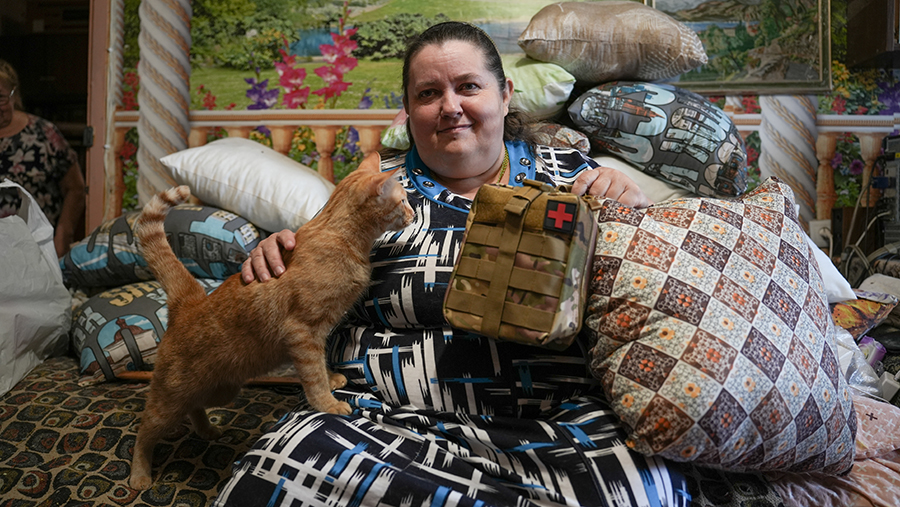
In the past, Sveta was a typesetter. In 2014, she participated in rallies in the center of Donetsk, arriving as a guard. When hostilities broke out, she took up sewing: the captured militia needed things, sent them by parcels to Ukrainian territory, along with food and medicines. After her release, she met yesterday's prisoners and continued to help them with the same fees. He's doing it today.
One of them is 70—year-old Nikolai Ivanovich Dubina. In 2014, with the help of anti-tank mines, he blew up a railway bridge in his Zaporozhye region, stopping the delivery of heavy military equipment to Mariupol. Then he was detained. Dubina spent 5 years in prison. He was tortured multiple times — they electrocuted him, hung him on a hook, and the only thing that saved the partisan was that he was hypertensive and passed out quickly. In 2020, he was exchanged, lives today in Gorlovka, has a disability group. Sveta has been helping him all these years.
"We— the militia of the first wave, are obliged to support each other," the woman says firmly. — Otherwise we'll stay alone.
Svetlana herself is also disabled and suffers from epilepsy. At the same time, he does not pay attention to the disease in humanitarian concerns. He says, "I'm not really up to myself."
She has certificates and awards in her locker — from motorized riflemen, tankers, and scouts. Among the collections of recent days are chainsaws for gunners. Addressable parcels for refugees from Artemovsk and Krasny Liman living in a temporary accommodation facility in the city of Kirovsky: they contain medicines and all the same bed linen. And also a modest monetary assistance to those who are forced to rent a house. The fees are small, the woman explains, but almost everything is closed, sometimes literally by a miracle.

Pour it out completely
Lilia Radionova is a military medic. In 2014, on the barricades in the center of Donetsk, she assisted her colleagues as part of the 1st medical detachment. She survived captivity in the same year. She was the commander of several battalions. His last duty station was a unit that fought near Chasovoy Yar in 2025. I returned home six months ago. "Forced break," she briefly states.
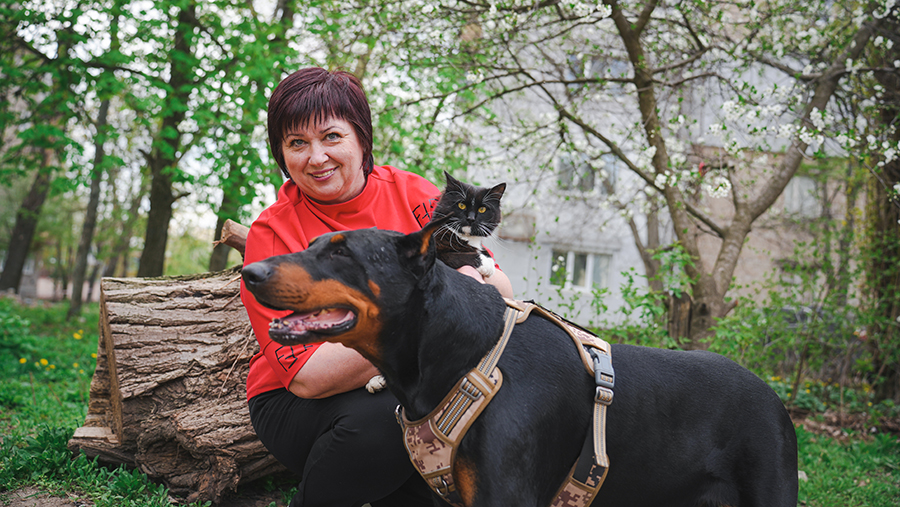
Many Donetsk fighters are familiar with Lily, they call her "our mother", and her apartment is "the headquarters of mutual assistance." They know that you can contact her with any question and at any time, whether it's support for the wounded or the same humanitarian aid. She will help herself or connect fellow soldiers.
And the usual conversation is also important for fighters, my interlocutor explains, both on the front line and on the "citizen".
"Very often, a person needs to speak out," Lilia tells me. — After all, what you see in the war is never forgotten. You have to live with this burden, it presses. When wounded people or just guys who need to be treated or have some kind of procedures come to my LBS, I always talk to them, listen to them. After all, he won't pour out his soul to another fighter, won't tell him how difficult it was for him, won't complain. But a woman can…
Under Chasovoy Yar, a UAV technician, 19—year-old Milana Umka, served in their squad, Lilya recalls. The girl came under targeted shelling and after three days she was not herself, did not sleep, from the outside it even seemed that she would not recover. For three days, Umka had been telling Lilia off—repeating the same thing, in a circle, over and over again. And — it felt better! I poured it all out.
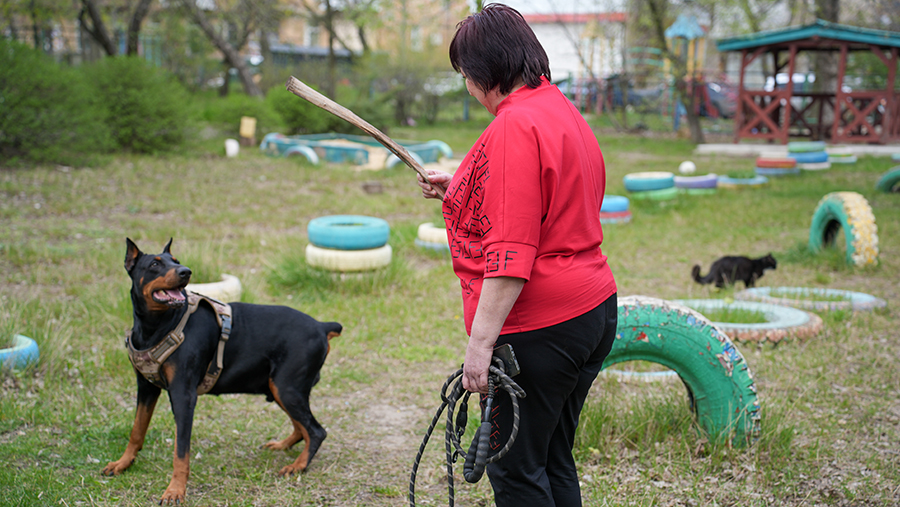
From under Sentry Yar, Lilya brought with her a service dog, a wounded Doberman, and a kitten, Chasika.
"His master is dead," the woman sighs, pointing to the dog. — His paw was broken, the bones of his sacrum were damaged, and his ear was leaking. He was probably crushed somewhere under the rubble - he was very afraid when something descended or fell on him from above...
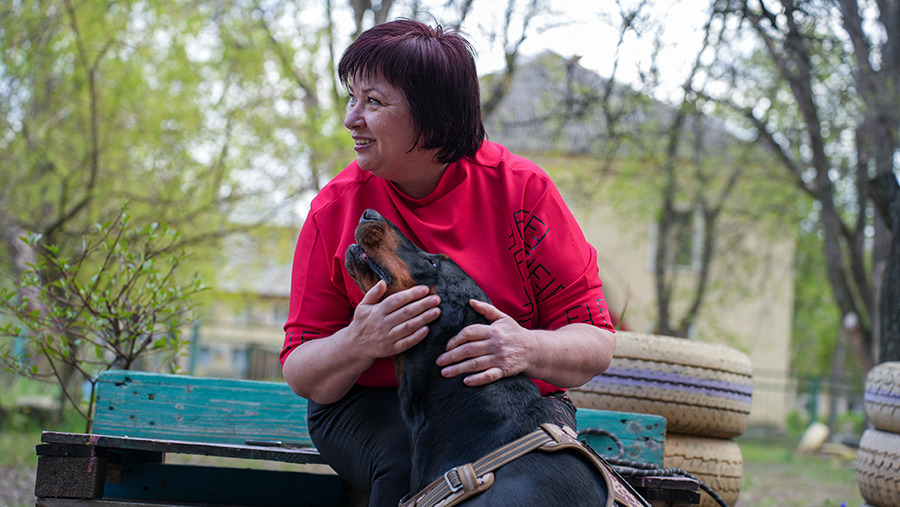
Gradually, the Doberman was cured, he got up on his paws, began to walk, albeit hobbling. After the start, Mehmed took him with her to Donetsk: leaving a younger brother would be tantamount to betrayal. Today, the dog lives in her "mutual aid headquarters." He sleeps curled up in a ball with his fellow cat. He licks the new owner's face at every opportunity and gratefully hugs her with his paws.

As relatives
Lilia's colleague, only of a civilian profile, is Irina Markovna Beniaminova, chief physician of the 5th Dental polyclinic in Donetsk. The story of their acquaintance became an example of how chains of mutual assistance are built in Donbass.
At the end of 2022, the military turned to Lila: "Our fighter is dying of toothache. What should I do?" There were no ready-made assistance routes in such cases then. Friends gave Beniaminova's contacts. Lilya called and asked the question: "Can I bring it? However, the boy is straight from the trenches, dirty..." The answer was clear: "What kind of talk can there be, bring it urgently!" As a result, five soldiers came to the clinic that day at once: others with periodontitis, untreated teeth, and inflammation from hypothermia also asked. They accepted everyone as family.
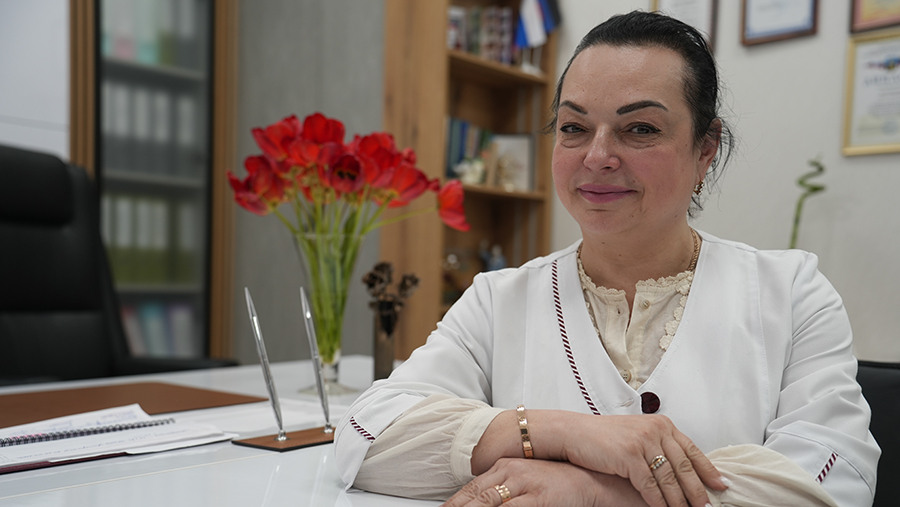
Some asked for leave and came back for more and more medical treatment. After that, new patients arrived from the front line. And they continue to this day. They accept them without an appointment, without coupons, without payment. This affects, of course, the personality of Irina Markovna herself — an open, sympathetic person, and the doctor's code, and, as she herself says, the Donetsk character, when it is impossible, unacceptable to stay away. Especially when it comes to defenders.
— Many of our employees also went through military operations. When general mobilization was announced in the DPR in February 2022, five of our employees left to serve," Irina Markovna tells me. — A general practitioner, an orthopedic doctor, two department heads. And a nurse. They served in different directions — in Mariupol, in the Zaporizhia region, in the Kherson region.
"Give it to us!"
The Sergiyenko family — Alyona, Alexey and their four children — live in a small village in the DPR. In 2023, the military was stationed in their village. Since the same year, Sergiyenko has been helping them — they have equipped a free laundry at home. The machines turn the laundry seven days a week, from dawn to dusk. For the third year in a row.
"The fighting guys lived in tents,— says Alyona. — We were walking with a friend, also a mother with many children, and they were chilled and soaked - they had just returned from a combat mission. We understand that they have nowhere to wash the same things, and we suggested: "Give it to us." And so it went.
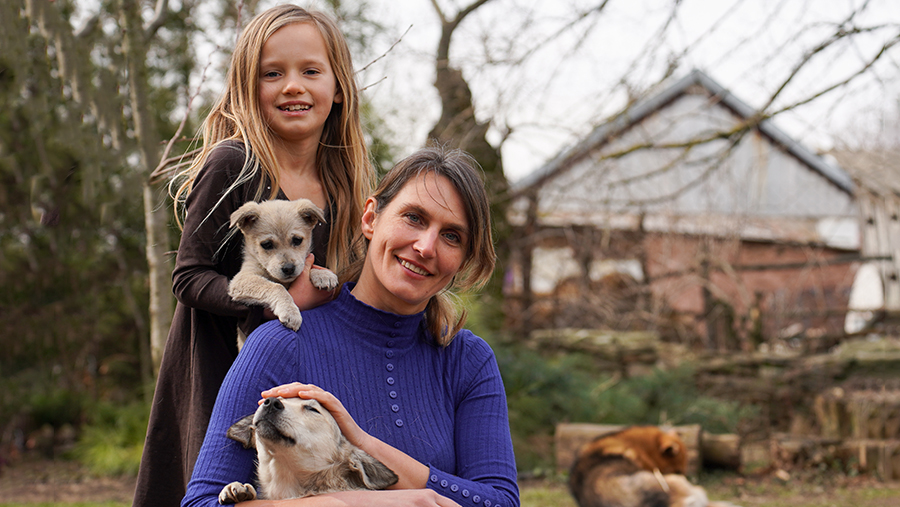
At first, Sergiyenko twisted sweaters, pants, jackets, tunics and sleeping bags in his car. A few months later, the fighters presented them with a new, more spacious one. Then another one appeared, and another.
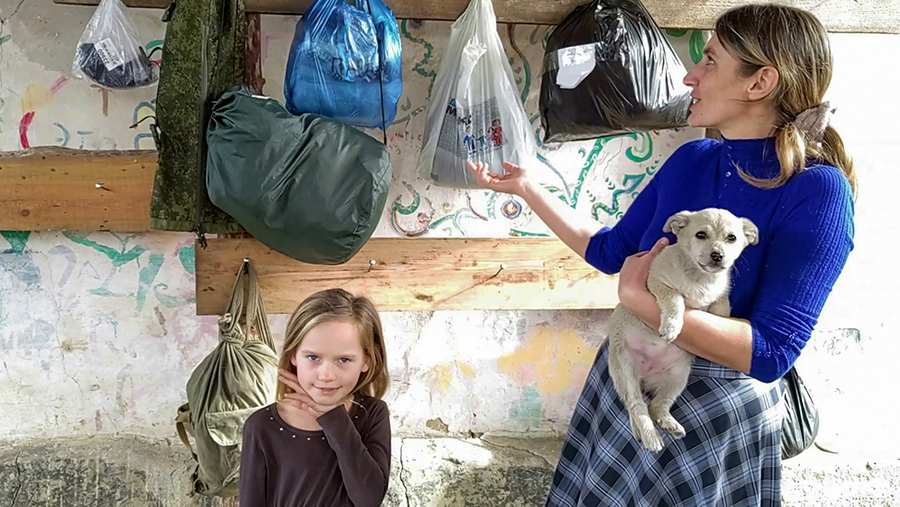
— We have a bench and nails in the courtyard at the entrance, where the guys leave their bags and backpacks. We take it away, erase it, and put it back. We made friends with many people. Unfortunately, someone brings things and then doesn't come back.…
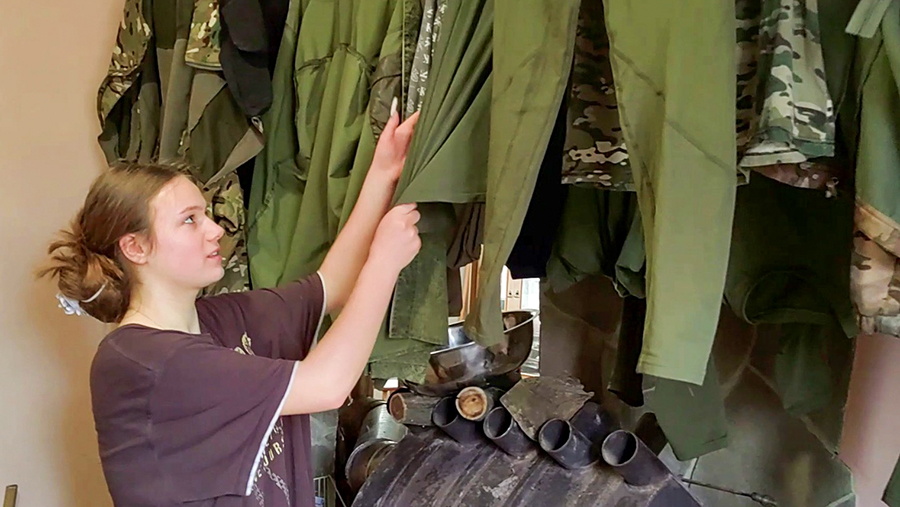
Not so long ago, Alyona and Alexey equipped a separate laundry room in the garage. The military actively helped with the repairs and facilities. The washing process has become almost industrial in scale: dozens of backpacks with laundry are brought to them every day, and less than an hour passes without someone looking in. In gratitude, the guys leave some fruits, some cookies for children, some two or three hundred rubles for electricity, detergents, just for their responsiveness. A separate event was the arrival of a large washing machine from the city on the Neva: a girl from St. Petersburg accidentally found out about the family's initiative and decided to participate too - she bought the device and paid for delivery right to the door.
According to Alyona, they are not going to stop, they will contribute as long as necessary, as long as they can. Recently, a replenishment has just arrived in the village.
Переведено сервисом «Яндекс Переводчик»
