
"We have no right to live as if nothing is happening"

Roads under fire, assistance to the wounded in hospitals, soldiers on the front line and residents of frontline villages — this is how everyday life of volunteers in the special operation zone goes. And almost every one of them has their own salvation story. Once, Alexander Lomaki's group was even captured by their own, but soon the volunteers turned from detainees into guests of the Russian military. About how the volunteer unit helps the army and civilians — in the material of Izvestia.
On a date with a tank
Everything happened on trips to the front. One day, near Novaya Kakhovka, a group of volunteers led by Alexander Lomaki chose a good place to spend the night under a spreading tree. They did not even suspect that there was an enemy tank 200 meters away, and the road had long been shot down. But the problem wasn't with the enemy.
They tied their own. They came up quietly, tied him up quickly and sent him for interrogation.
"You can't be without vigilance there," the volunteer smiles, remembering the frontline story.
The volunteers showed their documents for a long time, claiming that they were their own. But they didn't believe them.
— In the end, we got through to the unit where we were returning from, and they confirmed our identities. That's how we became guests from prisoners," he laughs.
They became friends with the fighters. The volunteers were amazed that they had a real sauna in the basement of the house.
"The guys are getting settled in thoroughly," says Alexander. — And that's right, they don't just fight there, they live there.
Water for kindergarten
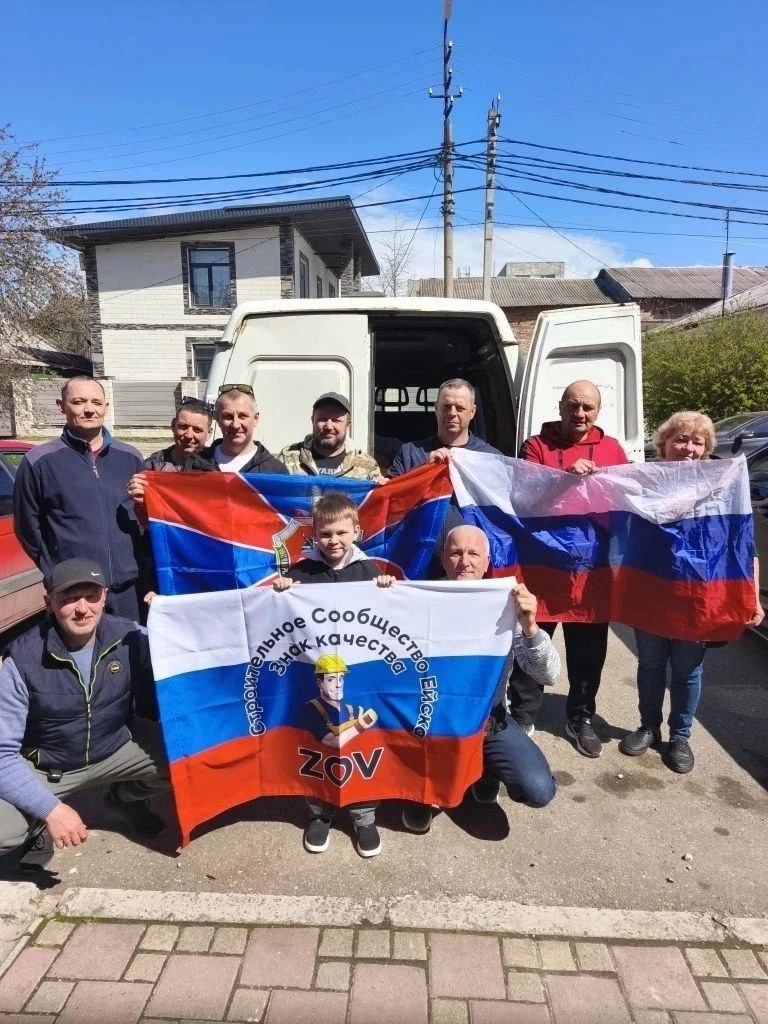
The volunteer community, headed by Alexander, began to help the fighters at the very beginning of the special operation. The clip Alexander saw on social media, where a little girl from kindergarten asked for water, had a great influence on the decision.
He began to find out where the video was shot, and learned that there was an acute shortage of drinking water in Donetsk. He called out to his friends. And a day later, the first two cars with bottled water went there. The detachment handed over 21 tons of water to the city. And, of course, to that kindergarten first.
They also brought water to the children's hospital.
"It was later bombed by the Ukrainian Armed Forces," Alexander says painfully.
The movement was spreading. There were a lot of people who needed help.
— At first, we were approached by the families of those who were at the front. Then other people started coming," he says.
Today, volunteers cooperate with seven departments on an ongoing basis.
— I am also an inspector of the Moscow Regional State Security Veterans Fund, — says Alexander. — This gives me the opportunity to go where others cannot. It is important. I take all humanitarian aid directly to the units, without overloading it to other vehicles.
Which nets should be woven
The volunteer community has its own headquarters, in the premises of which there are machines where camouflage nets, masks, and "kikimora" capes are woven. All kinds of people come there to help. The collected materials, Alexander assures, are transferred to the community, knowing that the cargo will definitely reach the addressee.
— Today, the flow of contributions has somewhat thinned out, — he says. — And people are tired, and life has become more difficult. But it is not for nothing that the Russian proverb has been living for centuries: "A shirt for a beggar is a thread from the world." She works. After all, it's not just about how to dress a person. It's about the survival of a Russian soldier, his speedy victory and return home.
Alexander is sure that patriotism is an action. And that's what the people around him think.
Another world
There is a completely different world and different values in the territory where the fighting is taking place. The broken windows of the houses are boarded up with boards or plywood, the pipes of the bourgeois stoves stick out.
"I'm driving and I see how peaceful people are surviving," Alexander says.
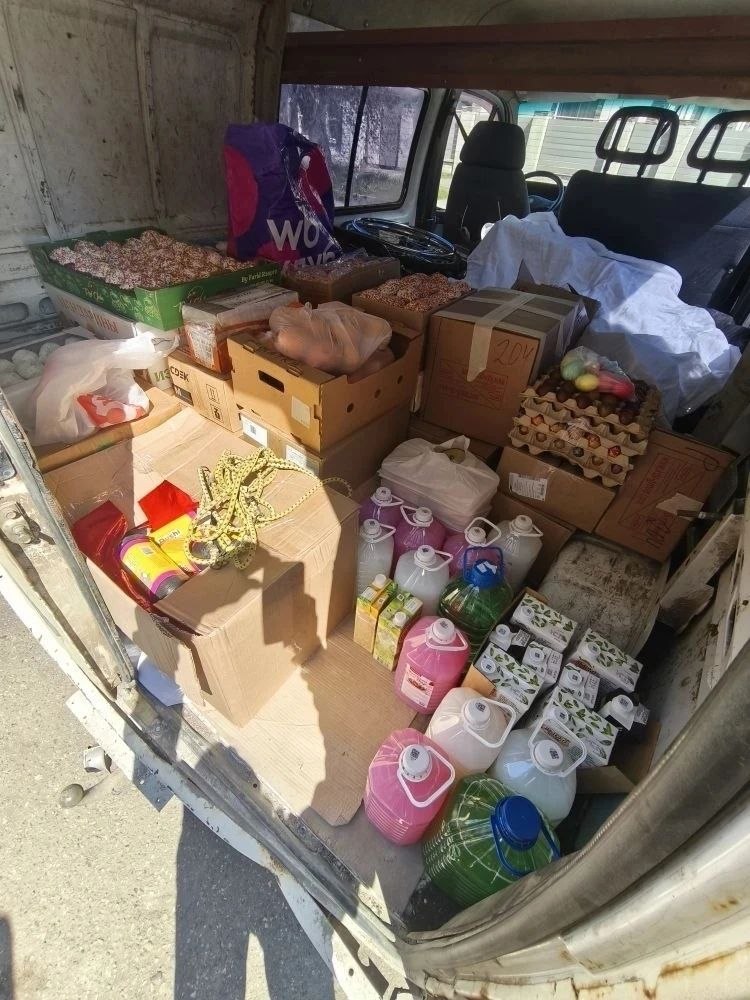
They need everything: medicines, clothes, food, and even drinking water.
"You just have to see it with your own eyes to understand that we cannot, have no right to live as if nothing is happening," Alexander explains.
He believes that if the miners had not stood up then, in 2014, if they had not fought and died in the trenches for eight years, the Bandera gang would have done much more.
— We cannot leave without the help and support of our fighters, the Russian residents of Lugansk, Donbass. That's why I'm going," our interlocutor confidently declares.
Cheburashka's favorite
The community led by our hero, among other things, helps the wounded in the Yeisk military hospital. Volunteers bring food there.
"The soldiers don't starve there, but home—made food always warms the soul," Alexander smiles."The main thing is that the soldier's soul is warm. Then he knows what he's going into battle for.
Convalescents are happy with letters, congratulations and toys — first of all Cheburashka.
— These little knitted toys are disassembled quickly, — says Alexander. — And they immediately hang it on your sleeve or attach it to your pocket. They are something dear, kind, like greetings from childhood.
On New Year's Eve, Alexander went to the guys in a Santa Claus costume, with a beard and a staff.
"When the guys saw us, they had fun like children, even the soldiers at the checkpoints were smiling," the activist says.
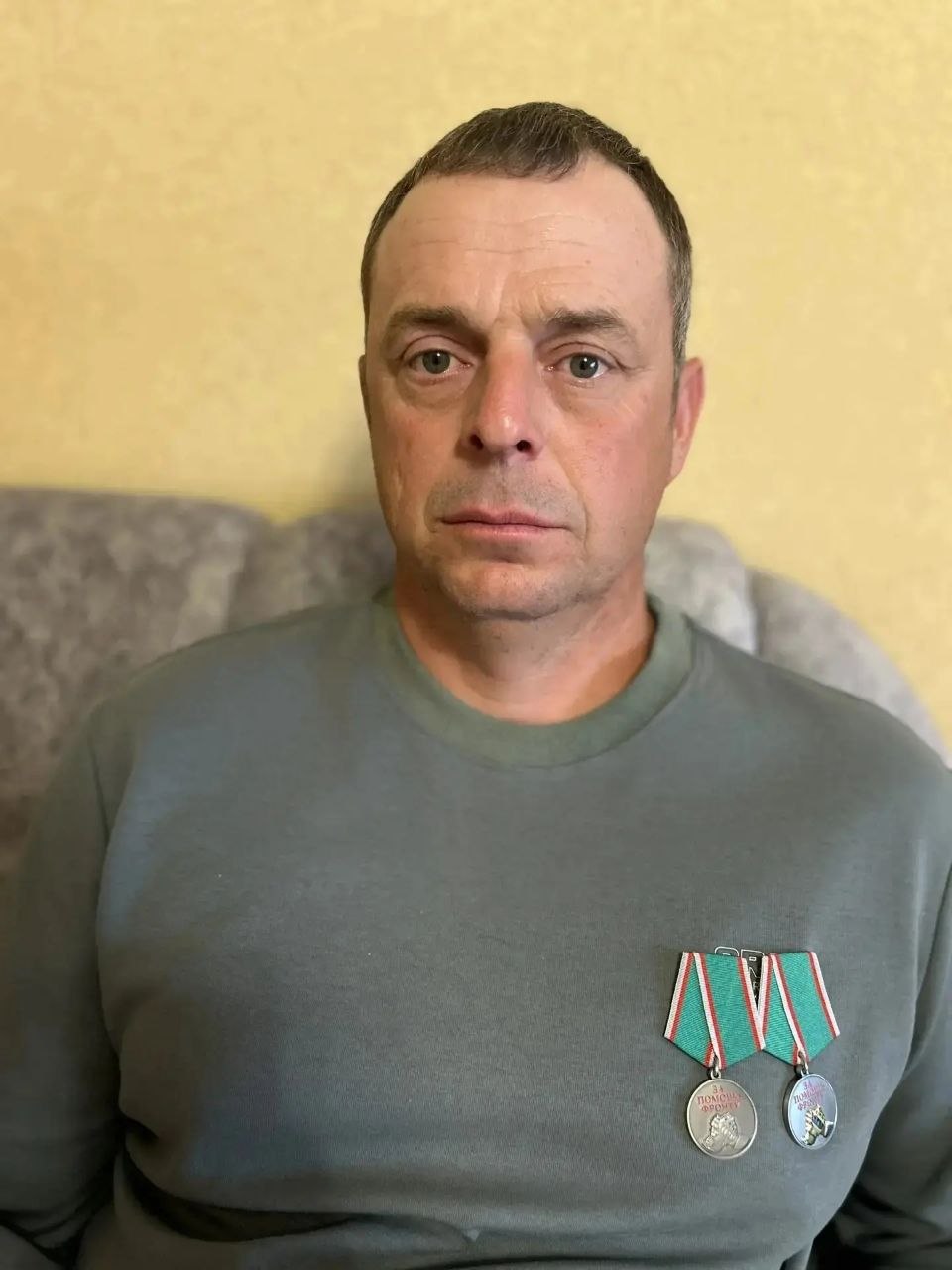
For his work, Alexander received the medal "For Helping the Front" from the veterans of Novorossiya.
"I think this award is for dedication to the Motherland and people, for courage and bravery, a sign of trust," he says. — We take a thorough approach to any important task, whether it's collecting aid or getting to the front line.
On the way to the front line, the volunteers saw a lot. And the darkness of drones and minefields.
But Alexander is firmly convinced that they are not working in vain — you can not leave your own. That's the only way to win.
Переведено сервисом «Яндекс Переводчик»
