In a state of defect: nanoparticles will detect diseases by individual molecules
- Статьи
- Science and technology
- In a state of defect: nanoparticles will detect diseases by individual molecules


Russia has developed a technology for producing highly efficient nanosensors based on palladium diselenide particles. Such structures are able to recognize individual molecules, which opens up opportunities for detecting impurities in materials, as well as biomarkers of diseases, for example, in blood samples. In addition, selenium and palladium-based compounds can be used in water disinfection systems. When exposed to sunlight, they decompose organic pollutants 50 times more efficiently than existing analogues. The development is promising for industrial implementation, experts interviewed by Izvestia noted, but issues of reproducibility of the technology and economic efficiency remain to be resolved.
How disorder endowed matter with new properties
Scientists from the Moscow Institute of Physics and Technology, the Joint Institute for Nuclear Research, as well as a number of Russian and foreign scientific centers have obtained nanoparticles that can be used as hypersensitive sensors.
The development can become the basis for creating devices that recognize individual molecules in the test sample. In particular, the technology will make it possible to detect microscopic impurities in ultrapure materials or detect early markers of diseases in a drop of blood. This was reported to Izvestia by the Russian Ministry of Education and Science.
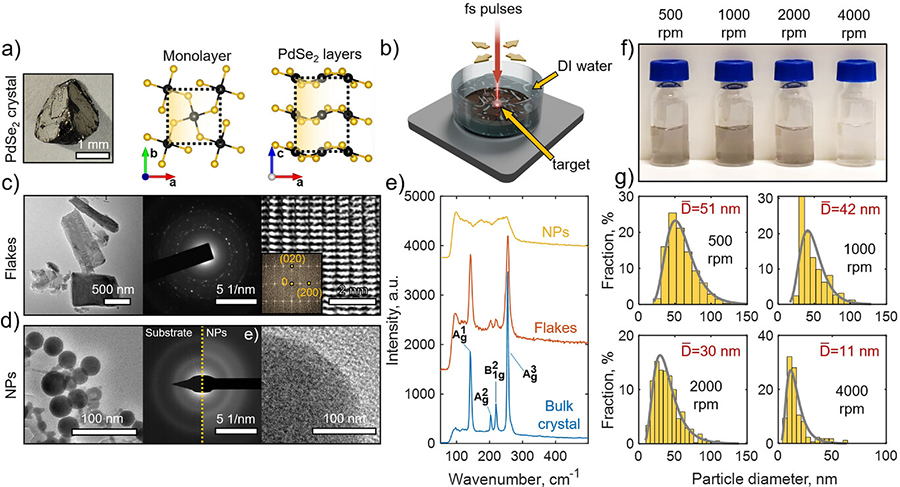
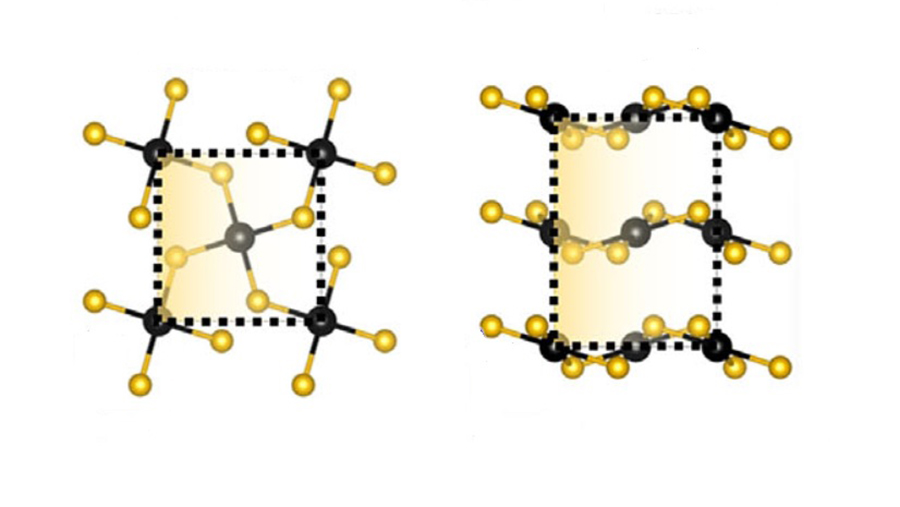
— Initially, palladium diselenide is a layered two—dimensional crystal. In its natural state, it is stable and chemically inert, since there are few active centers on the surface of its lattice for interaction with the external environment. To bring the material out of "hibernation", it was placed in distilled water and irradiated with ultrashort (femtosecond) laser pulses, said Andrey Ushkov, senior researcher at the Center for Photonics and Two—Dimensional Materials at MIPT.
With this treatment, the temperature at the focus point of the laser beam reaches several thousand degrees, which causes the substance to enter a state of dense plasma, he explained. Then a sharp cooling occurs, and the atoms do not have time to return to their original crystal lattice, "freezing" in a disordered state. As a result, structures with a large number of free chemical bonds are formed. They are the ones that turn particles into peculiar chemical "traps" capable of actively attracting molecules from the environment. Thus, the chaos created at the atomic level gave the material new functional properties.

How nanoparticles recognize individual molecules
According to the expert, besides the fundamental importance, the research has great economic significance. Currently, 80% of palladium in the world is spent on the production of automotive catalysts for exhaust gas purification, but with the transition to electric vehicles, this market will shrink. The new technology makes it possible to obtain new palladium-based products with high added value. This is beneficial for our country, which controls 40% of the world's production of this precious metal.
— In particular, one of the applications of synthesized particles is GCR sensors. These are devices that multiply the useful signal due to the giant Raman scattering. This effect allows you to see things that cannot be recognized by conventional devices," said Andrey Ushkov.
Commercial products of this kind are 1 sq. cm substrates with gold nanoribbons. A drop of the test substance (for example, blood) is placed on such a surface and the spectrum is read. If there is even a tiny amount of the desired substance in the sample, the device will record it, the specialist explained.
According to him, unlike traditional devices of this type, which have "hot spots" — areas with maximum signal amplification — palladium nanoparticles provide a more uniform signal distribution. This allows for faster and more accurate diagnostics.
The resulting nanoparticles are also capable of capturing light and triggering chemical reactions that normally do not occur. In particular, they can capture harmful molecules and decompose them into safe components, which makes the technology promising for wastewater treatment, said Andrey Ushkov. In the experiment, the new structures turned out to be about 50 times more efficient than titanium dioxide, which is usually used for these purposes.
In addition, it was found that palladium particles convert infrared radiation into heat about twice as efficiently as gold. This opens up prospects for their use in medical technologies, including methods of local heating in the treatment of tumors.

Where else can the technology be in demand?
— Ordinary palladium diselenide is a promising material for electronics, sensors and catalysis. Its extraordinary crystal structure, stability in air and other properties determine a wide range of applications," said Igor Pronin, Head of the Department of Nano— and Microelectronics at Penza State University.
So far, progress in this area has been modest. The limiting factor was the low gain of the local electric field, which actually negated the advantages of the material. However, as he noted, the scientists managed to "circumvent" this limitation and obtain a unique nanomaterial.
— The study fits into the trend of using nanostructures with controlled disturbances. Such defects often increase sensory and catalytic activity, so the idea is logically sound and promising," Kristina Kotyakova, researcher at the Research Center for Inorganic Nanomaterials at the MISIS University of Science and Technology, told Izvestia.
However, at the level of practical application, reproducibility of the effect in real conditions is important. According to her, the main difficulties may be related to the fact that such structures are unstable, and their properties are sensitive to environmental conditions and the method of synthesis. There are also questions about scaling up production, the selectivity of detecting specific molecules, and the economic feasibility.
Incomplete bonds increase the reactivity of the formed nanoparticles. Therefore, the new structure, which is a loosened crystal with amorphous regions, has a much larger active surface and can serve as a catalyst, filter, and receiver of infrared radiation," explained Boris Timerkaev, professor of the Department of General Physics at Kazan National Research Technical University named after A.N. Tupolev — KAI.
However, it is not easy to create such nanoparticles on an industrial scale, he added. Palladium is an expensive material, and a femtosecond laser is expensive equipment. Therefore, in order for the technology to be cost-effective, it is necessary to offer economically viable production methods.
Переведено сервисом «Яндекс Переводчик»
