Sisters of our time: Anna Tsivileva presented medals to female medical heroes of her


The hum of helicopter propellers and the screech of stretchers are more familiar to them than theatrical silence. On the International Nurse's Day, the Central Academic Theater of the Russian Army honored those whose hands saved thousands of wounded soldiers. The medals "For Help and Mercy" were presented to female servicemen by Deputy Minister of Defense Anna Tsivileva. After the ceremony, the nurses discussed with her the issues of military field medicine and support for the participants of the special operation.
Choosing a heart
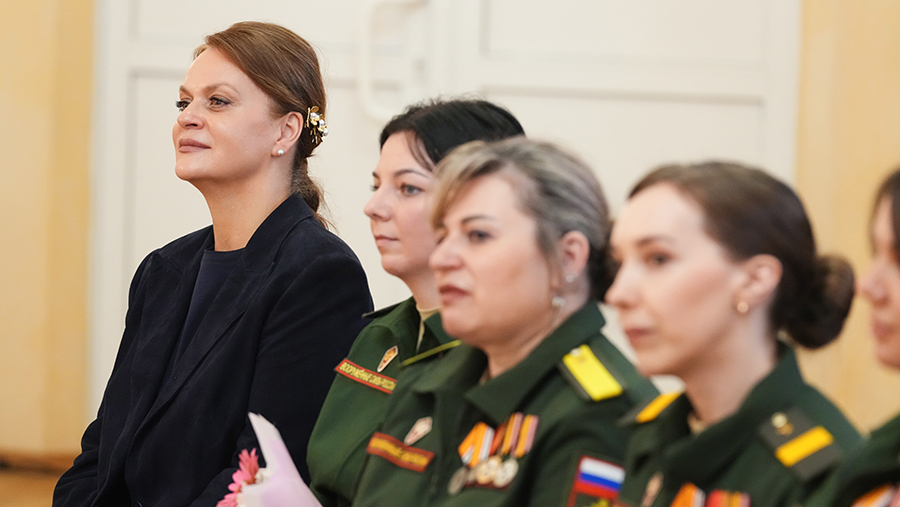
There is a noticeable commotion in the theater lobby. Nineteen military nurses, who have spent months working in the SVO zone, are preparing to take the stage for awards.
"It is a pleasure and an honor that Anna Evgenievna personally presents the award," they whisper among themselves. Some of the girls even joke, trying to defuse the situation: they promise not to wash their hands after shaking hands with the deputy head of the military department.
For Corporal Marina Chuprunova, the news of the award came as a complete surprise.
— It's nice when people notice your work. There are so many decent people around, real heroes. It is a great honor to be among them. It's just important to understand that you're in your place," the nurse smiles.
Until January 2024, her life flowed in the usual rhythm of a civilian hospital. Working in the intensive care unit and anesthesiology required endurance, but it was there that character was tempered. The decision to sign a contract and go to the free zone matured gradually. It was a conscious choice by a man who understands that his experience is needed elsewhere now.

"I wanted to help the guys, to be useful," she explains her action laconically.
Marina has spent the last eight months in the Luhansk People's Republic. Her daily routine is a continuous series of emergency interventions and the most difficult evacuations. The work of an anesthesiologist nurse requires extreme concentration, because severe patients cannot be left for a second.
— We take out fighters by helicopters, cars, trains. The method of transportation depends on the condition of the person. If a fighter is extremely heavy, we don't take a single step away from him," the corporal shares.
When asked to recall the most vivid episode, Marina just smiles sadly. For her, every departure is a separate story. But it's not injuries that are imprinted in memory, but moments of sincere human joy.
— It always touches how the guys react to the rescue. When we cross the ribbon and take them to the next stage, closer to the rear or already on the territory of Russia, they start singing songs and smiling. They are happy that they survived. Looking at them makes you happy," the nurse told Izvestia.
For her dedication, Marina had previously been awarded medals "For participation in the SVO", as well as "For Military Valor" of I and II degrees. One of the awards found the heroine after the evacuation of the wounded under shelling in the Kursk and Belgorod directions. The lives she saved go into the thousands. And although the statistics look impressive, for a nurse, there is a specific person behind each figure, someone's hope and faith that they will definitely wait at home.
The word is also a medicine
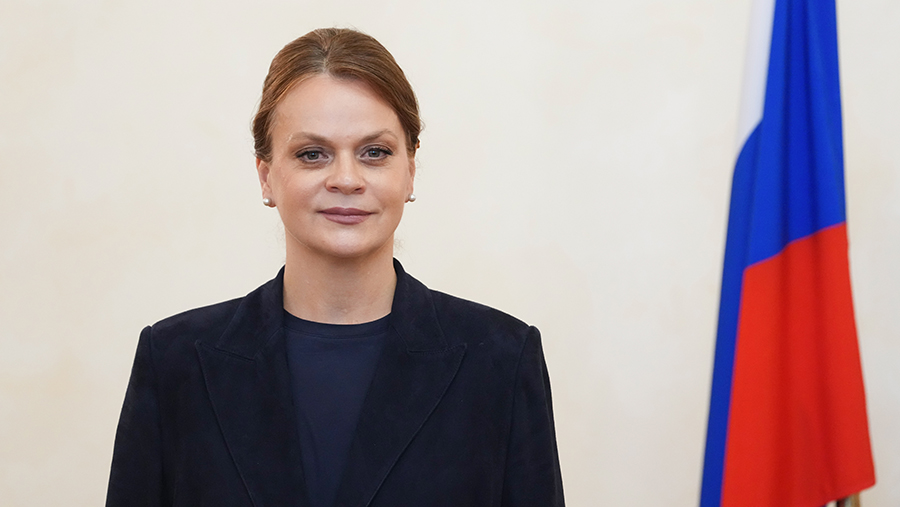
Speaking to the audience, Anna Tsivileva addressed the audience as colleagues — the State Secretary also has a specialized medical education.
"You were once called sisters of mercy, and this definition most accurately reflects the essence of your vocation," the Deputy minister noted. — In times of trial, it is the willingness to give a piece of the soul to those who suffer that becomes crucial. You are with the defenders all the time. It depends on your professionalism and sensitivity whether the soldier will return to the ranks and see his relatives.
According to her, the staffing of medical personnel in the advanced units in the special operation area now exceeds 95%. Anna Tsivileva stressed that the head of the Ministry of Defense, Andrei Belousov, set the task of continuously improving the first aid system, reducing the delivery time for the wounded and introducing advanced technologies. However, no amount of innovation can replace humans.
— You have decided to work at the forefront, regardless of the danger and risk. This is a real feat," the Deputy minister stressed.
So, Inna Kuznetsova consciously entered medicine after her older sister, who works as a paramedic. She started out as a district nurse, but eventually realized that her place was in the ranks of the Armed Forces. Inna is now an operating nurse and anesthesiologist for the special purpose medical unit at the Vishnevsky Hospital. She has eight awards on her tunic.
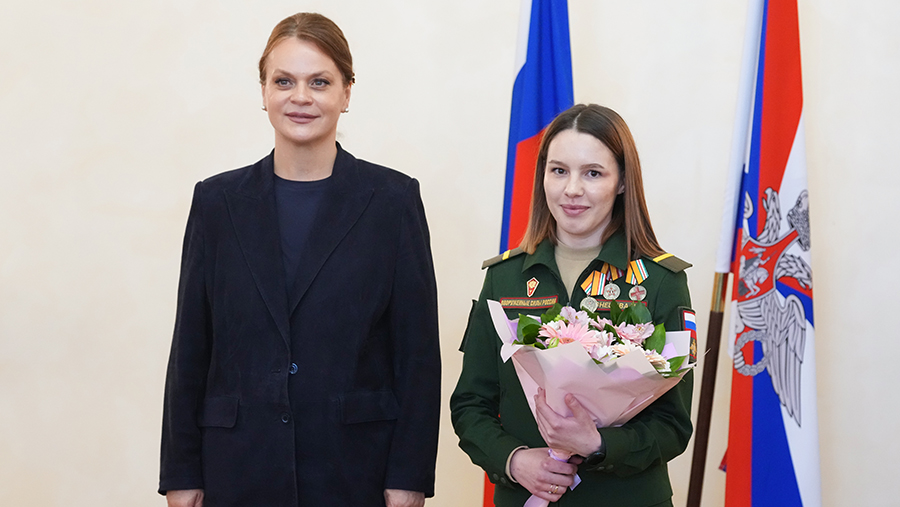
The girl received her baptism of fire in Nagorno-Karabakh, followed by a business trip to Syria.
— I've been in the profession for five years. She evacuated the wounded by all means of transport. We face the most serious cases: from mine-explosion injuries to acute conditions," she said.
Inna has been in the free zone since August 2022. She worked in the Kharkov direction, sometimes for days without closing her eyes, on the basis of moral and volitional qualities alone. When her strength is running out, she finds a resource in simple human sympathy. Looking at another fighter on the operating table, Inna sees in him someone's father, brother or son. This empathy helps you not to burn out and continue fighting for your life.

- Sometimes they drive by, come in and say, "Do you remember how you helped me? Thanks to you, I'm standing now." At such moments, the tears that I used to hold back still come to my eyes," the nurse admits.
The theater as a fortress and a home
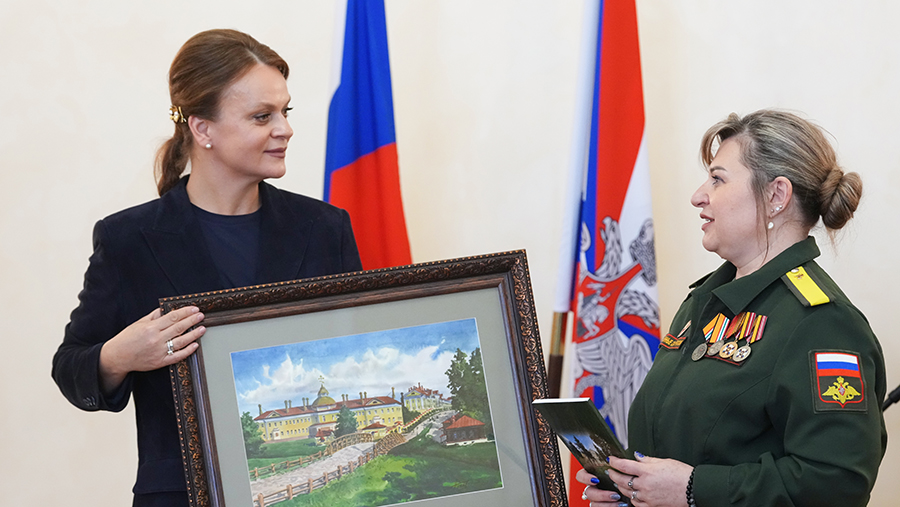
After the official part, where Anna Tsivileva read the poem "A good deed", and the girls presented her with a picture of the hospital, the heroines were waiting for a cultural program. Honored Artist of Russia Alexander Tyutin became a special guest. The actor is an officer himself, and his work is especially close to the military. The culmination was the performance of the "Waltz of the front—line sister" by David Tukhmanov and Vladimir Kharitonov, the anthem of the feat of doctors of all generations.
Later, all the girls were invited to an open dialogue with Anna Tsivileva. There they discussed issues related to the field of military medicine, as well as support for military personnel. The meeting was attended by representatives of the Military-Social Center of the Ministry of Defense of the Russian Federation and the Defenders of the Fatherland Foundation, who will address the issues raised during the meeting.
There was also a conversation with the artists of TSATRA — Olga Bogdanova, Timur Yeremeyev and Roman Bogdanov. The nurses were greeted by the director of the theater, Milena Avimskaya. The guests discussed the play "The Messenger" based on the stories of Maxim Gorky. Leading actress Olga Bogdanova noted that now is the time for a team game, where every meaning is tested for strength.
"Few people really liked Gorky at school," she confessed. — But there is incredible depth in this material. There's a lot of meaning behind every line. Our "Messenger" is a story about transformation, about how important it is not to be left alone.
The Theater of the Russian Army is not just an architectural monument, but a complex mechanism. His stage remains the largest in Europe. In order for the guests to better understand the scale, they were shown a video about the technical capabilities of the stage.
— Imagine: the circus arena is only 13 meters. And our small turning circle is the same 13 meters. The big one is twice as wide — 26 meters in diameter! — the actors told us. — In addition to the circles, we have 12 platforms capable of rising and falling several meters at the same time.
The conversation also touched upon moral guidelines. Olga Bogdanova spoke about the importance of sincerity in art.
— We live in difficult times. Sometimes the empty tinsel of show business is annoying. Do they understand that every minute someone is risking themselves for the sake of the country? Our theater is set up differently. We remember that man does not live only on bread. We are looking for new plays about modern times, about the guys who are in hospitals or at the front today. It's difficult, sometimes there aren't enough strong texts, but we try to do it sincerely, not for show," she said.
Legends of the star
The day ended with a guided tour of the monument building. The nurses were told the legend that the shape of the building was determined by an ashtray in the shape of a star, which was allegedly circled in pencil by People's Commissar of Defense Marshal of the Soviet Union Kliment Voroshilov. In fact, architects Karo Alabyan and Vasily Simbirtsev had a different task: to create a monument that would demonstrate the power of the Soviet system from a bird's-eye view. So a giant five-pointed star grew on the Commune Square (now Suvorovskaya).
During the Great Patriotic War, the building served as a landmark for the bombing of the Luftwaffe. To save the theater, it was camouflaged in the summer of 1941: residential areas were depicted on the roof, and trees were planted around it. The trick was successful — the building survived. The walls also remember the legends of cinema: Eldar Ryazanov shot episodes for Carnival Night here and staged The Hussar Ballad.
The guests were also reminded of the legend of the theater, the project "Your Theater, Mitka." The story of a wounded soldier on a front-line brigade train, to whom the actress promises that an art house will be built for him in Moscow, has become prophetic for TSATRA.
The tour ended with words that sounded especially pleasant to the girls.:
"Whatever happens, know that we are waiting for you. This is your home."
Переведено сервисом «Яндекс Переводчик»
