
Dissolve the story: how schools in Europe distort the victory of the USSR over Nazism

The contribution of the Soviet Union to the victory over Nazi Germany in May 1945 is massively distorted in European schools. In history lessons, French and British students are told about the victory of the allied forces led by Britain and the United States, and Spanish students are also told about the occupation of Poland and the Baltic States. However, in some countries, such as Serbia and Croatia, events are presented more objectively. Moscow, for which May 9 is a sacred holiday, reacts painfully to ridiculous attempts to falsify the past. About how geopolitics is once again making history a tool in the hands of European propagandists of war — in the material of Izvestia.
Europe is hiding from an uncomfortable past
The topic of the Second World War has always been overly politicized in favor of one or another state interest. For example, in the spring of 1945, Great Britain began to apply censorship in order to downplay the role of the USSR in the victory over Nazi Germany. The Foreign Intelligence Service (SVR) of the Russian Federation recently published a telegram from a Soviet resident in Egypt, who reported that, on the instructions of London, the capture of Berlin and the victory of the Red Army were deliberately hushed up by the local Arab and European press.
Over time, the invaluable contribution of the USSR to the victory over Nazism became an even more uncomfortable truth for Europeans. In 1957, Izvestia cartoonist Boris Yefimov depicted two Western politicians deliberately turning away from the Soviet Victory Memorial: "Why are you turning away?" - "I don't like to think about the past, you know..." Today— the subtle satire of the legendary artist is more relevant than ever.

Looking through European textbooks, which since childhood form the "right" attitude to those events, you understand: each state writes its own history. However, the concealment of facts and the placement of their accents by Europeans actually distort and belittle the feat of our grandfathers and great-grandfathers.
In particular, the textbooks of France and Great Britain speak about the decisive contribution of the allies in the anti-Hitler coalition to the victory over Germany. In one of the leading French textbooks for secondary schools, the victory of the Red Army at Stalingrad in 1943 is mentioned only in passing. On the contrary, the Allied landings in Normandy in 1944 and the Soviet operation Bagration to liberate Belarus are recognized as turning points in the war.

Spanish textbooks emphasize that the Allies allowed the Red Army to take Berlin "of their own free will," as if as a reward. Moreover, it is explained that the Soviet troops did not liberate the countries of Europe from the Nazis, but occupied them.
"The Russians regained the Baltic states; in the second half of 1944, they occupied Romania, Bulgaria and Hungary, while Yugoslavia and Albania were liberated by their own resistance movements," says one of the most popular manuals.

Such a narrative is most common in textbooks from Eastern European countries, which in the late 1940s fell into the sphere of influence of the USSR. In the Polish material for schoolchildren, the first paragraph about the war is called "Two occupations", it implies the division of Warsaw into spheres of influence between Germany and the Soviets by the Molotov—Ribbentrop Pact in 1939. There is no talk at all about the course of hostilities; it is only noted how Polish soldiers helped the Allies in the fight against Hitler. Finally, it is emphasized that the operation to defeat the fascists led to a new occupation.
"After the Lublin operation, the Red Army occupied Poland, and the Polish Committee for National Liberation (a pro-Soviet body. — Ed.) has been located in Lublin since August 1, 1944," the authors specify.
History is presented in the textbooks of Estonia, Lithuania and Latvia in the same way. There is nothing in the manuals about the operations to liberate the Baltic States by Soviet soldiers, Russian novelist and Estonian citizen Vladimir Illashevich tells Izvestia. "It is said that since 1944 they came, defeated the Germans and occupied the Baltic States," he says.
Recently, the Tallinn police also issued a decree banning the laying of flowers at commemorative memorials on May 9, and victory symbols, including St. George's ribbons, have long been banned throughout the Baltic States. The corresponding order was given again by the Berlin police.

At the same time, the Polish authorities, despite the current relations between Moscow and Warsaw, did not prevent the holding of Victory Day events this year, the Russian Embassy told Izvestia.
"However, the risks of provocations by pro—Ukrainian groups remain high," the diplomatic mission added.
Exceptions to the rules
Nevertheless, a number of Central and Southern European countries are not trying to keep silent about the USSR's contribution to the victory. One of Croatia's textbooks provides the most comprehensive coverage of the war on all fronts, including the battles of Soviet soldiers: a separate point is highlighted for the key Battle of Stalingrad. The situation is similar in Serbia, where current politicians especially criticize European countries for covering up the role of the USSR.

Serbia ranks among the winners, among those who celebrate May 9 as Victory Day over Nazism, and not as Europe Day, the leader of the Movement of Socialists party, former Deputy Prime Minister of Serbia Alexander Vulin, said earlier in an interview with the newspaper Politika. "We have no reason to be ashamed of our ancestors, but there are reasons to be proud of the victory," the politician noted. He also intends to visit Moscow at the end of May to participate in the International Security Forum.
— Like Victory Day, the Security Forum in Moscow is proof that you cannot isolate Russia. It is very stupid to try to isolate the largest country in the world, as well as a country with a huge reputation," the Serbian politician said.

The ideological "tentacles" and political roots of Nazism have never been completely destroyed, Professor Daniel Siter, head of the research department at the International World War II Research Center in Maribor, Slovenia, emphasized in a conversation with Izvestia. He also plans to discuss the issue of protecting historical memory at a forum in Moscow.
— Our International World War II Research Center will present a unique exhibition "5,000 steps to Immortality". It contains unique materials we have collected about the prisoners of the Nazi death camp Russenlager in Maribor," he said.
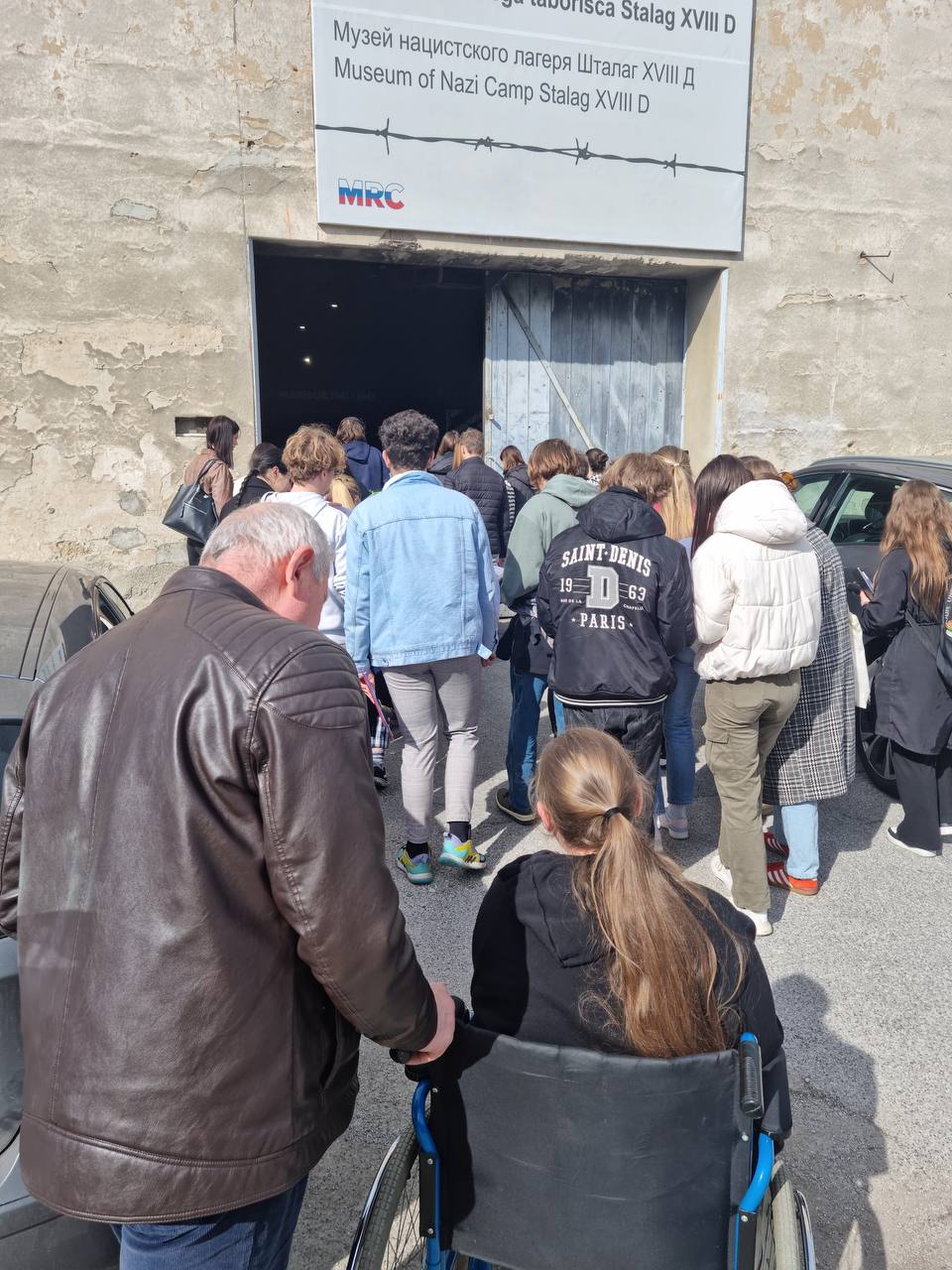
According to him, the exhibition will not only be a tribute to the soldiers of the Red Army who gave their lives in the fight against Nazism, but also a warning about the inadmissibility of the revival of this global evil.
The main holiday in modern Russia
Victory Day has become much more important in modern Russia than it was during the Soviet period. From 1948 to 1964, May 9 was a regular working day with no mass celebrations. Military parades on Red Square have been held only four times in 45 years — in 1945, 1965, 1985 and 1990. Only in 1965, by the decision of Leonid Brezhnev, this date became a day off.

Since 2007-2008, the holiday has transformed from a memorial date into a central element of national identity and patriotic education.
— The evolution of May 9 in Russia shows how historical memory adapts to the demands of time — from post—war grief to the consolidation of society, - says Svetlana Batanova, senior lecturer at the Financial University under the Government of the Russian Federation.

It is not surprising that the Russian Federation reacts quite sharply to any attempts to distort those events. Moscow is well aware of the attitude of the collective Western minority towards May 9, Russian Foreign Ministry spokeswoman Maria Zakharova said.
— They systematically destroy the Soviet memorial heritage, exhume the ashes of Soviet soldiers, rewrite and distort history. It is they who, by arming Ukraine, are complicit in the criminal plans of the Kiev regime," the diplomat stressed.
Thus, in the hands of Russia's historical opponents, the past has once again become a tool in the geopolitical struggle. But something else is much more important: Russians do not forget about the main thing — about their ancestors, who gave their lives so that today we, as far as possible, live under a peaceful sky.
Переведено сервисом «Яндекс Переводчик»
