Katyusha at the Reichstag: how Soviet artists raised millions for tanks


From the very beginning of the Great Patriotic War, artists went to the front with the army. They performed in trenches and hospitals, on the armor of tanks and at dugouts, under the whistle of bullets and the roar of artillery. Without a stage, scenery, or complicated props. Sometimes one accordion and several costumes were enough to give the fighters a sense of peaceful life for an hour. On the eve of Victory Day, Izvestia recalls from the newspaper's archives how front-line theater brigades became the voice of home for millions of soldiers.
Acrobats on tanks and concerts with the sound of shells
In the early days of the war, the country hastily learned to live by new laws, and culture was one of the first in this system. Many artists went to the front with weapons in their hands. Among them are Yuri Nikulin, Sergey Bondarchuk, Innokenty Smoktunovsky, Mikhail Pugovkin, Anatoly Papanov, Leonid Gaidai. But the theater brigades provided no less assistance to the Red Army.
From 1941 to 1945, more than 3.5 thousand teams worked at the front. Among them are specially created brigades like Iskra, as well as branches of the country's largest theaters: Bolshoi, Maly, Moscow Art Theater, Vakhtangov Theater. According to historians, more than 42 thousand artists traveled to the front line. They volunteered, were not afraid of the roar of shells and the whistle of bullets, and gave more than a million concerts.
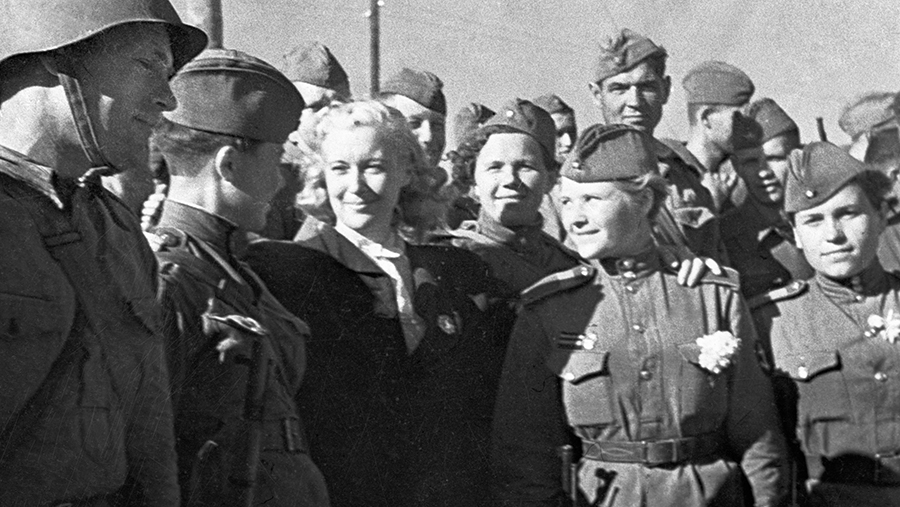
The format of such performances was extremely mobile. No decorations, a minimum of props, often one accordion and several costumes. Acrobats performed stunts right on the tanks. The artists performed performances in the trenches, in the fields and at hospital beds.
In the article "Actors at the front" dated August 14, 1941, Izvestia's own correspondent Boyadzhiev described such a picture:
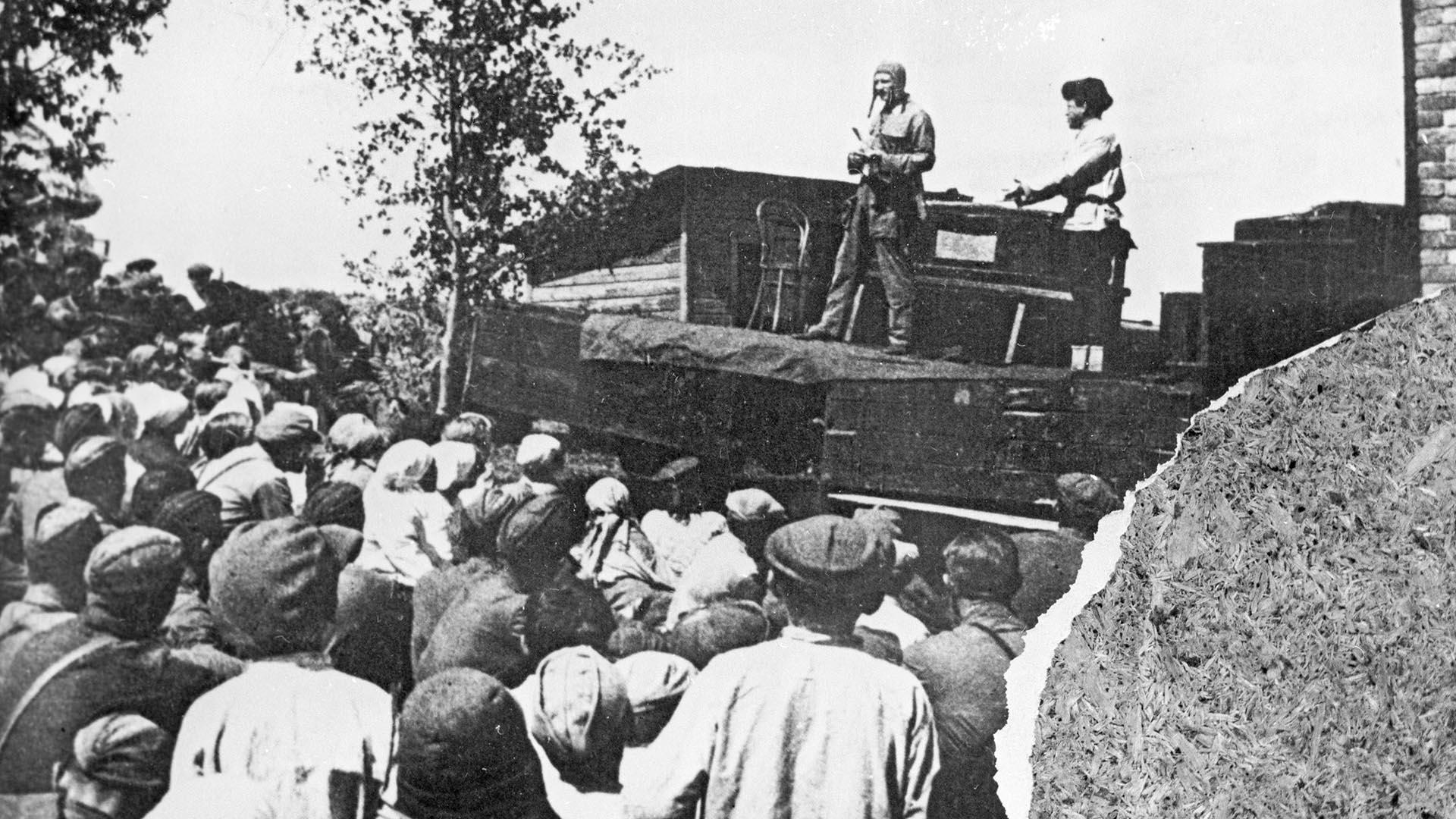
"There have been cases when a combat alarm was sounded during a concert, and listeners boarded planes to beat the enemy with deadly fire. But now the dogfight was over, the pilots were descending, and the actors were continuing their interrupted game. Naturally, in such an environment, almost every concert turned into a spontaneous rally — the Red Army soldiers and commanders spoke with gratitude, the actors spoke in response, all the words were about one thing — about victory."
Front-line brigades came under fire, died, and went missing. But the flow did not stop — another group took the place of one group.
"By the time the artists arrived at the unit, the fighters lovingly built stage platforms, decorated them with greenery and flowers, looked after the artists and touchingly presented them with bouquets as a sign of their fervent appreciation for their performances. Concerts often took place very close to the front, near dugouts and trenches, and the sounds of machine-gun fire mixed with piano accompaniment, artillery cannonade broke in," Izvestia reported on October 5, 1941.
Performances were reduced to individual scenes, monologues alternated with songs, and classics were juxtaposed with satire. In 1941, patriotic numbers, songs about the Motherland and comedies were particularly popular, and by 1942 the main wartime plays appeared — "Russian People" by Konstantin Simonov, "Front" by Alexander Korneychuk and "Invasion" by Leonid Leonov.

How the artists raised money for the needs of the front
The artists not only raised the morale of the fighters, but also raised money for weapons for the army. On September 11, 1941, Izvestia reported that employees of the State Central Committee had transferred about 6 thousand rubles to the Defense Fund. It was a huge sum for that time: the average salary was 300-350 rubles.
By mid-February 1943, according to Izvestia, the Soviet Union's art workers had contributed almost 14 million rubles to the construction of tanks and airplanes. In total, the Defense Fund received more than 48 million from personal savings and income from charity performances and concerts. And the fundraising didn't stop.
In June 1944, the artists of the Maly Theater handed over to the pilots a squadron of fighters built at the expense of the troupe's employees. The inscription on the combat vehicles read: "Maly Theater to the front."
"Test pilot Krivoshein told the artists about the enthusiasm and speed with which the factory workers built these latest formidable aircraft. The pilots, lieutenants Kamarin and Melikhov— assured the artists of the Maly Theater that they would launch fierce attacks on the enemy on their planes," the Izvestia journalist reported.
The famous singer Lidiya Ruslanova presented the 1st Belorussian Front with two Katyusha batteries — 14 rocket launchers. The staff of the Sverdlovsk Musical Comedy Theater raised funds for tanks, and Leonid Utesov personally handed over two combat fighters to the front.
Katyusha on the steps of the Reichstag
Individuals have become real wartime symbols. Lydia Ruslanova is among them. During the war, she gave more than 1,120 concerts and traveled with the soldiers all the way to Berlin. Her powerful voice, traditional Russian attire, bright headscarf and red beads — her image is like a Motherland mother who leads her sons to victory with her song.
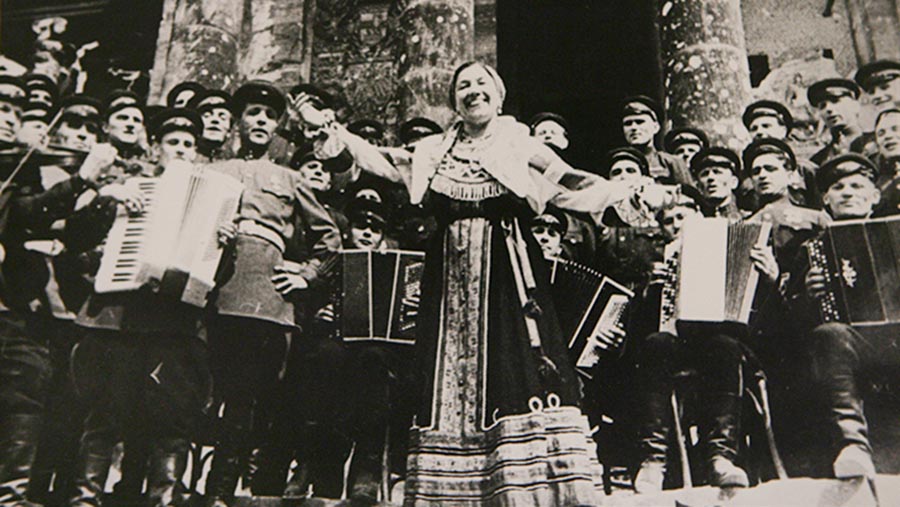
The first performance turned out to be exciting even for the famous actress. She felt embarrassed by the bright concert outfit against the background of the soldiers' gymnasts, and then scared by the roar of artillery cannonade. But as soon as Ruslanova sang "Katyusha" and "Valenki", the soldiers froze, not paying attention to either the explosions or the German planes. Later, the singer recalled: "They listened like in a Pillared Hall."
On May 12, 1945, a large Victory concert was held near the walls of the Reichstag, which was attended by Soviet artists who arrived in Berlin on a special flight by order of Marshal Georgy Zhukov. Ruslanova was among them, along with a Cossack song and dance ensemble.
On May 18, 1945, the newspaper Izvestia published a report by special correspondent Mikhail Dolgopolov, "A Russian Song in Berlin."
"Pieces of furniture and boxes used by the SS barricaded themselves were still burning in the building. It smelled of burning, and the boot was buried in the still-warm ashes. The artists entered the central marble hall. The collapsed dome covered the middle of the hall like a tent. One of the officers inspecting the Reichstag, seeing Ruslanova in her bright Russian outfit, loudly asked: "Sing us something, we're so longing for a Russian song," the journalist wrote.
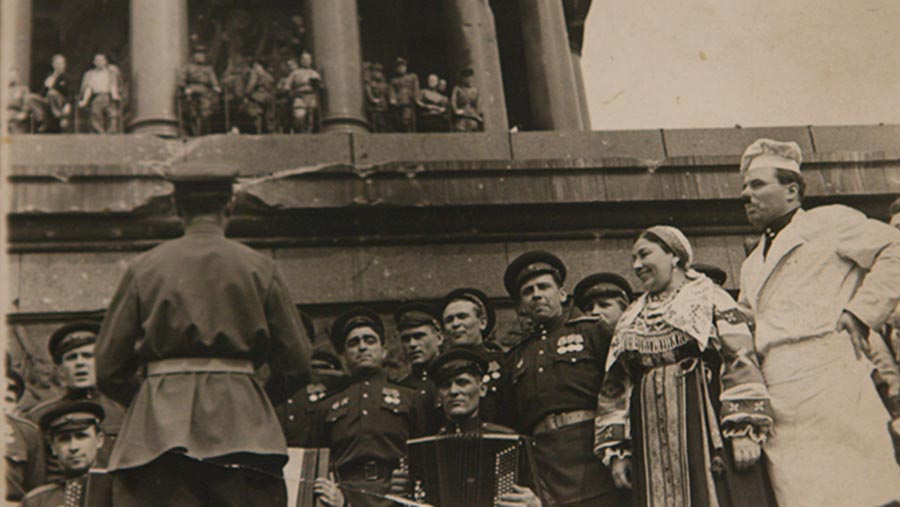
The artist sang one song after another. Siberians asked for native Siberian tunes, Volzhans — "Oh yes, Volga is a mother river", Saratovites — fervent ditties, Kaluzhans — "Kaluga choruses". The fire was still smoldering inside, the fumes were eating away at my throat, and it was getting harder and harder to sing. Then the musicians went outside and continued the concert at the walls of the defeated Reichstag. And soon the Soviet officers, who had failed to get inside the building at first, asked Ruslanova to speak again, already on the steps. And the singer, along with the ensemble, performed the entire concert anew for a crowd of thousands of winners.
According to Rosstat, the Great Patriotic War claimed the lives of 26.6 million Soviet citizens. And it is impossible to imagine how many more people would have died if the Red Army had not destroyed Nazism and stopped Hitler's army. But even in the midst of fire, blood, and ashes, man continued to need music, laughter, words, and the memory of home. Front—line artists took to the makeshift stage in the same way that soldiers went into battle, realizing that they might not return. Their songs were played in the trenches before the attack, and their voices reminded exhausted people of what it was worth living, fighting and winning for.
Переведено сервисом «Яндекс Переводчик»
