They are Rurikovich: what the Baryatinsky princes looked like and what they collected
- Статьи
- Culture
- They are Rurikovich: what the Baryatinsky princes looked like and what they collected


What art was collected by the Russian nobles, descendants of Rurik? And how did the manor culture of the 19th century influence the development of painting? The exhibition "The Baryatinsky Princes. Art for Heirs", which opened at the Pushkin Museum, is dedicated to a little-known dynasty of collectors and focuses not so much on masterpieces as on creating a holistic image of the artistic decoration of aristocratic life. Izvestia was among the first to visit wealthy connoisseurs of beauty and appreciated their efforts from the perspective of today.
Choosing a dynasty
Pushkin has been celebrating private pre-revolutionary collecting for years. It is true that if the funds of the Hermitage and the Russian Museum were formed primarily by the emperors, then in Moscow the main artistic values appeared thanks to aristocrats and merchants. And here the names of the Sheremetevs, Yusupovs, Stroganovs are traditionally mentioned, plus, of course, the Shchukins and the Morozovs. Now the State Museum of Fine Arts has decided to include the Baryatinsky princes in this series (their family goes back to Rurik) — and clearly demonstrated their contribution to the museum fund by combining items from 25 public and private collections.
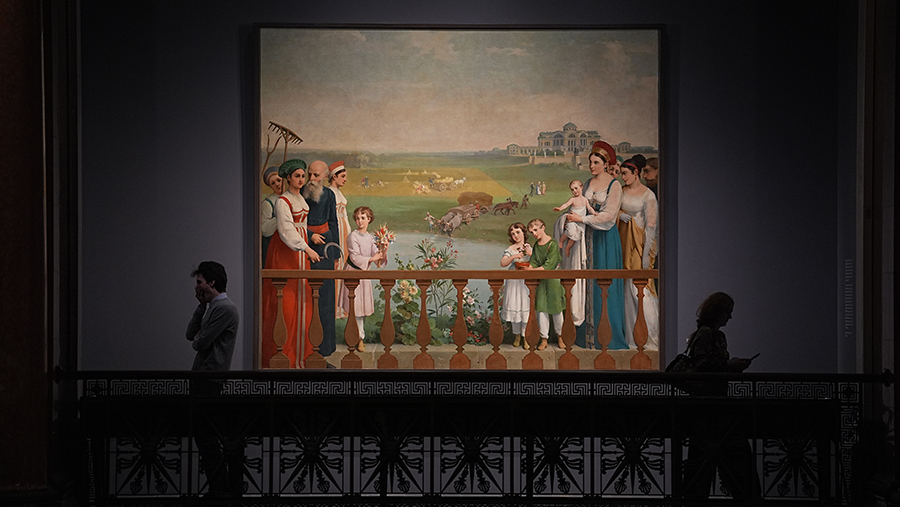
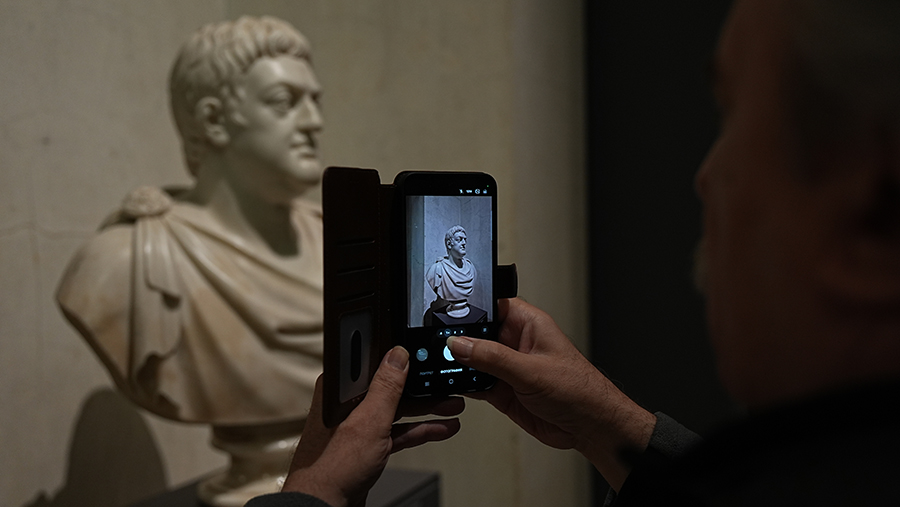
Although this figure is impressive, as well as the total number of exhibits (about 230), and some of the names represented — Rembrandt Harmens van Rijn, Albrecht Durer, Luca Giordano, Caspar David Friedrich — the most interesting thing here is something else. The Baryatinskys, unlike the Shchukins and Morozovs, were not visionaries; their taste was not impeccable and progressive. On the contrary, the preferences of princes can be called the average, average choice of the aristocracy. Therefore, items from the princely collection allow us to understand how they saw themselves, and create a real, and not distorted by genius, artistic mirror of the era.
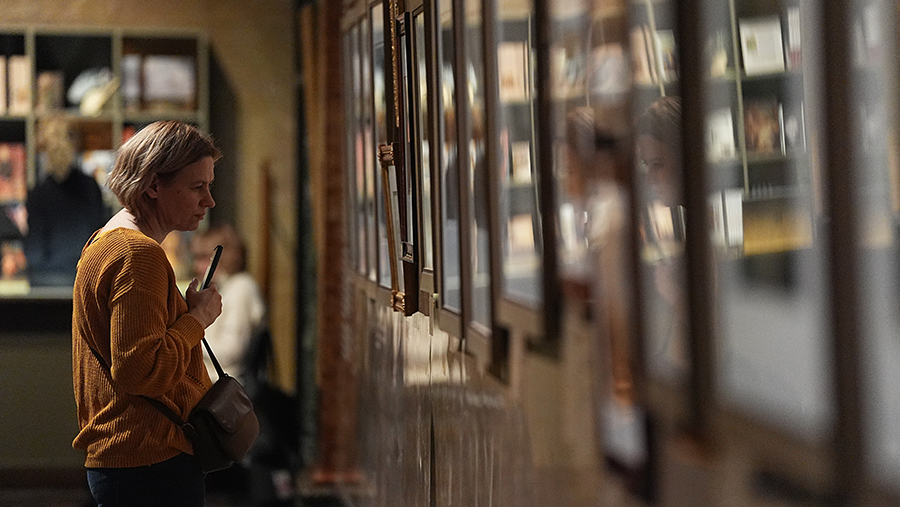
A significant part of the exhibition is portraits of members of the Baryatinsky dynasty. This painting is not great, but it is certainly good-quality and charming in its desire to show the models in the most advantageous light. For example, Princess Maria Feodorovna Baryatinskaya (nee Keller, daughter of a Prussian minister) with her son in her arms: an unknown painter presented a mother and child almost as a Madonna and child. Well, the Frenchwoman Marie-Elizabeth-Louise Viger-Lebrun, by the way, Marie Antoinette's favorite artist, painted her husband Ivan Ivanovich in the image of a romantic hero: a handsome man with a calm, confident look and disheveled hair could easily pass for a character of Goethe, Byron or Lermontov.

The female gaze
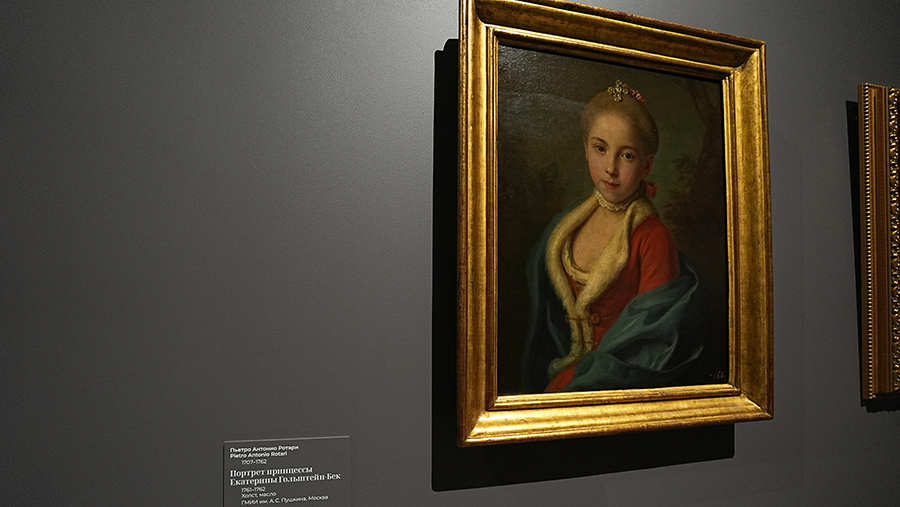
A special place in this series is occupied by two portraits of Ivan Ivanovich's mother, Princess Catherine of Holstein-Beck. The first, where the future wife of Ivan Sergeyevich Baryatinsky is still a child of 11-12 years old, was painted by Italian Pietro Antonio Rotari, one of the best portrait painters of the Rococo era, famous for his images of graceful female heads. And this is an exemplary, delicate, delicate piece for his style, in which the master managed to convey the childish charm of Holstein-Beck and at the same time her awakening femininity.
Well, after 40 years, the Danish princess, who became (to her displeasure) a Russian princess, was painted by Frenchman Jean-Louis Veil, the court painter of Paul I, who was in love with Catherine when he was his heir. However, the affair with the tsarevich did not take place, but with Andrei Razumovsky (the Russian envoy to Vienna, Beethoven's patron) — more than enough. As with many others. At some point, the marriage with Baryatinsky became a pure formality for the beauty.
Has female freedom brought her happiness? Voila's portrait does not provide an answer. And it is almost impossible to recognize in his model the girl once depicted by Rotary. It seems that the heroine of Kubrick's Barry Lyndon is looking at us from the canvas: her melancholic gaze, blush and lush powdered hairstyle are no less expressive. Voila's signature silver color scheme emphasizes the princess's cool detachment, and a half-smile that barely touches her lips adds sentimental mystery to the image.
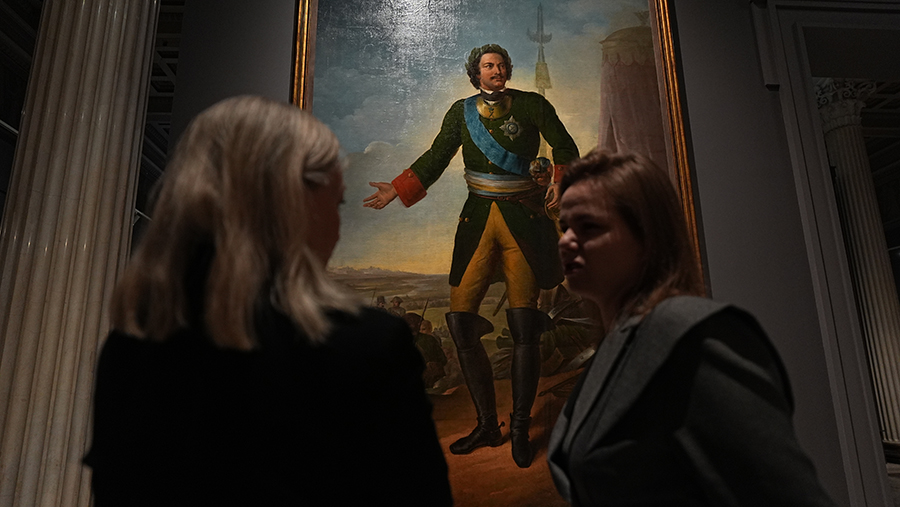
When Ekaterina's husband returned to St. Petersburg, she preferred to go on a long trip to Europe, where she met the Swiss artist Angelika Kaufman and acquired a number of works from her. Some of them are on display at the State Museum of Fine Arts today, and, I must say, thanks to this, as well as some other exhibits, the exhibition has a feminist connotation: women are among the customers and performers here.
Another example of this is the portrait of Maria Ivanovna Baryatinskaya, daughter of Ivan Ivanovich and granddaughter of Holstein—Beck, painted by Englishwoman Christine Robertson. Robertson created several images of Maria Ivanovna, who was considered one of the main beauties of St. Petersburg, communicated with Pushkin and was a maid of honor to Empress Alexandra Feodorovna, the wife of Nicholas I. Alas, the life of a lovely, graceful girl, whose figure and graceful neck Robertson particularly admires, ended tragically early, at the age of 24. As soon as she married Prince Mikhail Kochubey, she died of fever on her honeymoon.

It's beautiful to live
The explanatory texts in the exhibition, however, avoid controversial and tragic topics, be it the biography of Ekaterina Holstein-Beck or the troubles of her granddaughter, who was probably married to Kochubey without much love. And, ultimately, the exhibition creates a ceremonial, ideal image of an aristocratic dynasty, whose life consists of wise gathering, fascinating travels, caring for ancestral homes (a manor in Kursk province and houses in St. Petersburg) and devoted service to the Fatherland.
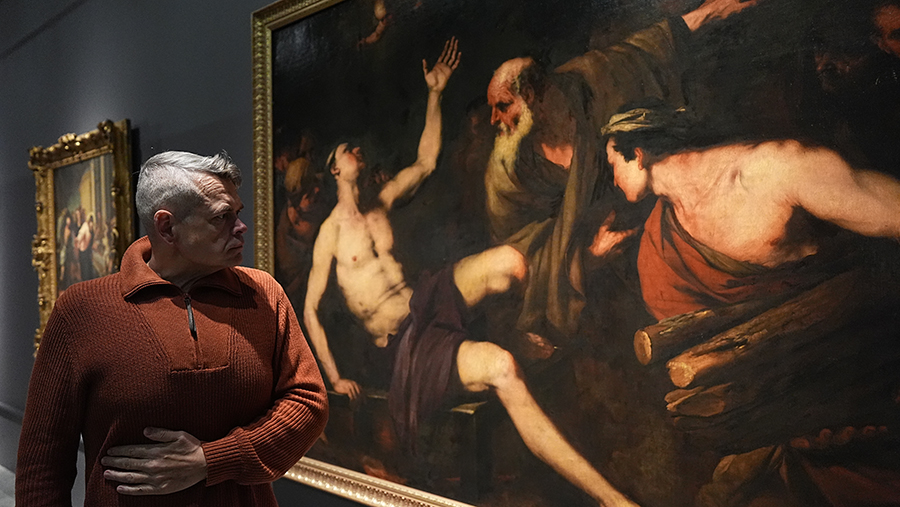
So why not believe in this illusion while enjoying Dutch still lifes of the 17th century, biblical scenes of the Italian Renaissance and Baroque (in particular, it was the Baryatinskys who bought the "Torment of St. Lawrence" by Luca Giordano), and finally drawings and engravings by major masters? If the paintings at the State Museum of Fine Arts were placed in the White Hall and in the space above the entrance, then the graphics are placed along the colonnade near the stairs. And from an artistic point of view, this is perhaps the strongest part of the collection. A couple of small etchings by Rembrandt, three engravings by Durer, a number of large Piranesi sheets, a gloomy pencil landscape by Friedrich depicting a coffin (where in the Romantic era without the theme of death).
Unable or unwilling to compete with the main collectors of paintings, the Baryatinskys did not restrain themselves in acquiring print runs. In total, the princes collected about 19 thousand engravings, some of which we can admire today at the Pushkin Museum. And, of course, it's the cream. There is no doubt that not all the princely acquisitions were as good as those chosen by the curators of the State Museum of Fine Arts. After all, they were not art historians and sought, by buying canvases and drawings, making orders to artists, first of all to create decorations for a beautiful life. But who knows — maybe this approach will be truly therapeutic for a modern viewer. And going to the museum will not be so much enlightenment as immersion in a world where men were noble, women were beautiful and refined, and the gardens in noble manors were immaculately trimmed and fragrant.
Переведено сервисом «Яндекс Переводчик»
