Risen from the heat: the new model will extend the life of satellites by a third
- Статьи
- Science and technology
- Risen from the heat: the new model will extend the life of satellites by a third


Returnable launch vehicles, long-lived satellites, Venusian landers and devices for descent into the vents of volcanoes — a new mathematical model developed by Russian scientists can improve the efficiency and reliability of such technology. It will allow changing the approach to thermal protection by controlling the heat spread inside the multilayer insulation. The model takes into account the rate of temperature change in the material, which is important in case of sudden temperature fluctuations, for example, when the satellite comes out of the shadow or the engine is turned on. Experts note that the development cannot be called a breakthrough, but it can significantly expand the engineering tools for creating highly loaded systems.
How to protect space technology from overheating
Scientists from the Moscow Aviation Institute (MAI), in partnership with specialists from the Central Aerohydrodynamic Institute named after Professor N.E. Zhukovsky, have found a way to improve the protection of spacecraft from extreme temperatures. The development is based on a new computational model that will make it possible to calculate the heat distribution in protective materials with high accuracy.
As the researchers explained, the model is aimed at improving the characteristics of screen-vacuum thermal insulation (EVTI), also known as the "space blanket". This material is used to protect the onboard equipment of modern satellites and interplanetary vehicles, and is also used in the design of spacesuits.
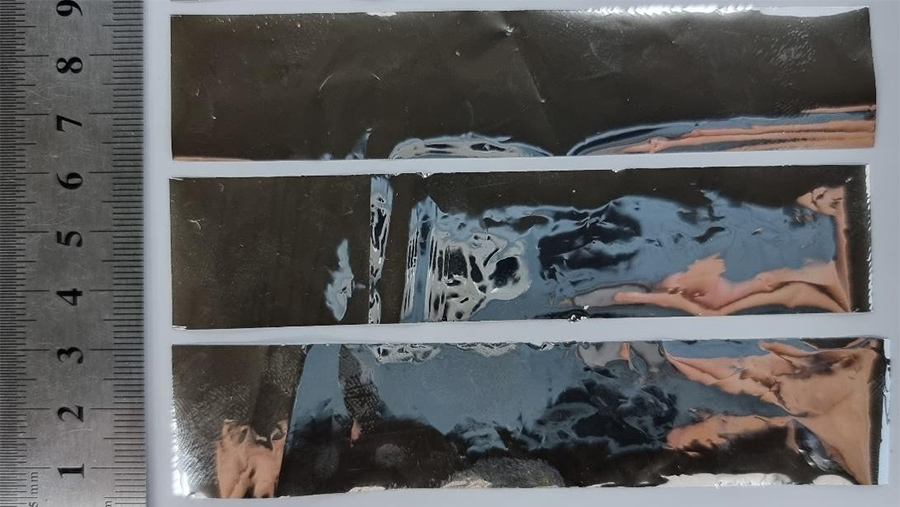
— EVTI is a multi—layered package, a "sandwich" of several dozen layers that reflect thermal radiation, and gaskets between them. For example, polyimide (durable heat-resistant plastic) films can be used as screens with aluminum coating. Glass mesh or a porous polymer are often used as intermediate materials," said Maria Egorova, co—author of the project, graduate student of the Department of Rocket and Space Systems Operation Management at MAI.

She explained that EVTI traditionally acts as a barrier when removing heat. However, the proposed approach allows not only to restrain heat transfer, but also to control the direction of heat flows. In particular, at the design stage, engineers can select the thickness and composition of materials in such a way as to purposefully remove heat in a given direction. This will allow, for example, to take excess heat from the sensitive elements of the equipment and divert it to radiators.
How to extend the life of satellites in orbit
According to Maria Egorova, unlike classical approaches, which assume an infinite speed of heat propagation, the development takes into account that the heat signal has a finite speed. This is especially important in case of sudden temperature changes — when the satellite moves out of the Earth's shadow to the illuminated side or when the propulsion system is switched on. In such modes, the model allows you to more accurately determine where and at what point overheating may occur, and provide for timely heat removal.
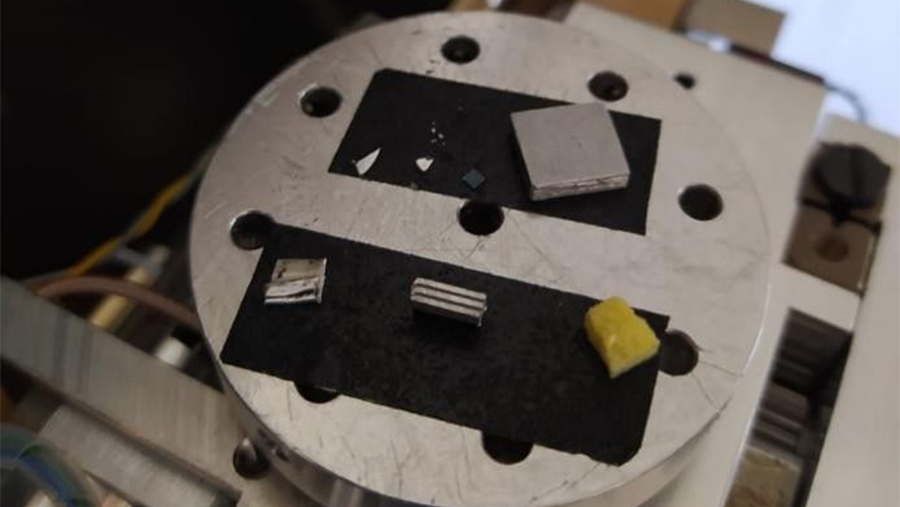
— The calculations obtained give the temperature dependence on the number of layers, their reflectivity and gaps. When designing a product, an engineer can change these parameters, achieving an even distribution of heat or creating conditions to make it flow to where it is colder," she explained.
Heat flow control will make it possible to extend the active life of satellites by a third and reduce the mass of insulation by 15-20%. The technology will also help to reject unsuccessful options at the sketch stage, which will reduce the time and cost of developing space technology, the co-author of the project noted.
The proposed models can be adapted to calculate spacecraft for landing on the surface of Venus, where the average temperature is about 460 degrees and the pressure is 90 atmospheres.
In such cases, a refrigerant can be placed inside the casing, which will absorb excess heat during melting or evaporation, and the model will allow you to predict how long the device will be able to withstand such loads. The development can also be used to design solar probes and equipment for descent into the vents of active volcanoes, Maria Egorova added.
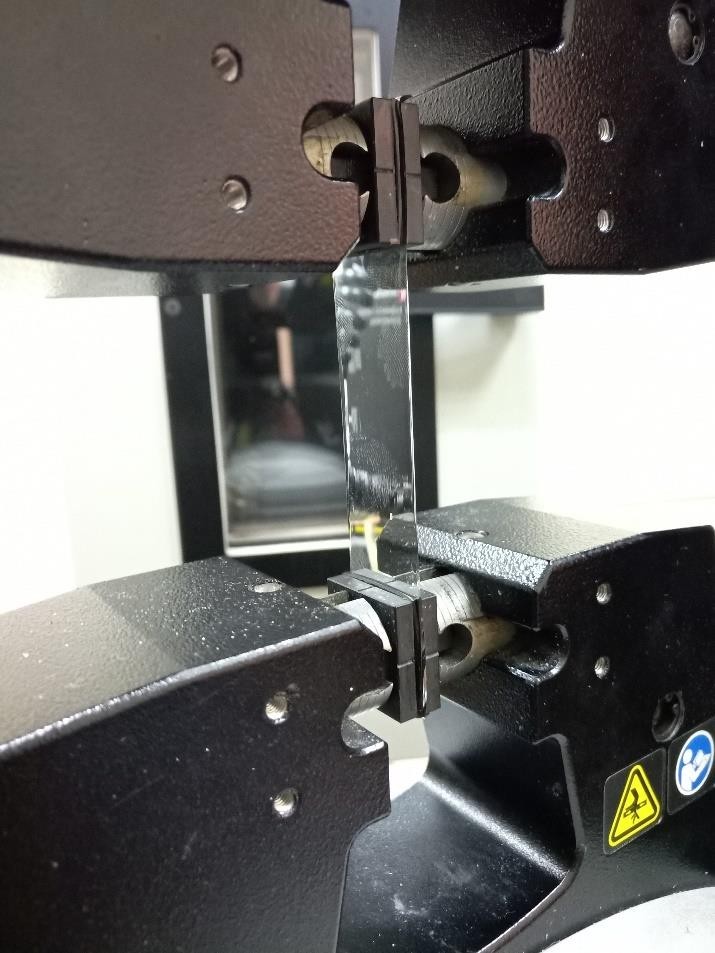
In the future, scientists plan to create a software module that will combine existing thermal protection design systems. Such a tool will make it possible to unify approaches in different design bureaus.

How simulation will reduce the weight of spacecraft
—The theory continues to be improved, and the presented model will certainly make it possible to more accurately predict the behavior of heat—shielding materials," said Andrey Novikov, Senior engineer at the NTI Center for Digital Materials Science: New Materials and Substances at Bauman Moscow State Technical University.
However, the space environment is characterized by temperatures not found in everyday life, and the thermal processes themselves are unstable — the heating pattern is constantly changing. This significantly complicates both the design, production and operation of heat-protective materials, the expert specified.
He explained that the tasks of thermophysics are much less unambiguous than, for example, in mechanics or strength theory, since they depend on a large number of factors. Therefore, modeling of thermal processes does not always allow us to accurately determine a particular value, and sometimes it is completely impossible.
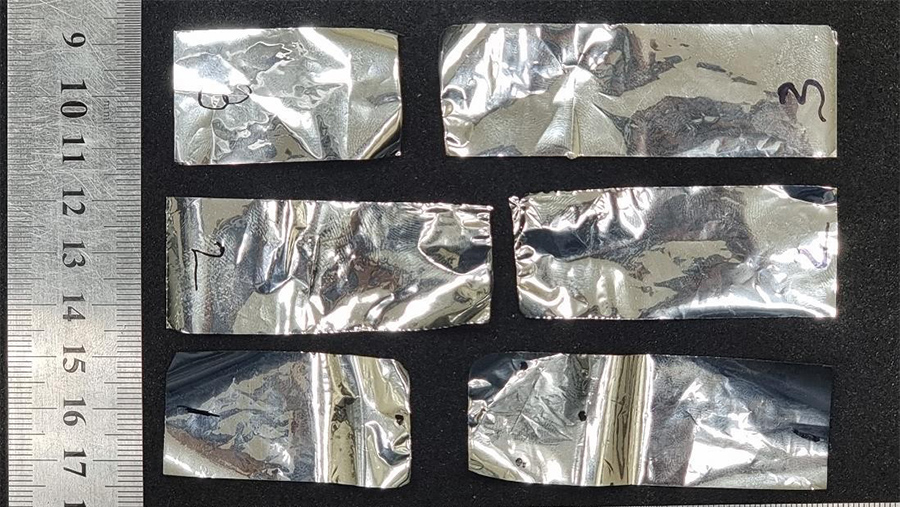
— The development looks like an important step in the development of methods for calculating heat transfer in complex multilayer structures. Classical approaches work well under standard conditions, however, under extreme thermal loads and in materials with complex internal structures, they can produce errors," Anton Alekseev, CEO of Novy Kosmos, an Aeronet market expert at the National Technology Initiative, told Izvestia.
He noted that more accurate modeling would allow optimizing thermal protection parameters in advance and reducing excess safety margins. This, in turn, will make it possible to reduce the mass of vehicles, which is critically important for space technology.
According to the expert, the model will be in demand in tasks related to extreme environments, for example, when designing spacecraft for Venus or returnable space systems. In general, we are not talking about a technological breakthrough, but about a qualitative expansion of engineering tools.
Переведено сервисом «Яндекс Переводчик»
