- Статьи
- Economy
- Oil is stronger: the raw materials market is waiting for a jump in prices to $ 200 per barrel

Oil is stronger: the raw materials market is waiting for a jump in prices to $ 200 per barrel

The increase in oil prices will not be limited to the March rise of almost 50% and will continue in the next two months, experts interviewed by Izvestia believe. Against the background of the escalation of the conflict in the Persian Gulf, quotes, according to their estimates, may gain a foothold at $ 120-130 per barrel, while jumps to $200 per barrel are not excluded. Even if OPEC + decides to increase production on April 5, it will not have a significant impact on the market: the closure of the Strait of Hormuz and attacks on the oil and gas infrastructure have already led to a reduction in production by the cartel countries in March by almost 20%. According to analysts, the longer the conflict drags on, the less predictable the dynamics of world prices for energy and consumer goods will become. The economies of which countries may be affected first and how this will affect Russia are described in the Izvestia article.
The impact of the conflict in the Persian Gulf on the oil market
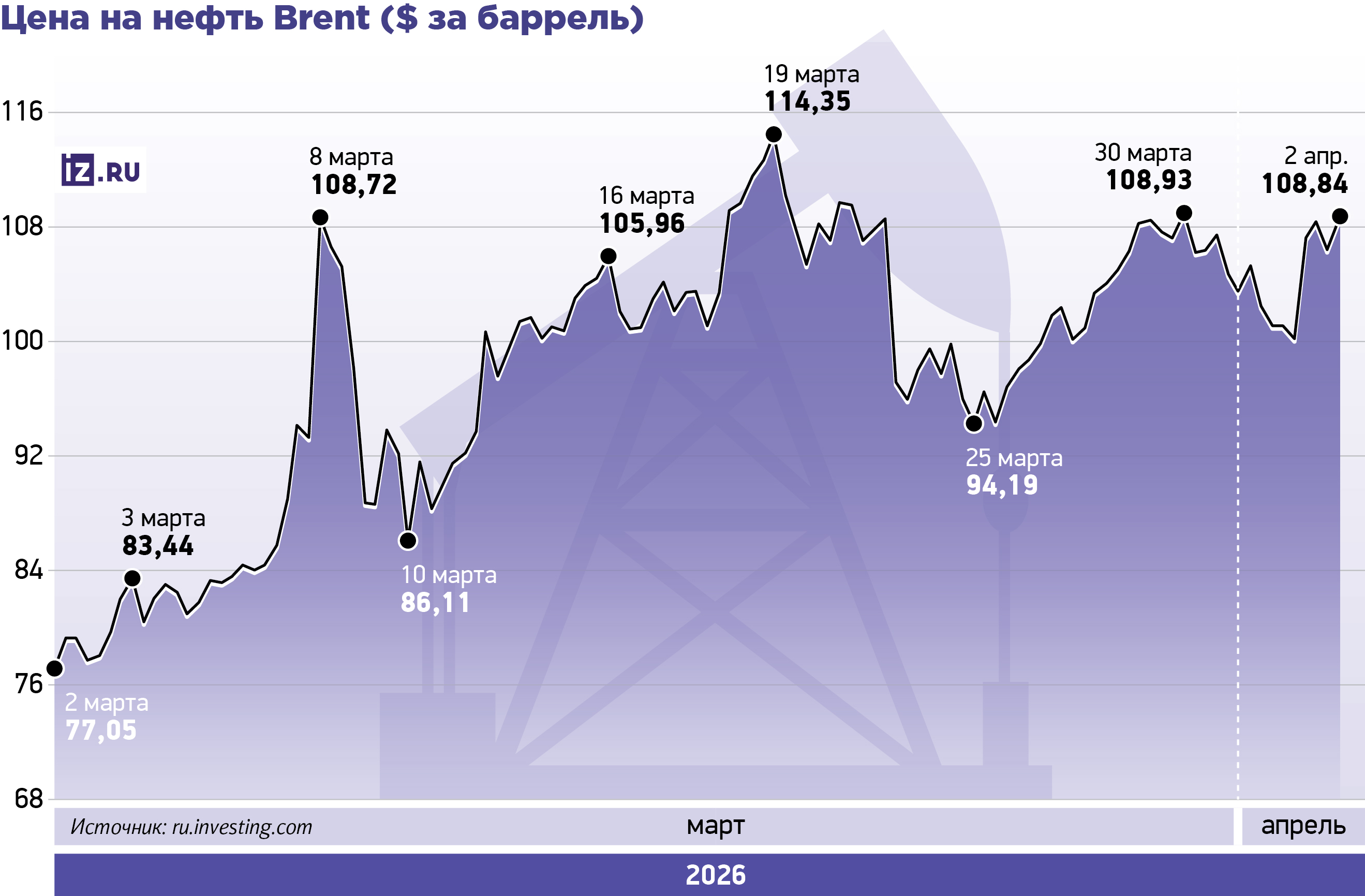
Oil prices will continue to rise in April–May amid escalating conflict in the Middle East. In March alone, they increased by almost 50%, from $72.87 per barrel at the end of February to $108.46 per barrel of Brent North Sea crude on April 2. Thus, the growth was 48.84%.
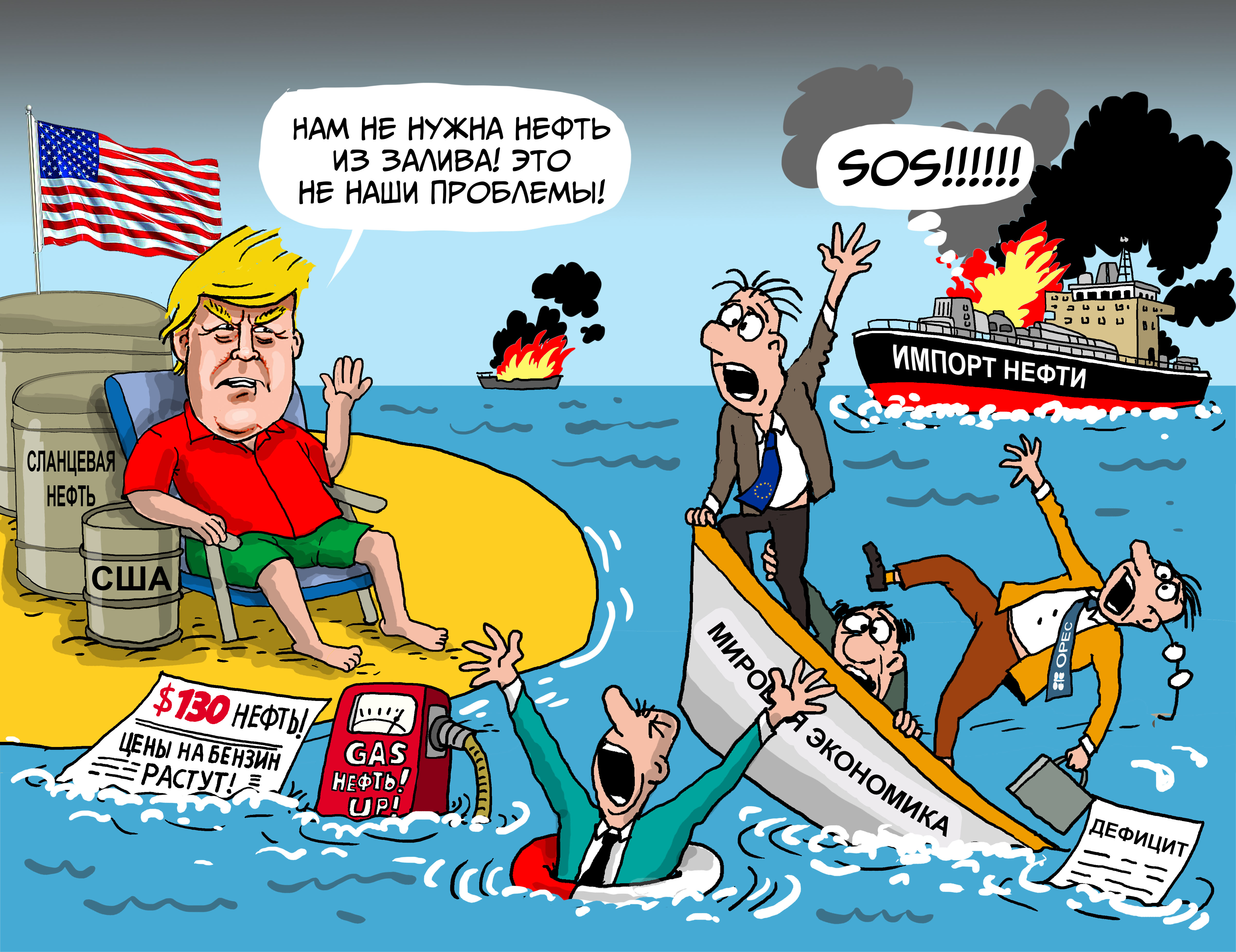
At the same time, against the background of the verbal interventions of the American leader Donald Trump that the war in the Persian Gulf could end in the near future, prices at the moment fell below $ 100 per barrel. However, the Iranian authorities denied that there were any negotiations with the United States, and the quotes rose above this mark again.
So, on April 1, they dropped to $98 per barrel amid statements by the US president that his country could end its military campaign against Iran in two to three weeks. In turn, the President of the Islamic Republic, Masoud Peseshkian, stressed on the same day on the social network X that an end to the war is possible only with the recognition of Iran's legitimate rights, the payment of reparations and the provision of international guarantees against future aggression.

In response, the American leader promised to "return" Tehran "to the Stone Age." "We're going to hit them extremely hard over the next two to three weeks. We're going to take them back to the Stone Age, where they belong," Donald Trump said in an address to the nation broadcast by the Associated Press.

At the same time, global oil consumption has already decreased by 12 million barrels per day since the beginning of March due to the conflict in the Middle East. According to the head of the International Energy Agency (IEA) Fatih Birol, by the end of April, the losses could be twice as much.
— In March, some cargoes of oil and gas from the Middle East were already shipped, even before the war, and they are still arriving at the ports of their destination countries. But that won't be the case in April. This means that even according to our conservative estimates, oil losses in April will be twice as much as in March. In addition to this, there will be LNG losses," the head of the IEA warned.

According to him, as a result of the conflict in the Middle East, about 40 key energy assets in the Middle East were damaged: "Some of them are slightly damaged, but some are seriously or even very seriously damaged."
Fatih Birol added that the measures taken by the IEA countries to release oil reserves are important, and allowed new supplies from their reserves. At the same time, he stressed that the most important task today is the opening of the Strait of Hormuz.
The Strait of Hormuz is a narrow passage between the Persian and Oman Gulfs, the only exit from the Persian Gulf to the Indian Ocean. It is the most important logistical artery connecting the countries of the Persian Gulf — Saudi Arabia, the United Arab Emirates, Qatar, Kuwait, Bahrain, Iraq, Iran and Oman — with global markets. Before the conflict began, 200-300 vessels passed through it every day. According to the U.S. Energy Information Administration, this waterway accounts for about a quarter of the world's oil and petroleum products traffic and about a fifth of the world's liquefied natural gas (LNG) trade, mostly from Qatar. On March 11, a representative of the central headquarters of the Iranian Armed Forces, Khatam al-Anbiya, said that the Islamic Republic would not allow any oil shipments related to the United States and its allies to be transported through Hormuz. On March 25, Iranian Foreign Minister Abbas Araqchi noted that the country allows passage through the strait to friendly states, including Russia, India, Iraq, China and Pakistan. And at the end of March, Alaeddin Boroujerdi, a member of the Majlis Committee on National Security and Foreign Policy, said that the passage of ships through the Strait of Hormuz would be paid for in accordance with a new law that the Iranian Parliament (Majlis) would soon adopt.
What oil prices to expect
— In March, the price of oil increased by more than 40%, and assuming that supply losses may be twice as high in April, we should expect prices to continue to rise, which may gain a foothold above $120-130 per barrel. Considering that the stocks of raw materials in the countries are designed for an average of one to two months, importers will soon begin to feel a physical shortage of raw materials," said Ekaterina Kosareva, Managing Partner of VMT Consult.
In her opinion, in the event of a further escalation of the conflict, oil prices above $150-200 per barrel are not excluded.
— Do not forget that the United States is not only the largest oil producer with production of 13 million barrels per day, but also the largest consumer — about 20 million barrels per day. They bought raw materials from Canada and the Middle East. Now the American president declares that they are independent of oil from the Persian Gulf, nevertheless, with the chain reaction of the market, the same Europeans, for example, should not rely heavily on raw materials from overseas. Therefore, I do not rule out that we will see price spikes to $150-200 per barrel by May," Ekaterina Kosareva believes.

According to Dmitry Kasatkin, managing partner of Kasatkin Consulting, in April–May, the market is likely to remain volatile in the range of $90-110 per barrel of Brent crude oil. In case of further escalation of the conflict, prices may exceed $120 per barrel. Gas will also remain expensive, especially for European and Asian countries, the expert noted.
At the same time, analysts are skeptical that the parties to the OPEC+ agreement can influence the situation.
— OPEC+ is likely to increase production, but this is unlikely to save the market much. The possibilities of the parties to the deal are limited — in March they had to reduce production due to the conflict in the Middle East by a quarter, — Ekaterina Kosareva noted.
OPEC countries cut production by 7.2 million barrels per day in March, according to a Reuters poll conducted using data from the LSEG platform and analytical information providers, including Kpler. According to the IEA, OPEC+ production averaged 37.76 million barrels per day by the end of 2025.

The largest reduction was recorded in Kuwait, Iraq, the United Arab Emirates and Saudi Arabia, while the total OPEC production in March amounted to 21.57 million barrels per day. This is the lowest figure since June 2020, Reuters noted in its report. Venezuela and Nigeria were the only OPEC members to see an increase in oil production in March.
Dmitry Scriabin, Portfolio manager of Alfa Capital Management Company, does not rule out that on April 5 a decision will be made to increase production quotas in countries that are outside the conflict zone.
— OPEC+'s decision will be largely limited by the fact that most of the participating countries are located precisely in the conflict zone and do not have the opportunity to increase production, even if they want to do so. At the same time, decisions on increasing quotas for countries outside the conflict zone, for example, for Russia, cannot be ruled out," the source told Izvestia.
Who will suffer the most
Against the background of the growing conflict, damage to energy facilities and production facilities in the Middle East region, the world has entered a phase of acute shortage of not only oil, petroleum products, gas, but also fertilizers, which may lead in the future to problems of providing certain types of food, said Tamara Safonova, Director General of the Independent Analytical Agency for the Oil and Gas Sector.

She stressed that in the current situation, it was the short-sighted policy of the European Commission aimed at rejecting Russian energy resources that led to a deliberate reduction in the supply of our pipeline gas from 153 billion cubic meters. in 2021 , up to 18 billion cubic meters . In 2025, supplies via the Druzhba pipeline increased from 37.5 million tons in 2021 to 9.7 million tons in 2025 (excluding Kazakh oil).
— Such short-sighted actions of the European Commission at the moment have led to insufficient potential volumes of oil and gas in the world, ultimately, it is not the establishment that pays for these decisions, but the population of the EU countries. The longer the conflict drags on, the more uncontrollable global prices for all energy resources and consumer goods may become, which will primarily affect the economies of importing countries," Tamara Safonova noted.

According to Dmitry Kasatkin, the countries that are most at risk are those that are more dependent on hydrocarbon imports. These are primarily Japan, India, the EU, as well as the less developed economies of Africa, where rising commodity prices strongly affect inflation, logistics and the budget, he added.
Fatih Birol, the head of the IEA, warned that a reduction in energy supply would certainly affect inflation, especially in developing countries. He admitted that some of them may soon switch to regulating energy supply.
The economies of almost all countries in the region, whose incomes are largely tied to energy exports, are suffering from virtually "locked up" shipping and the destruction of infrastructure, said Dmitry Scriabin, managing Director of Alfa Capital Management Company.

According to Vyacheslav Mishchenko, head of the Center for Analysis of Strategies and Technologies for the Development of the Fuel and Energy Complex, Russia's role in the Middle East conflict is "understandable."
— We are becoming an alternative resource provider. The task of our country at this important moment is to satisfy all the applications that need our hydrocarbons. First of all, the countries of Southeast Asia and the Asia-Pacific region. We must sell our oil as efficiently as possible, at a premium to global quotations," the expert notes.

Earlier, Deputy Prime Minister Alexander Novak reported that today domestic raw materials are sold at a premium to global quotations.
According to the consulting company Rystad Energy, Urals crude moved from a discount of $12 per barrel to a premium of $4 in relation to North Sea Date crude in March, "reflecting the pace at which buyers absorbed the available volumes of Russian supply."

An additional increase in the selling price of oil by one dollar in annual terms gives the industry about $1.4 billion in additional revenue, of which about two thirds go to the budget in the form of taxes, Dmitry Scriabin added.
According to Ekaterina Kosareva, retail gasoline prices in many countries are breaking records: in Europe they increased by an average of 27%, in the UAE from April 1 — by 30%, and in Russia in March the average retail price of gasoline increased by only 0.8%. In her opinion, these figures eloquently demonstrate the resilience of the domestic fuel and energy complex and the economy to such crises.
Переведено сервисом «Яндекс Переводчик»
