
Front-line bail: Arab countries may join the conflict in the Persian Gulf

Almost three weeks of the US and Israeli military campaign against Iran have shown that expectations of a "quick operation" have not been fulfilled. The strikes continue, and key targets remain elusive. At the same time, tensions in the Persian Gulf region are only growing: Arab states are tightening their stance against Tehran due to attacks on their energy facilities. The monarchies have significant military potential, including modern aircraft, tank strike forces and strategic missile systems, which can make them important players in the confrontation, experts interviewed by Izvestia believe.
Contradictions are multiplying in the US administration
Hopes for a quick outcome were dashed by the outcome of the first three weeks of military action by the United States and Israel against Iran. The strikes continue, the key objectives of suppressing the missile potential and closing the nuclear issue remain unattainable, and tensions in the region are increasing. In American political circles, the possibility of completing a military operation against Iran with the fixation of the results already achieved is increasingly being discussed.
The United States has failed to achieve a strategic breakthrough. Although Pentagon Chief Pete Hegseth had previously stressed that the operation should not escalate into a protracted war like the Iraq campaign, current dynamics increasingly point to the risk of just such a scenario.

Donald Trump stated on March 1 that the operation could take "four weeks or less," but later admitted the possibility of extending it, stressing that Washington was ready to act as long as necessary. At the same time, criticism of the White House's course is growing within the administration. The loudest signal was the resignation of Joe Kent, head of the National Counterterrorism Center, who in a public letter called on the president to reconsider the strategy.

Kent said that Iran did not pose an immediate threat to the United States, and the decision to start the war was made under the influence of Israel. The White House rejected these allegations, emphasizing the existence of convincing evidence of Tehran's impending actions. Nevertheless, the very fact of a public demarche by a high-ranking official was the first such clear manifestation of disagreements within the US administration.
At the same time, as follows from the data provided by Al-Monitor at closed briefings in Congress, American intelligence did not record Iran's preparations for a preemptive strike against the United States or its forces. Moreover, intelligence community assessments indicated that Tehran made no attempts to restore its nuclear program after the 2025 strikes, and the damage from them was limited.

At the same time, intelligence warned of the risks of retaliation from Iran, including against US allies in the Persian Gulf. These forecasts were largely confirmed: the attacks affected infrastructure in a number of countries in the region, including energy facilities and transport hubs.
— One of the popular versions in the United States is that Trump acted under the influence of Israeli partners, primarily Prime Minister Benjamin Netanyahu, who has long advocated a change of the political regime in Iran. In this case, the United States was drawn into a deeper conflict than a simple limited strike on the nuclear infrastructure," Andrei Kortunov, an expert at the Valdai Club, said in a comment to Izvestia.
He added that another explanation is related to the euphoria of the United States after the successful operation in Venezuela: Trump hoped to achieve rapid success in Iran with minimal costs, striking at the country's leadership and creating pressure that could provoke socio-political chaos and potential regime change.

Kortunov stressed that similar optimistic forecasts accompanied discussions of the invasion of Iraq in 2003, when many experts overestimated the speed and effectiveness of establishing stable democracy in the country.
HSE analyst Egor Toropov links Donald Trump's decision to domestic political calculations. According to him, the bet was initially placed on a quick and demonstratively successful military operation on the eve of difficult congressional elections for Republicans, which will be held in November.

"Long—term military campaigns have never enjoyed domestic political popularity, and the need to strengthen electoral positions will force the United States to end the active phase of the war with Iran by the end of March," the expert noted.
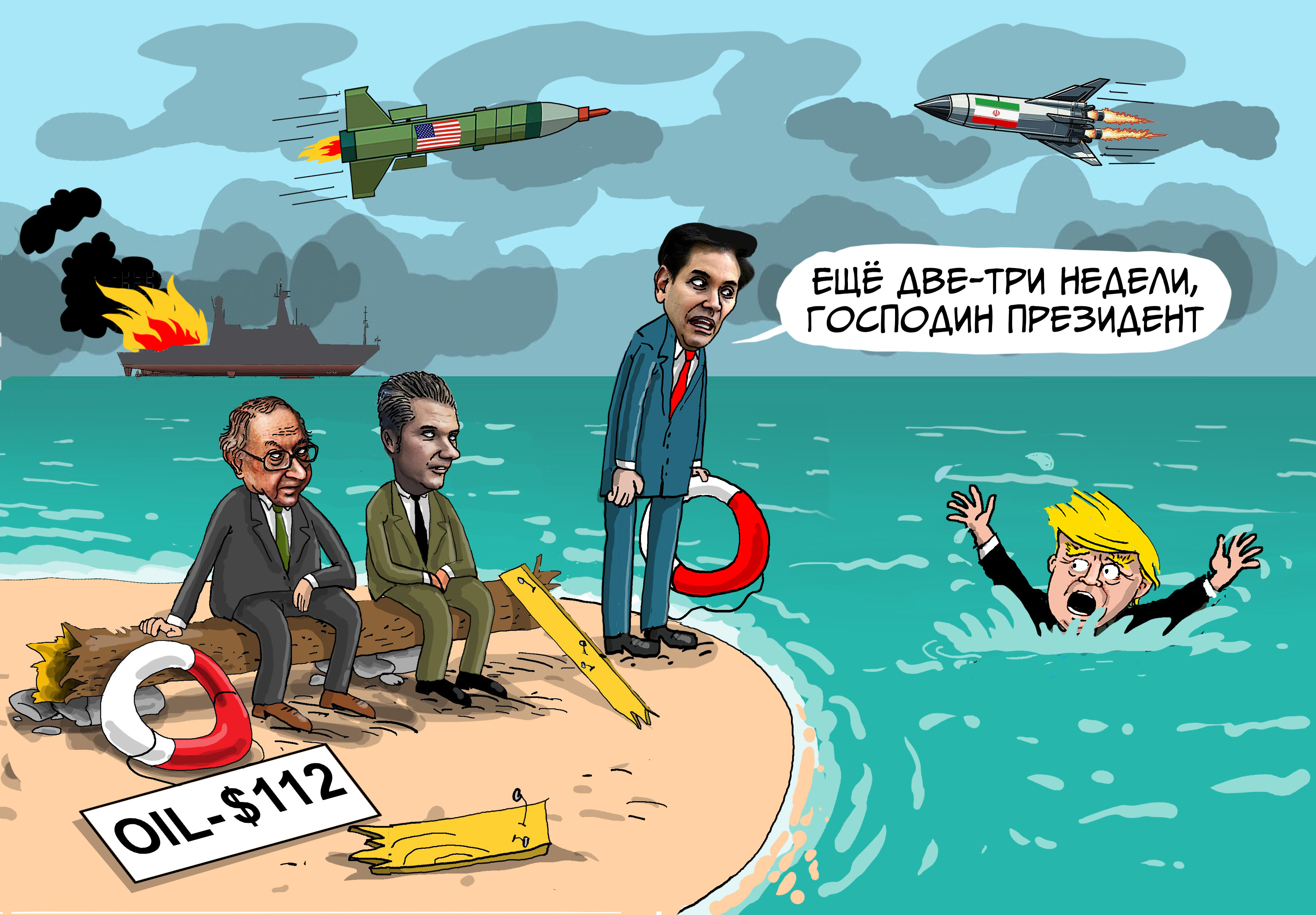
The expert also draws attention to the fact that the president's ratings are stagnating amid unresolved socio-economic problems, including rising prices. In these circumstances, according to him, foreign policy actions, even if they failed to achieve all the goals, can be used to strengthen the positions of Republicans before the elections.
Discontent with Iran is growing in the Arab world
The escalation of the conflict is already directly affecting the countries of the Persian Gulf, turning them into one of the key risk zones. An additional factor of tension was the attacks on the energy infrastructure of the region. In particular, the Qatari state-owned company QatarEnergy reported serious damage to the Ras Laffan industrial area in the north of the country, a key center for the production of liquefied natural gas. According to the Qatari authorities, the Iranian attack led to fires in the complex, which provides about a fifth of the world's LNG supplies.

The Qatari Foreign Ministry called the incident a dangerous escalation and a direct threat to national security, stressing that Doha reserves the right to retaliate. The strike was part of Tehran's stated retaliatory strategy: earlier, the Iranian side warned of its readiness to attack energy facilities in the Persian Gulf countries in response to attacks by the United States and Israel on the infrastructure of the South Pars gas field.
The States of the Cooperation Council for the Arab States of the Persian Gulf demonstrated the most severe reaction. Saudi Arabia has significantly toughened its rhetoric against Tehran. The kingdom's foreign minister, Prince Faisal bin Farhan Al Saud, said that Riyadh reserves the right to respond militarily in case of further attacks.
Since the beginning of the conflict, Saudi Arabia has been attacked by hundreds of Iranian missiles and drones, most of which have been intercepted. Farhan said that although Riyadh still prefers the diplomatic path, further Iranian attacks will almost certainly destroy any remnants of trust. Escalation, apparently, may open up opportunities for normalization of relations between Israel and Saudi Arabia. According to Israeli Ambassador to Russia Oded Yosef, a successful campaign against Iran can revive the "Abraham Agreements" and strengthen regional cooperation between Arab countries and Israel.

At the same time, an emergency meeting of the foreign ministers of a number of Arab and Islamic states was held in Riyadh, including Azerbaijan, Bahrain, Egypt, Jordan, Qatar, Kuwait, Lebanon, the United Arab Emirates, Pakistan, Saudi Arabia, Syria and Turkey. The participants of the meeting unanimously condemned the attacks on the territory of the countries of the region, emphasizing the inadmissibility of attacks on civilian facilities and strategic infrastructure, including oil companies, airports and water supply facilities.
In the final statement, the ministers indicated that the further development of relations with Iran will directly depend on its willingness to respect the sovereignty of neighboring states and refrain from interfering in internal affairs.
However, the mediators who had previously been involved in the negotiation process were critical of what was happening. In particular, Oman's Foreign Minister Badr al-Busaidi said that the US and Israeli strikes on February 28 took place just a few hours after the most meaningful round of negotiations and actually destroyed the real chances of reaching a compromise.
The Israeli leadership convinced the United States that Iran was so weakened by sanctions, internal contradictions and attacks on nuclear facilities in June 2025 that immediately after the first strikes and the assassination of the supreme leader, Tehran's unconditional surrender would follow, Badr al-Busaidi wrote in an article for the Economist.

"But now it has become clear that in order to achieve the goals set by Israel, a long—term military campaign will be required, during which the United States will be obliged to begin the ground phase, opening a new front in the endless wars that (US President Donald) Trump had previously promised to end," he stressed.
The Omani diplomat believes that Iran's subsequent retaliatory actions, directed, according to him, against American targets in the countries of the region, have become a "predictable, albeit deeply undesirable" outcome of the escalation. According to him, this was the only rational option for the Iranian leadership.

The "Aviation Fist" of the Gulf Monarchies
According to orientalist Kirill Semenov, Saudi Arabia and the UAE have at least 400 modern combat aircraft in total.
Abu Dhabi has a high—tech fleet, which includes about 80 F-16 fighter jets and an impressive number of French Mirage. Given the active contracts for the supply of Rafale and Eurofighter aircraft, the Emirates is ready to deploy about 150 pieces of equipment capable of hitting targets deep in Iran's rear," he explained.

Saudi Arabia has an even larger resource. According to the expert, the kingdom has about 250 shockwaves at its disposal. In fact, this combined "fist" is numerically superior to the American air group stationed in the region on bases and aircraft carriers.
Together with Qatar, the region's air group reaches about 500 units, but the direct entry of Arab countries into the conflict is constrained by external and internal factors.
— The UAE looks like the most decisive link in the coalition. Direct agreements with Israel remove many prohibitions for them, which makes their participation in joint operations with the Jewish state quite likely, Kirill Semenov believes. — The situation with Qatar is different. Doha has carried out a huge modernization, purchasing dozens of F-15s and Rafales, but it will avoid military alliances with Israel until the last moment, so as not to provoke the discontent of its own population.
The third factor is Riyadh's caution. For Saudi Arabia, an open alliance with the Israeli side against Tehran remains an extremely sensitive topic. Most likely, the kingdom's reaction will be reduced to demonstrative pinpoint strikes designed to confirm its readiness for defense while maintaining diplomatic channels.

The analysis of the defense potential of the countries of the region builds a clear hierarchy. Saudi Arabia remains the leader with the most balanced army. According to military expert Dmitry Kornev, the Royal Strategic Missile Forces with 40 Chinese DF-3 ballistic missiles with a range of over 2,500 km, comparable to the eliminated Soviet R-12 and R-14, are considered a key deterrent. The kingdom's naval potential with frigates and corvettes makes Saudi Arabia a key player in the region.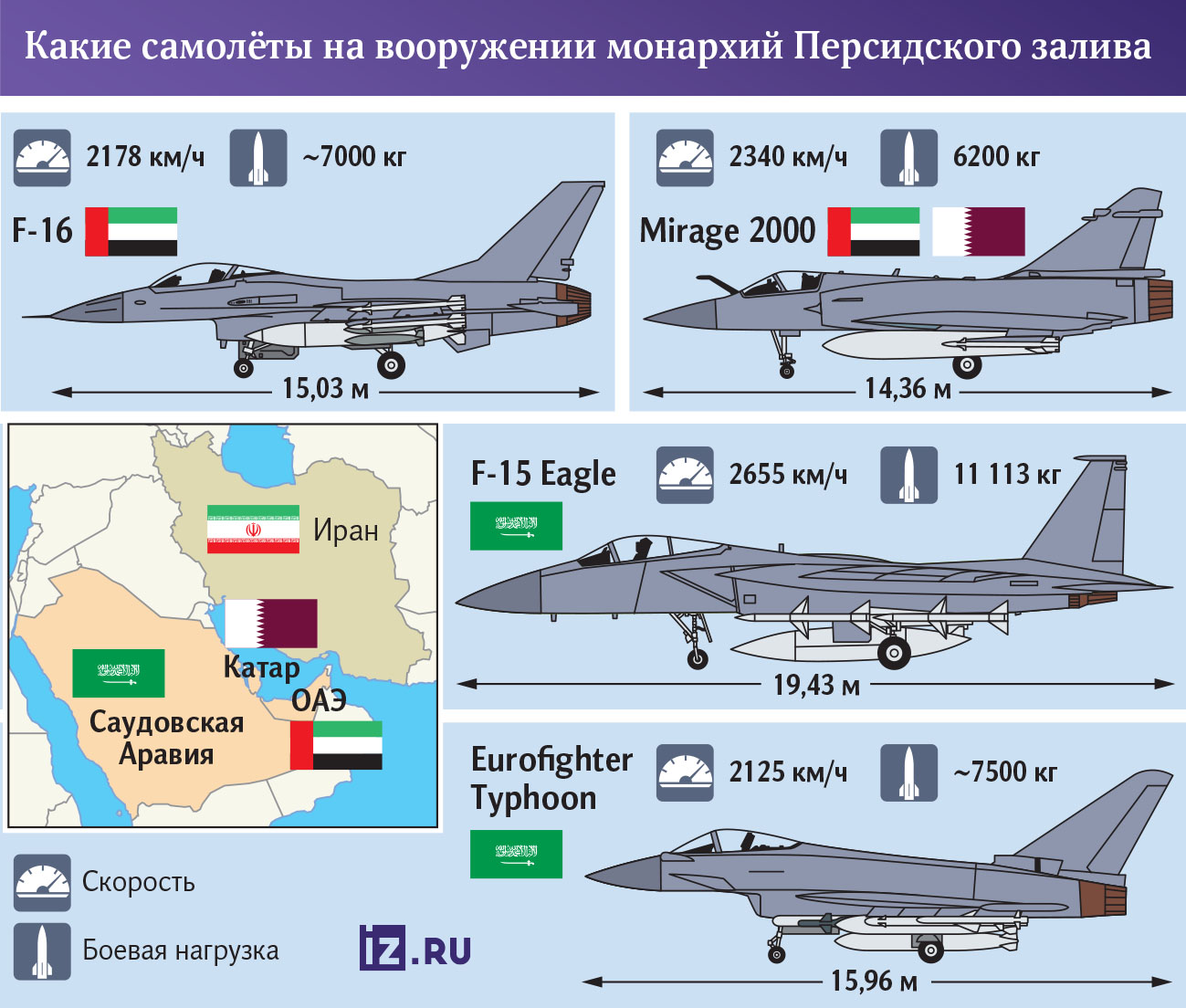
The UAE relies on ground forces: the core of the army consists of 390 French Leclerc tanks with a high degree of automation. Their Air Force and Apache attack helicopters are able to significantly support operations in the air.
Despite the presence of heavy armored vehicles, experts agree that a direct collision on land looks unlikely.

"Remote air operations remain the most predictable format of participation for all three states,— Dmitry Kornev summarizes. — At the same time, if the UAE and Qatar are perceived more as auxiliary forces with a powerful aviation wing, then Saudi Arabia has a self-sufficient potential to conduct full-scale military operations in all environments.
In the case of the total involvement of the Gulf monarchies, the military capabilities of the anti-Iranian bloc in the region will double. However, the political cost of such a move for Riyadh and Doha still outweighs any tactical benefits.
Переведено сервисом «Яндекс Переводчик»
