
Fake news: migrants in Russia are illegally registered via the Internet

In Yekaterinburg, the Kirovsky District Court not only fined a local resident for fictitiously registering nine foreigners, but also confiscated his room for state revenue. The verdict may become a turning point in judicial practice in cases of illegal migration. If the decision stands in the cassation and appeal instances, this may indicate the launch of a new tough policy towards violators of migration legislation. The reason for this step is the massive criminalization of the market for permits. Izvestia figured out how illegal immigrants solve their problems with papers and who helps them in this.
The verdict with the withdrawal
A Yekaterinburg resident found guilty of organizing illegal migration was left without a living space, which he used to accommodate and fictitiously register foreign citizens. According to the investigation, from January to July 2025, the man, for selfish reasons, registered foreign citizens in two real estate objects belonging to him — on the street of the 40th anniversary of Komsomol and Danila Zverev. He realized that the migrants would not live at these addresses, but he regularly registered them. He received a fee for his services.

The defendant fully admitted his guilt. The court sentenced him to a fine of 300,000 rubles under Article 322.3 of the Criminal Code of the Russian Federation (fictitious registration of a foreign citizen). At the request of the state prosecutor, the court also decided to confiscate the housing, applying paragraph "d" of part 1 of Article 104.1 of the Criminal Code of the Russian Federation. One of the rooms was seized for state revenue as a "means of committing a crime" in the field of illegal migration, according to a press release from the prosecutor's office of the Sverdlovsk region.
The issue of confiscation
Law enforcement practice shows that the confiscation of property, especially real estate, is a rare case for Russian justice. Most often, in such cases, the confiscation concerned only machinery.
— This is the first time I've heard of apartments and rooms being confiscated. To be honest, it surprised me very much," admits lawyer Pavel Korniako.

According to him, in his practice, confiscation under "migration" articles concerned only equipment, in particular mobile phones used for registration through "State Services". The key question, according to the lawyer, is whether the living room can be considered an instrument of crime.
— The Criminal Procedure Law provides for the confiscation of the instrument of a crime. For example, if a person deprived of his license gets caught drunk driving for the second time, his car is confiscated," the expert explains, adding that he personally does not consider the living room to be a crime weapon in this case.

Korniako draws attention to the fact that the resolution of the Plenum of the Supreme Court No. 17 dated June 14, 2018 describes in detail what can be considered "an instrument, equipment or other means of committing a crime" — real estate is not listed in this list.
— I think, in any case, this verdict will be appealed in this part. Let's see how the higher courts will react to this," the lawyer concludes.
About the reasons for the appearance of "rubber flats"
The expert also draws attention to a systemic problem: the law requires a foreigner to register for migration within 3-7 days, but it is extremely difficult to find an owner willing to do this legally.

— Russian citizens are reluctant to do this, because it entails tax burdens and additional control from the Interior Ministry. Therefore, intermediaries appear who, for a fee of 3 thousand to 10 thousand rubles per person, register migrants without real residence. They get an official piece of paper and go to work, and they rent their homes informally, which does not create a tax burden on the landlord," sums up Korniako.
"Assalom alaikum, fellow travelers"
Izvestia analyzed several popular Telegram channels aimed at people from Central Asia who are experiencing difficulties with legal registration of documents for work and residence in Russia.
Channels of this kind resemble a colorful oriental bazaar: here you can find legal work, help with paperwork, and frankly criminal offers. But the first thing that catches your eye, even with a cursory glance, is marketing. Almost every document sale announcement begins with a traditional greeting.
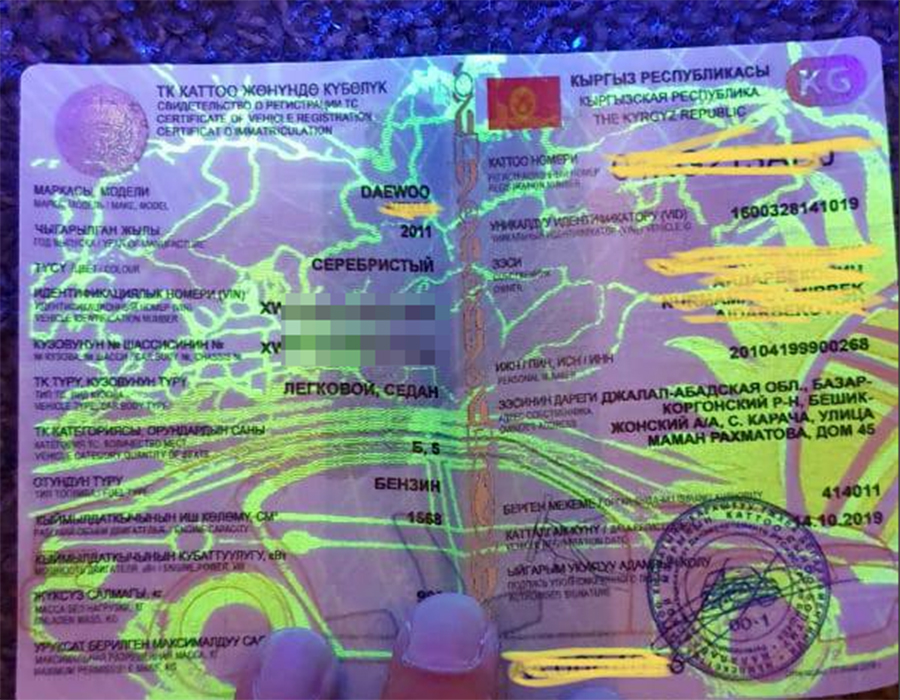
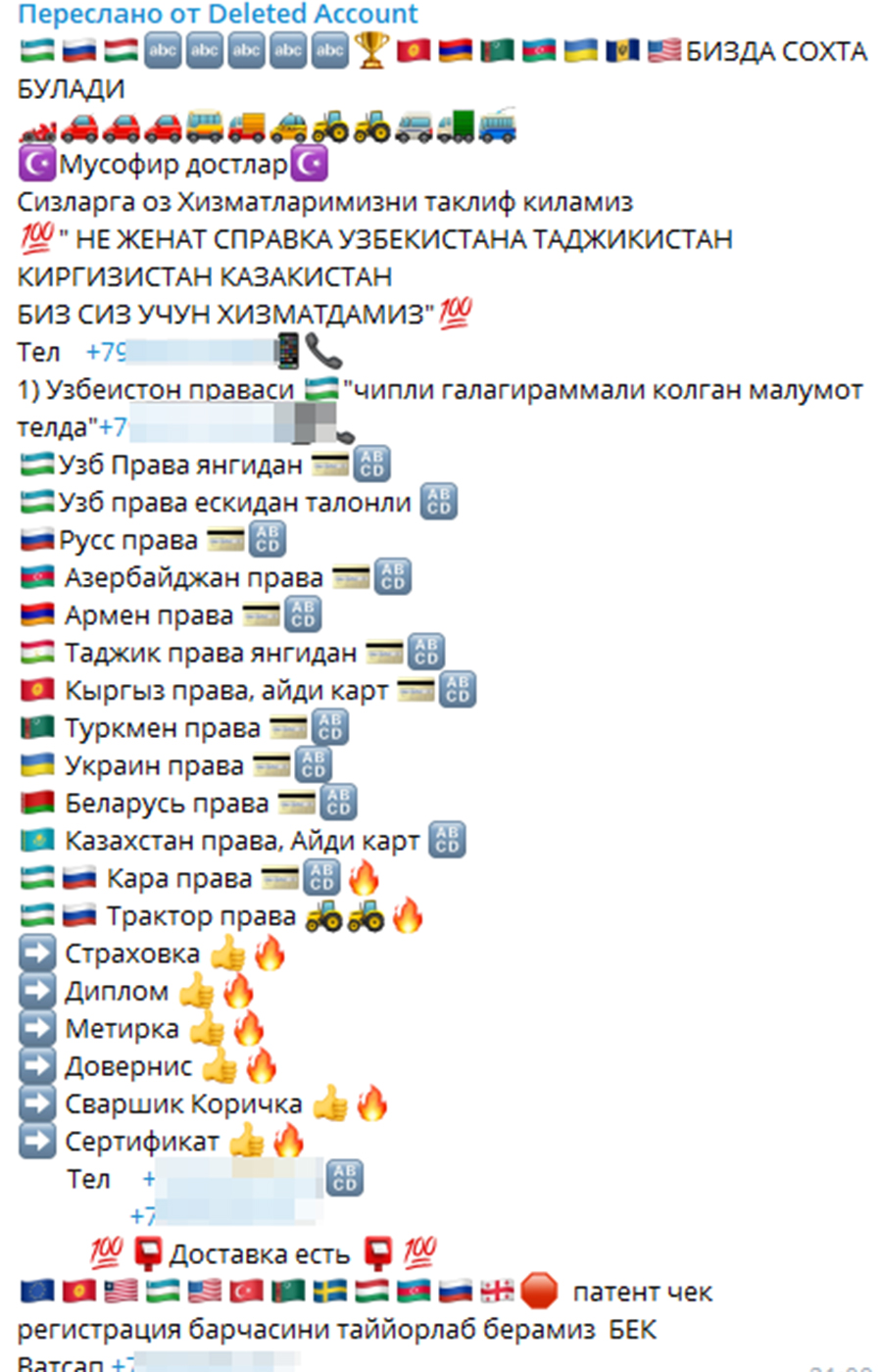
"Assalom alaikum, musofir dostlarim" (Uzbek: peace be upon you, fellow travelers; the spelling of the ads has been preserved hereafter), the author of one of the posts addresses potential clients. "Sizlarga uz hizmatlarimizni taklif kilamiz" (Uzbek: we offer you our services), he continues, followed by a list of offers that have all the signs of criminal offenses.

A polite tone is a way to establish trust with an audience, because illegal aliens are in a vulnerable position in a foreign country without knowledge of the language and laws. The creators of the shadow business are also playing the "honesty card". Almost all ads are accompanied by the slogan "Halolik foydadan ustun" (Uzbek— honesty is above profit). This phrase, designed to emphasize the integrity of the seller, accompanies the price list for fake patents and fake migration cards.
"Registration is 100% clean"
The most popular product is the opportunity to legalize without actually living at the address. The range of services is wide — from gray corruption schemes to outright forgery.
"Registrasa sokhta 500," the user reports in Uzbek, offering a fake registration for 500 rubles.
More ambitious players guarantee quality. "The registration of toza is 100%," the posts indicate ("toza" in Uzbek means "clean").
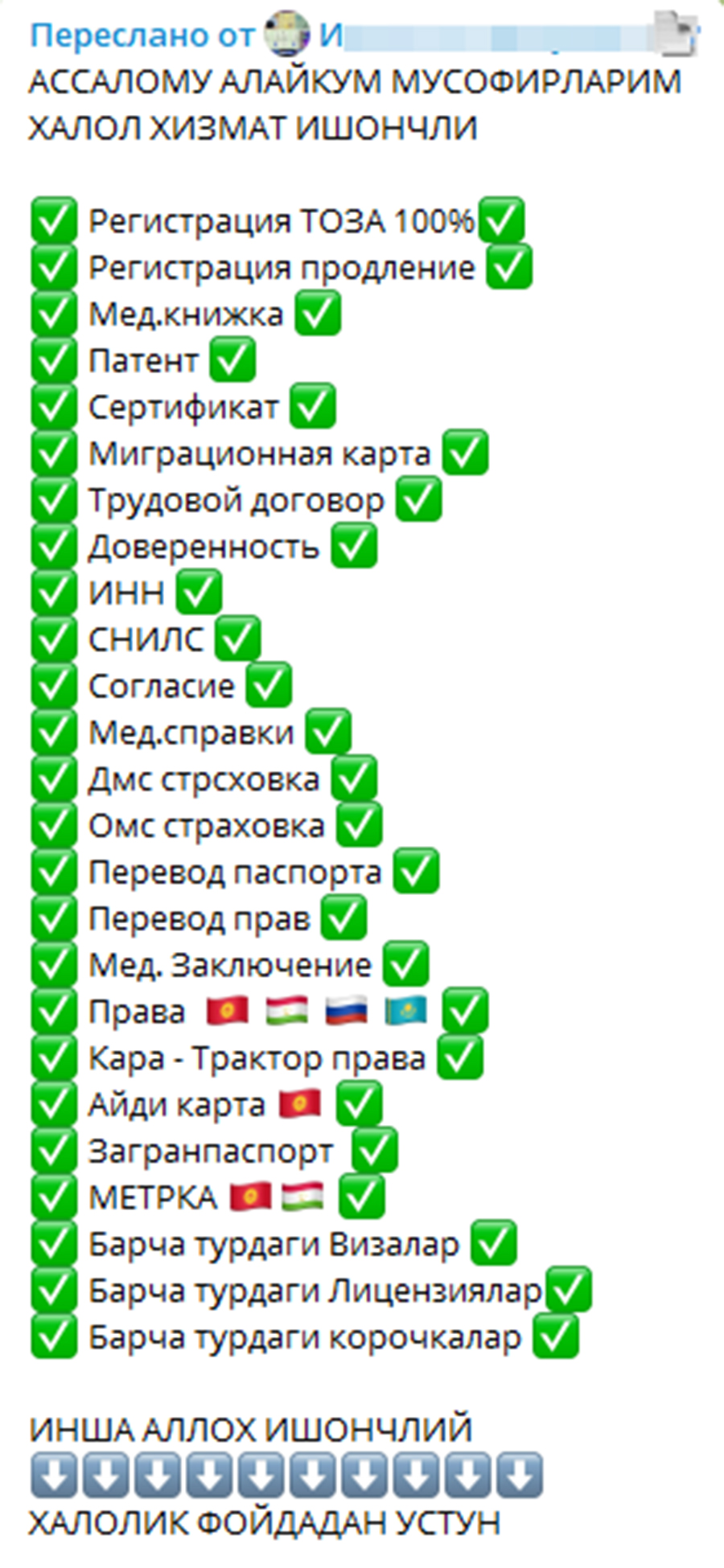
One of the channels promises to conduct documents on official databases, hinting at corruption links: "The original index is a fact. Registration 1000000 foiz bazasiga" (Uzbek — registration, which will get a million percent into the database).
Turnkey forgery
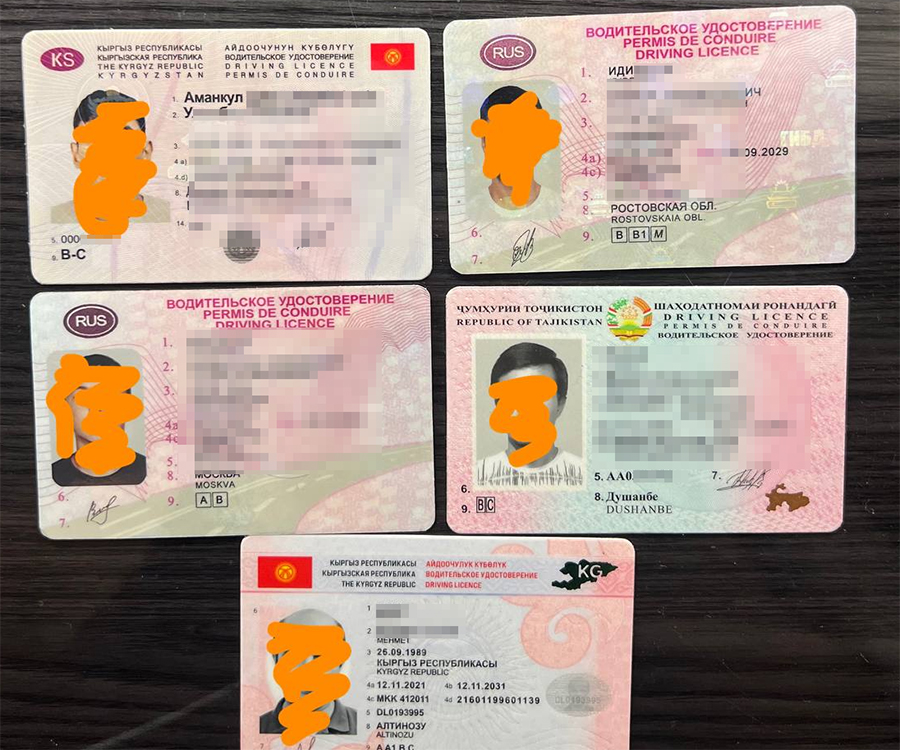
The range of shadow printers is extremely diverse — "specialists" are ready to produce a document for any occasion and for any employment.
"Uzbekiston pravasi" chipli galagirammali "kolgan malumot telda," the scammers are touting, offering Uzbek rights with a chip and a hologram.
"Mountaineer crust 3000 rubles / Welder certificate 3000 rubles," the following message says. So for a modest fee, almost anyone can become a licensed specialist.
If medical certificates are required for a patent, shadow specialists offer ready-made solutions: "Clean medical book / Covid-19 psr test / Sick leave / Certificate 0-86." Forging a sick leave or a kindergarten certificate takes this business far beyond the migration sphere.
Ids and "kara rights"
In addition to the obvious forgeries, there is a demand for real identification documents. "Snils clean / Inn clean," is listed in the list of services. Such documents provide access to numerous fields of activity. And in the future, this allows the foreigner to count on various kinds of payments and privileges.
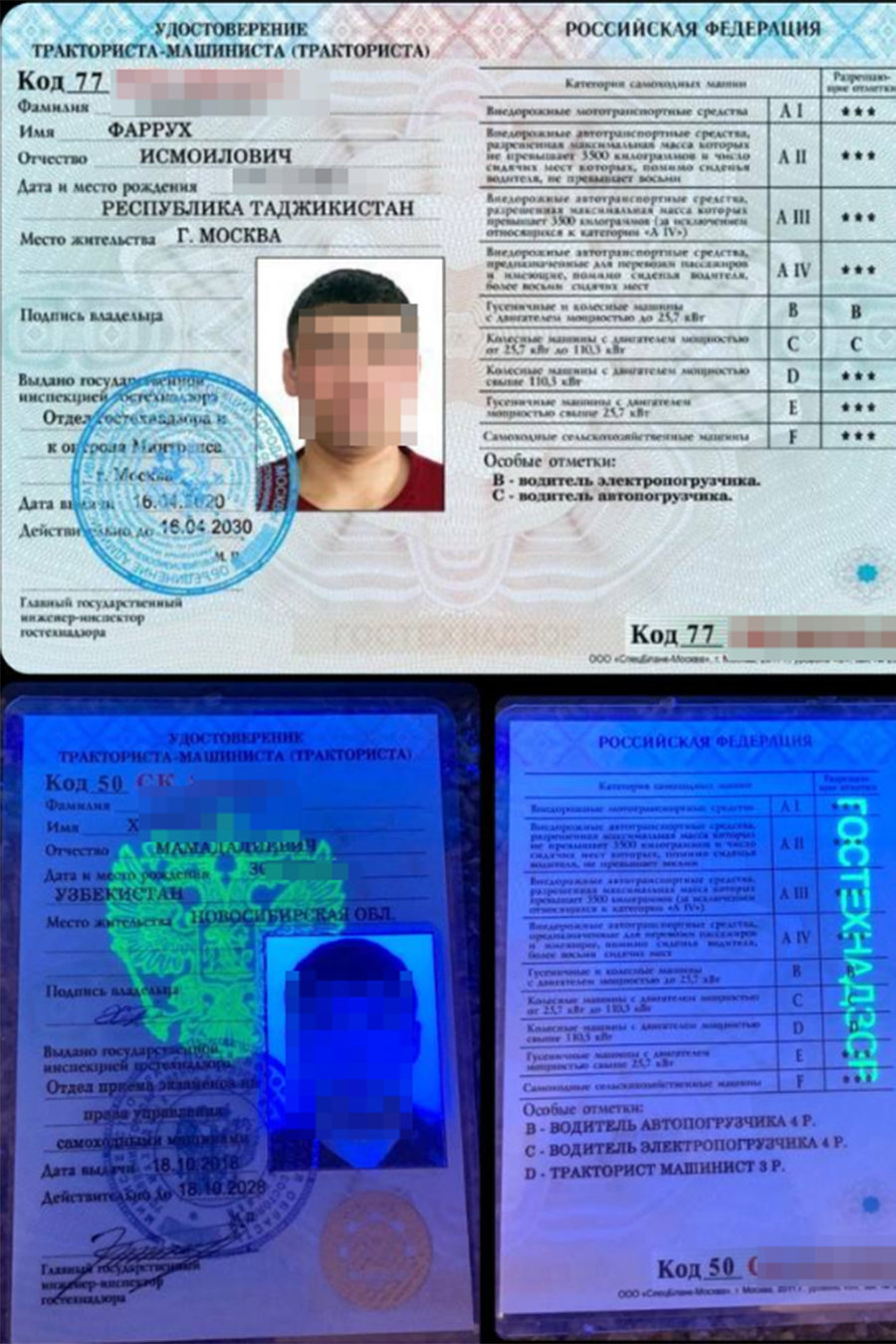
A separate article is the rights to special equipment. "Krg [Kyrgyz] rights / Uzbek rights / Kara rights / Tractor rights". The abbreviation "kara" is used in Central Asia to designate the rights to manage freight transport. Thus, the shadow market opens access to highways for people who have never been behind the wheel. It is not a fact that the documents will pass even the first check at the traffic police post, but foreign drivers with a "fake" are regularly caught by the police on the road.

Mixed up with employers and erotomaniacs
An analysis conducted by Izvestia based on open sources showed that naturalized Russian citizens who speak the languages of the Central Asian republics are engaged in "helping" migrants.
Links to such channels are posted all over the Internet, primarily on adult channels — transitional links are found on porn resources where commenting is allowed.
Representatives of the criminal business also promote their services on cryptocurrency channels and forums, as well as on illegal currency exchange websites.
At the same time, legitimate companies with a shortage of personnel also post their ads on Telegram channels. Even large recruiters are looking for employees in different regions of the country. "Salary: 3,300 rubles. shift. Free accommodation + help with registration in the region; free meals; free medical certificate," the vacancy says.
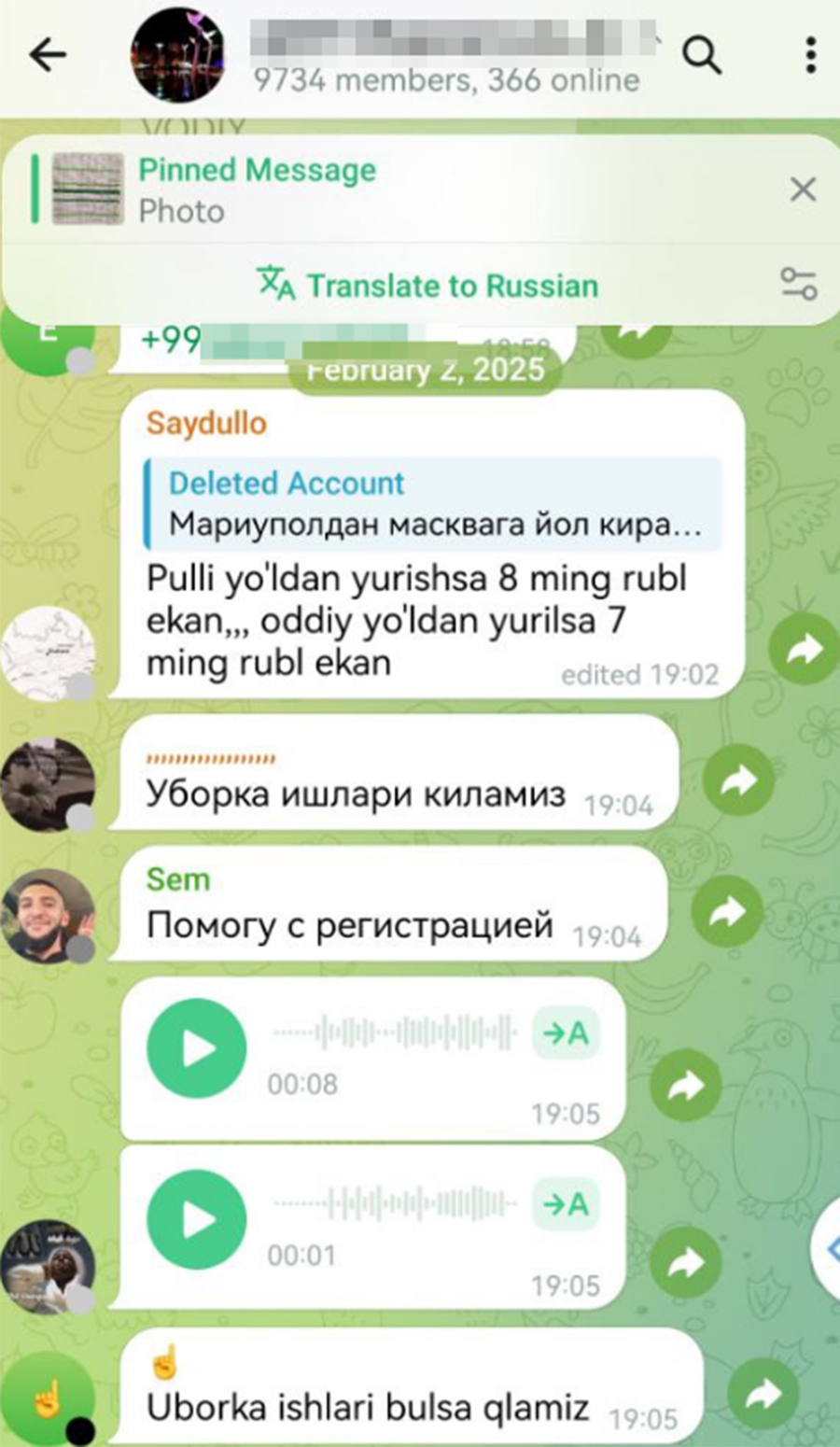
Such ads in questionable channels are a diagnosis of the system of working with foreign labor. Even a law-abiding business is forced to promise assistance with a "residence permit" in order to compete with the shadow sector.
Переведено сервисом «Яндекс Переводчик»
