- Статьи
- Science and technology
- The Muses of the Spheres: how female scientists create "smart" fabrics and perform quantum calculations

The Muses of the Spheres: how female scientists create "smart" fabrics and perform quantum calculations

By March 8, Izvestia is talking about women who determine the agenda of Russian science — from mathematical models of space processes and green chemistry to quantum computing, veterinary immunology and "smart" materials. Their research is already finding practical applications in agriculture, industry, climate forecasting, and high technology. And personal stories prove that the path to big science begins with curiosity and the courage to move on, despite stereotypes and the choice between a career and a family.
Mathematical billiards
— We all lived in a dormitory on Lomonosovsky Prospekt. We lived very amicably and had fun, helping each other both in everyday life and in school. Common interests, a similar outlook on the world, and a love of mathematics — my faculty friends have become a new family for me. We still communicate and support each other," Victoria Vedyushkina, Doctor of Physico—Mathematical Sciences, Professor of the Faculty of Mechanics and Mathematics at Moscow State University, winner of the Russian President's Prize in Science and Innovation for Young Scientists for 2025, told Izvestia.

Victoria Vedyushkina
In graduate school, the girl came to discover a new class of billiard systems and search for their connections with systems of classical mechanics (billiard systems are models of the movement of material particles on a plane inside a certain limited area, by analogy with the movement of a ball on a billiard table). Already during the preparation of the PhD thesis, the idea of a deeper continuation appeared — new effects, new patterns, new generalizations. These results formed the basis of a study awarded the prize of the President of the Russian Federation.
The practical benefit of the discovery is the ability to build simpler visual models for space, engineering, and other fields. In addition, the studied systems are beginning to be used for training neural networks. The research takes place within the framework of the Decade of Science and Technology.

Air and light as green reagents
Vera Wil, the first female winner of the National Prize in the Field of Future Technologies "Challenge" in the "Perspective" nomination, has been interested in chemistry since the ninth grade and thought all her youth that she would become a chemical technologist. Her dream was to build chemical plants where new substances and materials are created. She came to the Institute of Organic Chemistry of the Russian Academy of Sciences almost by accident, responding to an announcement about the recruitment of students to do scientific work in the Laboratory for the Study of Homolytic Reactions. And it became a life's work.

Vera Wil
Now she is a Doctor of Chemical Sciences and head of the laboratory at the Zelinsky Institute of Organic Chemistry of the Russian Academy of Sciences. She received the award for developing environmentally friendly methods for creating new chemical bonds using electric current and organic peroxides. Its technology allows the synthesis of functional molecules used in the production of polymers and plant protection products. According to her, an important achievement of organic synthesis in recent years has been the use of "renewable reagents" — oxygen in the air, carbon dioxide, as well as available energy sources: visible light and electric current for chemical transformations.

— Female researchers often face a difficult choice — to take advantage of measures to support young scientists and develop a scientific career, or to go on maternity leave without postponing the time of having children. The Russian Science Foundation was the first to introduce a very important "clock-stopping policy": time spent on parental leave is "frozen." Thus, a girl can safely get out of maternity leave, and she will still have enough time to grow as a novice scientist," Vera Wil told Izvestia, answering a question about the necessary measures to support women in science.
The Ministry of Science and Higher Education has now implemented the same policy in a number of competitions.

Safe vaccines for farm animals
A team of scientists led by Professor, MD, Chief Researcher, Professor of the Department of Microbiology and Biotechnology at Vavilov University, member of the Expert Council of the Russian Academy of Sciences Valentina Fedorova is engaged in research in the field of veterinary immunology, vaccine prevention and molecular genetics of infectious diseases of animals.
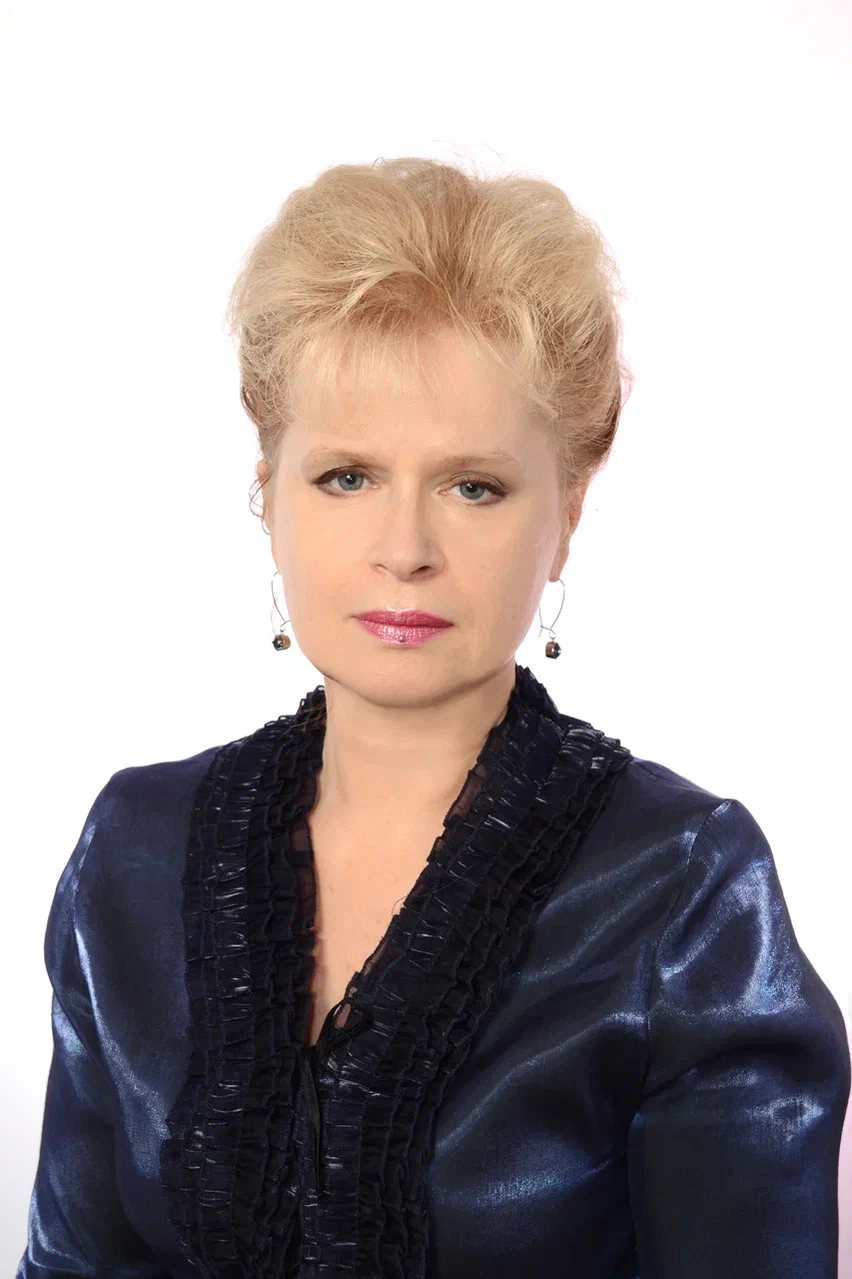
As part of a project supported by a grant from the Russian Science Foundation, scientists have for the first time in the world completely decoded the genome of a strain of Listeria monocytogenes bacterium used as a live veterinary vaccine. During the work, key genes influencing the attenuation of listeria were identified, as well as candidate genes for removal from the existing vaccine. These results create the basis for the development of safer and more effective next-generation drugs that can reduce the risk of human infection with listeriosis through food.

The results of the research team's work contribute to strengthening food security and sustainable development of agriculture.
— It is worth going into science for the sake of new unique discoveries that can improve the quality of life and health of many people, animals and the whole country; find and offer extraordinary solutions to seemingly impossible scientific tasks; be a part of the global scientific community, meet and communicate with outstanding scientists and interesting people and even work with them on joint projects. to uncover the secrets of nature by creating new products with the help of advanced nature—like technologies for a healthier, happier and longer life for our fellow citizens," Valentina Fedorova told Izvestia.
Smart weatherproof fabric
Olga Molokanova, Director of the Polymer and Composite Materials SmartTextiles Scientific and Educational Center at the Immanuel Kant Baltic Federal University, Candidate of Technical Sciences, has created a smart fabric that adapts to weather conditions. Its special feature is its built—in filaments and functional properties that respond to environmental conditions and help a person feel comfortable. The material can heat up in the cold and cool down at elevated temperatures.
As a child, the girl did not dream of laboratories and scientific discoveries at all. Like many girls, she loved playing with dolls, designing outfits for them, and creating beauty. In high school, Olga was seriously preparing to enter a circus school and dreamed of becoming a professional circus athlete. But one day, as she says, "something inside clicked," and the documents were sent to the St. Petersburg State University of Industrial Technology and Design. The expectations were related to the classical understanding of design, but the reality turned out to be much deeper and more interesting.

Olga Molokanova
In graduate school, he developed an interest in polymers and composites for the textile industry. It was not just about materials, but about technical, smart, electronic textiles, a high—tech field at the intersection of engineering, chemistry and design.
— To be honest, I realized the importance of the field in which I worked two years after defending my PhD thesis, when I was preparing a large report on my developments. I was struck by how multifaceted the world of polymer composites is and what prospects there are in it. And here technology and aesthetics are combined again: strength, functionality and beauty of form," she admitted.
The research takes place within the framework of the Decade of Science and Technology.

Weather and climate models
The scientific team, led by Irina Repina, Doctor of Physico-Mathematical Sciences, Deputy Director for Scientific and Technical Development at the A.M. Obukhov Institute of Atmospheric Physics of the Russian Academy of Sciences, a grant recipient of the Russian Science Foundation, a member of the Russian Academy of Sciences Expert Council, conducts fundamental and applied research on the interaction of the atmosphere with the hydrosphere (ocean, lakes, rivers, reservoirs, swamps) and the cryosphere.

Irina Repina
The team develops parameterizations for weather and climate models, as well as methods for reconstructing the characteristics of the sea surface and ice cover based on satellite data.
— For me, there are two equal poles in my work: the result and the path to it. In science, it's not enough just to want to discover something, you need to build the most complex logistics - from the allocation of resources and time to the selection of methods. It's like being a navigator who navigates an unknown territory. The main thing here is not just to walk, but to choose the only path that will allow you not to lose your way, save the team's efforts and at the same time not pass by a truly significant discovery," Irina Repina told Izvestia. — But in recent years, I have realized that creating new knowledge is pointless if there is no one to pass it on to. Therefore, the second, no less important aspect for me is teaching.

Irina Repina
As part of a project supported by a grant from the Russian Science Foundation, scientists have developed a new model of turbulent flows for the stable boundary layer of the atmosphere, the layer closest to the earth, where conditions are formed that affect the spread of pollution. This result is important for ecology and improving the reliability of weather forecasts and climate change modeling.

Suppression of the "noise" of quantum computers
Alyona Mastyukova, a researcher at the Russian Quantum Center and Laboratory at MISIS University, secretary of the scientific committee of the National Challenge Award, did not have the image of a "typical scientist" and examples of women in theoretical physics in her school years. But she was lucky to have a physics teacher who never divided students into techies and humanities, but said: "If you're interested, go and dig deeper, solve problems to understand what's going on." Probably, this was the turning point in her career, the girl admits.
Her research is now focused on moving from theoretical principles to practical quantum devices.
— I am researching architectures of quantum computing systems and algorithms for working with noisy quantum devices. To put it more simply, modern quantum computers are still unstable, they "make noise" and make mistakes. My task is to understand how to use them as efficiently as possible right now, before perfectly scalable machines appear," she told Izvestia.

Alyona Mastyukova
If we talk about the attitude towards women in theoretical physics, then in her work the girl faced different stereotypes.
— But something else is much more important — support. I was lucky to meet scientific supervisors and colleagues who evaluated me on ideas, not on the fact that I am a girl. In my opinion, always and everywhere we need not so much separate "benefits" as transparent selection and promotion procedures, mentoring programs for young researchers, support at the stage of combining science and family (flexible schedules, clear rules for maternity breaks in academic careers) and visible role models," Alyona Mastyukova told Izvestia.
According to her, when a very young student sees a female professor in quantum physics, it ceases to be something impossible for her.
Переведено сервисом «Яндекс Переводчик»
