Biohacker attack: "hacked" bacteria will simplify the production of anti-new infections
- Статьи
- Science and technology
- Biohacker attack: "hacked" bacteria will simplify the production of anti-new infections


Russian scientists have developed a way to disable the protective system of one of the most sought-after bacteria in biotechnology. This allows you to seamlessly insert foreign DNA into it and force the microorganism to produce the necessary substances, for example, components of medicines. Previously, it took researchers several years to create a new producer strain, but now this process can be reduced to six months. According to experts, the technology will significantly accelerate the development of new drugs and vaccines, which is especially important in conditions of the risk of new pandemics.
"Hacking bacteria"
Researchers from the Moscow Institute of Physics and Technology (MIPT) have for the first time found a way to pointwise disable the protective system of the bacterium Bacillus licheniformis, one of the main microorganisms in global biotechnology used in the production of enzymes, antibiotics and other substances. This discovery will significantly simplify and accelerate the genetic modification of microbes to create industrial strains with desired properties.
— Many producing strains are created on the basis of Bacillus licheniformis, but the process itself remains extremely laborious. To do this, it is necessary to introduce foreign DNA into the microorganism, but due to the activation of protective mechanisms, bacteria often die. As a result, many unsuccessful options have to be consistently rejected, and the search for a working modification can take years. We have discovered a sequence in these genes that the bacterial immune system responds to. And if you turn it off, then this set decreases to six months," said Anna Kudryavtseva, senior researcher at the Laboratory of Molecular Genetics at MIPT.
Bacteria defend themselves against viruses by using restriction-modification systems that attack foreign DNA. The scientists examined it in Bacillus licheniformis using next-generation sequencing, and determined the exact DNA sequence that the system recognizes and attacks.
— We not only described the protective system, but also showed for the first time that its work can be effectively suppressed in vitro using the ArdB protein. Previously, it was believed that proteins of this family work only in living cells, which imposed restrictions on their study and application. Our work is changing this paradigm," said Rodion Berezov, one of the authors of the project, an engineer at the MIPT Laboratory of Molecular Genetics.
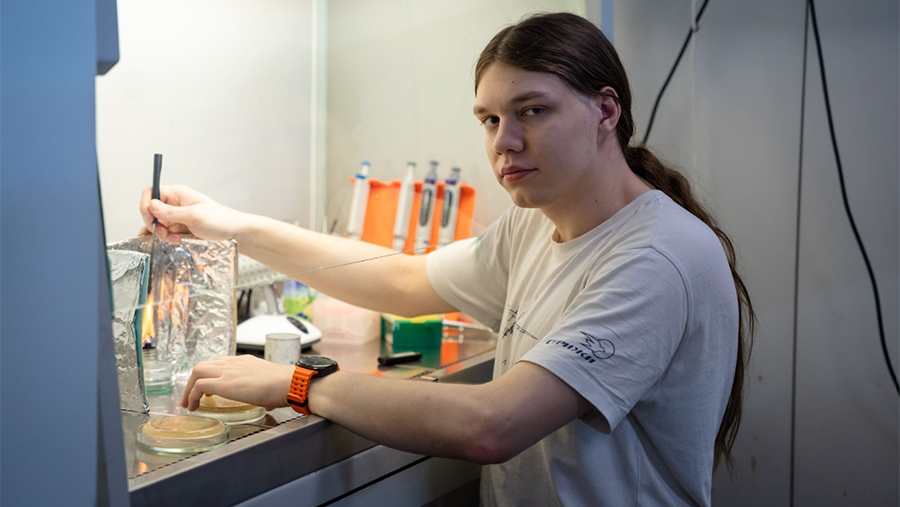
Now, knowing the exact target of the defense system, scientists will be able to design plasmids for the genetic transformation of Bacillus licheniformis without these sequences, which will actually bypass the bacterium's immune defenses. In addition, researchers can use the ArdB suppressor protein as a tool to temporarily disable the protective mechanism, which will significantly increase the efficiency of producing producing strains.
— The experiment was clear: the purified BlihIA complex cut only a specific DNA sequence. But when adding ArdB, the slicing process stopped completely. This is a direct proof of the influence of ArdB on the BlichIA interaction (restriction-modification system. — Ed.) with DNA, — added Anna Kudryavtseva.
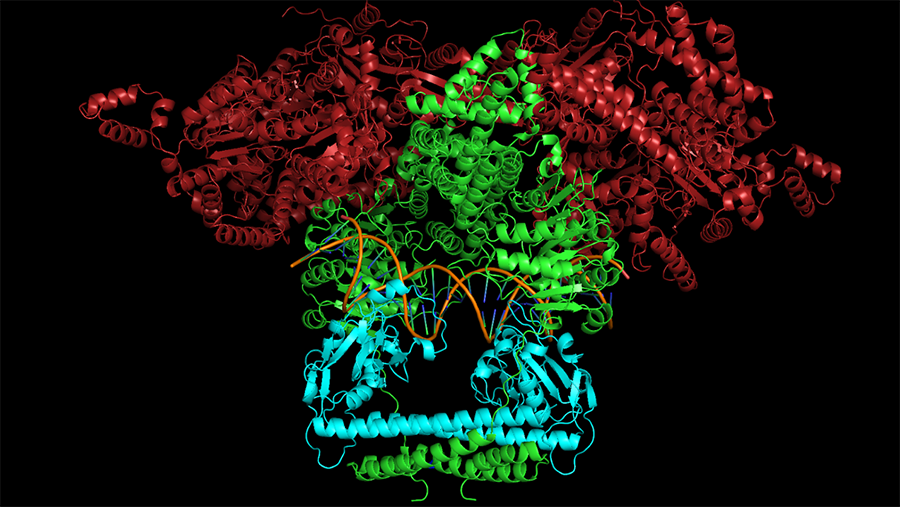
The discovery removes the restriction for working not only with this bacillus, but also with other industrially significant microorganisms, the developers added.
Accelerated creation of medicines and vaccines
Restriction-modification systems in bacteria serve as "immunity" against foreign DNA and often seriously inhibit genetic transformation. If this barrier can be turned off in a controlled and targeted manner, it really shortens the cycle of creating strains producing enzymes, proteins or metabolites, Albert Rizvanov, head of the Personalized Medicine Center of Excellence, explained to Izvestia.
"In an applied sense, this means a faster transition from a genetic construct to a stable industrial strain suitable for scaling," he said.
In the event of new pandemics, the discovery may partially accelerate the creation of means to combat them. Although vaccine development today is more often based on cell lines, viral vectors, or mRNA platforms, rather than Bacillus as a producer. But for the production of recombinant proteins — for example, antigens for subunit vaccines, enzymes for diagnostics, auxiliary bioreagents — accelerated creation of strains can significantly reduce the preparatory stage, the expert added.

As Maxim Kolyasnikov, associate professor at the UrFU Institute of Economics and Management, noted, in vitro efficiency is not always reproduced in a living cell, including due to duplication of bacterial defense systems. And the industrial strains of B. licheniformis accumulated by leading enzyme companies have already been optimized by decades of classical and molecular breeding, so it will be difficult to break into the market of the new technology.
"It is quite possible to apply the results of the work to create new producing strains in pharmaceuticals and agrobiotechnology, and further in vivo experiments will show how the discovery moves from the category of "scientific news" to the category of an industrially applicable solution," said the specialist.
The work of MIPT is important not only for the production of medicines, but it can also be used in genetic engineering approaches and for molecular biology. With its help, it will be possible to simplify and accelerate the process of transition from the scientific stage of creating new drugs to their mass industrial production. However, before entering pharmacies, they will still have to be tested for safety for quite a long time, said Nailya Zigangirova, head of the Department of Medical Microbiology at the N.F. Gamalei National Research Medical Center.
Переведено сервисом «Яндекс Переводчик»
