Theoretically speaking, Russians are starting to save on cosmetics


Russians have reduced spending on cosmetics and care products: by the end of 2025, natural sales of facial products in stores decreased by 6.3% compared to 2024, shaving products by 5.2%, and oral care products by 3.5%, according to Nielsen data. Experts attribute this to an increase in the savings model of behavior and a decrease in the assortment in stores. About how the demand for cosmetics in the country is changing and how retailers are adapting to this, see the Izvestia article.
Why cosmetics sales are falling
By the end of 2025, sales of face care products and cosmetics in stores decreased by 6.3% in physical terms. This is stated in the review of the analytical company Nielsen, which was reviewed by Izvestia. Data from more than 180 retail chains and manual audits of traditional trade channels, including data from rural Russia and the online market, were taken into account. Cosmetics sales in the country totaled 3.9 billion packages last year, which is 2% less than a year earlier, Businessstat analysts confirm.
Sales of shaving products over the same period decreased by 5.2%, body care by 4.4%, child care by 6.9% and oral care by 3.5%, respectively, according to the company's data.
In addition, the number of brands of face care products and cosmetics decreased by 13.3% over the year, which is the most significant drop among all categories of consumer goods (FMCG), according to the report. The range of products for child care decreased by 11% year—on—year, shaving products — by 7.1%, hair products - by 5.3%, and body products - by 4.1%. This has led to the fact that the buyer is experimenting less and less often and is more likely to choose brands that are already familiar to him, says an interlocutor of Izvestia in a large retail chain. According to him, the frequency of purchases is decreasing, especially in the middle price range.
However, Lenta noted that no brands have left the market in the cosmetics segment, but "the basic matrix has slightly decreased." They noted that the changes are related to the redistribution of demand between channels: customers choose products where it is more convenient and profitable. According to Magnit, cosmetics sales remain stable.
Representatives of L'Etoile and Druzhki declined to comment. Rive Gauche, Ile de Botet and X5 (Pyaterochka, Crossroads) did not respond to Izvestia's requests.

How is the demand for cosmetics changing
Within the categories, demand was redistributed in favor of new texture— functional products, the Magnit representative noted. Lip glosses and balms with a care function were popular with consumers, while sales of classic lipsticks declined slightly, he noted.
The consumer is changing the structure of demand within the category, said the representative of the Rainbow Smile. According to him, people still want to take care of themselves, but they do it "more consciously and in a diverse way." One of the key factors is the macroeconomic pressure on households, according to the McKinsey global cosmetics market survey. Against this background, the trend of consumers moving from traditional retail to marketplaces is increasing, Anastasia Melnikova, senior lecturer at the Department of Entrepreneurship and Logistics at Plekhanov Russian University of Economics, agrees.
This is confirmed by Wildberries data: on the marketplace, the turnover of care cosmetics increased by 28% by the end of 2025 compared to a year earlier, and decorative cosmetics by 20%, his representative told Izvestia. By 2030, online will provide more than 30% of global sales of beauty products, McKinsey predicts.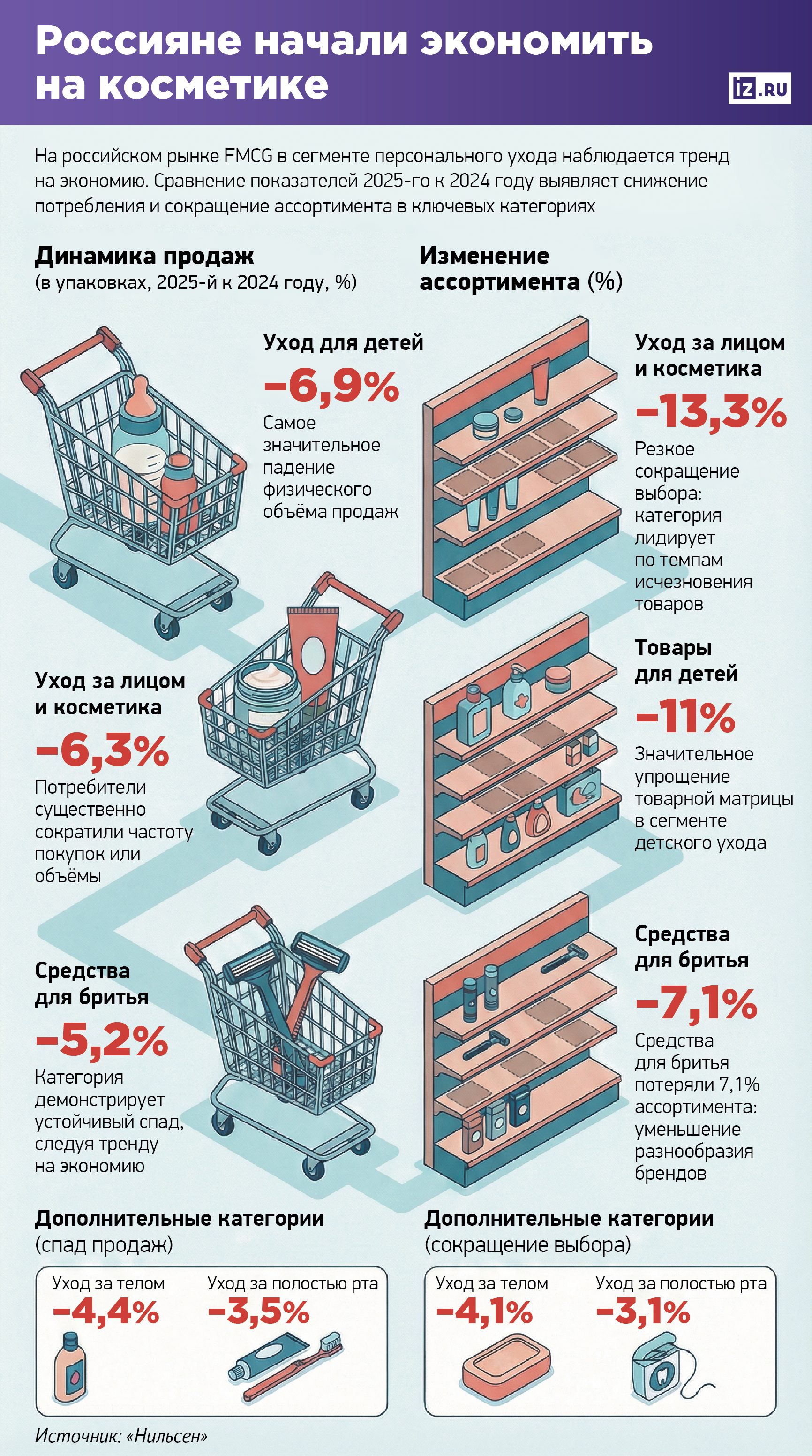
At the same time, the share of domestic brands is growing in the Russian market, said a representative of Wildberries. In the segment of care cosmetics, their share has already exceeded half. In 2025, the range of Russian brands in this category increased by 22%, in decorative — by 31%, in perfumery — by 16%, the representative of the Golden Apple added. Magnit has introduced nine new brands in the decorative cosmetics segment, five of which are domestic, said a company representative.
Retailers do not expect a decline in cosmetics sales in 2026, the chairman of the Presidium of the Association of Retail Companies (ACORT) told Izvestia Stanislav Bogdanov. At the same time, the trend of increased flow between product distribution channels will continue, he predicts. This is facilitated by the growing popularity of domestic cosmetics and the increase in the online segment, which remain key drivers for the expansion of sales of the category in 2026, analysts at Businessstat believe.
They note that to increase the availability of funds, retailers are expanding their product line under their own trademarks (STM). In 2025, Magnit rebranded its own drogery network, M.Cosmetics": within the format launched a separate brand of beauty stores "M.Kos," said his representative. This year, Lenta intends to develop new store concepts for its Smile of the Rainbow with additional service and customer experience, according to the retailer's report on the results of last year.
Переведено сервисом «Яндекс Переводчик»
