The nuclear arms limitation treaty with the United States has ended. Why is this important
- Новости
- World
- The nuclear arms limitation treaty with the United States has ended. Why is this important

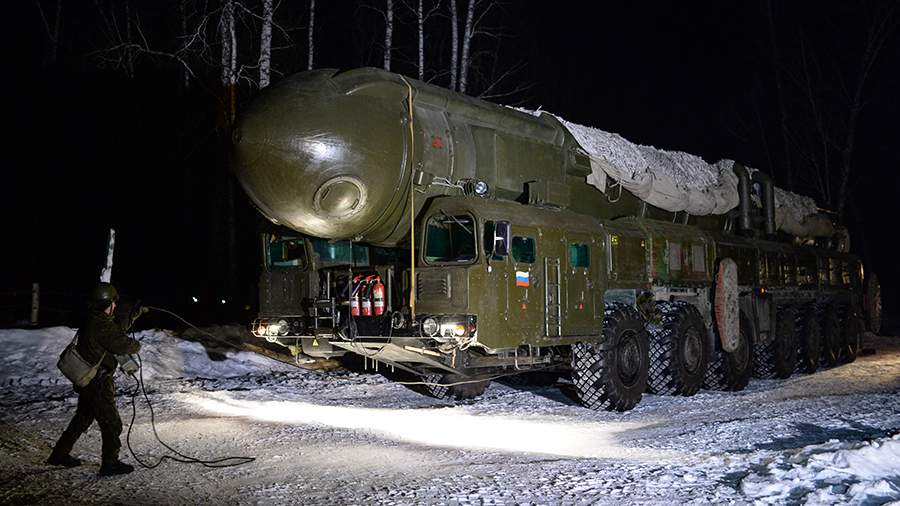
On February 5, the Agreement between Russia and the United States on Measures for the Further Reduction and Limitation of Strategic Offensive Arms (START Treaty) expires. It operated for 15 years and provided for the reduction of the nuclear arsenals of both countries. Russia's participation in the treaty was suspended in 2023, while the obligation to limit warheads remained. What you need to know about the START Treaty and what prospects it has is in the Izvestia material.
What is the START Treaty?
• The START Treaty was preceded by a series of bilateral treaties between Russia (USSR) and the United States on the limitation of strategic nuclear forces. Since the early 1970s, the two countries have consistently imposed limits on the number of existing nuclear weapons and launchers, on the range of ballistic and cruise missiles, and on the potential of nuclear arsenals. The START Treaty became the seventh agreement between Russia and the United States, which dealt with this topic.
• At the time of the START Treaty, only the Strategic Offensive Reductions Treaty was in force. It stipulated that by December 31, 2012, the total number of strategic nuclear warheads in each side should not exceed 1,700-2200 units, with each country determining the composition and structure of its weapons. By the beginning of 2010, Russia had about 2,500 warheads on combat duty, while the United States had about 2,200.
• The START Treaty was signed on April 8, 2010 in Prague by Russian President Dmitry Medvedev and US President Barack Obama. The treaty stipulated that each country would reduce the number of intercontinental ballistic missiles (ICBMs), submarine-launched ballistic missiles (SLBMs) and heavy bombers to 700 units, while they would be able to carry up to 1,550 nuclear warheads. Also, each country has received the right to have up to 100 more carriers in an undeveloped state for training and testing. The agreement allowed for the organization of inspections at military facilities for mutual control over its implementation.
• The START Treaty was ratified within a year of its signing. It was approved by both the U.S. Congress and the Federal Assembly of the Russian Federation, after which it was re-signed by the heads of both states. On February 6, 2011, Russian Foreign Minister Sergei Lavrov and US Secretary of State Hillary Clinton exchanged instruments of ratification, after which the START Treaty entered into force. His initial term was 10 years. In January 2011, the Presidents of the Russian Federation and the United States, Vladimir Putin and his American counterpart Joe Biden, agreed to extend the agreement without additional conditions for another five years until February 5, 2026.
Why did the START Treaty stop?
• Problems with the execution of the contract began in 2020. Then, due to the coronavirus pandemic, mutual inspections of deployed and non-deployed strategic systems temporarily stopped. In the future, inspections, the number of which should reach 18 per year, resumed.
• However, new obstacles have emerged in 2022. Due to the sanctions imposed by the United States, it has become impossible to conduct inspections at American military facilities. In addition, U.S. allies in Europe have closed their airspace to Russian planes with inspectors. As a result, the travel agreement was suspended in August.

• In February 2023, Putin announced that Russia would also not allow inspections of its nuclear arsenal. He pointed out that Western countries began to support Ukraine in attacking strategic aviation bases. Putin submitted to the State Duma a proposal to suspend Russia's participation in the START Treaty, which was soon adopted. At the same time, the Russian president noted that the commitments made on quantitative restrictions on nuclear weapons will continue to be respected.
• In September 2025, Putin proposed to adhere to quantitative restrictions for another year after the START Treaty expires. In response, US President Donald Trump indicated that this was a good proposal, but there has so far been no official reaction from the American authorities. Moscow's proposal to comply with the parameters of the agreement remained in force until the very last moment.
Why is this important
• The fact that the START Treaty actually maintained quantitative indicators of both carriers and nuclear warheads precluded the start of an arms race in this area. But now, with its end, there is a risk of its resumption, despite the fact that the United States has already adopted a program to modernize its nuclear forces, allowing it to build up its arsenal. The treaty stipulated that old delivery vehicles and warheads should be disposed of, but with its completion, the United States would be able to keep them on combat duty and repair them, and in addition to them, create modern types of weapons.
• In addition, the United States is escalating in other military areas. In 2025, a decree was signed on the creation of the Golden Dome missile defense system, which involves the deployment of satellites in low-Earth orbit to detect and destroy enemy missiles. The United States is also constantly testing hypersonic missiles, which may soon be in service.
• The extension of the START Treaty is hindered by the US position, according to which China should be involved in the drafting of a new treaty. Trump insisted on this during his first term. This requirement did not take into account the fact that Russia and China have no allied obligations to each other in the military sphere, and even more so do not possess a combined nuclear potential. At the same time, the participation of France or Great Britain, the US's NATO allies, in a possible new nuclear arms reduction treaty was not envisaged. If the US demands on China are lifted and the strategic security negotiations once again focus solely on the two leading nuclear powers, this will open a window of opportunity for concluding new agreements.
• At the same time, the United States should take into account that the parameters of future agreements may change due to the fact that modernization of nuclear weapons is already in full swing in Russia. In recent years, the Yars and Sarmat ICBMs, the Bulava SLBM, and the Avangard hypersonic missile system have been adopted. While the United States is only preparing to modernize its nuclear arsenal, it is based on aging missiles developed back in the 1970s.
When writing the material, Izvestia interviewed:
- military expert Yuri Knutov;
- military expert Vasily Dandykin.
Переведено сервисом «Яндекс Переводчик»
