Allied conspiracy: Albania and Croatia engaged in dragging Kosovo into NATO and the EU


Croatia and Albania are working on bringing Kosovo closer to Euro-Atlantic structures, Russian Ambassador to Tirana Alexei Zaitsev told Izvestia. According to him, the attempt to create a hostile ring around Serbia leads to the unfreezing of old conflicts. Experts warn that the region is being turned into a military springboard against Moscow and Belgrade.
Will Kosovo be accepted into NATO and the EU
The confrontation over the expansion of the North Atlantic Alliance and the European Union is unfolding in the Balkans. The self-proclaimed Republic of Kosovo remains one of the candidates for joining these alliances. Last March, Pristina signed an agreement with Zagreb and Tirana on cooperation in the military field.
Albania and Croatia have engaged in dragging self-proclaimed Kosovo into NATO and the EU, Russian Ambassador to Tirana Alexei Zaitsev told Izvestia.
— As for the issue of attempts to "pull" Kosovo towards the European Union and NATO, this is certainly the case. <...> There is a desire for closer cooperation and coordination on the issue of Kosovo's full integration into regional defense initiatives. Support was expressed for Kosovo's Euro—Atlantic prospects, including through the offer of the status of a participant in the NATO Partnership for Peace program," the diplomat noted.
According to him, the measures of applied military cooperation stipulated in the agreement are directly linked to the common policy of NATO and the EU. For example, the adoption of urgent measures to develop defense capabilities is linked to the provisions of the strategic concept of the North Atlantic Alliance, the document "NATO's Commitment to expand production capacity", the European Union's defense doctrine "Strategic Compass" and the European rearmament plan "Readiness 2030".
The Alliance is already present in the region in the form of the KFOR international peacekeeping mission. The largest military facility, Camp Bondsteel, belongs to the United States and is a "city-state" with its own infrastructure. However, the process of Pristina's integration into the EU and NATO is progressing slowly, as several members of these organizations (Spain, Greece, Romania, Slovakia, and in the case of the EU, Cyprus) do not recognize Kosovo's independence. The autonomous Region declared itself a sovereign state in 2008, but Serbia, as well as Russia, China and a number of other countries did not recognize this fact.
In January, the EU Special Representative for the Balkans, Peter Sorensen, visited Serbia and Kosovo to seek the resumption of dialogue on the normalization of their relations, one of the conditions for the admission of Belgrade and Pristina to the European Union. But the process has reached an impasse due to Kosovo's harsh policy towards Serbian municipalities.

Elena Ponomareva, a professor at MGIMO of the Ministry of Foreign Affairs of the Russian Federation, stressed in an interview with Izvestia that the Kosovo issue is extremely painful for Serbia, it is metaphysical in nature. Abandoning Kosovo would mean a loss of identity for Belgrade. Germany and the United Kingdom, which have significant interests in the Balkans, are most actively trying to separate autonomy from Serbia.
— Albania does not count, because it has long been not a state, but a criminal structure that operates on several sites, and the interests of Americans are quite strong there, — the political scientist clarified.
Kosovo is one of the poorest "states" in Europe, and Brussels would not like to take on an additional burden. At the same time, Pristina will be encouraged and supported on the European path, but real membership is hardly possible in the near future, said RIAC program manager Milan Lazovic. The unresolved territorial dispute between Serbia and Kosovo is also holding back NATO and the EU.
The threat of military conflict in the Balkans
The West is inciting to draw new dividing lines in the region, provoking the formation of hostile blocs, and this is an extremely dangerous trend that can lead to the destabilization and "unfreezing" of old conflicts, the Russian Ambassador to Albania added in an interview with Izvestia.
It is important that the alliance of Croatia, Albania and Kosovo is aimed at strengthening defense capabilities through the purchase of equipment and weapons, the development of military-industrial cooperation, easier access to resources and supply chains, investments in technology and innovation. In particular, joint purchases of weapons from the United States are envisaged, based on the principle that when ordering a large batch, the price is lower and delivery is faster.
— Zagreb, Tirana and Pristina support the Kiev regime, provide various assistance to Ukraine, it is not difficult to guess where the weapons and military equipment they have purchased and produced may end up, — said Alexey Zaitsev.
At the moment, the total amount of military assistance to Ukraine from this alliance has exceeded €300 million. Moreover, the lion's share is accounted for by Zagreb, which has transferred 14 military support packages, including heavy weapons, to Kiev.

It is also possible that new players will join the alliance. There were reports in the press that the corresponding invitation was sent to Bulgaria, Serbia's historical opponent. According to Elena Ponomareva, the Federation of Bosnia and Herzegovina (the Muslim-Croatian entity of BiH) may join the creation of a military-strategic "fist" against Belgrade.
— This agreement may be signed by many European states, with the exception of those EU countries that have not yet recognized Kosovo. This is a dangerous situation for Russia, because we have a special relationship with Serbia," the expert believes.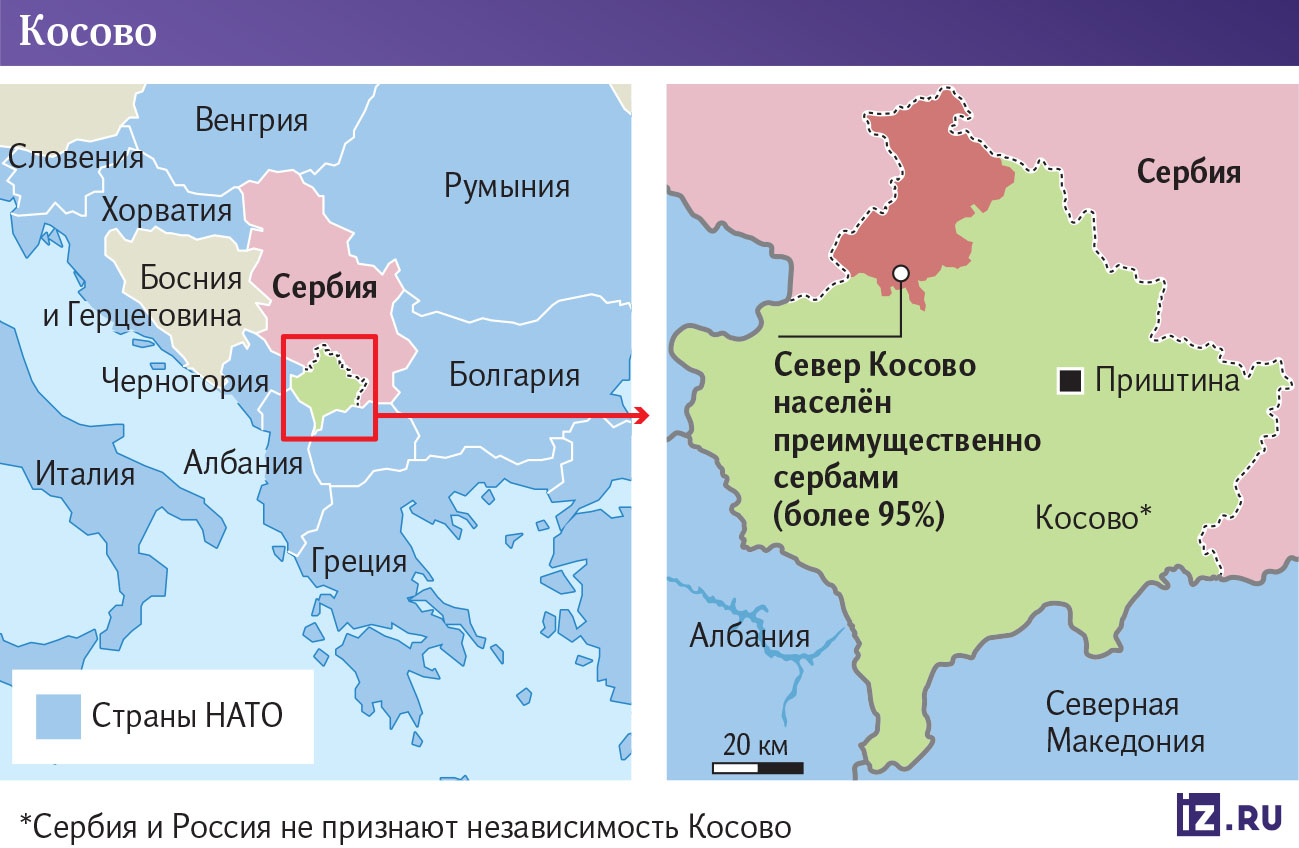
The Russian Embassy in Tirana believes that stimulating and institutionalizing Serbia's hostile environment is one of the methods of exerting pressure on Belgrade from the West, because they cannot accept its independent approach to international affairs. Brussels has long demanded that the country's authorities join the sanctions against Russia.
Belgrade takes the new threats seriously. In addition to plans to return compulsory conscription to the army, Serbian President Aleksandar Vucic announced the construction of a factory for the production of drones. In April last year, Serbia and Hungary signed a military cooperation agreement providing for the intensification of joint exercises and cooperation in the military-technical sphere. Belgrade is also increasing cooperation with Bratislava, especially in the defense industry.
The militarization of Kosovo by Albania and Croatia is an attempt to finally close the "Balkan issue" in favor of NATO. This means the emergence of another zone of instability, where the interests of the alliance directly clash with Russia's position in support of Serbian sovereignty.
Переведено сервисом «Яндекс Переводчик»
