
So much for gas: Europe increases purchases of Russian LNG

European countries have increased purchases of Russian gas. In January, Russia supplied a record 2.1–2.3 billion cubic meters of liquefied natural gas (LNG) to the countries of the Old World. In addition, pumping through the Balkan Stream has reached its maximum level — the average daily volume through this pipe was 56 million cubic meters. m in January, which is almost 25% higher than the design capacity. Among the reasons are the frosty winter, gas extraction from underground storage facilities and a decrease in LNG imports from the United States, where cold weather has also set in. Despite the fact that currently the price of fuel in Europe has decreased from $500 to $418 per 1,000 cubic meters, experts believe that the cost of Russian gas will increase in the second quarter of 2026. What impact the current situation will have on Russian exports and revenues can be found in the Izvestia article.
On Russian gas supplies to Europe
In the first month of 2026, European countries made the most of Russian gas supplies, both liquefied and piped. According to the European Network of Gas Transmission System Operators (ENTSOG), in January, Russia increased fuel exports to Europe via the Turkish Stream pipeline by 11% year-on-year, to 1.73 billion cubic meters.

According to Valery Andrianov, an associate professor at the Financial University under the Government, gas pumping through the Balkan Stream, a continuation of the Turkish Stream and the only remaining Russian gas supply line to Europe, has reached its maximum values. In January, the average daily volume of transportation amounted to 54-56 million cubic meters, which was almost 25% higher than the design capacity of the pipe — 43.15 million cubic meters. cubic meters per day (15.75 billion cubic meters m per year).

In addition, the expert noted that in January, Russia supplied Europe with a record 1.5–1.7 million tons of LNG, which is equivalent to about 2.1–2.3 billion cubic meters.
— As a result, the share of Russian LNG in the total volume of EU imports reached 19%. In fact, according to the European media, local traders "bought up the entire Yamal LNG" in January. Our country will not be able to help Europe in any way, since there are currently no other supply opportunities to the Old World (the Nord Streams were disrupted, and Ukrainian transit was blocked by Kiev). And is it worth it, considering that the EU has set a goal to completely abandon purchases of Russian gas in any form by 2027," he added.
Alexander Frolov, Deputy Director General of the National Energy Institute, also noted the "seasonal maximization of purchases of domestic LNG produced in Yamal." According to him, about 2 billion cubic meters were delivered to Europe from Russia in the first month of 2026.

— But the current situation will not have an impact on pumping through the pipe, since the available capacities are used by almost 100%. 57 million cubic meters go through the Turkish corridor to the EU. m per day," the expert noted.
In 2025, Russian LNG supplies to EU countries outstripped pipeline supplies for the first time, according to data from the Bruegel European analytical center. Exports of domestic LNG to the EU last year amounted to 19.9 billion cubic meters, and shipments through the pipe amounted to 18.1 billion cubic meters.
Izvestia has sent requests to Gazprom and Novatek for gas supplies to Europe.
Empty UGS and declining imports from the United States
Among the reasons for the increase in Russian gas purchases, experts cite frosty weather, gas extraction from underground storage facilities (UGS) and a decrease in LNG imports from the United States, where cold weather has also set in.
According to Gas Infrastructure Europe (GIE), fuel extraction from European underground storage facilities in January against the background of frost amounted to 23.9 billion cubic meters, this is the third result for the entire observation period after January 2017 (25.38 billion cubic meters) and January 2021 (25.39 billion cubic meters).

According to the results of the first month of 2026, there were 45.5 billion cubic meters of gas in the EU UGS. Since the start of the heating season on October 13, 2025, EU countries have taken about 51 billion cubic meters from storage facilities. Net sampling (the net difference between sampling and injection volumes) is more than 46 billion cubic meters, or 85% of the volumes pumped in the summer.
— Currently, European UGS facilities are filled by just over 40%. The GIE report means that more than 80% of the gas pumped since the beginning of the heating season has already been withdrawn. But storage facilities are never completely empty — this is impossible even from a technical point of view (by the end of the heating season last year, about 34% remained in UGS). In other words, 20% of the "new gas" pumped since last autumn remains in the UGS, but their total capacity is over 40%," explained Valery Andrianov.
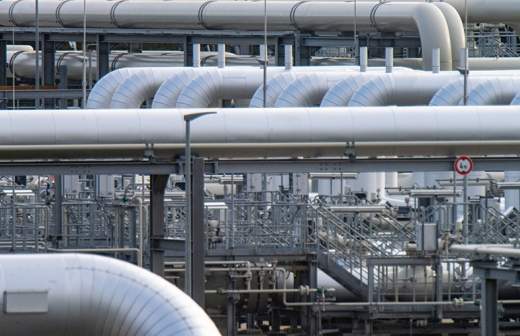
According to him, this is a critical level.
The basic degree of gas consumption is lower now than in 2022, so there is no need to fear exhaustion of storage facilities before the end of the sampling season, said Alexander Frolov. Even with high dynamics in February, at least 25 billion cubic meters will remain in European UGS facilities by the end of March, the expert believes.
According to Valery Andrianov, the current situation with stocks is related to the abnormally cold January, which was established in most of the Northern Hemisphere. A partial delay in the shipment of LNG from the US Gulf of Mexico also played a role, also due to bad weather. Green energy has also failed — wind blades stop, solar panels end up under snowdrifts, which forces them to switch electricity to gas, increasing its consumption, the expert noted.

According to Western media reports, American LNG plants canceled 15 export shipments in January amid rising gas prices at Henry Hub to $249 per 1,000 cubic meters.
In addition, as Gazprom noted in its Telegram channel on January 28, natural gas supplies to liquefaction terminals in the United States decreased significantly when the Arctic cyclone hit the country.
"The severe cold snap led to the redirection of gas intended for liquefaction terminals to the US domestic market. From January 16 to January 27, prices in the United States for Henry Hub "for the month ahead" more than doubled and reached $245 per 1,000 cubic meters, the highest since December 2022. Under such conditions, the European market is close to losing competition for LNG to the US domestic market, as has already happened with a number of Asian markets," the company said in a statement.
In addition, Reuters reported that BP and Shell have already started importing gas to the United States: at least four shipments have arrived from the Atlantic LNG project in Trinidad and Tobago.
What will happen to gas prices next
Fuel prices in Europe in January (on the TTF exchange) They have already grown by almost a quarter, reaching $500-525 per 1,000 cubic meters, Valery Andrianov recalled.

According to Gazprom, on January 21, the cost of natural gas delivered "one day in advance" in Germany (THE virtual trading hub) reached $525.9, in Austria (the virtual trading hub VTP) — $537.2 per 1 thousand cubic meters.
According to the London ICE futures Exchange and TASS calculations, the average price of gas in Europe in January 2026 was about $415 per 1,000 cubic meters. On January 30, trading closed at $487, 42% higher than in December and at its highest since the spring of 2025.

On February 2, at TTF's largest gas hub in the Netherlands, the cost decreased by 14.14% at 14:16 Moscow time, to $418 per 1 thousand cubic meters.
Ekaterina Kosareva, Managing Partner of VMT Consult, attributes this to the approach of warm weather in Europe. According to her, in the second half of February, the central and northern EU countries will experience positive temperatures.
Nevertheless, according to Valery Andrianov, "the depletion of UGS reserves will require more injection volumes in the summer and autumn season of 2026, as a result, expenditures for these purposes may increase by €10 billion compared to last year — from €16 billion to €26 billion."

Alexander Frolov believes that Russian gas prices may rise in the second quarter due to the influence of stock market indicators on the final figures, which are calculated according to the formulas prescribed in the contracts.
Tamara Safonova, CEO of the Independent Analytical Agency for the Oil and Gas Sector (NAANS-MEDIA LLC), noted that the European Commission's desire to reduce dependence on Russian energy resources had led to a failure of energy security systems built over decades. This supports high gas prices and damages the European economy, she added.
In her opinion, the increase in gas prices on a European exchange basis will have a positive impact on the revenues of Russian gas corporations, which also supply LNG and pipeline gas to Europe.
Переведено сервисом «Яндекс Переводчик»
