
Tropical course: what they cook in restaurants with pineapples

Pineapples came to Europe during the era of great geographical discoveries from Central America, but they came to the gastronomy of the Old World only after the Dutch learned how to grow them in special greenhouses in the 17th century. Tsar Peter I, during his embassy to Holland, appreciated the advantages of the tropical fruit, and with his presentation it became a fashionable product among the Russian aristocracy. Almost three hundred years later, pineapple in Russia is still associated with a beautiful life. Izvestia found out what unusual dishes can be found with it in domestic restaurants today.
Which historical Russian pineapple dishes have gained a second life in restaurants
Pineapple in pre-revolutionary Russia was a symbol of status and wealth and was often referred to as the "king of fruits." Since the beginning of the 18th century, it was first imported from tropical countries, and then actively grown in greenhouses, primarily in noble estates and merchant farms. The most famous greenhouses were located in Tsarskoye Selo, Peterhof, as well as in the Kuskovo and Arkhangelskoye estates.
— By the middle of the 19th century, pineapple had become almost an obligatory element of the ceremonial table of wealthy houses, — Vladislav Piskunov, a historian of Russian cuisine, brand chef of the Matryoshka restaurant (Moscow), told Izvestia. — He is regularly mentioned in cookbooks of that time and in fiction — from Alexander Pushkin to Ivan Shmelev, where he acts as a marker of luxury and "high life". Thus, pineapple was not an everyday product, but it took a stable place in the representative, festive Russian cuisine of the pre-revolutionary period.

According to our interlocutor, pineapple was used in cooking both fresh — it was served whole or sliced for formal dinners and wedding tables — and in desserts, sweets and complex cold dishes. The extant menu of the gala dinner given in honor of the accession to the throne of Emperor Alexander III features a pie with hot pineapple. Brand chef Piskunov offers his interpretation of this dish in the Coronation Lunch set. The warm dessert consists of rye crumble, topped with fried pineapple, and next to it is oregano ice cream.
— Unfortunately, pineapple has lost its connection with Russian cuisine in the mass consciousness today and is perceived more as an exotic or even "bourgeois" symbol, — says Fyodor Verin, brand chef of the restaurant of the Central House of Writers (Moscow). — However, it is an unfairly forgotten historical ingredient that was widely used in cooking. In addition to being eaten fresh, it was also fried and stewed as a side dish to meat.

During the fasting period, our expert introduces pineapple dessert to the menu. It is based on the classic, but slightly complicated technique of roasting fruit in caramel with Cointreau liqueur, which gives a sweetness with a slight bitterness. And to add a taste contrast, the sweet is complemented with a cold spicy cardamom sorbet.

Muranovsky soup with sauerkraut
"In pre—revolutionary Russia, pineapples were also fermented in barrels," adds Andrey Shmakov, brand chef of Savva Restaurant (Moscow). — They were used to make cabbage soup, pickles, kvass, stewed and served with meat — in fact, like cabbage. Pickled pineapple was a substitute for sauerkraut, and this technique is still relevant today.
In the special menu "Russian classics "Metropol 120", the Savva team recreated the recipe for Muranovsky cabbage soup with pickled pineapple. This idea appeared after visiting the Muranovo Museum - the ancestral estate of Fyodor Tyutchev. During his lifetime, there was a greenhouse with pineapples, which were used to make starter cultures for longer storage of the product. The poet loved cabbage soup with sauerkraut, which was once replaced with pickled pineapple and the potatoes were removed to preserve the acidity and not overload the taste. The result was a delicious and well-balanced dish.

Pineapple sorbet, pineapple marinated in white rum and oyster water pearls
Pineapple can be fermented in the same way as cabbage, our interlocutor continues. The fruit should be thinly sliced, sprinkled with salt, put under pressure and left for 3-4 days. You can use the billet in different ways: serve it cold, add it to soups, stew it, or use it as a side dish to meat. It is important to understand that pickled pineapple is not a substitute for sauerkraut or mushrooms, but an independent fermented product that can be an excellent alternative to the usual pickles. However, its cost will be very high.
How pineapples are used in different cuisines of the world today
Thanks to globalization, pineapples can now be found in dishes of a wide variety of gastronomic traditions and trends. For example, they are now actively used in Middle Eastern cuisine.
"Neither the Ottomans nor the peoples of the Middle East had ever added pineapple to their dishes before, where pomegranate and dates predominated," Alexander Mandron, chef of Levantine Cuisine restaurant (Moscow), told our publication. — This product gradually penetrated into their gastronomic culture only towards the end of the 20th century and organically fit into it. It was added to meat and chicken, tagines and grilled dishes.

Grilled lamb with pineapple
Kafes, that is, lamb ribs, are very fond of being served with a whole pineapple fried on the grill, continues our interlocutor, who included this item in his menu. It looks very impressive, and, as you know, Turkish chefs are always a bit of an artist and often accompany dishes with beautiful stories. Kafes translates from Turkish as "the cage" where the sultan's sons were imprisoned in the Topkapi Palace in Istanbul, and this legend turns the cooking process into a special ritual. Lamb ribs are pre-stewed in the oven, grilled and served at the table: a square is separated with a sharp knife, pineapple is cut, meat is spread in the shape of a crown, and at the end it is beautifully salted. Pineapple not only harmonizes well with lamb, but also acts as a bright additional chord.
For grilling, Chef Mandron advises choosing a ripe but resilient pineapple, otherwise it will fall apart on the grill. It is better to cut it into slices or thicker circles, about 2 cm. The grill must be well heated to a medium-high temperature, and the grill must be oiled so that the pineapple does not stick. Roast the fruit without moving for 3-5 minutes on each side, until clear, deep stripes from the grill and caramelization appear. The main thing is not to overdo it so that the pineapple does not turn into porridge.

Roasted pineapple with cardamom sorbet
Pineapple is not a ubiquitous ingredient in Chinese gastronomy, but it is significant for specific regions. This is the "soul" of the cuisine of southern China, primarily the provinces of Guangdong and Hainan Island, which is explained by geography: it is there that the tropical fruit grows in abundance, and local chefs have been learning for centuries to organically fit it into their recipes.
— For us, pineapple is not just a dessert fruit, but a powerful culinary tool, — says Lin Rongan, chef of the Chinese restaurant Mume (Moscow). — It contains natural enzymes (bromelain) and fruit acids, which work as an ideal marinade: they soften meat fibers, remove specific odors and, importantly, neutralize fat content. Also, according to our interlocutor, Cantonese cuisine has a long tradition of using fruits in hot dishes to create balance. A classic example that has become a worldwide hit is pork in sweet and sour sauce (Gulaorou). It is there that pineapple helps to create the very harmony that prevents the dish from becoming cloying or too heavy.

Fried rice with chicken and pineapples
The fried rice with pineapple on the Mume menu is a classic of southern China. The idea of this combination lies in the philosophy of contrasts inherent in Chinese cuisine. Rice is a neutral product, chicken and seafood give texture and flavor, and pineapple acts as a bright flash that refreshes the receptors.
In order not to spoil the hot dish, our expert advises using only fresh pineapples. In canned food, the product has already been "boiled" in syrup and has lost its texture and, most importantly, its enzymes. It will give only a flat sweetness, whereas fresh fruit will give the necessary sourness and elasticity. If you use pineapple juice to marinate meat, keep an eye on the time. Bromelain is very active and if the meat is overexposed, it will turn into "porridge". So 15-20 minutes will be quite enough for softness. Do not stew the pineapple for a long time, otherwise it will "flow". It is best to quickly roast it in a wok or grill at the very end of cooking. This will trigger the caramelization reaction of sugars on the surface, enhance the flavor, but inside the piece will remain juicy and crispy. The fruit works best with fatty meats: pork belly, duck, marbled beef. If you cook a lean chicken breast, pineapple can attract attention to itself, but with fatty meat it will create an ideal symbiosis.

Modern Italian gastronomy is open to new products if they are used with respect for traditions and with the right approach, so today pineapples also find their rightful place in it.
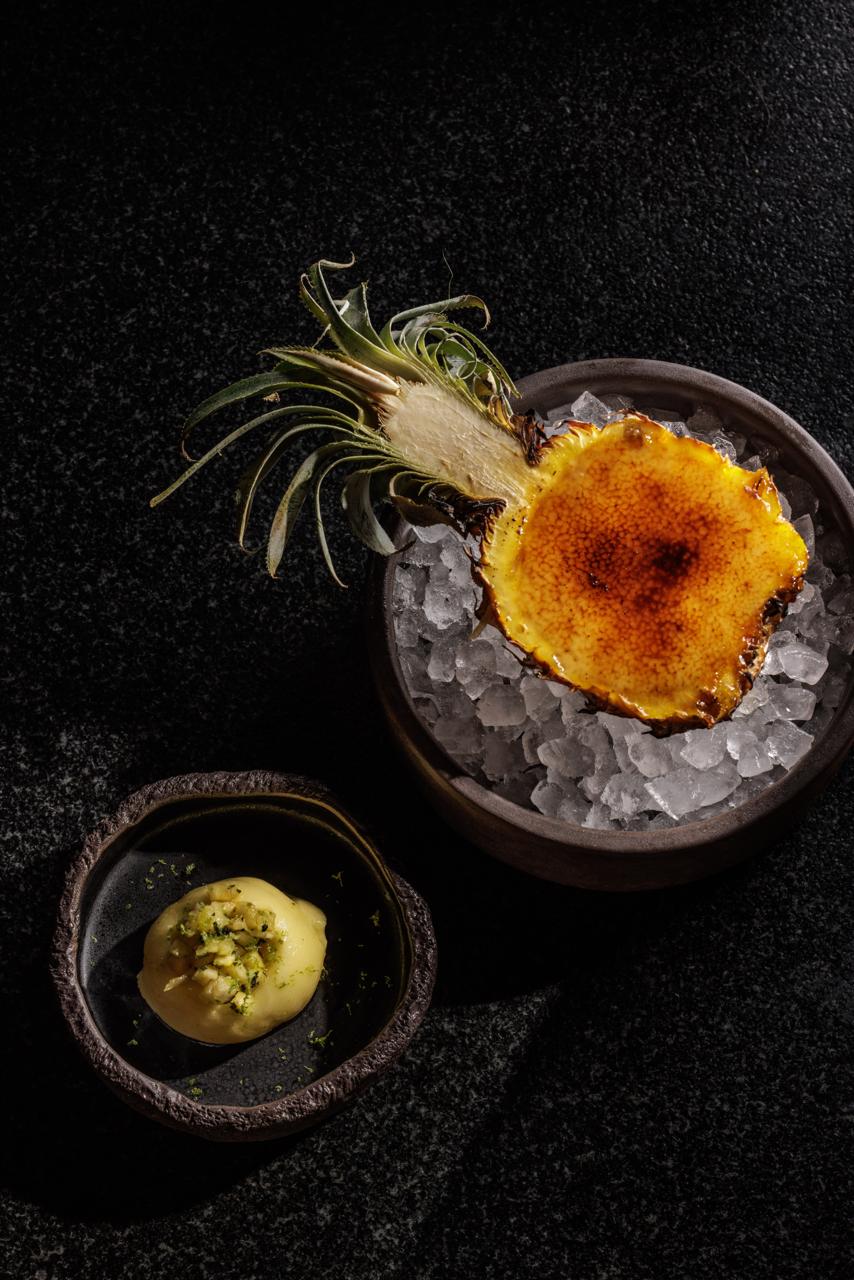
— Pineapple works well in dishes where freshness, acidity and purity of taste are important: in cold appetizers, carpaccio and light desserts, where it performs not so much a sweet as a refreshing function, — says Matteo Lai, brand chef of the Italian restaurant Osso (Moscow). — I prefer fruits with a good balance of sweetness and acidity, most often of the MD2 variety. For me, dense texture, juiciness and pure flavor are important. The fruit should be ripe, but keep the crunch and precision of taste.
While working on the Modern Italy set menu, our interlocutor decided to create a dessert that does not make the dinner finale heavier, but leaves a feeling of freshness. This is how pineapple and fennel carpaccio appeared, where tropical fruit sets the rhythm and acidity, vanilla binds the elements, and fennel sorbet completes the dish, purifying the taste.

Pineapple carpaccio with fennel
To thinly slice pineapple for carpaccio, brand chef Lai recommends choosing a dense and unripe fruit. After cleaning, it needs to be slightly cooled, then it will cut more accurately. The slices should be as thin as possible, but retain their structure and shape, so you need to cut them with a very sharp knife using calm, long movements without pressure.
What kind of pineapple dish is eaten all over the world?
Hawaiian pizza can safely claim to be the most popular pineapple dish on the planet today. It appeared in the 1960s in North America and is now widespread around the world, despite the controversial combination of ingredients.

Pizza with pineapple kimchi and Tambov ham
— In my opinion, the secret of the popularity of pineapple pizza lies not so much in gastronomy as in its "meme", — says Pavel Kosov, brand chef of the new Rusty Rat & Pizza restaurant (Moscow). — It's kind of a funny cultural phenomenon. Therefore, the appearance of such an item on our menu is irony, a desire to laugh and support the eternal discussion between its fans and deniers.

Pineapple Express pizza at Rusty Rat & Pizza is based on classic dough, cheese and tomato base, but the main role in it is played by fermented pineapple kimchi. The fruit is aged for several days under special conditions and with special ingredients, due to which its structure and consistency change and a complex, piquant and deep taste appears. The composition is completed with kimchi-mayo sauce and fresh green onions.
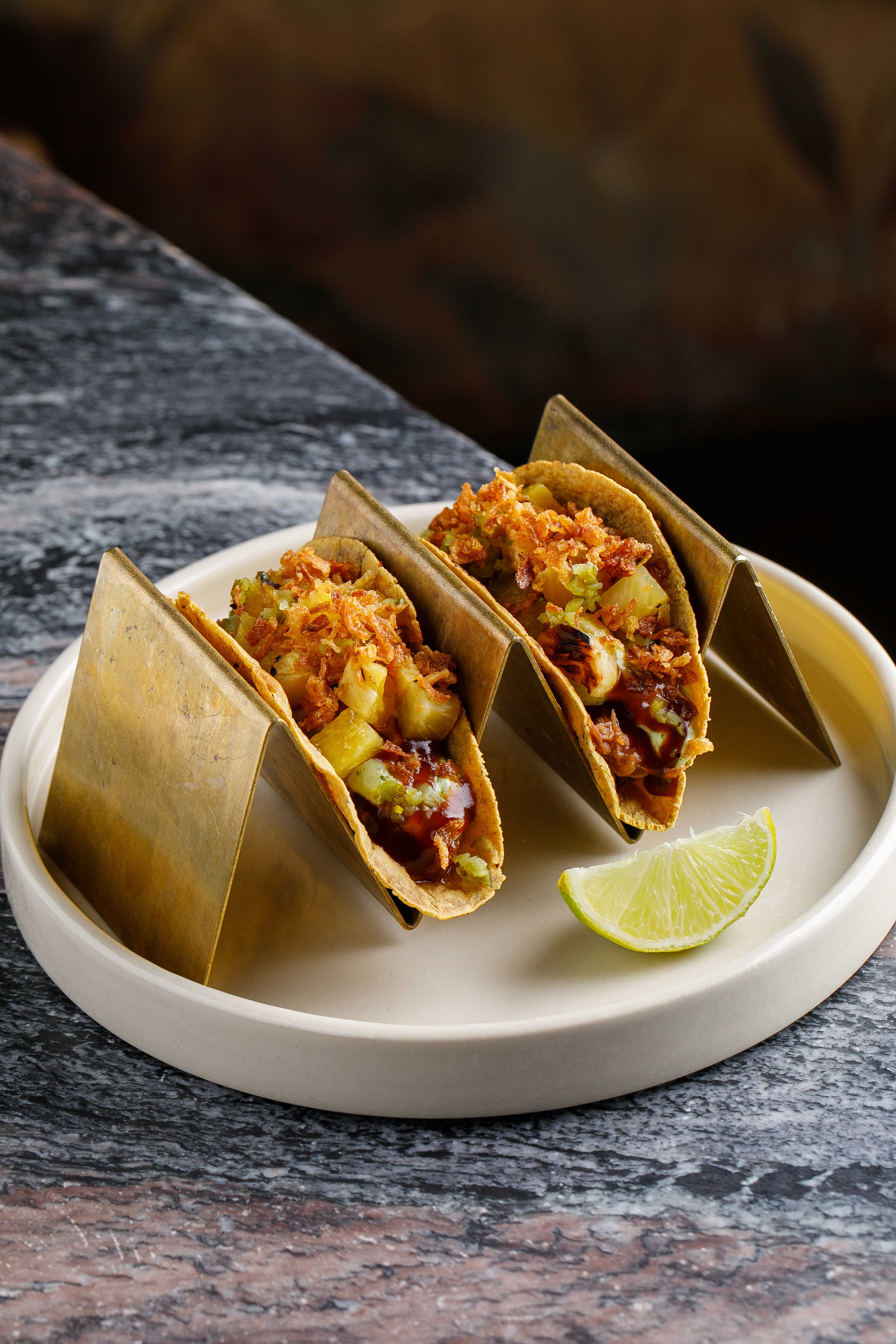
According to Kosov's brand chef, the main secret to the success of pineapple kimchi is to work properly with salt. For fermentation, he advises using only non-iodized salt in an amount of 3% of the total weight of the fruit. As for the rest of the ingredients for the marinade, complete creative freedom is possible here.
Переведено сервисом «Яндекс Переводчик»
