
The armament is in force: Russia will respond to the EU's plans to create its own army

Russia will take into account initiatives to create a European army in its military planning, Vladislav Maslennikov, director of the Department of European Affairs at the Russian Foreign Ministry, told Izvestia. According to him, the EU is rapidly transforming from an economic integration project into a military-political bloc. According to analysts, in response, Russia will strengthen its grouping in the western direction. After all, it is assumed that the permanent European contingent should completely replace the American troops in the region in the future. Against this background, the number of supporters of dialogue with Moscow is growing in the European camp: negotiations between the presidents of the Russian Federation and France are not excluded, although no conversation is planned now, a European diplomatic source said. At the same time, Brussels is discussing the appointment of a special envoy for negotiations with Russia.
How will Russia react to the creation of the EU army
Against the background of growing contradictions between the EU and the United States, Brussels is once again concerned about creating its own armed forces. In early January, the European Commissioner for Defense and Space, Andrius Kubilius, proposed the creation of a permanent EU army of 100,000 troops. It is worth noting that now the total number of regular armed forces of all 27 EU member states is approximately 1.3 million soldiers and continues to grow. The EU's permanent forces are proposed to be formed not from national quotas, but as a separate supranational structure under the direct command of Brussels.

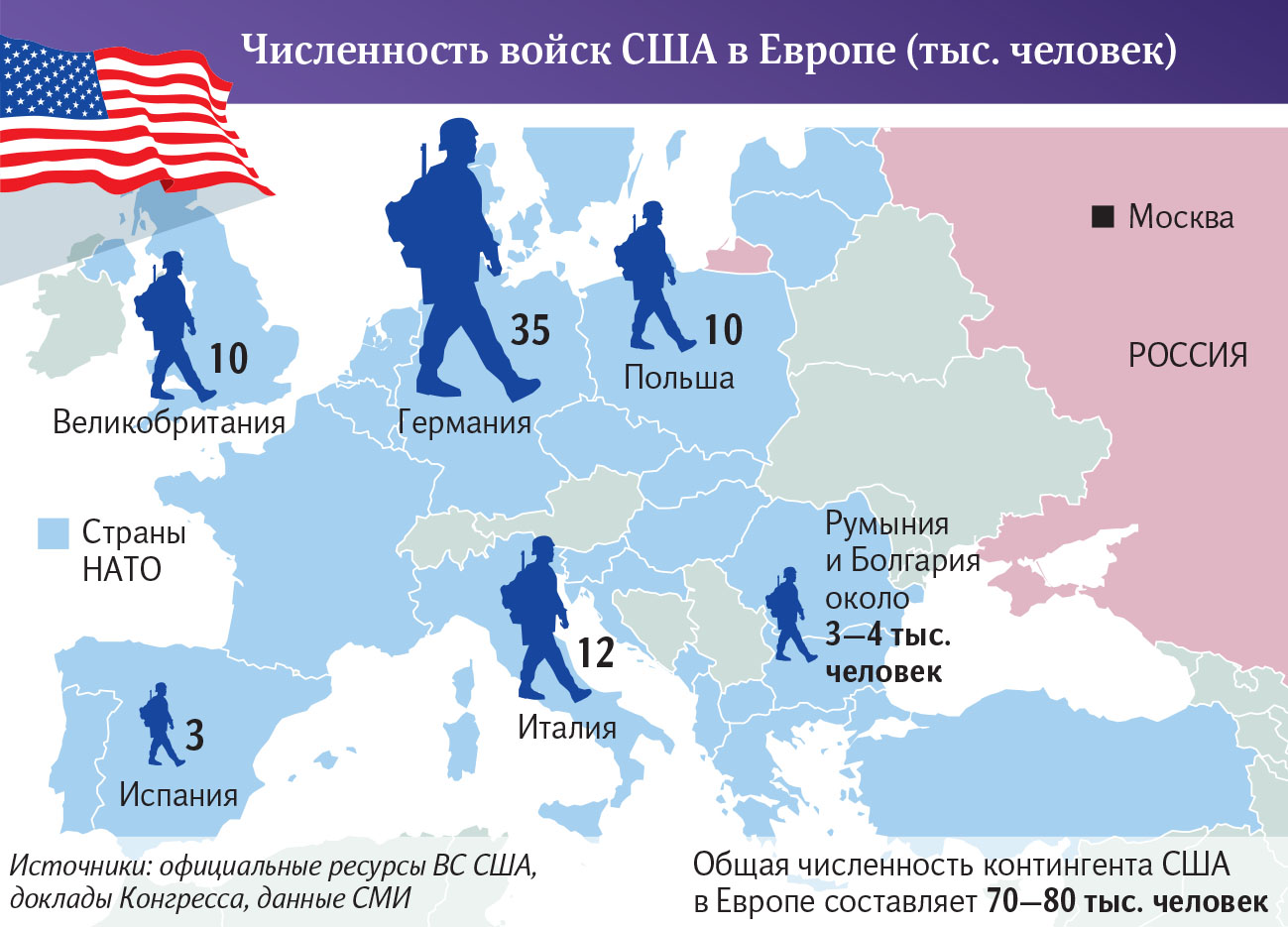
According to Kubilius, the permanent European contingent should completely replace the American troops in the region in the future. Now, according to open sources, there are 70-80 thousand American soldiers in the European members of NATO. In October, it became known that the United States was returning an airborne division combat brigade group from Romania without replacing it.
Russia will take into account the EU's plans to create an army in its military planning, the director of the Department of European Affairs told Izvestia The Russian Foreign Ministry Vladislav Maslennikov.
— Against the background of the aggressive line of the current EU leadership towards Russia and the intimidation of Europeans by the inevitability of war, we treat such processes with all seriousness. In turn, we will take this new reality into account in our military planning, including modernization programs for all types of weapons and military equipment," the diplomat stressed.

According to Maslennikov, the EU's economic integration project is currently undergoing an accelerated transformation into a full-fledged military-political bloc that threatens to destabilize the entire Eurasian region.
— This is confirmed by unprecedented financial injections into the military-industrial complex and a course towards "strengthening the eastern flank", launching new defense projects, preparing the transport infrastructure for high-intensity combat operations and increasing the volume of ammunition production. Calls for the creation of some kind of "European army" are part of this policy," the diplomat said.

In recent years, the European Union has dramatically increased its military activity. In 2025, the Readiness 2030 rearmament program was launched at a cost of about €800 billion. By 2030, at least 50% (and up to 60% in the future) of the defense budgets of EU member states should be spent on products manufactured within the European Union. Moreover, part of these funds will be used to finance the military industry of Ukraine. Of the €90 billion allocated to Kiev in December last year, over €60 billion is planned to be spent on the purchase of European military equipment.

It is important that we are talking not only about creating an army or purchasing weapons, but also about preparing theaters of military operations. According to the Military Schengen program, by 2027 it is planned to complete the creation of a single military mobility space, including bridges, railways and ports, allowing the transfer of NATO heavy equipment from the Atlantic to the borders of the Russian Federation. The EU leadership is openly talking about the risk of a military conflict with Russia in the next three to five years.
For this reason, checks are being carried out in Germany on the readiness of the healthcare system for conflict conditions, and fortifications and fences are being built along the borders in the neighboring countries of the Russian Federation — Finland, the Baltic States and Poland. The project of the so—called drone wall, a system of protection against UAVs, is also being discussed. However, it may also have an offensive character, Russian Deputy Foreign Minister Alexander Grushko said earlier in an interview with Izvestia.

The direct military threat to Russia from the creation of such a contingent is extremely low, the new EU structure is not designed to become an independent offensive army against Moscow, but is primarily designed for collective defense and deterrence in the European space. The creation of joint forces is aimed at increasing operational readiness for high-intensity scenarios, but not for offensive operations on Russian territory, Nikolai Novik, deputy director of the Center for the Institute of World Military Economics and Strategy, told Izvestia.
"In response, Russia can strengthen its military grouping in the western directions, update its troop deployment strategy and actively develop weapons systems capable of resisting the collective forces of the EU and NATO," Novik said.

The EU's actions are an attempt to rethink the US foreign policy turn. The main NATO ally is starting to put pressure on painful points for Europe, so they are forced to rebuild there, Daria Moiseeva, candidate of political Sciences, chief analyst at ANO Kolaboratoria, told Izvestia.

Who will become the EU Special Envoy for Russia
Meanwhile, the European Union continues to discuss whether to resume contacts with Moscow. After the EU summit in mid-December, French President Emmanuel Macron unexpectedly announced that it was necessary to return to the conversation with Russia. And on January 7, he announced a telephone conversation with Russian leader Vladimir Putin in "the coming weeks."
No high-level talks are planned at the moment, but "nothing is ruled out," a European diplomatic source said.
"France and Russia have never interrupted contacts, in particular, through their embassies and multilateral organizations, including the UN Security Council," the source told Izvestia.

In general, the position of the Elysee Palace was supported in Rome, where they stressed: "The time has come for direct communication between Europe and Russia." Prime Minister Giorgia Meloni has proposed appointing an EU special envoy to negotiate with Moscow. Moreover, the head of the Italian government proposed the former head of the European Central Bank and former Italian Prime Minister Mario Draghi for this role.
The leaders of the governments of Hungary and Slovakia had previously spoken in favor of resuming dialogue with Russia, and Slovenian President Natasha Pirc-Musar last year called the cessation of communication with Russia "one of Europe's mistakes."
They are trying to intercept the agenda in Brussels. The European Commission has acknowledged that "one day the EU will have to negotiate with Russia," but believes that this moment "has not yet arrived." According to Politico, European governments are calling on the EC to be present at the negotiating table on the Ukrainian conflict, because otherwise Europe risks losing influence on the situation. Politico's interlocutors name Finnish President Alexander Stubb as one of the possible candidates for the role of negotiator, who previously spoke about the need to build relations with the Russian Federation in the future.

In December, Russian President Vladimir Putin stressed that Moscow's dialogue with Europe is possible as Russia continues to strengthen and as European political elites change. However, the EU is now led by an extremely anti-Russian leadership.
— Plans to create an EU army will negatively affect the prospects for a dialogue between Brussels and Moscow. The Russian Federation, of course, will have to respond to a new potential threat," political analyst Denis Denisov told Izvestia.

The region is increasingly divided on the issue of dialogue with the Russian Federation. The countries of Southern and Eastern Europe consider it necessary to negotiate with Moscow, and they are open to restoring economic ties. For example, the presidents of Bulgaria and Croatia stated the need for contacts, and Izvestia was previously informed in the Parliament of Cyprus about hopes to resume flights after the end of the conflict in Ukraine. The new government in the Czech Republic has muted anti-Russian rhetoric, which is reducing support for Kiev.

On the contrary, the countries of Northern Europe and the Baltic States do not show readiness for dialogue with the Russian Federation. For example, Sweden and Finland are proposing to tighten sanctions against Moscow, and Russian citizens who have not confirmed their Latvian language proficiency are gradually being ousted in Latvia.
For successful negotiations, the EU needs to appoint a person who understands Russia well and has sufficient political weight to be taken seriously. Therefore, the candidacies of the President of Finland and the head of the European Diplomacy have little chance, Daria Moiseeva said.
— Viktor Orban has a good chance, but his figure will not suit European politicians in Brussels. There is a high probability that it will be one of the German politicians, because they have a long history of relations with Russia. Thanks to previous connections, it may also be a representative of Italy, Sweden or Finland," the expert predicts.

The EU's further steps will depend on which point of view prevails at the unification summits, as well as on Washington's position. Now it is the line of the White House that forces the Europeans to seek a dialogue with the Russian Federation. Special Envoy of the US president Steve Witkoff and the son-in-law of the American leader Jared Kushner plan to travel to Moscow in the near future to meet with Vladimir Putin, sources told Bloomberg. Thus, Donald Trump shows that he does not intend to abandon the dialogue with Russia.
Переведено сервисом «Яндекс Переводчик»
