
Longing for ads: nine out of ten Russians face difficulties in finding a job

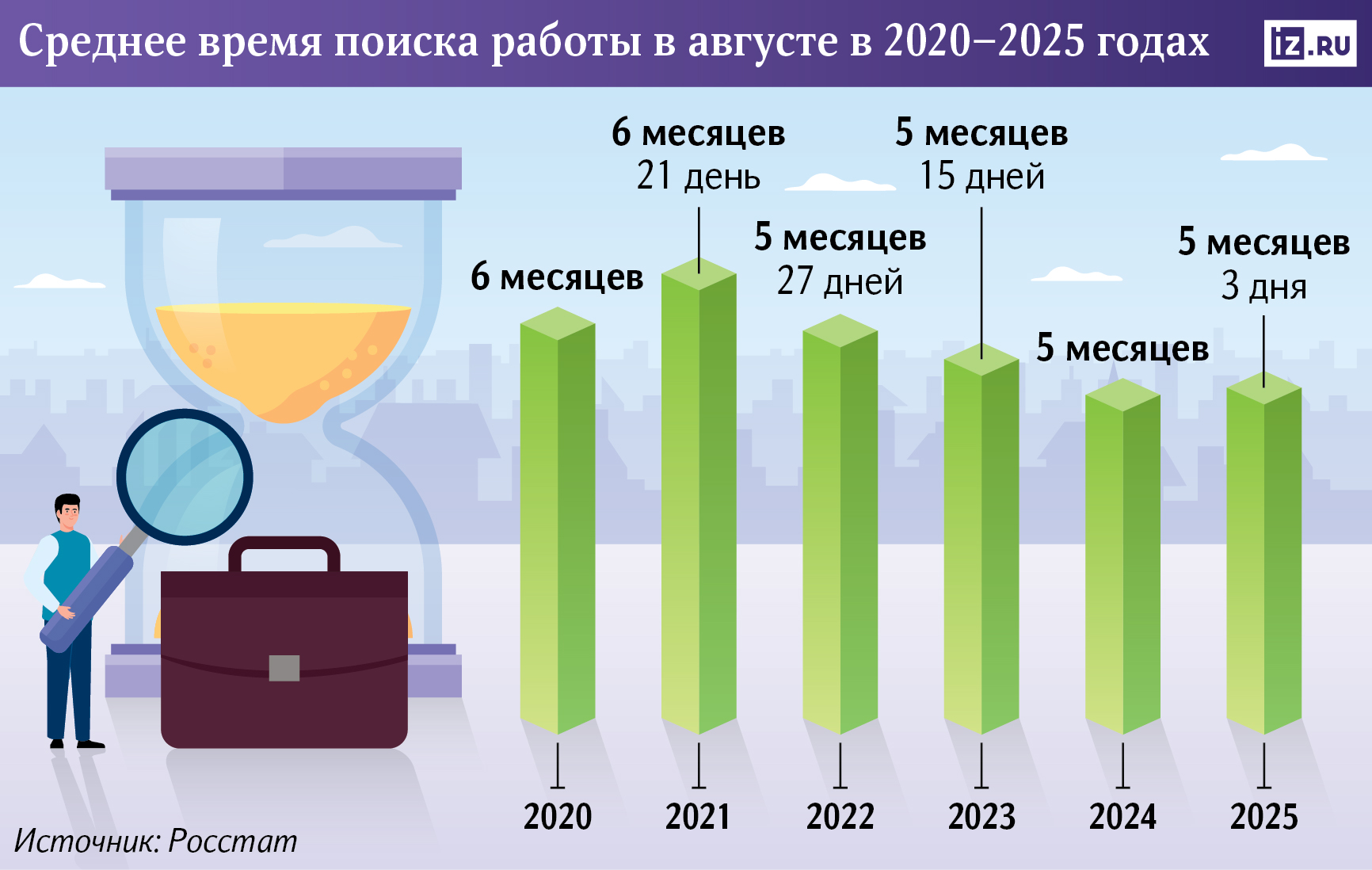
91% of Russians face difficulties in finding a new job, the survey "Jobs.<url>" and "SberPodbor" (Izvestia has it). This is happening despite the record low unemployment rate (about 2%) and a shortage of staff. The main barriers are low wages, age, high competition and working conditions. This situation is developing against the background of a cooling market: salaries are growing more slowly, hiring is decreasing, and the requirements for candidates are becoming tougher. At the same time, the average job search period increased for the first time since the pandemic in 2021 and reached five months and three days. Whom employers are more willing to hire and why the "salary race" has stopped — in the Izvestia article.
What prevents Russians from getting a job
Almost half of Russians fear dismissal at the initiative of their employer. At the same time, despite the alarming expectations, the majority (72%) plan to change jobs on their own in the near future. However, when it comes to job search, 91% of citizens face difficulties, according to a study conducted by more than 3.2 thousand residents of all regions of Russia (Izvestia has it). The editorial board sent a request to the Ministry of Labor.

Half of the citizens who have experienced difficulties finding a new job are embarrassed by the low level of salaries offered. In the first half of 2025, real earnings in the Russian Federation, adjusted for inflation, increased twice as slowly as a year earlier. It increased by 4% against 9%, to 96 thousand rubles, follows from the report of the Accounting Chamber on budget execution for January—June (Izvestia studied it).
More than a third of Russians (there are several possible answers in the survey) indicated that their age was a barrier to employment. According to SuperJob, applicants who are between 30 and 38 years old have the best chance of finding a suitable job now.

— Age and gender have always been barriers to employment. These factors have now become less important, but discrimination has not completely disappeared. In the context of digitalization and the active introduction of AI, employers are trying to give preference to younger candidates, in whose development, in their opinion, it is more efficient to invest resources," explained Farida Mirzabalayeva, Associate Professor of the basic Department of the Russian Chamber of Commerce and Industry "Human Resource Management" at Plekhanov Russian University of Economics.

Slightly fewer respondents noted that they are deterred by excessive demands with modest payment terms. Another third faced high competition for attractive jobs. SuperJob reported that the number of offers decreased by 16% over the year, while the number of resumes increased by 18%. This has led to a more balanced labor market situation compared to last year. At the same time, companies are not so much reducing hiring as tightening selection, the service clarified.
— The business strives to minimize risks and wants to be sure that the new employee will pay for himself. Employers now prioritize candidates with clear experience and measurable results in the right field, with a high learning rate and adaptability. Preference is given not just to those who meet the requirements, but to those who can bring additional value, for example, by having related skills, SuperJob emphasized.

Also, every fifth applicant is not satisfied with the working conditions (mainly the format and schedule), as many indicate a lack of vacancies in their field or profession. Another 25% of respondents say that they do not find offers that would be really interesting to them.

The least of all were those who consider their experience outdated or too narrow, as well as those who face difficulties due to a lack of highly specialized skills or a change in professional field.
Who is most appreciated in the labor market
According to the survey, only 9% of Russians admitted that they do not face difficulties when looking for a job. Most often, such answers were given by applicants from the fields of construction, trade and transport. But among those who believe that it is almost impossible to find a job now, employees of manufacturing enterprises and IT industry specialists predominate.
SuperJob shared that the greatest competition for jobs is observed in consulting, entertainment, marketing and advertising, as well as in law. At the same time, the least applicants are competing for jobs in retail, construction, industry, tourism, catering and logistics.

The most in-demand employees today are skilled workers, line sales staff, truck drivers and couriers, the company said.
— The record low unemployment rate, which stands at 2.1%, indicates the full utilization of labor resources. However, these positive statistics hide structural distortions. Companies today are experiencing not a general shortage of personnel, but a shortage of highly specialized skills, especially in industry, construction and trade. At the same time, in office segments such as IT, marketing and HR, competition for places has really increased significantly," said Deputy CEO of Work.<url>" by Alexander Veterkov.
Increased competition is expected in those industries that are more actively implementing AI, says Farida Mirzabalayeva from the Russian University of Economics. At the same time, the shortage of personnel is also increasing in budgetary areas. Today, social workers, doctors, teachers, and junior medical staff are worth their weight in gold.
Working professions are in the most demand today, the All-Russian Research Institute of Labor told Izvestia. The highest median salaries were recorded for turners — 168 thousand rubles, welders — 160 thousand and concrete workers — 130 thousand. The top 20 also includes painters, electricians, car mechanics, machinists and locksmiths. Among the professions with the largest number of vacancies in the first nine months of 2025, cooks (409 thousand), welders (188 thousand) and electricians (150 thousand) are in the lead.
The institute added that a number of categories of applicants may indeed face difficulties in finding a suitable job. These are specialists with professions that are not in demand on the labor market, employees who are already employed and receive an average salary in terms of their skills, but want to significantly improve conditions, as well as candidates who rely on non-standard employment formats. In such cases, it is not so much a question of finding a job in general, but rather of finding a specific vacancy that best meets the candidate's expectations and competencies, the All-Russian Research Institute of Labor concluded.
How long does it take to find a job in Russia?
According to the latest data from Rosstat, in August 2025, the average job search period reached five months and three days. It increased by two weeks in a month, and by three days compared to last year, Izvestia calculated. In annual terms (August 2025 to August 2024), the duration of employment increased for the first time since the pandemic in 2021, when companies massively reduced hiring and staff numbers.

SuperJob emphasized that the speed of job search is influenced by a number of factors.:
— industry affiliation — representatives of mass professions (for example, in retail, logistics and e-commerce) find work faster than specialists in creative and creative fields such as designers, marketers and PR specialists;
— position level — managers and top managers have been looking for a new position for longer than workers and mass staff;
— structural imbalance of supply and demand — there are now more experienced people in the labor market who are already employed and are looking for more favorable conditions, primarily in terms of salary. At the same time, most vacancies are intended for workers, and companies often do not impose strict requirements on education and experience.

— Companies have become more selective, as economic uncertainty forces them to look for the "ideal" candidate. Job seekers, seeing record low unemployment, hope for more profitable offers and are in no hurry to accept the first one they come across, this stretches the employment process, SuperJob added.
In general, the shortage of personnel remains a stable phenomenon in the modern economy, and positive changes in all sectors should not be expected in the near future, said Farida Mirzabalayeva. In low-tech areas, labor requirements are more modest than in high-tech areas, but the disparity between business needs and job seekers' skills is still large. Additional difficulties are associated with low territorial mobility: it is difficult for many candidates to move independently and settle in a new place.

In addition, companies are taking a more cautious approach to hiring amid high rates and tax changes. Earlier, Izvestia wrote that in the fall, every tenth organization plans to reduce staff, as reported by 12% of participants in the survey of services "Work.<url>" and "SberPodbor". At the same time, the number of businesses willing to hire new employees has halved.
While maintaining a significant number of open vacancies and an increasing number of young applicants who are used to studying and working remotely, the trend towards longer job search times is likely to continue, according to Tatiana Podolskaya, an expert at the Presidential Academy. At the same time, according to Farida Mirzabalayeva, the shortage of personnel may increase due to a decrease in the share of young people in the labor market and an increase in the number of age-related employees.
Переведено сервисом «Яндекс Переводчик»
