- Статьи
- Society
- You who have lived: about three thousand people will be able to receive the status of a blockade runner

You who have lived: about three thousand people will be able to receive the status of a blockade runner

Almost 3 thousand people can get the status of a resident of besieged Leningrad. The Legislative Assembly of St. Petersburg is considering a bill introduced by the governor of the city, Alexander Beglov. The amendments expand the number of those who will be able to receive benefits. They plan to provide veteran status and appropriate support measures to everyone who has spent at least one day in the besieged city. Initiatives to soften the criteria for obtaining it have been discussed since 2019, now the status of a resident of besieged Leningrad is given to people who spent at least four months in the city during the siege. However, not all public organizations supported this idea. See the Izvestia article about how the new support system can work.
What the "children of war" tell us
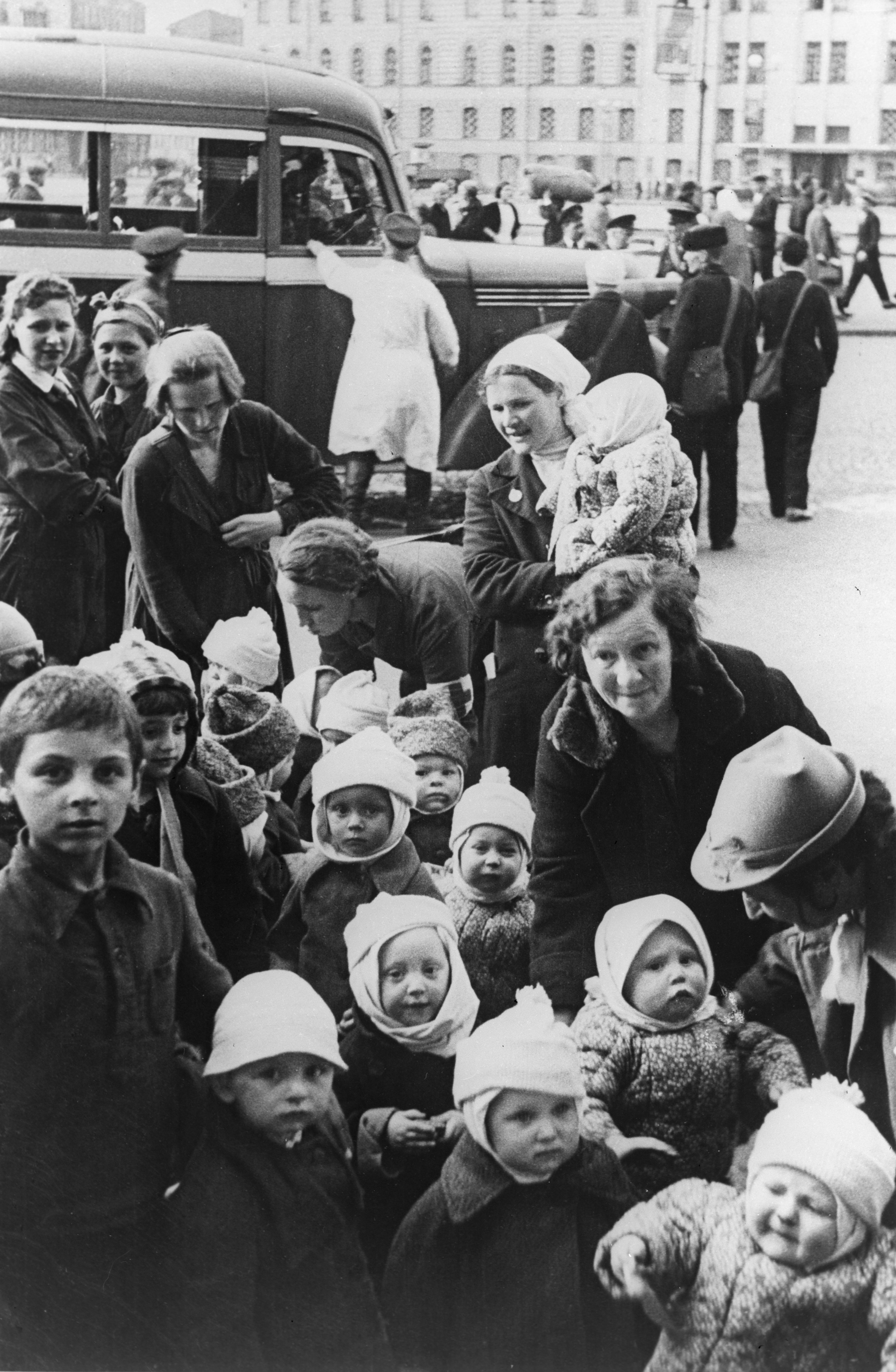
Adelia Nikolaevna Voronova does not know what she was named at birth, nor her real age. She was a child during the siege, and she was able to be evacuated from the besieged city.
— I remember waking my mother up, waking her up, and she, as it turned out, was already dead. I was very young, I don't even know how old I was. Probably two or three years, — the interlocutor of Izvestia told.

After her mother's death, she was taken to an orphanage in the Gorky region (now the Nizhny Novgorod Region). During the evacuation, Adelia Nikolaevna was injured, which caused her to develop bone tuberculosis - her leg eventually had to be amputated.
It was not possible to restore the documents, so only the place and her approximate year of birth, 1938, are known. The girl's name was given in the orphanage where she found herself after the evacuation, and she, like many orphans, received her middle name from the director of the organization, Nikolai Ivanovich. She said that she only remembers how her father went to the front.
"We were standing in the room, he was holding me in his arms, and I think he was in a military uniform—that's what stuck in my memory," she said.
Adelia Voronova has never claimed to be a blockade runner, but now it would help in solving health problems.

What changes can the bill make?
Currently, the status of a resident of besieged Leningrad is given to people who spent at least four months in the city during the siege — from September 8, 1941 to January 27, 1944. A draft law has been submitted to the Legislative Assembly of St. Petersburg, which assumes that those who spent even one day in besieged Leningrad will receive this status. The draft was submitted to the Legislative Assembly by Governor Alexander Beglov.
"Everything connected with the people who defended our city and who withstood the most difficult trials is sacred to us," said Alexander Beglov, Governor of St. Petersburg.
According to him, since 1989, 850 thousand people have already been awarded the badge "Resident of besieged Leningrad".
"With the adoption of the draft law, 1,836 residents of St. Petersburg and about 1,200 citizens living outside St. Petersburg will be presented with the badge "Resident of Besieged Leningrad," the explanatory note says.

After receiving the badge, these citizens will receive the status of veterans of the Great Patriotic War, which will give them the right to benefits and to receive a disability pension at the same time as a regular pension.
Beglov expressed the idea of easing the conditions for granting blockade status back in 2019. In December 2024, he spoke about his intention to make a corresponding proposal to President Vladimir Putin. In January 2025, the city Committee on Social Policy submitted for anti-corruption expertise a bill to abolish the requirement for a four-month stay in besieged Leningrad to obtain the status of a besieger.
In early September, Federation Council Speaker Valentina Matvienko announced plans to grant a similar status to all residents of besieged Leningrad without exception. According to her, preparations for the implementation of the bill will begin in the near future.
— We will adopt all necessary legal and by-laws to ensure that there are no restrictions. And those who have lived in the city for less than four months, practically all those who were born in Leningrad during that difficult and difficult time, will receive the status of "Resident of besieged Leningrad," she said.

How do the relevant organizations and committees treat the initiative?
The regional public organization of children from orphanages in besieged Leningrad reacted negatively to such an initiative.
— It was a very difficult time. And what about this one day? Well, they stayed in besieged Leningrad in September, and then maybe their parents sent them somewhere, or they were quickly evacuated," says Nina Fadeeva, chairman of the organization's board.
However, the chairman of the Russian Union of Veterans, Colonel-General Vitaly Azarov, said that he supports the expansion of the circle of people who have received the status of a blockade runner.
— The resolution of this issue is long overdue. The law will be able to remove the rigid barrier that for decades divided Leningraders into "real" and "fake" blockaders based on the formal criterion of the number of days, he noted.
According to him, for many elderly people, obtaining such a status is not only a matter of financial support, but also of moral recognition of their involvement in the heroic deed of the inhabitants of Leningrad.

The initiative is also supported by the head of the museum "Young Participants in the Defense of Leningrad" Lyubov Gadzhieva.
— This is especially true now for children of the blockade. There are people who were born on September 8, 1941 and further down the calendar," she noted. — There are very few such citizens left, so today we must do everything for them to make them happy, because they have lost their childhood because of the war.

The main thing is for the blockade fighters themselves to support such an idea, said Svetlana Bessarab, a member of the State Duma Committee on Labor, Social Policy and Veterans' Affairs.
"Living through the entire blockade in a hungry, cold, dying city and just passing through there for one day is a big difference," she stressed.
According to her, decisions on the assignment of veteran status cannot be made without the opinion of the besiegers themselves.
Переведено сервисом «Яндекс Переводчик»
