
Go with the flow: NATO turns Norway into a weapons testing ground

Norway is becoming a NATO training ground for testing new types of weapons, the Russian Embassy in Oslo told Izvestia. Diplomats note that most of them are intended for use against Russia. Previously, the Quicksink anti-ship "smart" bomb, designed for high-precision destruction of mobile naval targets at a great distance, has already been tested in Norwegian waters. Experts believe that the North Atlantic Alliance's interest in Norway is due to preparations for combat operations in the Arctic, and for these purposes, drones will be tested in the region. About Norway's strategy in the Arctic region and how the Russian Federation can respond to the challenges of NATO, in the Izvestia article.
New NATO weapons tests in Norway
The North Atlantic Alliance has significantly increased its military activity in the Arctic region. Tests of the latest NATO weapons near the Russian borders, in particular in the Norwegian waters, are becoming a regular occurrence. The Russian Federation states that Norway is turning into a testing ground for the alliance's deadly weapons.
"We cannot but be concerned that our neighboring country, which until recently took a responsible approach to maintaining low tension in high latitudes, is literally turning into a NATO training ground before our eyes, providing its land and sea spaces for testing weapons systems, most of which are intended for use against Russia," they said. "Izvestia" at the Russian Embassy in Norway.
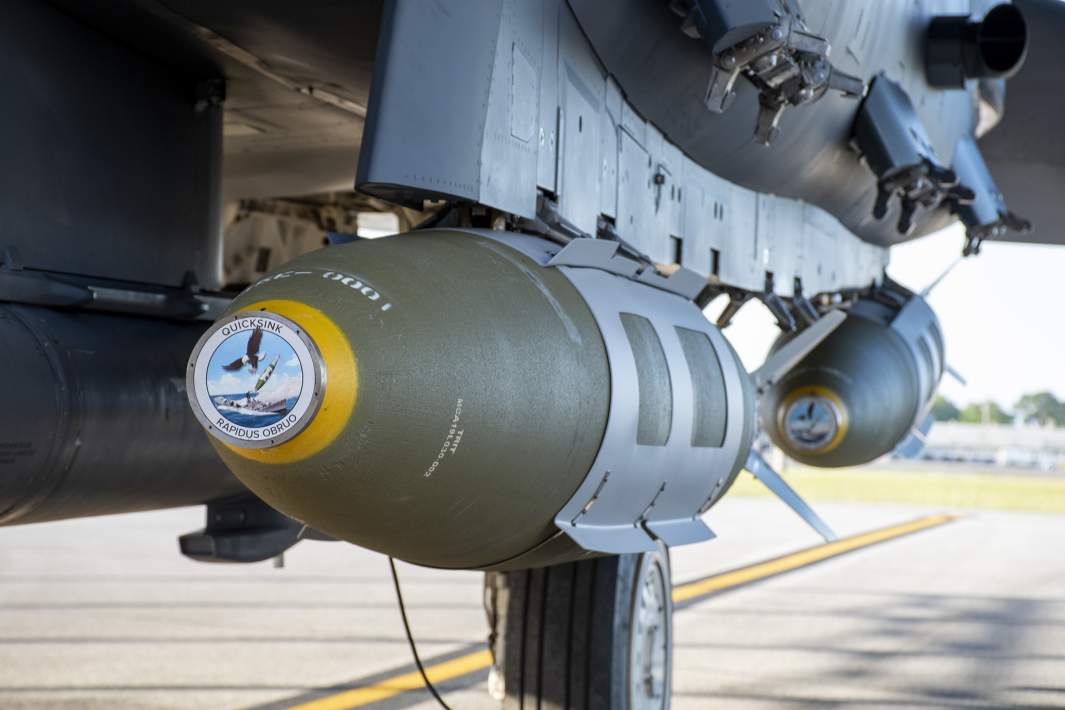
The Quicksink Bomb
The diplomatic mission stressed that the intensification of the alliance's activities on the "northern flank" poses threats to the national security of the Russian Federation, increases the likelihood of dangerous incidents and leads to an increase in military and political tensions in the Arctic.
As an example, the diplomats cited recent tests in the Norwegian Sea of the new American Quicksink anti-ship guided bomb, designed for high-precision destruction of mobile naval targets at a great distance. The "smart" aerial bomb was dropped from a B-2 Spirit strategic bomber of the US Air Force with the support of a P-8A Poseidon base patrol aircraft and four F-35 tactical fighters of the Norwegian Air Force, as well as using the infrastructure of the country's Navy and the Andeya cosmodrome.

In August, the NATO Air Force Command reported on the transfer to Norway of three B-1B Lancer bombers from the United States to Erland Air Base to participate in training events in Europe. At the same time, exercises of the US aircraft carrier group took place in the Norwegian and Barents Seas from August 23 to September 8, in which, among other things, France and Germany participated. The NATO Air Force practiced flight and strike training, including in the southeast of the Svalbard archipelago, located near Russia.

B-1B Lancer
Finally, in the first half of this year, the US Navy's Virginia-class nuclear submarine USS Delaware conducted tests of the YellowMoray system in the Norwegian fjords for launching and self-returning autonomous "reconnaissance drones" through the torpedo compartments.
Russian military expert Alexei Leonkov is confident that Norway was not chosen by chance. Oslo is the northern flank of the NATO bloc, and the US—led alliance has long been planning its military presence in the Arctic theater of operations. In addition, the Northern Sea Route passes through the test sites. The Americans "want to either take control of this area or block it."
— To do this, we need to create modern weapons systems that will work in Arctic conditions. And since the main force in the Arctic is the navy, it is not surprising that, let's say, the Norwegians are involved for two reasons: they can create equipment that works in Arctic conditions, and they have some innovative solutions," the expert told Izvestia.

According to Leonkov, Russia is ready for NATO maneuvers. Moscow has its own fleet rearmament program, which includes air-based or sea-based hypersonic anti-ship complexes of the Kinzhal or Zircon type. Russia is also working on second-generation complexes.

Norway's role in the militarization of the Arctic
The victory of the Norwegian Workers' Party, led by Prime Minister Jonas Garstere, on September 8 consolidated the country's foreign policy course towards further strengthening the role of NATO. Interestingly, at the end of August, the Norwegian government unveiled an updated Arctic strategy called "Norway in the North — Arctic Policy in a new reality."
This document effectively secures the kingdom's role as the Arctic outpost of the West and defines key policy directions in the north for the coming years. Special attention is paid to strengthening cooperation with the alliance's allies — the United States, Canada, Finland and Sweden, including an increase in the number of joint exercises and patrols in high latitudes. Further tests of new NATO weapons in Norway are also possible.

Vadim Kozyulin, head of the IAMP Center at the Diplomatic Academy of the Ministry of Foreign Affairs of the Russian Federation, believes that the Arctic has become a zone of increased interest to NATO. He noted that the number of weapons that will be tested in the region in the future will include drones launched from submarines. They will be used to launch strikes and conduct reconnaissance in the event of a military conflict, the expert noted. The United States will play a key role in NATO's strategy in the Arctic region.
— The Americans are preparing to launch strikes from under the water. As they could with cruise missiles, so, in general, they plan to use drones today. That is, most likely, the Arctic has become a zone of such testing, testing of these very technologies," he told Izvestia.
It is worth noting that in the context of the confrontation between NATO and the Russian Federation, Moscow and Oslo actually have no channels for contacts. Thus, Norwegian cooperation with Russia in the Arctic region has already been reduced to a minimum. The participants of the Arctic Council (AU), which set itself the task of sustainable development of this region and the adjacent marine areas of the Arctic Ocean and the northern seas, have almost completely stopped cooperation with Moscow.

Richard Balfe, a member of the British House of Lords, believes that the best hope for the Arctic would be for the forum to return to full-fledged work. It is one of the few remaining bodies in which Russia and European countries can try to build a safer world.
"A significant contribution from Finnish pragmatism and Scandinavian caution would greatly help to start a useful dialogue," he told Izvestia. The only way to minimize the risk of accidental collisions or other incidents is to return all the mechanisms of the Arctic Council to full functioning.

In total, the council includes seven Arctic states besides Russia: the USA, Canada, Denmark, Iceland, Norway, Sweden and Finland. However, since the beginning of their work, they have frozen their participation in the meetings of the forum, and later agreed to work on projects that do not require the participation of the Russian Federation, which, in fact, stopped the work of the council. In 2024, as a response, Russia suspended its annual contributions to the AU fund until full-fledged work with all members resumed.
Переведено сервисом «Яндекс Переводчик»
