- Статьи
- Society
- One hundred years of the secret war: what the "wolfhound of Stalin" told in his last confession

One hundred years of the secret war: what the "wolfhound of Stalin" told in his last confession

A daring saboteur who tricked the best intelligence services of the West. A real star of Soviet intelligence. The nightmare of the Ukrainian Nazis. And even Stalin's wolfhound. It's all one person. The man who was behind the events that fundamentally changed the already rapidly changing world. Pavel Sudoplatov. The stories that are told about him seem fantastic, but they actually happened. On September 6, the film NMG DOCK Sudoplatov will tell on REN TV about who was behind the cunning plans to destroy the USSR, how the secret atomic developments of the United States ceased to be a secret, and how an ordinary box of chocolates turned out to be more dangerous than an army of spies. Chronicles of the secret war through the eyes of an eyewitness." Izvestia watched a detective documentary based on the legendary intelligence officer's last interview before it aired. How the conflicts that are unfolding today in front of the eyes of the whole world are related to the events of almost a century ago — in our material.
"It was necessary to prepare for the war"
The main material for the authors of the film was an archival 10-hour interview with former NKVD Lieutenant General Pavel Sudoplatov. Recorded back in 1993, it was his last. Now, three decades later, much of this conversation looks like a frightening prophecy. Perhaps his main point is that the war against Russia did not stop in 1945 — it went on for all the following decades. And it will continue to go on. Only its names will change.
— For us, the Chekists of that time, it was clear that there would be a war. It's only a matter of time. And that we need to prepare for this. And we were preparing," he says.

the USSR. Ukrainian SSR, marines of the USSR Navy during exercises, Sevastopol, June 1, 1990
It's hard to call the year when this interview was taken a calm one. However, like any year of this "dashing" decade. A renewed Russia after the collapse of the USSR shared with Ukraine the fleet, the foreign debt inherited from the Union, and gas. In the same 1993, the odious Organization of Ukrainian Nationalists (OUN, recognized as extremist in Russia and banned) emerged from the twilight, legalizing its activities as a public association. At first.

Sudoplatov, the son of a miller from Melitopol, who made a rapid career in the NKVD, was privy to many state secrets and was an integral part of many of them, could not help but notice what was happening. He was all too familiar with these "liberation movements" in the neighboring country. As well as what they eventually turn into.

An image from the documentary "Sudoplatov"
The preparations for war in the 1930s, which he spoke about in an interview, included the development and conduct of special operations in the USSR and beyond to neutralize possible hotbeds of danger. One of the main ones was the nationalist movements of Ukraine, which interacted extremely closely with Western states. Satellites in the hands of foreign intelligence services, these terrorist cells posed a much more serious danger than one might have imagined. Moreover, their activities were not limited to the borders of the Soviet Union.
"We knew that none of the emigrant terrorist organizations were united," Sudoplatov recalls. — They even had a tendency to destroy each other. Soviet intelligence relied on this.

A shot from the documentary "Sudoplatov"
Sudoplatov personally carried out one of the most daring operations against such a cell. It took almost four years — their intelligence officer lived side by side with the Ukrainian radicals. But the result exceeded expectations: both the OUN fighters and their Abwehr patrons were circumvented. In the film, this episode is reconstructed and analyzed in detail, and it is almost impossible to believe that all this actually happened. By the way, from the same chapter of the documentary detective, we learn that the notorious slogan "Glory to Ukraine" — "Glory to the heroes" appeared exactly then, in the 1930s. And it hasn't gone away since.
— The most difficult thing in the process of preparing the film was to collect all the interviews of Pavel Anatolyevich, not only from 1993, but also earlier ones, analyze them, study them carefully and tell them simply and clearly, without value judgments about the events that he witnessed and directly participated in, — says the film's producer Daniil Shinkarev.
Operations that have become classics of the special services
One by one, Sudoplatov lists the external threats to the country. Britain, France, Finland, Turkey, the USA, Germany— all had plans to destroy the Soviets. And in each case, he developed plans, the execution of which could include not only years of work, but also the organization of the agents' activities. Who, by the way, sometimes might not know that they were agents. And even more so, not to suspect who else is involved in the operation.

Novogroznensky Oil Refinery, USSR, Chechen-Ingush Autonomous Soviet Socialist Republic, Grozny, June 8, 1984
The plans of the Western intelligence services were not a secret to him — Sudoplatov and his team knew about everything that was being prepared abroad. For example, about Operation Spear. The purpose of this Anglo-French project was to destroy the oil fields in Baku and Grozny in order to paralyze or even destroy the mining industry of the USSR.
— France planned to transfer from 100 to 200 aircraft to Syria in order to launch a bombing attack. This would be followed by an amphibious landing, which would reach the oil pipeline and occupy it," said Dmitry Surzhik, scientific secretary of the Center for the History of Wars and Geopolitics at the Institute of Universal History of the Russian Academy of Sciences.

During the Great Patriotic War, Sudoplatov conducted radio games. Soviet counterintelligence agents created fictitious underground organizations. By establishing contact with the German command, they misled it, forcing it to spend significant resources on the transfer of agents, equipment and funds. All this was intercepted, and misinformation was transmitted to the Germans, military historian Dmitry Boltenkov noted in an interview with Izvestia.
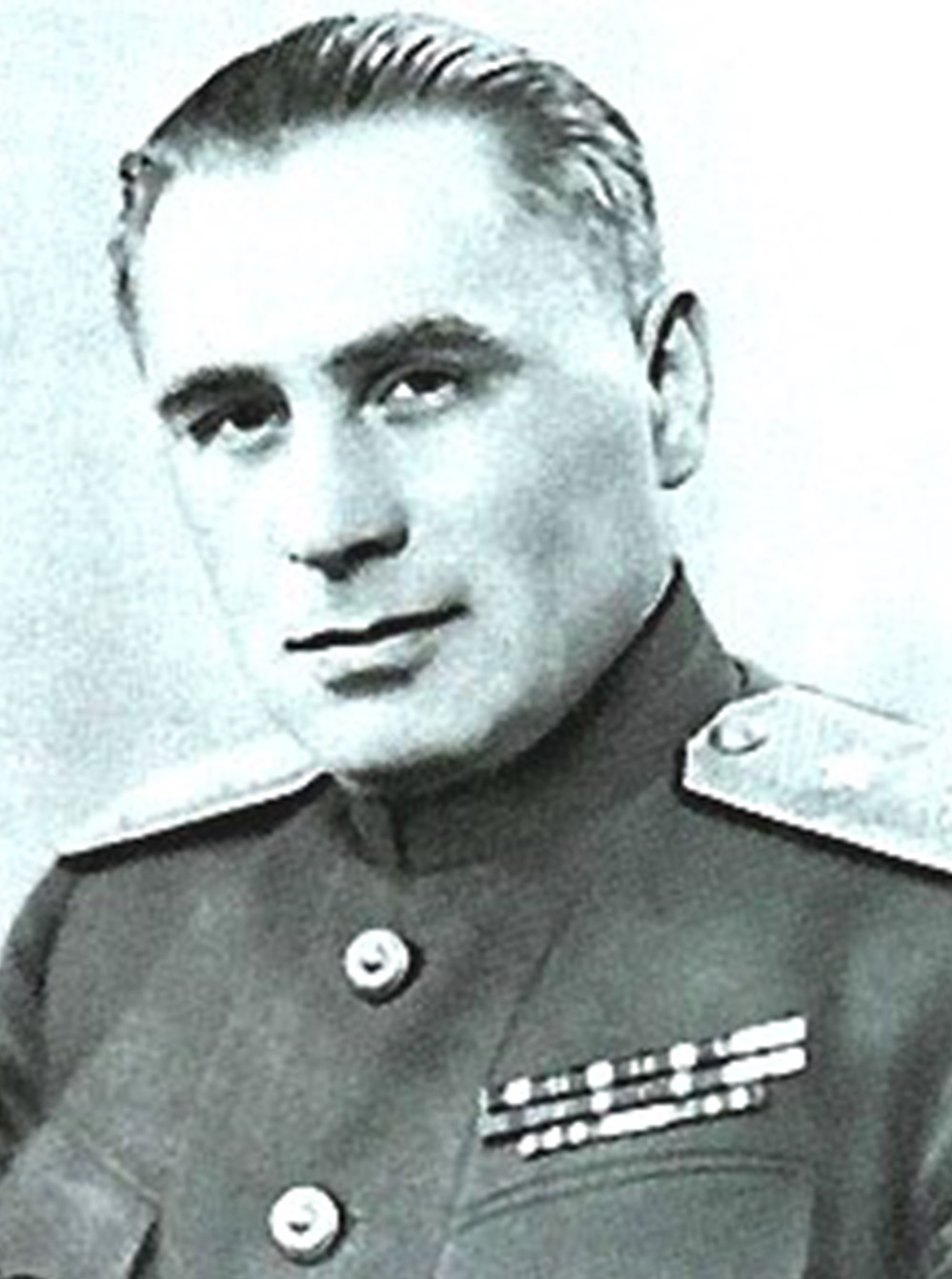
Among the most famous operations led by Sudoplatov, the historian singles out the Monastery and Berezino. The first was one of the longest-running and most successful radio games: counterintelligence agents created a legend about the existence of the monarchical underground organization "Throne". The Germans, believing in its authenticity, transferred their agents to the USSR, who were promptly detained, the expert recalled.
"These reconnaissance and sabotage operations have become classics of the world's special services," Dmitry Boltenkov said. — Now, fortunately, we see a return of interest in this unique and legendary personality.
A master of espionage or a prophet from the NKVD?
Izvestia has written about Pavel Sudoplatov more than once: the rehabilitation of the general, who was sentenced to 15 years in prison in 1958 with deprivation of titles and awards, and what he described in detail in his memoirs, which are very popular, including far beyond Russia, were widely discussed. The legendary intelligence officer's confessions about how he was supplied with information by the developers of the American atomic bomb, including Oppenheimer himself, thundered all over the world. His book "Special Assignments: Memoirs of an Undesirable Witness, a master of Soviet Espionage," written jointly with his son, became the reason for a large column by Vladimir Nadein (Izvestia, June 4, 1994), where Sudoplatov is called a time bomb.

Opening ceremony of a memorial plaque in memory of Soviet intelligence officer Pavel Sudoplatov in Melitopol
After Pavel Anatolyevich's departure in 1996, his fame did not subside.
"Now the 4th directorate, which was headed by Pavel Sudoplatov during the war years, is often criticized," Izvestia wrote on April 17, 1999. "According to veterans of Russian intelligence, it was thanks to the activities of this man that effective front—line intelligence was created, which provided our advanced units with operational information."
"Special services have always shown interest in hypnosis, techniques of mental influence on a person, and forecasting events. When creating the 13th department of the 4th directorate of the NKVD, Lavrentiy Beria incorporated the study of astrology into its functions. This department was also called Sudoplatov Department after its founder and first head, Lieutenant General Pavel Sudoplatov," Izvestia reported on October 5, 2000.

And in 2008, Izvestia published an interview with the grandson of intelligence officer Peter Sudoplatov.:
"In turn, one cannot ignore the historical context, the fact that grandfather sincerely believed in the communist idea," Peter remarked, answering the question of why his grandfather was perceived so differently at different times. — And he was a saboteur, not an executioner and a sadist.

Photo from an interview with the grandson of intelligence officer Peter Sudoplatov
Sudoplatov's own memoirs seem to contain a prediction of the cataclysms that our world is going through today. And the authors of the film are sure that everything he said about the "great chessboard of the 30s and 40s" can be fully attributed to the present day. Nothing has changed. And the stakes are the same, and the approximate balance of power is the same. And in this sense, "Sudoplatov. Chronicles of the Secret War through the eyes of an Eyewitness" is not just a historical detective story, but also a way to talk about our reality in the language of facts from the not—so-distant past.
"So far, we have focused only on events that seemed to us very much in tune with today, but there is enough material for a whole series," Roman Iovitsa, the film's director, shared with Izvestia. — And we've already started thinking about a sequel. Because the political agenda with enviable regularity throws up reasons for reflection and historical analogies.
Premiere of the documentary detective story "Sudoplatov. Chronicles of the Secret War through the eyes of an eyewitness" will be held on REN TV on September 6 at 17:00.
Переведено сервисом «Яндекс Переводчик»
