
With full acceptance: the main stage of the admission campaign has ended in Russia
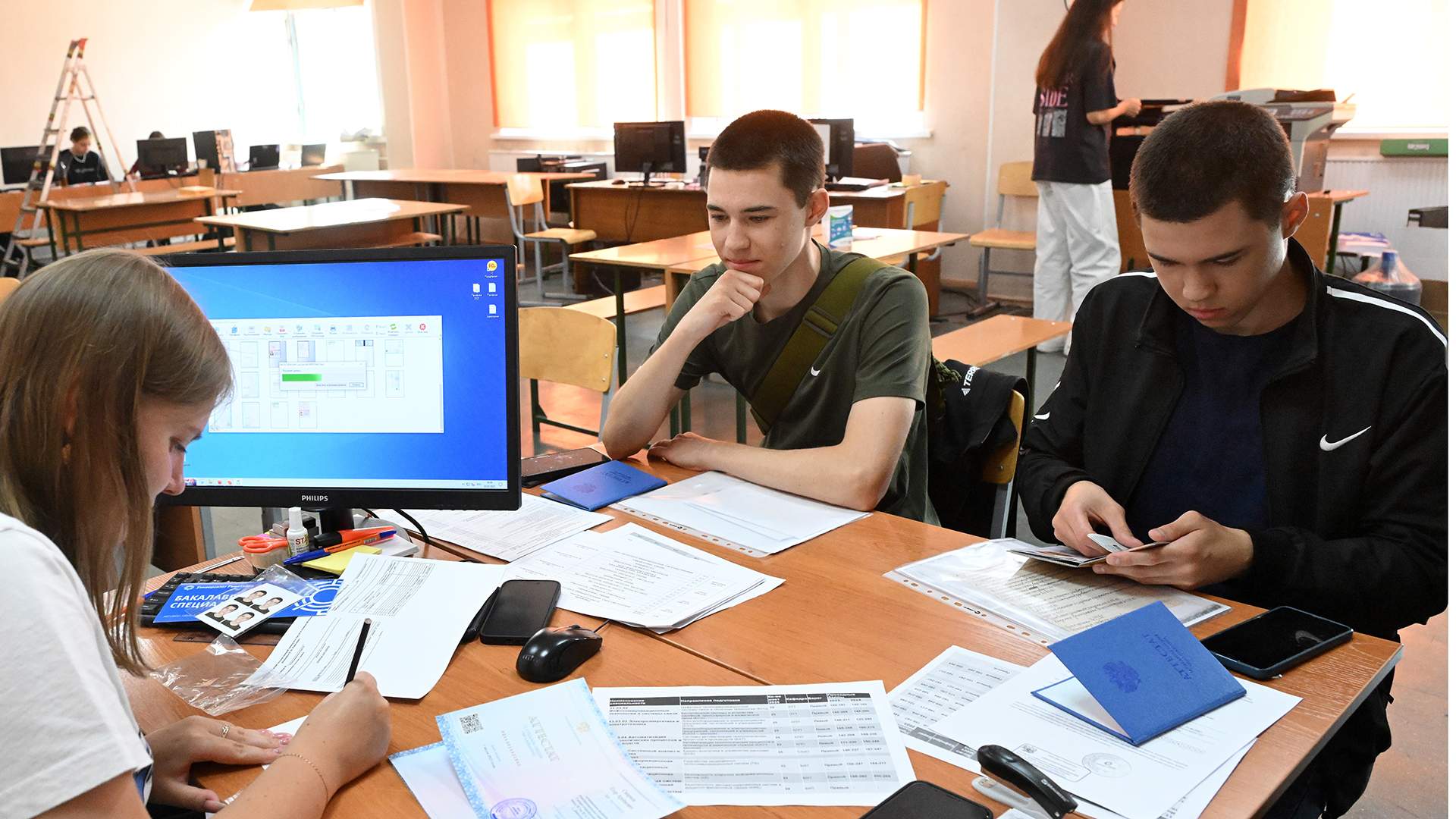
The main stage of the admission campaign has ended in Russia. According to preliminary data, more than 1.3 million applicants applied to universities, and more than 1.7 million applied to colleges. Engineering, pedagogical, medical and IT specialties have become the most popular areas. How the preferences of applicants have changed and what it depends on, read in the Izvestia article.
What was the admission campaign for 2025?
The main stage of the university admissions campaign, which is also often referred to as the first wave, has ended in Russia. If successful, this part of the applicants will be enrolled in budget places for bachelor's, specialist's and basic higher education programs in the first half of August.
In total, more than 1.3 million applicants have applied to universities, said Dmitry Chernyshenko, Deputy chairman of the Russian government.
"It is important to note that three of the five sought—after specialties among applicants are engineering. President Vladimir Putin said that by 2030, Russia needs to train at least 2 million specialists in this field — they will have to ensure Russia's technological leadership in the future," the official Telegram channel of the Cabinet of Ministers quotes him as saying.

This year, 67% of applicants chose regional universities — most of them used the Online University Admission service, said Valery Falkov, head of the Ministry of Education and Science.
"This is not just an online filing tool. We see that thanks to the superservice, applicants from the regions see a completely different picture of opportunities, they choose not only home universities and universities in Moscow and St. Petersburg, but also universities in other regions of our country," Falkov said.

Since 2025, universities of the DPR, LPR, Zaporizhia and Kherson regions have joined the service for the first time, the Ministry of Education noted.
Sergey Kravtsov, the head of the Ministry of Education and Science, noted the record number of applications in pedagogical areas: 514.1 thousand applications were submitted to the current admission campaign, as of July 28, and 25% more applications were received for bachelor's and specialist's degree programs in pedagogical areas than according to the results of the admission campaign of the 2024-2025 academic year — 471.4 thousand.

Minister of Education of the Russian Federation Sergey Kravtsov
Yulia Kuznetsova, a teacher and expert in education and finance, noted that the 2025 bachelor's degree admissions campaign clearly reflects shifts in economics, technology, and public expectations.
— The average budget competition at leading universities remained high, especially at MSU, HSE, MIPT, and St. Petersburg State University. In some areas, the competition exceeded 20-30 people per place, including in IT specialties, bioengineering and cybersecurity. However, on average in Russia, competition has decreased slightly compared to 2023-2024, including due to the demographic drawdown of graduates and an increase in the number of college applicants," the expert told Izvestia.
Which specialties are popular in universities
Yuri Lyandau, Doctor of Economics, Professor at Plekhanov Russian University of Economics, told Izvestia that the demand for higher education remains high because applicants and their parents are motivated to find decent work, and in this case it is necessary.
— If we are talking about serious career growth, then only a bachelor's degree may not be enough. For example, in the Russian Federation, professional standards define qualification levels, and a master's degree is required to hold managerial positions," said Lyandau.

According to him, there is a high demand for full-time and part-time education, as many plan to combine education with work.
— As for the choice of full—time education, then, of course, applicants are increasingly choosing in favor of modern programs, which teach, among other things, practitioners from the real sector of the economy, - said Lyandau.

According to the Ministry of Digital Development, Communications and Mass Media of the Russian Federation, on average, applicants choose three institutes or universities for admission. Most often, future students indicate volunteering, Olympiads, and passing TRP standards among their achievements. And the most popular groups of specialties are computer science and computer engineering, economics and management, education and pedagogical sciences, clinical medicine and law.
— There is a particularly high competition for full—time bachelor's degree programs. We also note the steady interest of applicants in legal, economic and social areas of study," said Andrey Khlutkov, Director of the Presidential Academy in St. Petersburg.
According to him, the competition for budget places is traditionally high, especially in popular areas, but this year the highest competition was marked in the program "Law" and "Economic security" full-time, "Sociology" and "Economics" full-time, as well as "Management" full-time.

Ekaterina Andreeva, Associate Professor at the Financial University under the Government of the Russian Federation, in a conversation with Izvestia, noted such areas as international relations and medical care among the most in demand.
— The average competition for budget places in top universities in these areas ranged from 15 to 30 people per place, which is slightly higher than last year. This growth in the competition is due, on the one hand, to an increase in the number of school graduates, and on the other, to an increase in the prestige of higher education and the desire of applicants to receive a high—quality education," the expert noted.
The priority of modern applicants is related specialties, experts point out.
— Applicants have become more aware of their choice of specialty, focusing on their interests, abilities and employment prospects. There is a tendency to choose related specialties that provide more opportunities for career growth. For example, applicants are increasingly choosing a combination of IT and economics or law," Andreeva emphasized.

Often, students choose not just related fields, but those with different passing scores, in case the applicant does not pass the main course. This indicates a pragmatic approach and strategic thinking, Yulia Kuznetsova said.
Which regions do they come from more often?
Yulia Kuznetsova also noted the growing demand for paid tuition. According to her, in many universities, paid places were dismantled even before the end of the admission campaign, especially in technical and medical fields.
— Parents who have the resources are increasingly considering paid education as an investment, especially when it comes to universities with a high level of graduate employment. At the same time, there has been a growing interest in installment programs, educational loans, and online formats, which indicates an attempt to combine quality and accessibility," the expert concluded.
Applicants are paying more and more attention not only to the prestige and relevance of the specialty, but also to its relevance in terms of digital transformation, innovation and career prospects, said Andrey Khlutkov.
— It is becoming obvious that modern young people are striving to get an education that will provide them with flexibility, the opportunity to adapt to a rapidly changing labor market and successful professional realization in the context of globalization and technological changes, — he said.

In general, the experience of this admission campaign shows that applicants have become more aware of their choice of specialty, focusing on their interests and employment prospects, summarizes Ekaterina Andreeva.
As for geography, according to Khlutkov, the regions of the North-Western and Central Federal Districts showed the greatest activity. Applicants from large cities and regions with a high level of economic development, such as Moscow, St. Petersburg, the Moscow Region, the Krasnodar Territory and the Republic of Tatarstan, are most actively applying, Ekaterina Andreeva said.
— However, we can also note an increase in the number of applicants from remote regions who use online application and distance learning opportunities. In general, the geography of applicants is becoming more diverse, which indicates an increase in the availability of higher education for residents of different regions of Russia," she said.
What professions do they go to college for?
The number of applications submitted to colleges, in turn, exceeded 1.7 million. According to Deputy Prime Minister Dmitry Chernyshenko and Education Minister Sergei Kravtsov, this is more than the figure for the same period last year.

"Vocational training is attracting more and more applicants, and graduates of colleges and technical schools are in demand from employers. Already, the number of applications submitted has increased by 800,000 compared to the same period last year," Dmitry Chernyshenko said.
More than 263,000 applications were submitted to colleges through the Online University Admission service, according to data released by the Russian government.

"Already in the first 10 days of the admission campaign, we saw a twofold increase in the number of applications compared to last year. Such an increase in interest in vocational education and training clearly confirms the demand for working professions among young people and the successful implementation of the tasks set by the President of Russia," said Sergey Kravtsov.
College applicants are most interested in information technology, medicine and law.

"Tourism and hospitality, economics and accounting, maintenance and repair of motor vehicles, primary school teaching, law enforcement, design, logistics operations, as well as construction and operation of buildings and structures are also among the top popular specialties," the official Telegram channel of the Russian government says.
As for the regions, applicants from Moscow and St. Petersburg submitted the most applications, the Krasnodar and Perm Territories took the second place, and the Tyumen, Moscow and Novosibirsk Regions took the third. The Republic of Bashkortostan closes the rating.
Переведено сервисом «Яндекс Переводчик»
