- Статьи
- World
- Money in question: the EU will not be able to invest $ 600 billion in the United States

Money in question: the EU will not be able to invest $ 600 billion in the United States
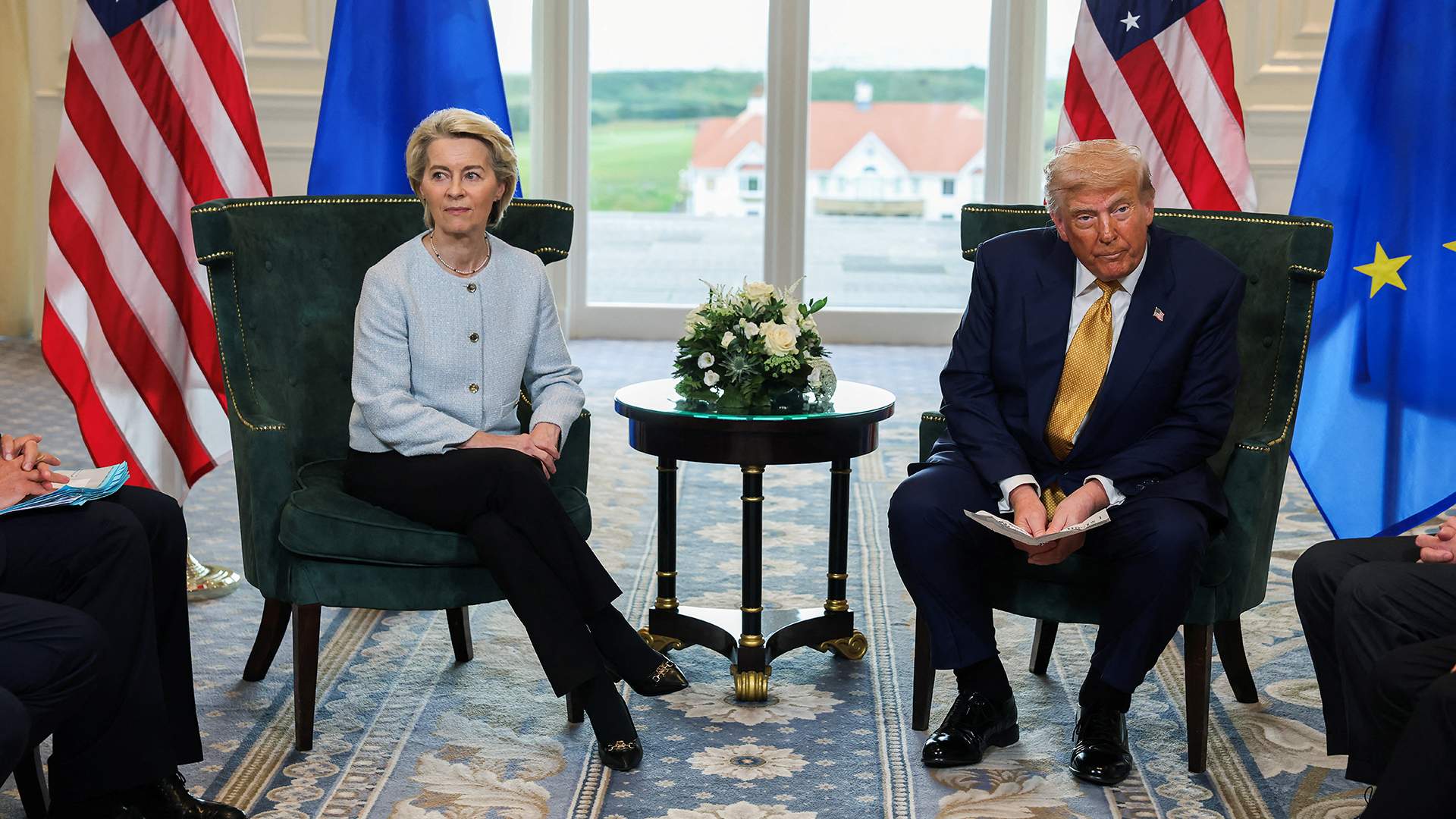
Just a few hours after the conclusion of what Trump called the "largest" deal between the United States and the EU, Brussels admitted that it would not be able to fulfill one of its main obligations — to invest $600 billion in the American economy. In Europe, it was explained that these investments should come from the private sector, which Brussels does not manage. At the same time, the European industry risks losing competitiveness as a result of the deal, and the region's economy is projected to shrink significantly. Experts believe that the agreement is more of a political nature — it is a declaration of intent with uncertain financial consequences, reflecting Trump's attempt to gain financial support for the United States at the expense of Europe. For more information, see the Izvestia article.
Why the EU will not be able to fulfill the agreements on the trade deal with the United States
The European Union, just hours after concluding a trade deal with US President Donald Trump in Scotland, admitted that it would not be able to fulfill its promise to invest $600 billion in the American economy. This was reported by Politico, citing unnamed EU officials.
"This is due to the fact that the funds will come exclusively from private sector investments, over which Brussels has no power," the publication says.
At the same time, another source of the publication noted that the agreed amount of investments is based on detailed discussions with various business associations and companies.

Why did the EU agree to a "bad" deal
Western economists predict that the result of the trade deal will be a serious economic decline for the European Union, while Germany will suffer the most. According to the forecast of the Kiel Institute of World Economy, production in Germany, which already feels bad today, will decrease by 15%, and in the EU as a whole — by 11%.
The American edition of Bloomberg believes that EU leaders are beginning to realize "how low they have fallen." It is believed that the terms of the trade deal will deal a significant blow to European companies: the EU has agreed to triple tariffs to 15% on most exports to the United States and will maintain its own duties on imports from the world's largest economy at 1% or lower.
"From an economic point of view, this is an unfavorable agreement, and from a geopolitical point of view, it is a defeat," former Spanish Foreign Minister Arancia Gonzalez Laia, now dean of the Paris School of International Relations at the Institute for Political Studies, told Bloomberg.
Chancellor Friedrich Merz said the European economy would suffer "significant damage," while French Prime Minister Francois Bayrou called it a "black day."
The head of the European Commission, Ursula von der Leyen, who signed the agreement, said that these conditions were "the best we could get." According to media reports, the EU "had no choice" but to agree to such an unbalanced deal, since "the alternatives would have been worse."
Trump's "Reverse Marshall Plan": Why Europe will become even more dependent on the United States
The trade agreements between the US and the EU are considered unequal — the EU has committed itself to buying significant volumes of products from the US, while guarantees from the American side regarding investments and reduction of duties are limited.
Experts point out that such a deal could increase Europe's dependence on the United States, especially in the energy and defense industries. At the same time, European manufacturers risk losing their competitiveness in the domestic market and in the world due to additional restrictions and pressure from American requirements.
The agreement is sparking discussions about its impact on the economic development of the EU and the United States, as well as on security and political cooperation. An important task for the European Union remains to find a balance between the benefits of access to the American market and preserving its own industrial base and strategic interests.
According to analysts, the deal is more a political decision than an economic one.
Trump is playing to the public and talking about incredible amounts of investments in the American economy from different countries, but what it will look like in reality is an open question, Vladimir Vasiliev, chief researcher at the Institute of the USA and Canada, shared his opinion with Izvestia.
According to him, the trade deal became a declaration of intent: Europe promised that it would invest in the US economy, but at the same time the amount of $600 billion was taken "from the ceiling."
— Trump is currently interested in the very question that Europe will invest these funds in the United States. That is, that financial flows will go with a positive balance for the States. This is the most important principle," Vasiliev explained.
According to him, in general, Trump is trying to make a "Marshall plan on the contrary": today, European countries should help the United States in the same way that Washington once helped Europe.
Переведено сервисом «Яндекс Переводчик»
