How Trump is trying to lead the United States out of the Ukrainian conflict. Analysis

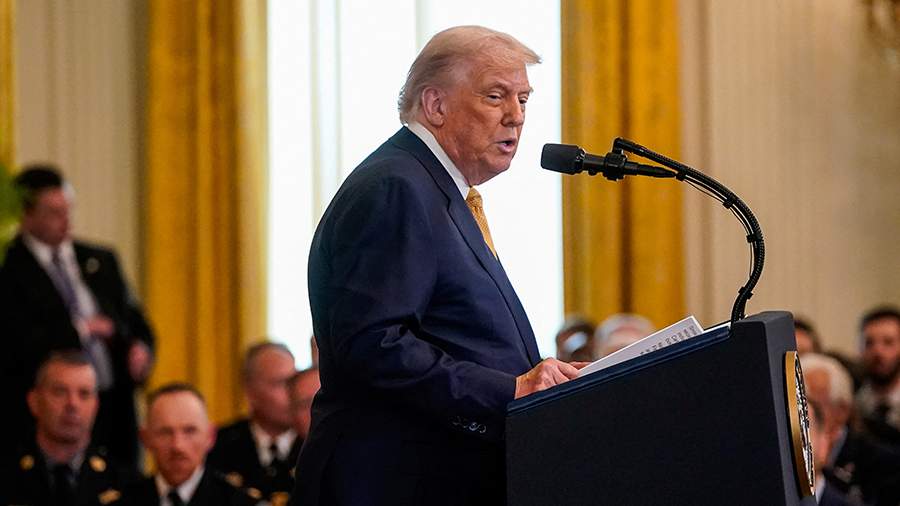
There is a noticeable shift in the foreign policy rhetoric of US President Donald Trump: from loud promises to quickly end the conflict in Ukraine to attempts to simply minimize US involvement. Internal challenges come to the fore for him. At the same time, Ukraine is also losing priority amid growing international threats and domestic political pressure. Why and how Trump's foreign policy is being transformed is in the Izvestia article.
Changing the rhetoric
• During the election campaign, Trump made loud statements about his ability to resolve the conflict between Russia and Ukraine within 24 hours of coming to power. He tried to reinforce his image of a strong leader with this. Such statements also created a spectacular contrast with former US President Joe Biden. However, a couple of weeks after the victory, having had the opportunity to get a closer look at the situation, Trump corrected his promises: now he was going to stop the conflict in 100 days. But even this failed. Trump's focus is now increasingly on the domestic agenda, in particular the economy, migration, crime, inflation, and border security. Foreign policy rhetoric is gradually fading into the background.
• After coming to power, Trump soon realized that he did not have the political levers that would allow him to force one or both sides to make concessions that satisfied all parties to the conflict. Ukraine, relying on the support of the EU, does not want to recognize the loss of territories. For its part, Russia is not ready to give up the political and military results of its conflict without guarantees, which it considers vital for its security. The space for compromise is extremely limited.
• The conflict in Ukraine is also causing mixed reactions within the Republican Party. Increasingly, there are voices demanding that support for Kiev be reduced or completely stopped, based on the priority of American interests. This position is also popular among voters who are skeptical of the United States' international obligations. Trump's supporters are opposed to large financial injections into Kiev, given that many problems have accumulated inside the country. For example, in 2024, over 772,000 homeless people were registered in the country, which is 18% more than a year earlier. This is a record in the 20-year history of observations.

• As a political pragmatist, it becomes rational for Trump not to focus on the Ukrainian issue. After all, loud statements cause a resonance in the media, distracting attention from his main areas. Amid conflicts in the Middle East, tensions with China, and an internal political crisis over the scandal involving the existing or not "files" of deceased financier Jeffrey Epstein, Ukraine is gradually losing its place in public rhetoric.
In addition, the constant lawsuits and accusations force Trump to be more careful in his language, especially in matters of foreign policy. After all, every word can be used as an argument in disputes about his attitude towards Russia. Democrats continue to use the topic of alleged ties with the Kremlin as a tool of pressure.
Delaying the process
• While Trump wants to minimize US involvement in the conflict in Ukraine, the European Union is interested in prolonging the confrontation with Russia. However, Brussels realizes that they will not be able to support Kiev alone. This may be hindered, in particular, by budget deficits, pressure from voters, inflation and the energy crisis, exacerbated by sanctions against Russia. Increasing the burden on European budgets without parallel American support may lead to a decrease in the pace and volume of aid to Ukraine.
• Despite the fact that Trump is looking for a way to "move away" from Ukraine and is ready to "wash his hands of it" if Russia's threat of a cease-fire within 50 days does not work, he is unlikely to succeed completely. The United States has been a guarantor of security in the transatlantic space for decades. A way out of the Ukrainian conflict will inevitably cause a crisis of confidence among NATO and EU allies. This may be perceived as Washington's strategic weakness, which could provoke increased instability in Europe and, what is undesirable for Western countries, the expansion of Russia's influence. Such consequences do not meet either the long-term interests of the United States or its global image.

• Although Trump will not be able to completely stop aid to Kiev without congressional approval in any case, he has the opportunity to slow down supplies or suspend the shipment of certain types of high-tech weapons. These steps can be presented as changes in support for Kiev, rather than a complete curtailment of the program.
• Trump is likely to continue to put pressure on his NATO and European Union allies to give them more responsibility for supporting Ukraine. Washington has repeatedly stated that the United States has already done enough and that Europe should shoulder the brunt. Such a strategy will allow maintaining the American presence in the region, but at the same time shifting the burden to the European powers.
Main directions
• One of the key vectors of Trump's foreign policy is a rethinking of the role in regional conflicts. In the context of increasing tension in the Middle East and China's growing role in international relations, Washington is demonstrating its desire to reduce participation in international defense programs. This does not mean completely abandoning the support of the allies. However, the White House has repeatedly noted the transfer of greater responsibility to regional players. In the case of Ukraine, Washington is testing the possibility of reducing support without losing overall control over the situation.
• Trump is also famous for actively using economic levers of pressure on other countries. Washington continues to use the system of sanctions and export controls everywhere. Trump's behavior has been called a "tariff tango": at first he makes harsh statements about the imposition of huge import duties, but soon he often departs from his own words. This policy, as Trump himself states, will allow the United States to maintain control of global processes without entering into direct confrontation. Despite frequent accusations that tariffs can contribute to higher inflation, they bring income to the US treasury. In the first six months of 2025, revenue from duties increased by 110% compared to the same period in 2024, reaching $97.3 billion.

• Trump pays special attention to the localization of production. Foreign policy is aimed at preventing possible dependence on suppliers from potentially hostile countries. The White House is committed to supporting national businesses. Trump sees tariffs not only as a way to conduct trade negotiations, but also as a lever to bring offshore production back to the United States.
When writing the material, Izvestia interviewed:
- Vladimir Mozhegov, an American political scientist;
- Dmitry Drobnitsky, an American political scientist.
Переведено сервисом «Яндекс Переводчик»
