August 2 is an important church holiday, Elijah's Day: what is strictly forbidden to do, signs
- Новости
- Local news
- August 2 is an important church holiday, Elijah's Day: what is strictly forbidden to do, signs

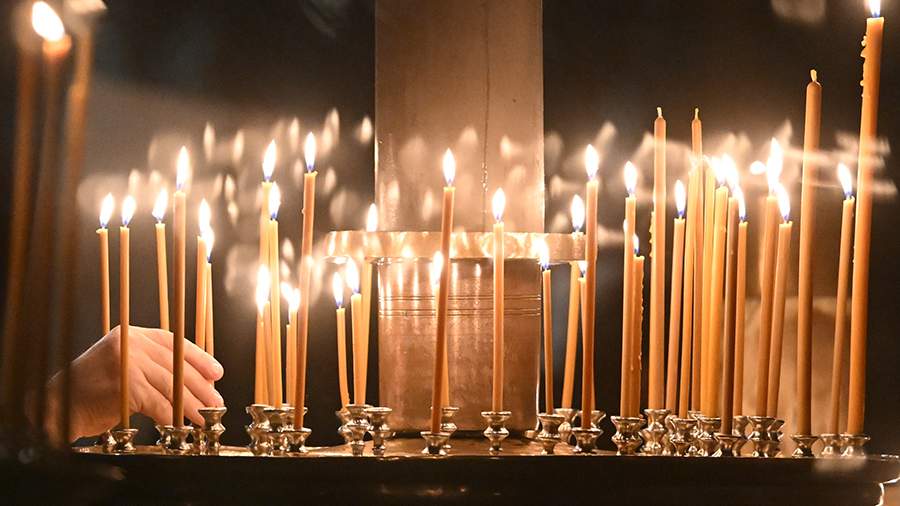
On August 2, the Orthodox Church honors the Old Testament prophet Elijah, one of the most famous saints among Jews, Christians and Muslims. In the national calendar, the holiday was named Elijah's Day. In 2025, it will be celebrated on Saturday. Izvestia tells about how the celebration was celebrated in Russia, what customs and signs are associated with this day.
Elijah the Prophet Day: the meaning of the Church holiday on August 2
Prophet Elijah Memorial Day is a non—transitory church holiday, its date does not depend on other celebrations and remains unchanged from year to year. On this date (July 20, Old style), believers remember the life and miracles of the saint.
According to the Holy Scriptures, Elijah lived in the 9th century BC, when King Ahab ruled the kingdom of Israel. Under the influence of his wife Jezebel, the daughter of the king of Sidon, the ruler diligently spread idolatry in Israel.
It was important for the prophet to turn the hearts of the king and the Israelites to repentance, returning them to true worship. Elijah struck the earth with a three-year drought, and he hid by the stream of Horath (a stream flowing into the Jordan), where the crows brought him food every day.
After three hungry years, he turned to the Lord with a prayer to reveal himself. At the same time, fire descended from heaven, engulfing the pagan altar. After that, it rained heavily, and the drought ended. What they saw made many pagans convert to Christianity.
This is not the only miracle performed by the prophet. One day in the city of Sarepta, he revived the widow's son, who had suddenly fallen ill and died, and she spared him the last handful of flour and butter. At the prayer of the prophet, the boy was resurrected, and since then there has always been plenty of flour and butter in the woman's house.
Another legend tells how Elijah struck the waters of the Jordan with his cloak (mercy), and the water immediately parted, allowing the saint and his disciple Elisha to pass to the other side. After that, a fiery chariot pulled by horses appeared, which picked up the prophet and lifted him to heaven, completing his earthly journey. Elisha got Elijah's cloak and the grace that rested on it — at that moment the young man became a prophet of God.
The prophet Elijah is mentioned again in the New Testament. It says that together with the prophet Moses, he appeared on Mount Tabor during the Transfiguration of the Lord. According to church tradition, the prophet will appear on earth again before the Last Judgment and become the forerunner of the second coming of Christ.
How to celebrate Ilyin's Day in Russia: the main Russian traditions
The Prophet Elijah was especially revered in Ancient Russia. He became one of the first saints of God, in whose honor temples and churches were built. The first of them was built at the beginning of the 9th century in Kiev and is mentioned in the "Tale of Bygone Years".
The prophet Elijah was revered by the people as the heavenly patron saint of fertility and the formidable power of nature, endowing him with the features of a powerful pagan deity — Perun. No wonder the saint was nicknamed Ilya the Thunderer. In the old days, it was believed that it was he who, rushing across the sky in a chariot of fire, sent thunder and lightning to the earth.
However, long before the appearance of Elijah's Day in early August, the Slavs celebrated Perun's Day. The celebrations were accompanied by sacrifices and noisy festivities. With the adoption of Christianity, these traditions became a thing of the past, and the prophet Elijah was worshipped more often than Perun.
Farmers especially revered the saint, turning to him for help in any trouble: for protection from evil and evil spirits, for help during famine, in case of widespread diseases of livestock, drought and heavy rains. To appease the saint, a piece of uncut rye was left on the field. This ceremony was called "beard curling". The ears were tied into a bundle and tilted to the ground, saying: "Here's a beard for you, Ilya—give us rye and oats."
It was also believed that in addition to cultivators, the saint protects hunters and treasure hunters. Hunters believed that if a wild animal was hunted down on this day, then the whole year would be successful. And those who wanted to gain wealth went in search of treasures hidden underground. To do this, they watched the lightning, believing that wherever it struck, the treasure was hidden there.
In the morning, our ancestors traditionally attended the Divine Liturgy in the church to pray to the holy prophet, after which they went on a religious procession. And then they organized a bratchina — a collective meal and mass festivities with songs and dances in several villages at once.
Unmarried girls performed rituals for a successful marriage, and married women performed rituals for the health of their loved ones and prosperity in the home. Fortune-telling was also popular on this day. As the sun rose, they approached any body of water and looked at the surface. If the water is covered with ripples, then there will be a wedding soon, and if the water is quiet, then marriage is not expected yet.

Prophet Elijah Day in 2025: What can I do?
On Elijah's day, it is customary to bake bread from the new harvest and arrange feasts with family or friends. Another tradition is associated with the collection of medicinal herbs and the production of various decoctions and tinctures. But instead, you can just brew herbal tea by adding a spoonful of honey to it.
By the way, herb picking and beekeeping were popular activities during the holiday. In some regions, bees are still traditionally distilled in early August, hives are cleaned and honeycombs are pruned.
Also on Elijah's Day, the first straw was collected in Russia — the so-called Ilyinsky feather bed. They slept on it all night for health and well-being. This ritual can be repeated today. It is known that sleeping on straw is not only stronger than usual, but also reduces the strain on the muscles, improves posture and helps with back pain.
What not to do on Ilya on August 2nd
Folk traditions associated with Elijah's Day also include a number of prohibitions, primarily on swimming in rivers and lakes. It is believed that from this day on, the water becomes cold and unclean, so bathing should be postponed until next summer.
In addition, one should not work on a holiday and be distracted by worldly affairs, so as not to anger the prophet. There was also a belief that on Elijah's day, evil spirits took the form of animals. Due to this superstition, street animals should not be allowed into the house and pets should not be allowed outside.
They also believe that Elijah can send thunderstorms and hail on the holiday. In the old days, a griddle, a stick, or a frying pan were thrown into the yard as a lightning rod. All empty utensils were turned over so that the evil spirits, driven by Ilya's arrows, would not hide in the hut and attract a thunderstorm into the house. The windows and doors were tightly closed.
Since the holiday falls on the period between St. Peter's Day (ended on July 11) and the Dormition Fast (will last from August 14 to August 27), there are no special restrictions on food. However, the church urges people to refrain from excessive alcohol consumption and overeating.

Folk signs on August 2, on Ilya
Since Elijah's Day, changes in nature are already beginning to be felt, which indicate the approach of autumn. The nights are getting colder and the days are getting shorter. People used to say about this: "Peter and Paul reduced the hour of the day, and Elijah the prophet fired two whole hours."
To find out what the weather would be like in the last month of summer, great importance was attached to weather signs. If the day turned out to be sunny and warm, then, according to observations, no precipitation is expected in the coming week. The friendly buzzing of bees in the hives also foreshadows good weather.
If thunder sounds muffled on August 2, light rain is expected. If the sound is loud, there will be a heavy downpour. By the way, getting caught in the rain on Elijah's Day was considered a good sign: it promised good health for the whole year.
Earlier, Izvestia reported on the traditions and signs of the Ivan Kupala national holiday.
Переведено сервисом «Яндекс Переводчик»
