
Systematic pressure: Japan and Australia did not want to defend Taiwan
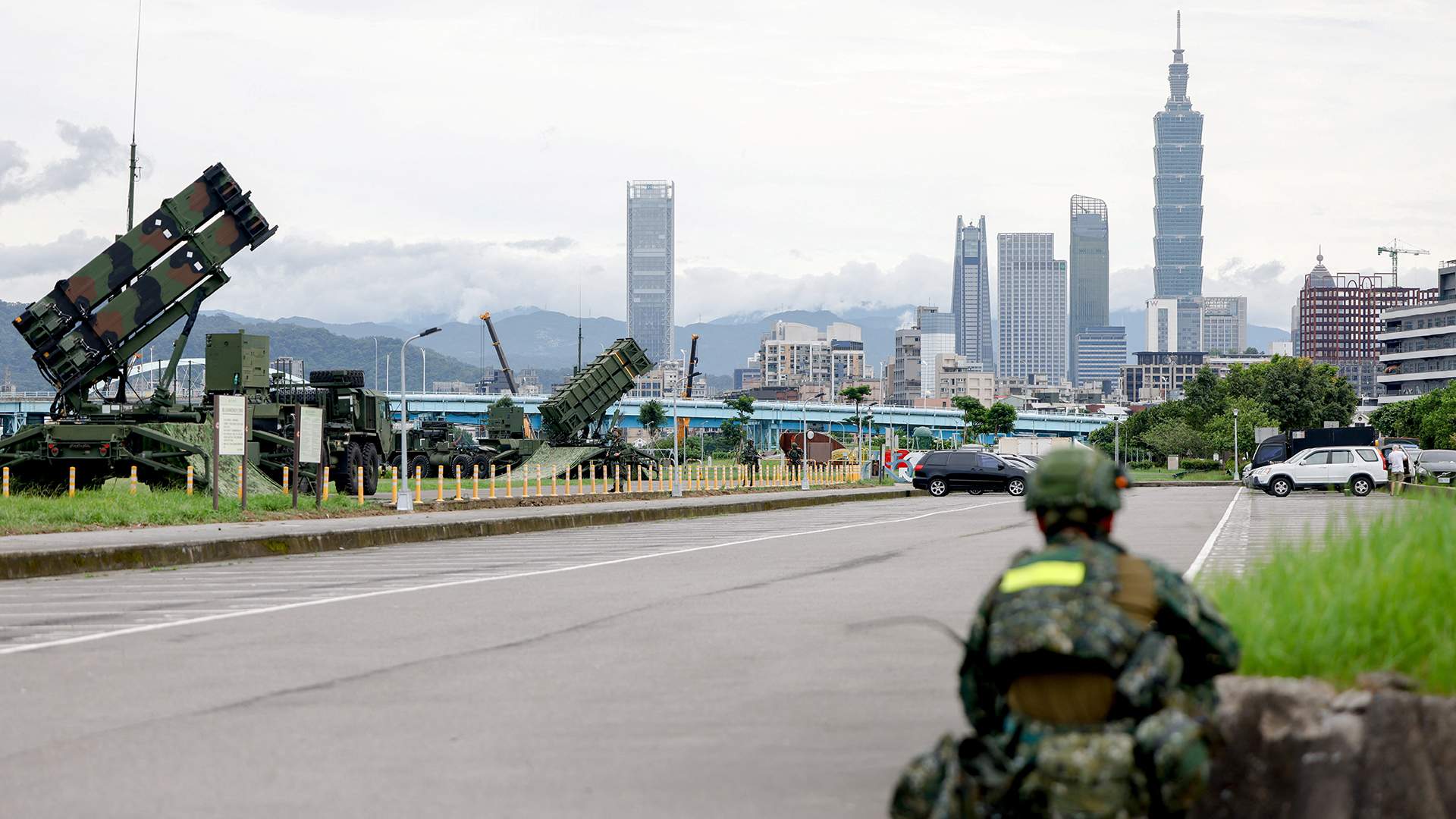
The United States has demanded a clear answer from Japan and Australia on whether they are ready to enter the war over Taiwan. Washington's allies themselves are frightened by such pressure from the administration of Donald Trump. Canberra stated that it is independent in making such decisions, and Tokyo referred to the need to take into account the Constitution of Japan. Details can be found in the Izvestia article.
Be prepared for war
"The Pentagon insists that the Japanese and Australian authorities clearly define their role in the event of a war between the United States and China over Taiwan," the Financial Times (FT) writes, citing sources. In particular, the deputy head of the Pentagon, Elbridge Colby, has been actively raising this issue in recent months at meetings with representatives of the Ministries of Defense of Japan and Australia.
Previously, he had repeatedly advocated for Washington to redirect its military efforts from Europe and the Middle East to China.

Deputy Head of the Pentagon Elbridge Colby
This time, Colby demanded that the allies fulfill their obligations, and also discussed with them an increase in defense spending amid growing concerns about China's threats to Taiwan.

The authorities of the two countries are perplexed by these demands, the newspaper reports, especially considering that the United States, despite its status as the main supplier of weapons to Taipei, does not offer a "check without specifying a certain amount" guaranteeing the protection of the island.
I would not like to perform
The Japanese Defense Ministry told the British newspaper that it was difficult to comment on the "hypothetical issue of the "emergency situation with Taiwan," adding that any actions would be "based on the constitution, international law and national legislation."
Japanese media noted that Trump himself holds an ambiguous position towards Taiwan. First of all, unlike Joe Biden, he does not talk about readiness to defend the island. Secondly, he did not send even a vague message about his readiness to increase military spending on the island.
Meanwhile, on July 7, President Donald Trump announced that the United States would impose duties of 25% on all goods of Japanese origin imported into the country from August 1. In the letter, he stressed that duties would apply to all goods separately from industry tariffs, and attempts to circumvent the new measures would lead to additional payments.

For Australia, the situation was complicated by the fact that at that moment the country's Prime Minister Anthony Albanese was on a visit to China, the main purpose of which was to expand cooperation between the states, especially in the economic sphere.
According to the head of the Australian government, Canberra does not accept any harsh action regarding Taiwan, and he himself only wants stability and peace in the Indo-Pacific region.
Australian Defense Industry Minister Pat Conroy was more categorical. According to him, Canberra will refuse any request from Washington about possible participation in a "hypothetical" conflict over Taiwan.

However, according to The Guardian, the United States has the opportunity to put Australia in its place — the AUKUS pact concluded between Australia, the United States and Britain. According to the document, Washington promised Canberra to transfer technology and everything necessary for the production of nuclear submarines equipped with long-range missiles.
The production of submarines will help Australia provide about 20,000 new jobs. According to the agreement, the Americans should transfer several old submarines to the Australians before they set up their own production of submarines, but Washington has paused the transfer process.

The United States, in turn, is unhappy with the actions of Japan and Australia, believing that American partners should be ready, if necessary, to give China a collective rebuff, as well as increase their defense spending.
What do the experts think
American political scientist Malek Dudakov does not rule out that pragmatists who will pursue a more independent policy towards the United States may come to power in Japan.
"In principle, this is already partly happening in South Korea, where Lee Jae—myung, a candidate who takes a pragmatic position, won the recent presidential election," the expert explained in an interview with Izvestia.
The expert drew particular attention to the pressure that the Trump administration is exerting on Tokyo, demanding from Japan a significant increase in military spending and commitments to support the United States in the event of a conflict over Taiwan. He also noted the instability of the Japanese government.
"This year, maybe the current Prime Minister of Japan, Shigeru Ishiba, will try to overthrow and remove from power if his party loses the upcoming elections to the upper house of the Japanese parliament," he added.

Prime Minister of Japan Shigeru Ishiba
Dudakov did not rule out that the crisis in relations with the United States would continue, which would negatively affect the domestic political situation in Japan.

Meanwhile, RISI expert and senior researcher at the Institute of China and Modern Asia of the Russian Academy of Sciences Yulia Kryachkina, in a conversation with Izvestia, suggested that negotiations between the countries could resume and they would try to find a way out of the current situation by either increasing purchases of American weapons or easing Washington's demands.
"In any case, even though today it seems that economic issues are increasingly affecting security relations, it is unlikely that serious changes should be expected in the military—political aspect of cooperation between Tokyo and Washington," the expert said.
Andrei Kortunov, scientific director of the Russian Council on International Affairs, noted in an interview with Izvestia that Australia traditionally has diverse economic ties with China.

—But still, these relations were limited by political differences and conflicts, so China has repeatedly imposed various restrictive measures, for example, on Australian coal or other exports," the expert explained.
The political scientist added that Australia, of all the Asia—Pacific countries, is one of the most loyal allies of the United States.
Chen Hong, director of the Center for Australian Studies at East China Normal University, believes that the alliance with Washington remains the cornerstone of Australia's foreign policy. "Therefore, its ties with the United States are unlikely to change in the future, but if Australia provokes China or harms its core interests, Beijing will obviously resist. Australia needs strategic prudence and political wisdom to avoid such a situation," the expert concluded.
Переведено сервисом «Яндекс Переводчик»
