
Counter act: Russia will respond to the 18th package of EU sanctions
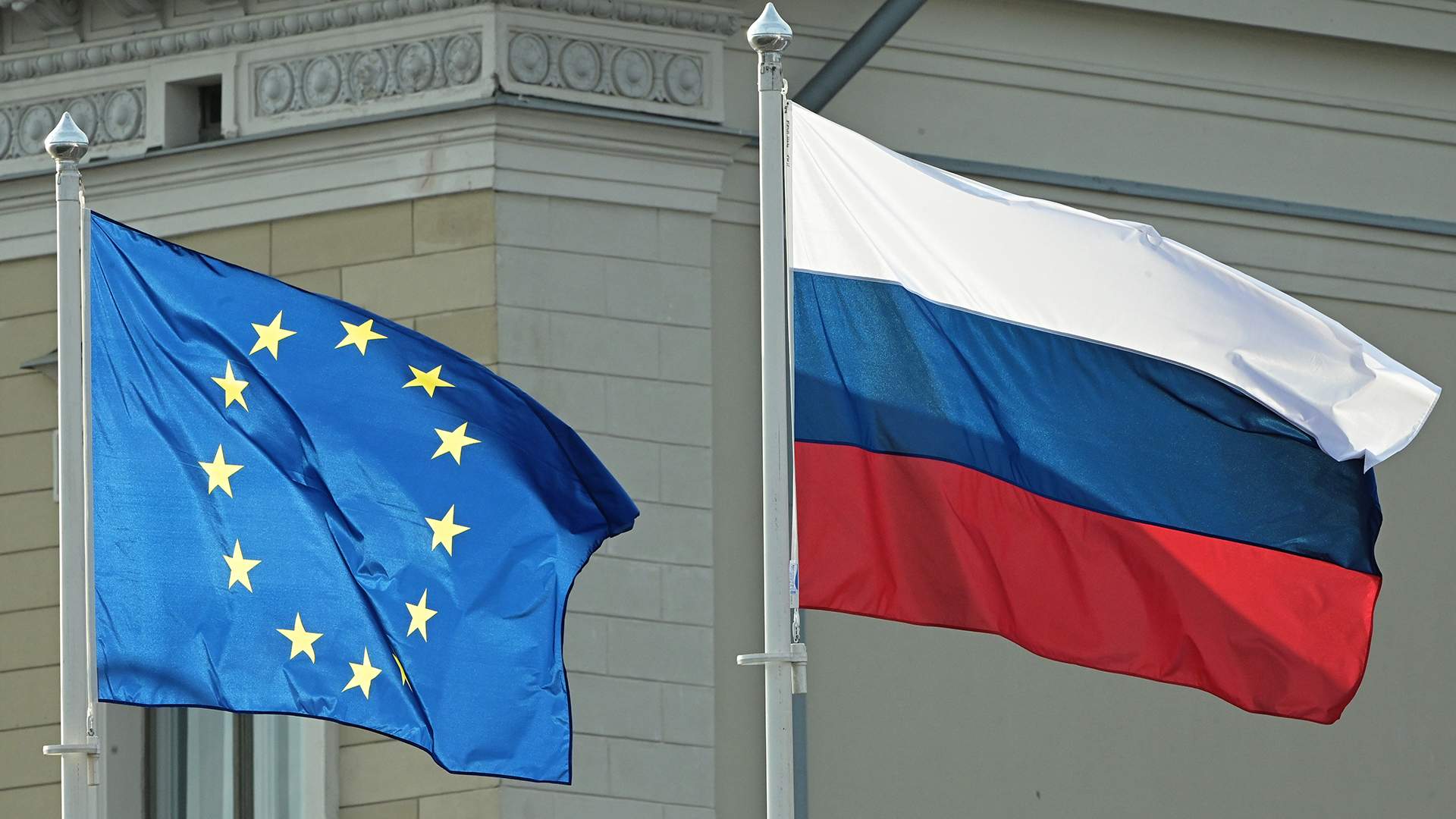
Russia will respond to the new EU sanctions, Russian Deputy Foreign Minister Alexander Grushko told Izvestia. According to him, Moscow will take both defensive and countermeasures. Earlier, the head of the European Commission, Ursula von der Leyen, proposed to impose additional sanctions against oil tankers and bank transactions. For the first time, restrictions may affect the Nord Streams, which have not been pumping gas for several years. The EC also wants to completely ban the import of petroleum products produced on the basis of minerals from the Russian Federation. Experts believe that this measure could hit consumers in Europe.
New package of EU sanctions against Russia
The European Union is developing the 18th package of sanctions against Russia. According to Politico, the next restrictions may be approved as early as June 20, a few days after the G7 summit in Canada. Moscow is ready to respond to new restrictions.
— We will have to see what sanctions they have come up with. We will respond to the sanctions as we have previously responded. With these sanctions, they very often shoot themselves in the foot, sometimes even higher. We are far from the practice of causing damage or sawing at the branch we are sitting on, but nevertheless retaliatory measures, both protective and countermeasures, will be taken," Russian Deputy Foreign Minister Alexander Grushko told Izvestia.

At the end of last year, the diplomat said that the EU's losses from anti-Russian sanctions exceed € 1.5 trillion. Losses from restrictions, according to him, are only growing.
— They lose, they overpay for everything, they don't make a profit. This has a serious impact on the EU economy. And the figures published by Eurostat indicate that the recession continues. In some countries, there is a slowdown, in some the economy is going into negative territory. In some cases, the growth is comparable to a statistical error," said Alexander Grushko.

According to the European Commission (EC), the EU economy grew by about 1% in 2024. In its spring review, the EC lowered its forecast for real GDP growth in the European Union in 2025 to 1.1% from 1.5% expected in November. Against this background, the 17th list of sanctions against Russia was adopted at the end of May. The new package of restrictions should partially complement the previous one, for example, in relation to vessels that are classified as a "shadow fleet" in the West. On June 10, the head of the European Commission, Ursula von der Leyen, announced that 77 more ships would be banned from entering European ports.
The European Commission also proposed an embargo on the import of petroleum products produced on the basis of Russian crude oil. Although the ban on direct supplies from Russia to the EU has been in effect since February 2023, nothing prevents companies in third countries from purchasing cheaper Russian oil and, after refining, shipping the resulting products to Europe. Ekaterina Kosareva, Managing Partner of VMT Consult, believes that European consumers will suffer greatly from this measure.

— They may face both a shortage and an increase in the cost of fuel. After its launch, India began to buy Russian oil at high discounts and supply the oil products produced from it to Europe. But you need to understand that Indian refineries process not only Russian oil. And it's hard to imagine how the European Commission intends to track the proportion of molecules of Arab or Russian oil in a liter of diesel fuel," she told Izvestia.
According to her, the ban will create a lot of bureaucratic problems, an increase in logistics routes, which can lead to fuel crises until the new supply chain gets back on track. This can provoke social tension in the region.
"The impact of the new sanctions on the Russian fuel and energy sector will be no greater than the impact of all the latest European packages," Alexander Frolov, Deputy Director General of the National Energy Institute, told Izvestia. — It may be necessary to make additional adjustments to logistics in Russia, redirecting some of the cargo to other ports.
Sanctions against Nord Stream and lowering the ceiling on oil prices
Interestingly, the new package of sanctions may for the first time affect the Nord Stream and Nord Stream–2 gas pipelines, which were disrupted back in 2022. Only one branch of the Nord Stream –2 has survived, which is currently not functioning. The EC wants to introduce a ban on transactions for gas pipelines. "This means that no EU operator will be able to participate directly or indirectly in any pipeline transactions," Ursula von der Leyen said.

Igor Yushkov, a leading analyst at the National Energy Security Fund and an expert at the Financial University under the Government of the Russian Federation, believes that Brussels' proposal is symbolic.
— Nord Stream 2 has not received a commissioning permit. That is, they scare us that nothing will change. These gas pipelines do not bring income to Russia, and accordingly, they will not bring it. That is, nothing will change," he told Izvestia. — It's just that Nord Streams are well—known projects, everyone knows them, so it will be possible to report, including to the voters, that they continue to put pressure on Russia.

The EU also insists on lowering the price ceiling for Russian crude oil from $60 to $45 per barrel for the G7 countries.
— In itself, this measure is ineffective, because there is a fleet that ignores the price ceiling. In the West, it is called the "shadow fleet." There are enough ships to export our oil, ignoring the price ceiling. Therefore, it doesn't matter to us what it is — $60 or $45 per barrel," said Igor Yushkov.
Commenting on the new EU sanctions, Russian Presidential spokesman Dmitry Peskov said that lowering the ceiling on Russian oil prices would not help stabilize the market. But the Russian Federation knows how to minimize the consequences of such decisions.

"Russia has been living under various restrictions for several days, which we still consider illegal, and Russia has already gained some very useful experience in order to minimize any negative consequences from such decisions," he said.
Disconnecting new Russian banks from SWIFT
The EU has proposed to disconnect 22 more Russian banks from the SWIFT international banking system. Experts emphasize that although such a measure may interfere with transactions, increasing their cost, payments will still be made.
"Payments will take place not through SWIFT, but through other transaction systems," Georgy Ostapkovich, director of the HSE Center for Economic Research and Economic Analysis, told Izvestia. — That is, they will find some kind of settlement system through the banks of friendly countries.

Finally, the European Commission proposed banning the export of European goods and technologies to Russia worth more than €2.5 billion, and imposing sanctions against 22 foreign and Russian enterprises that, according to the EC, provide direct or indirect support to the Russian military-industrial complex. Brussels also wants to blacklist the Russian Direct Investment Fund (RDIF), its branches and investment projects. Kirill Dmitriev, head of the Russian Direct Investment Fund, responded to Ursula von der Leyen's initiative. According to him, the statements of the EC head are related to the fact that the European Union wants to continue the conflict in Ukraine.

In the process of approving a new package of restrictions, the European Commission will again face resistance from Hungary and Slovakia, writes Politico. Slovak Prime Minister Robert Fico has already threatened to block new sanctions if Bratislava does not receive an exception to ensure its own energy security. Hungarian Prime Minister Viktor Orban also said that his country may not support the new restrictions, which, in particular, will include a complete ban on transactions with major Russian banks. According to him, the EU's anti-Russian sanctions are destroying Hungary and the whole of Europe: in three years Budapest has lost €20 billion because of them.

At the same time, Russia has recently practically not introduced economic counter-sanctions against the EU. In March, in response to the 16th package of restrictions, the Russian Foreign Ministry expanded the European "stop list". Thus, Moscow imposed sanctions against representatives of law enforcement agencies, government and commercial organizations of EU countries, citizens responsible for military support to Kiev, for activities "aimed at undermining the territorial integrity of Russia" and for the blockade of Russian ships and cargo in the Baltic Sea.
— I think that Russia's main response is to continue its military operations until its goals are fulfilled. We do not see any counter-movement on the part of the EU against the background of Russia's negotiations with the United States and Ukraine. Rather, he takes a hawkish position based on attempts to force Russia to do something. But the Russian Federation will not make decisions under pressure," Ivan Timofeev, program director of the Valdai International Discussion Club, told Izvestia.
Переведено сервисом «Яндекс Переводчик»
