- Статьи
- World
- Military without action: Russia urges Tbilisi not to use force against Tskhinvali and Sukhum

Military without action: Russia urges Tbilisi not to use force against Tskhinvali and Sukhum
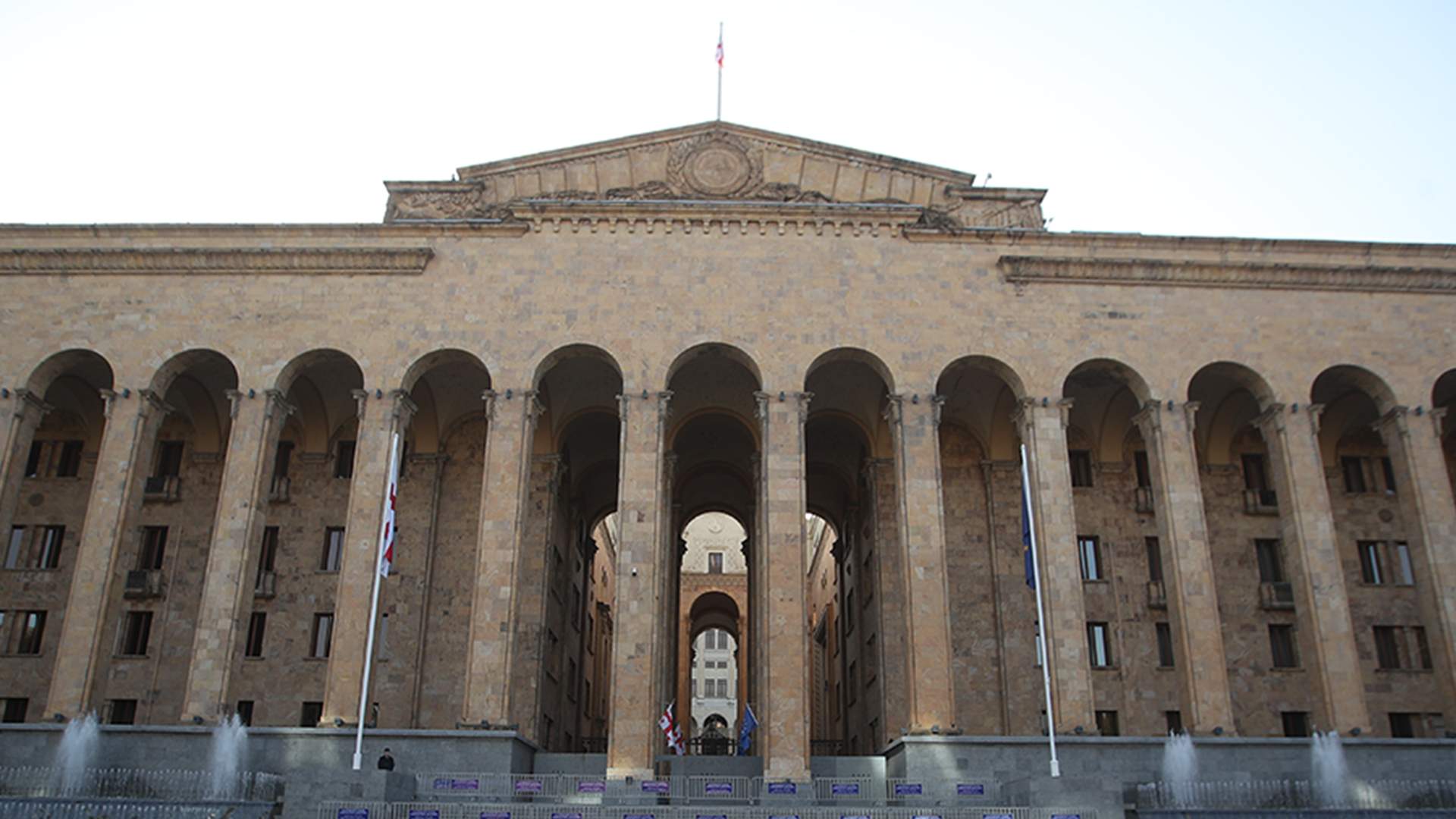
The principle of non—use of force should apply in Transcaucasia, in particular, Georgia should assume legal obligations with respect to Abkhazia and South Ossetia, Russian Deputy Foreign Minister Mikhail Galuzin told Izvestia. At the same time, Russia supports the transfer of discussions on the Caucasus from Switzerland to another country, since Geneva has lost its status as a neutral venue, the diplomat stressed. The prospects for reconciliation between Tbilisi, Sukhumi and Tskhinvali are described in the Izvestia article.
Postponement of negotiations from Switzerland
Russia continues to insist on moving discussions on security and stability in Transcaucasia from Switzerland to a more neutral venue, Russian Deputy Foreign Minister Mikhail Galuzin told Izvestia.
— As you know, the Russian side and our Abkhaz and Ossetian allies have long and clearly indicated that Switzerland has lost its neutral status by joining all the unfriendly actions of the European Union and the collective West towards Russia. Since Switzerland has lost its neutral status, it means that it has also lost the status of a venue worthy of hosting major international events on its territory, where the host country is required to be neutral in political matters," the diplomat said.

According to Mikhail Galuzin, in the context of choosing a different platform for discussions, it is important to take into account the need to maintain a format in which interested parties — Abkhazia, South Ossetia and Georgia — can hear each other.
— It must be borne in mind that the format itself is important first of all, because it is this format that allows all interested parties — Abkhazia and South Ossetia, on the one hand, and Georgia, on the other — to discuss issues of security and stability in Transcaucasia from the point of view of Georgia's commitment to non—use of force. forces in relation to Abkhazia and South Ossetia," the diplomat said. — The most important thing for us at this stage is to work within this format to ensure that the principle of non-use of force prevails in the South Caucasus.

We should be talking about signing a legally binding document on the non-use of force against South Ossetia and Abkhazia. However, Tbilisi has so far, in fact, blocked its adoption. At the same time, the Geneva discussions have been taking place since September 2008. They are attended by representatives of Abkhazia, Georgia, South Ossetia, Russia, and the United States under the co-chairmanship of the EU, the UN, and the OSCE. The discussion is conducted in the format of two working groups: on security and humanitarian issues.

The 63rd round of the Geneva discussions was held on March 4-5. The participants stressed their willingness to continue working in this format, and also expressed interest in resuming the work of the Incident Prevention and Response Mechanism (IPRM) in Gal and stated that any efforts to unblock the work of the IPRM are welcome. The parties also discussed the freedom of movement of citizens of Abkhazia using national passports, including the lifting of restrictions and isolation for traveling around the world.
On the eve of the latest round of discussions, Mikhail Galuzin discussed measures to ensure stability in Transcaucasia with UN Representative Cihan Sultanoglu, Special Representative of the Chairman of the Organization for Security and Co-operation in Europe for the South Caucasus Christophe Spaty and EU Special Representative Magdalena Grono. Among other things, the parties touched upon issues related to the non-use of force, as well as maintaining a stable situation in the Georgian-Abkhazian and Georgian-South Ossetian borderlands, including through the delimitation and demarcation of state borders.
The next meeting is scheduled for June 25-26. At the beginning of the month, Abkhazia confirmed that it would continue to participate in the discussions.: "We will continue to participate in the Geneva format with the support of our Russian colleagues. This is the only platform where we can convey our point of view, talk about our approaches, and demand certain actions. This format is important, it is needed and, as I have already said, it is the only one today," said Oleg Bartsits, the head of the republic's Foreign Ministry.

As for the country to which the discussions can be moved, the necessary consensus among all participants in the discussions has not yet developed, the Russian Foreign Ministry explained earlier to Izvestia. Nevertheless, experts believe that potential candidates could be Middle Eastern states, in particular the United Arab Emirates, Qatar and Saudi Arabia, which have already shown themselves positively as mediators in humanitarian and political issues in the context of the Russian-Ukrainian conflict.

Is an escalation of the conflict in Transcaucasia possible
The current Prime Minister of Georgia, Irakli Kobakhidze, has repeatedly called on Abkhazia and South Ossetia to "live in a single country" with Tbilisi. In particular, he expressed this idea during his speech at the 79th session of the UN General Assembly in September last year. "All our steps are aimed at helping our people and so that one day we and our children can live together in a happy, united and developed Georgia," he said in his speech.
Before that, in May 2024, congratulating citizens on Independence Day, Kobakhidze said that Georgia dreams of uniting with Abkhazia and South Ossetia in 2030 and joining the European Union with them. Two months earlier, South Ossetia reported that Tskhinval, in close coordination with Moscow, was discussing the country's accession to Russia. The Russian Foreign Ministry noted that if South Ossetia sends specific proposals on this issue, they will be considered.

— As for the risk of escalation, I think it is unlikely in the near future. Most likely, Tbilisi is aware that going to a forceful solution to the issue would mean undermining its image and striving to establish a relatively stable dialogue with Abkhazia and South Ossetia in the future," said Milan Lazovich, INF Program Manager.
According to him, Tbilisi, however, will not agree to legally fix the refusal to use force.
— Georgia will definitely not try to return the republics by military means now, but I don't think it will officially consolidate its refusal to do so either. Most likely, it will proceed from a pragmatic approach and try to establish a dialogue somehow. But this process is likely to be slow and difficult, since official Tbilisi does not recognize the independence of Abkhazia and South Ossetia, considering them "occupied territories," and in fact seeks to include them in its composition, which does not suit the latter, the expert says.

For Abkhazia and South Ossetia, the issue of signing an agreement on the non-use of military force with Georgia is of particular importance. Firstly, the republics have preserved the memory of the Georgian-Abkhazian armed conflict of 1992-1993 and the Georgian-South Ossetian armed conflict of 1991-1992, Kristina Puren, a researcher at the Caucasus Studies Branch of the ICSA RAS, an analyst at the Institute for the Development of Integration Processes of the Russian Academy of Sciences, reminded Izvestia. This is evidenced by the commemorative events that take place in the republics every year. For example, on May 20, South Ossetia celebrated the 33rd anniversary of the Zara tragedy. According to Puren, independence and victory in the armed conflict with Georgia are the basis of the national idea of Abkhazia and South Ossetia. Therefore, any discussions, for example, on peaceful incorporation into Georgia, which was mentioned by Prime Minister Irakli Kobakhidze, or the possibility of opening a second front in Georgia, are perceived sharply negatively there, the expert added.

— Secondly, for Abkhazia and South Ossetia, the signing of the treaty will signal the impossibility of resuming the armed conflict and will provide a credit of trust, which was mentioned by the Minister of Foreign Affairs of Abkhazia Oleg Bartsits. In this case, it should be borne in mind that Abkhazia and South Ossetia are logistically oriented towards the South Caucasus. For this reason, the signing of such an agreement may be a step towards discussing economic and infrastructure projects between the countries, as it implements the above—mentioned "credit of trust," she says.

Thirdly, the signing of an agreement on the non-use of military force has an important symbolic meaning. Any document signed by the presidents of the three countries will be considered by the republics as a step towards Georgia's legal recognition of Abkhazia and South Ossetia, Kristina Puren concluded. Abkhazia's Foreign Minister Oleg Bartsits earlier told Izvestia that his country was actively seeking recognition from more states. In addition to the Russian Federation, Venezuela, Nauru, Nicaragua and Syria have confirmed the sovereignty of the republics.
On the night of August 8, 2008, an armed conflict broke out between Georgia, Abkhazia and South Ossetia. The Georgian army attacked Tskhinvali. The Russian peacekeepers who were in the city also came under fire. In response, the Russian Federation deployed troops to protect Russian citizens living in the region, and ships of the Black Sea Fleet approached the shores of Abkhazia.
As a result of the conflict, which ended with the defeat of Georgian troops, Moscow recognized the independence of Abkhazia and South Ossetia. Because of this, Tbilisi severed diplomatic relations with the Russian Federation.
Переведено сервисом «Яндекс Переводчик»
