
Get Dostoevsky: literature as a way of moral self-purification

The book by Vladimir Viktorovich, a well-known researcher of F.M. Dostoevsky's work, is composed of materials published at different times, starting with the 1985 article "On two historical and journalistic ideas of Dostoevsky" (in the current edition it was transformed into chapter 5 "Dmitry Donskoy and the Nihilists") and ending with the 2019 study "M.M. Dostoevsky as Razumikhin's prototype". Critic Lidia Maslova presents the book of the week specifically for Izvestia.
Vladimir Viktorovich
"Dostoevsky's Life-building"
Moscow: Rosebud Publishing, 2026 — 360 p.
The interpenetration of life and creativity (including the separate topic of prototypes, which invariably arouses increased reader interest) is a cross—cutting idea that unites the essays included in the book. Viktorovich is well aware that Dostoevsky was not the first to feel the possibility of irreversible change (or rather, the impossibility of not changing) under the influence of his own writings, and cites the aphorism of his predecessor Montaigne: "My book was created by me to the same extent that I myself was created by my book."
By the exclusive term "life-building" included in the title of the book, the author understands "the relationship between creativity and life action," tracing it both in Dostoevsky's novels and in his journalism. "Until now, one of the most obscure is the mechanism of interaction between Dostoevsky's fiction and his journalism throughout his creative career," notes the researcher, who finds the term "life—building" to make the notorious obscure mechanism more understandable: "Turning to Dostoevsky, one can see how his word worked to build an aesthetic world. and through him — on finishing the morally responsible personality of both the writer and the reader."
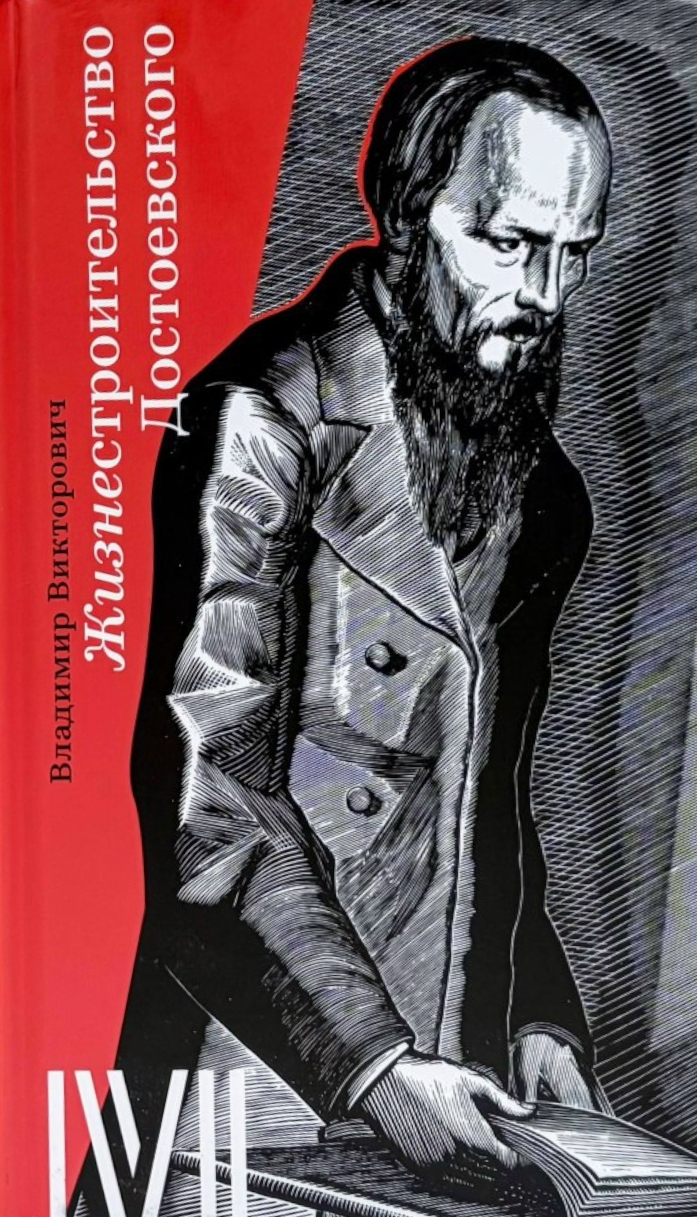
The book is dedicated to this decoration, more precisely, to the "self-finishing" of Dostoevsky's personality, the hero of which, despite the gloom of many plot collisions in his novels, was convinced: "...With a clear desire to become the best <...> one day we can really get together and become the best." To what extent Dostoevsky himself succeeded, Viktorovich partly allows us to trace, considering the writer's talent itself to be a continuation of the writer's human qualities: "...The entire unbroken chain of Dostoevsky's artistic and journalistic statements (novels that turn into a Writer's Diary and A Writer's Diary that turns into novels) is ultimately not only a Word, but also the Act of a man named Fyodor Mikhailovich Dostoevsky."

Viktorovich asks himself a question that has always been of interest to literary studies to a greater or lesser extent.: as biographical "material", what is experienced by the writer himself is transformed into the artistic flesh of the work. This is especially clearly illustrated by the example of Mikhail Dostoevsky's transformation into Dmitry Razumikhin. Viktorovich begins by describing the real relationships of fellow brothers, whose correspondence in the 1840s gives an idea of the spiritual origins of the great writer, for whom fraternal participation acquired an existential meaning.
According to Viktorovich, the "complex" Fyodor needed a balanced, "simple" Mikhail, and similarly, "the polysyllabic Raskolnikov in the novel was balanced by the simple-minded Razumikhin." Viktorovich mentions the scene of Razumikhin's report on repairing a dress for a friend as one of the most "smiley ones" in Crime and Punishment (where smiles are, in fact, one or two and gone): "Razumikhin carries the very sparkles of humor and gaiety that the author so appreciated in brother Mikhail. He seems to be the only hero in the novel who brightens up the gloomy picture of life with soft colors of gentle humor (Svidrigailov and Porfiry Petrovich are much more venomous than other humorists in this novel)."

The story "The Village of Stepanchikovo and its inhabitants" is imbued with a very poisonous humor, which reveals a kind of "self—portrait" of Dostoevsky in such a caricature character as the pharisaical and the foolishness of Foma Opiskin at the same time. Viktorovich provides irrefutable evidence of a direct connection between the writer and the sarcastic caricature he created. Other researchers have noted obvious biographical similarities between the fate of Opiskin and Dostoevsky, but Viktorovich draws attention to the parallels of an "autopsychological nature," believing that Dostoevsky's phrase about Thomas Fomich — "the snake of literary pride sometimes stings deeply and incurably" — self-critically and quite transparently hints at himself.

Additional damning evidence is found in correspondence with his brother, where Fyodor Mikhailovich does not spare himself ("I have a terrible vice — unlimited self-love and ambition"), and in a letter dated November 16, 1845, he completely assumes a self-satisfied tone: "Everywhere there is incredible respect, terrible curiosity about me. <...> Prince Odoevsky asks me to make him happy with my visit, and Count Sollogub tears his hair out of despair <...>: Where can I get Dostoevsky?" This sophisticated self-irony, if not to say merciless self-ridicule, has, in Viktorovich's opinion, a psychotherapeutic meaning: "Dostoevsky, 'caricaturing himself as the meanest' hero, dealt with his own underground in this manner. <...> Freeing himself, the writer drew the reader into this process. Art became an act of moral self-purification."
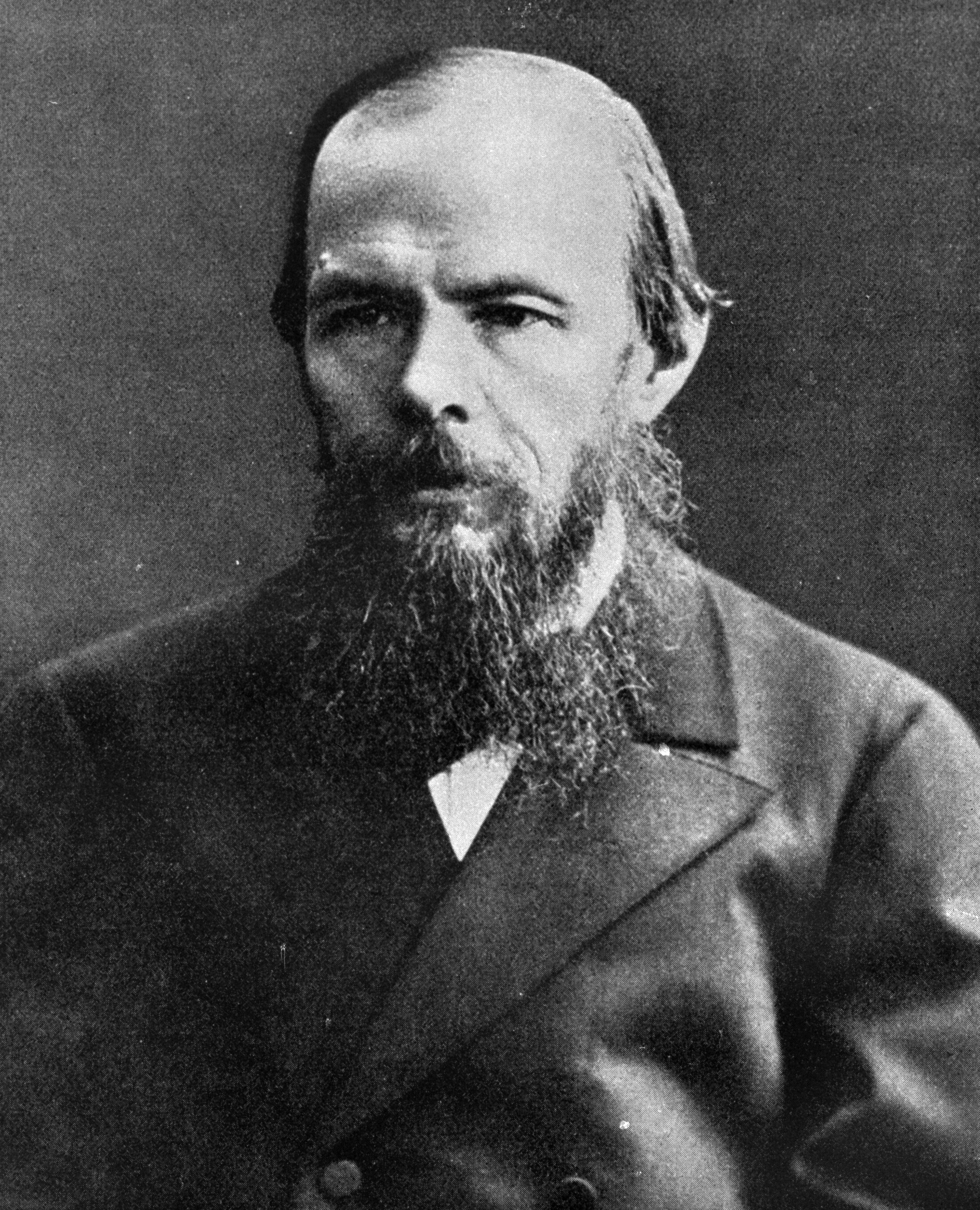
An important theme of the book is Dostoevsky as a link between Pushkin and Gogol, which first arises when analyzing the first novel, White Nights. Viktorovich interprets his plot as the acquisition of spiritual vision: "a man looked and did not see ("slept"), and suddenly, having fallen in love, he saw ("woke up")." Dostoevsky's first novel (declared at one time to be the new Gogol) can be considered a development of Gogol's view of the world "in a direction that naturally became criticism and overcoming, and then, at a new stage, a return to the good old Pushkin" — Viktorovich brings out the literary spiral, recalling how Dostoevsky was bribed by the tone of the "Stationmaster", first of all, respect for the "little man."
Dostoevsky's famous formula, "With complete realism, find a man in a man," takes in both Gogol's and Pushkin's experience, Viktorovich sums up, before turning back to the triad of the main humanists of Russian literature in the fundamental and, as it were, summing up the book, the final chapter, "The Abandoned Seed will grow." It examines Dostoevsky's famous Pushkin speech, which begins with a quote from Gogol. Misunderstood by some contemporaries, in Soviet times, the Speech was long viewed as proof of the writer's reactionary political views: "Humble yourself, proud man" (which especially irritated Maxim Gorky, the petrel of the revolution). Starting with the analysis of Pushkin's speech with the question of the secret of its extraordinary impact on listeners, Viktorovich restores epistemological justice, calling for Dostoevsky's theses to be perceived not only in a political, but also in a cultural aspect. Here the author of the book moves from the literary level to the general philosophical one, discussing the various ways of changing the world that politics and culture offer, and coming to the inevitable conclusion about the futility of their opposition and confrontation: "In the isolation of one or the other, which Dostoevsky once felt most acutely, lies the rumble of a future catastrophe in which they will burn out equally. both politics and culture. The only chance is their convergence...".
Переведено сервисом «Яндекс Переводчик»
