
The latest myths are flying around: Nikolai Zabolotsky and his natural philosophy

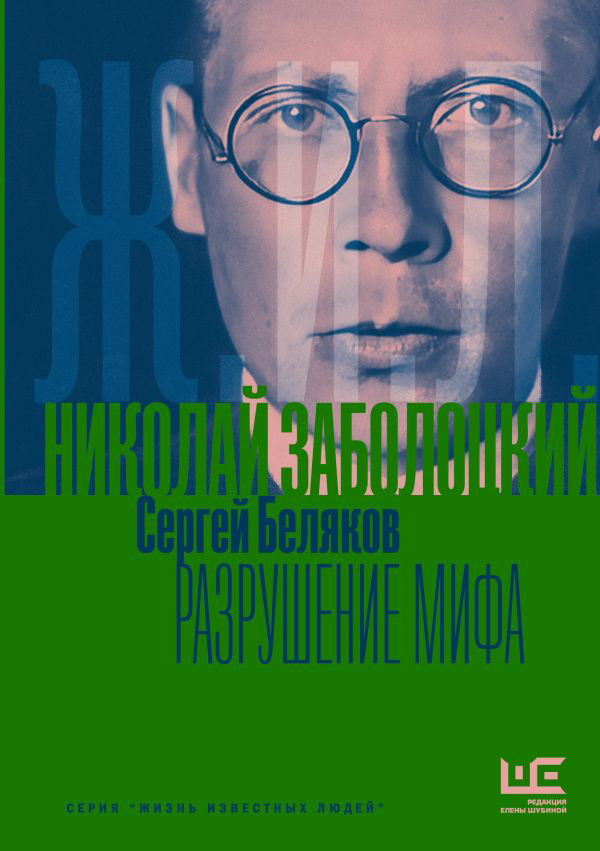
Justifying what was promised in the title of the book about Nikolai Zabolotsky, "the destruction of the myth," Sergei Belyakov tries in the introduction to thicken the mythical halo around the hero, which is not so easy. On the surface, Zabolotsky is a fairly well—studied representative of the literary establishment, captured in various detailed memoirs, who, although he served five years for "counterrevolutionary" works, subsequently embarked on solid official rails, adapted to publishing and reader tastes. Critic Lidia Maslova presents the book of the week specifically for Izvestia.
Sergey Belyakov
"Nikolai Zabolotsky. Destroying the myth"
Moscow: AST Publishing House : Edited by Elena Shubina, 2026. 352 p.
The myth that Belyakov himself constructs in order to destroy later boils down to the fact that he suggests mentally dividing Zabolotsky in two: "There were two Zabolotskys. So to speak, Zabolotsky-1 and Zabolotsky-2. The second one was much better known." The second is a recognized Soviet poet, whom Korney Chukovsky respectfully put on the same level as Tyutchev and Derzhavin, and the first is a suspicious marginal who "wrote strange poems in his youth, as if to Captain Lebyadkin."
Captain Lebyadkin (with whom Pavel Antokolsky's wife, actress Zoya Bazhanova, compares Zabolotsky for the first time) repeatedly appears on the pages of the biopic Byelakovsky. Lebyadkin also recalls Osip Mandelstam in connection with Zabolotsky's poem "Autumn Omens" from 1934. However, as Belyakov writes with reference to Antokolsky, Zabolotsky himself was not offended or embarrassed by the comparison with Lebyadkin. Moreover, he seemed to have anticipated it: "He smiled good-naturedly, looked intently through his glasses at Zoya and, not in the least embarrassed, said: "I've been thinking about it too. But what I'm writing is not a parody, it's my vision."

And considering that the poet Nikolai Oleynikov quite consciously wrote a completely Lebyadkin poem "Cockroach" (in the same 1934, in which Mandelstam was horrified by the "Autumn Signs"), a bizarre effect arises: the eccentric graphomaniac Lebyadkin, born of Dostoevsky's fantasy, seems to merge like an invisible shadow into the literary group of OBERIU., one of the founders of which was Zabolotsky. His acquaintance with Daniil Kharms and Alexander Vvedensky is discussed in the second chapter, "A Long Way to OBERIU," which first tells about the attempts of the young Zabolotsky (more precisely, then Zabolotsky) to move from Vyatka province to one of the two capitals.

In Moscow during the war communism, the theme of Zabolotsky's "bifurcation", proposed by the biographer, continues in some way: he studies simultaneously at the Faculty of History and Philology of the First Moscow State University (out of interest in poetry) and at the Faculty of Medicine of the Second Moscow State University — rather out of interest in the increased rations that medical students were entitled to, unlike philologists. On this ration ("Not only bread (a pound a day, that is, 400 g), herring or roach, but also sugar and even butter are a real luxury!" exclaims Belyakov, who is always attentive to the material side of the writer's life), which was soon cut short, the student Zabolotsky did not last long and after some timeAt that time, at the insistence of his parents, who dreamed of a reliable profession for their son, he moved to the newly established Petrograd Pedagogical Institute named after A.I. Herzen.
Petrograd in the early 1920s is described by Belyakov in romantic and sublime colors: in a city where old Viktor Burenin, a once-odious conservative publicist, lived quietly on the same street with Daniil Kharms, and "not even the past, but the penultimate Russian literature met with its future." After all, Zabolotsky will graduate from the Pedagogical Institute, although he understands from the very beginning that he will not work as a teacher, but will use his training time to join the Petrograd bohemia, gain fame as a poet and make useful acquaintances.

In the summer of 1926, an important literary scene was dated, which Belyakov tells based on the memoirs of the poet Igor Bakhterev. Before Zabolotsky's public appearance at the Union of Poets, Vvedensky, after examining the neatly dressed and "youthful rosy-cheeked" young man, notices: "He looks like an employee, I'm curious. Appearances can be deceiving." Then, shocked by the poems of the aspiring poet, Kharms and Vvedensky enthusiastically shake Zabolotsky's hand and take him to drink "cheap draft port wine" at Kharms's famous apartment on Nadezhdinskaya Street, now named after Mayakovsky — he is repeatedly mentioned by Belyakov as one of Zabolotsky's least favorite poets.
According to the author of the book, Velimir Khlebnikov, whom Belyakov mentions in connection with Zabolotsky's favorite artist Pavel Filonov, had a much greater influence on his hero among the famous futurists. Zabolotsky took lessons from him, and not only painting: "Filonov did not sell his paintings, he wanted them all to stay in Russia. This way of life was a kind of monasticism, only an artist-monk does not serve God, but art. Filonov's self-denial made a strong impression on Zabolotsky. Perhaps Nikolai Alekseevich's lifestyle in the 1920s was a conscious imitation of Filonov." And Zabolotsky's readers sometimes have direct associations with Filonov's paintings — Belyakov quotes the memoirs of journalist Isaac Sinelnikov, who thinks specifically of Filonov's paintings while listening to the poem "Movement" from Zabolotsky's first collection Columns: "... And the poor horse waves his arms, / Then stretches out like burbot, / Then eight legs again they sparkle / In his shiny belly."

The horse, one of Zabolotsky's favorite characters (along with the wolf), appears in passages dedicated to the famous poem "The Triumph of Agriculture." In it, according to Belyakov, Zabolotsky surpassed himself in depicting the suffering of animals — this is the cornerstone of his natural philosophy, imbued with horror of nature with its cruelty and constant eating of each other. In this regard, Belyakov, of course, quotes the 1934 textbook creepy poem "Lodeynikov in the garden": "The beetle ate grass, the beetle was pecked by a bird, / the ferret drank the brain from the bird's head, / and the terribly distorted faces / of nocturnal creatures looked out of the grass." The debunking of the myth of the "two Zabolotskys", promised in the title of the book, begins in Zabolotsky's arguments about natural philosophy. In fact, the poet remained true to himself inwardly, although he sometimes doubted his correctness, Belyakov believes: "Zabolotsky's view of nature as a prison, a hell where all living beings suffer from birth to death, appeared in the mid-1920s... Zabolotsky will remain faithful to this theme, its related plots, images, and ideas until the end of his days."
And, in general, there is no insurmountable contradiction between this tragic worldview and the completely prosperous social existence that was prepared for Zabolotsky at the end of his life, who never became a selfless ascetic monk like Filonov. Belyakov enthusiastically talks about Zabolotsky's enjoyment of all the benefits available to a well-earning translator of Georgian poets in the second half of the book, where an implacable fighter against nature transforms into a completely peaceful consumer of her gifts.

The author of the book refrains from a vulgar hypothesis about how the triumph of Georgian winemaking influenced the transformation of Zabolotsky-1 into Zabolotsky-2, which in no way indicates the extinction of talent, but rather a change in poetic tools: "It is as if an unknown great poet of the Golden Age has risen. Zabolotsky passed from the beloved eighteenth century, from Vasily Maikov, or from the twentieth century, from Velimir Khlebnikov, into the era of Boratynsky, Lermontov, Tyutchev." But even such a respectful biographer as Belyakov cannot resist a slight irony towards the late Zabolotsky, whose hated nature in one of his most famous poems really "does not look like itself," because, contrary to the chronology established in it, poppies fly around at the same time as cranes flying away.
Переведено сервисом «Яндекс Переводчик»
