
Not so bitter: psychologist explained Sergey Yesenin's devastating medical history

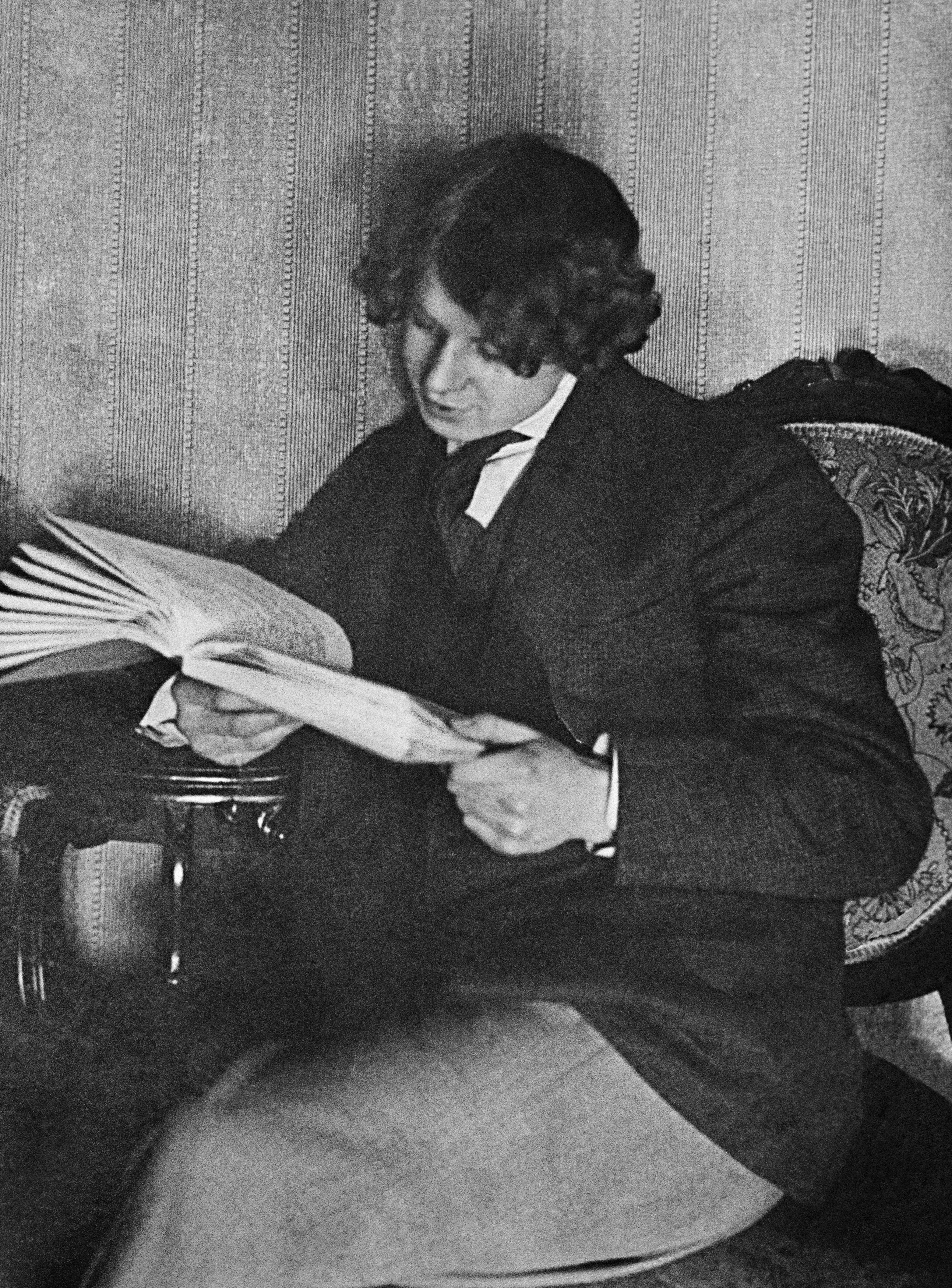
A short and stormy life, a tragic ending — and, of course, great poems. This image of Sergei Yesenin is probably familiar to every Russian from school. But there is still debate about what led to the evening at the Angleterre. Psychologist Alexey Filippenkov tried to dot the I's according to his main specialty. Critic Lidia Maslova presents the book of the week specifically for Izvestia.
Alexey Filippenkov
"The tragedy of Sergei Yesenin. The psychologist's view"
Moscow: AST Publishing House; KPD editorial office, 2025. 576 p.
The author of a new book about Sergei Yesenin, psychologist Alexey Filippenkov, considers it his main mission to debunk unscrupulous and unreliable conspiracy theories that the real cause of the poet's death was an insidious Chekist conspiracy (one of the main opponents with whom Filippenkov is arguing is the author of the book "The Secret of Yesenin's Death"). To summarize Filippenkov's considerations briefly, he is more inclined to explain the Yesenin tragedy not by persecution and harassment from "competent authorities", but more prosaically, in a less "detective" way: the initially unsuccessful fate of the poet, who did not receive the necessary maternal love and affection in childhood, then was insufficiently caressed by fame as an unconditional genius (which Yesenin had reason to consider himself), and to top it all off, alcoholism was superimposed on his morbid vanity, which finally destroyed Yesenin's fragile psyche. According to Filippenkov, the combination of these sad circumstances led to the fatal outcome in the Angleterre Hotel room on December 28, 1925.

On almost every page of Filippenko's book, one can find the proud phrases "I am as a psychologist" or "I am as a specialist," the abundance of which seems to leave no room for purely human sympathy for the hero of the book — Yesenin appears here as a narcissistic, infantile personality, hardly endured by contemporaries, friends and numerous women. Moreover, in some of the psychologist's arguments, one can sometimes hear a hint of condescending condemnation of a pathologically vain and irresponsible poet who failed to manage his life competently and was too offended by the hostile world around him: "Once abroad, Yesenin does not particularly strive to work for his positive image. A few years ago, he chose for himself the image of a bully who goes to fame through black PR. Vanity and thirst for attention prevail over the poetic heritage. This is his emotional fuel, without which he cannot live. At the same time, Yesenin does not particularly care about the quality of the attention he receives. The main thing in it is redundancy and the desire to be more by any means. And for me, as a psychologist, these are already the first bells in understanding his possible hysteria."

This central idea — that Yesenin was ultimately destroyed by a hysterical desire to constantly be the center of attention at all costs — is carried out by Filippenkov throughout the book, where there are no more subtle nuances, shades, semitones that would allow creating a three-dimensional portrait of a complex poetic nature. It is only when the poet himself is given the floor — not only in poetry, but also in letters — that one can guess that Yesenin was not such a primitive being, and things were not as elementary as Filippenkov assures us, relying as the main scientific authority on the American neo-Freudian Karen Horney (whom he overly enthusiastically writes it down to the "great ones"). Her description of a neurotic personality plagued by chronic "basal anxiety" is conveniently superimposed on Yesenin's manner of behavior.: "Since he lives in a competitive society, the feeling that he is at the bottom of it, isolated and surrounded by enemies (and he has just such a feeling), he can only have an urgent need to put himself above others."
In addition, Filippenkov's important methodological tool is transactional analysis with its division of the inner world of any patient into a "child", "adult" and "parent". From the point of view of this concept, the author of the book interprets Yesenin's painful and stormy relationship with Isadora Duncan: "His inner child and adult conflict. Yesenin is unable to change this model of relationship and manifest an inner adult, since Isadora has power over him and plays the role of a controlling parent, and Yesenin himself is dominated by the ego state of the child."
From the very beginning of the book, Filippenkov modestly refuses any claims to literature and stubbornly emphasizes that his main trump card is, first of all, the professionalism of a psychologist, although, as it turns out closer to the end, psychology is far from omnipotent in explaining suicidal human actions ("And I, as a psychologist, have worked a lot with suicidal people, I will say that there is no logic in psychology"). But sometimes even a cold-blooded and detached psychologist can suddenly be struck by lyrical beauties, for example, in the description of Yesenin's last night: "A cold winter evening enveloped the streets of Leningrad. Gusts of freezing wind shook the gloom over St. Isaac's Square. The district is falling asleep, intersections are resting in silence, avenues are silent. Only a few cabmen urge their horses on, disappearing into the dark streets. The Angleterre Hotel is also hidden in the depths of twilight.

Room No. 5 at the Angleterre Hotel
However, for a reputable psychologist, Filippenkov sometimes has too much addiction to some colloquial phrases. The expression "in any way" repeatedly pops up in his mind on various occasions and often looks comical, bringing something Zoshchenkovian to the intonation of the book, for example, in the chapters devoted to the heroic struggle of one of the poet Galina Benislavskaya's passions with Yesenin's drinking buddies: "Galya characterizes Axelrod in every way: vile, unscrupulous, lover of the strong feelings and free booze." Or: "Yesenin's friends threaten Benislavskaya in every way." Ultimately, these cute stylistic rough edges and deviations from strict scientific vocabulary, perhaps, give Filippenkov's harsh research at least a little human warmth, thanks to which the "Tragedy of Sergei Yesenin" still ceases to be just a dry case history and allows us to see in the poet a suffering personality, and not just an incurable hysterical patient who could not cope with managing your own unbridled and selfish nature.
Переведено сервисом «Яндекс Переводчик»
