- Статьи
- Culture
- Use it about the carnation: how the spices of the Moluccas Archipelago became the engine of globalization

Use it about the carnation: how the spices of the Moluccas Archipelago became the engine of globalization

Cinnamon, pepper, cloves, nutmeg — today these spices are available to everyone on the shelf of even the most second-rate supermarket. However, centuries ago they were symbols of wealth, and they themselves traded almost at the price of gold. It was the pursuit of spices that drew Europeans into risky voyages across unfamiliar seas and, as a result, led to the most unexpected (but still observable today) consequences. Critic Lidia Maslova presents the book of the week specifically for Izvestia.
Roger Crowley
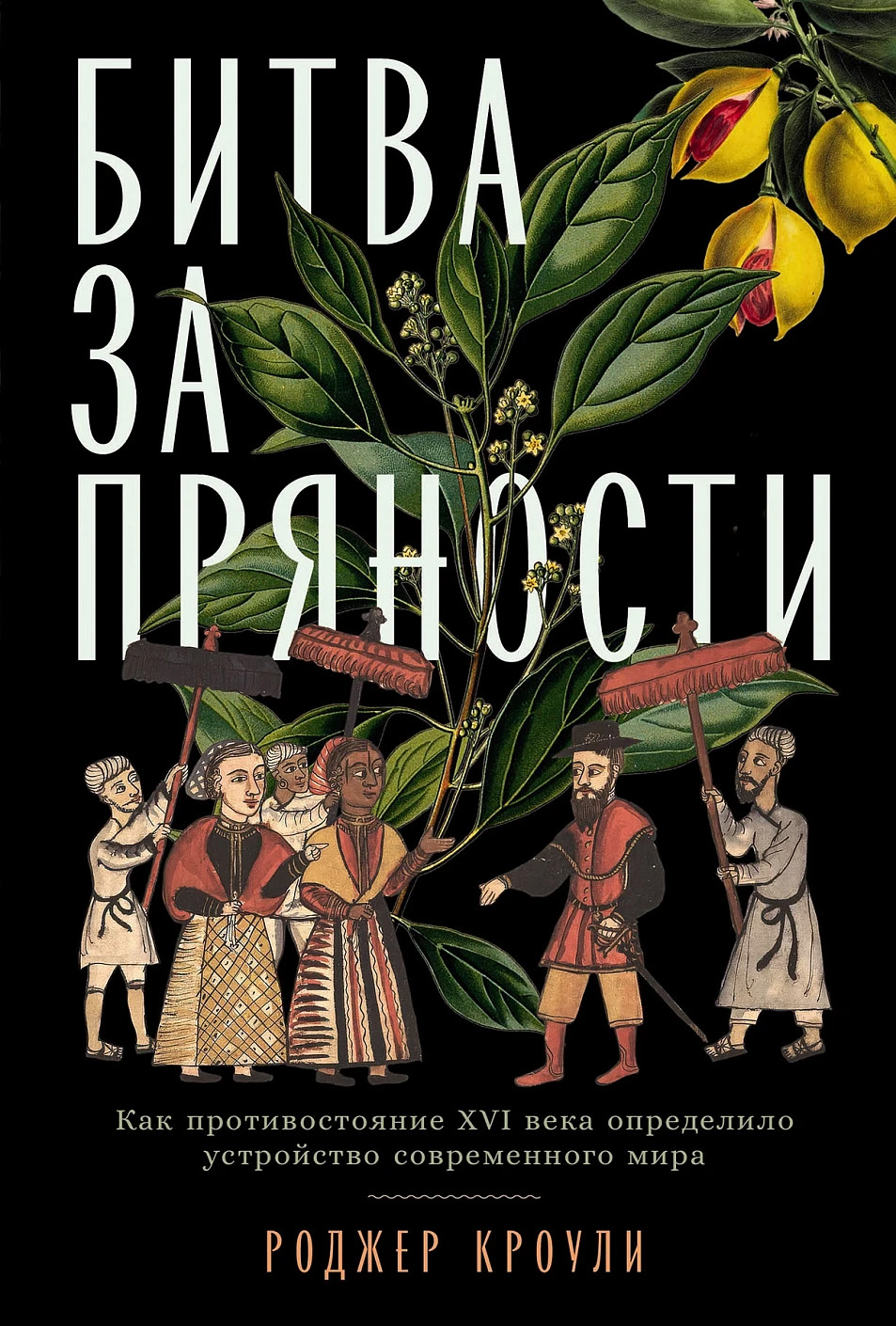
"The Battle for Spices: How the confrontation of the 16th century determined the structure of the modern world"
M.: Alpina non-fiction, 2026. — translated from English — 384 p.
The book by Roger Crowley, a British master of historical non-fiction, is set in the era of great geographical discoveries and begins with two epigraphs. The first one can be called aromatic, and it belongs to the Portuguese botanist of the XVI century Garcia de Horta, who enthusiastically shares the olfactory sensations of a ship sailing nearby with full holds of carnations, which were extremely highly valued at that time. Thus, Crowley, who sees himself first and foremost as a writer and only then as a historian, forces the reader to breathe in the air of the era, saturated with the smell of cloves and nutmeg, which then grew exclusively on the Moluccas in Southeast Asia and predetermined their geopolitical significance: "The Moluccas were destined to become the epicenter of an exciting game of the XVI century. which literally shaped the world: at first it was a fierce struggle between Portugal and Spain, the consequences of which were not long in coming and which later developed into a global confrontation."
The theme of globalization, when, in parallel with the confrontation on the ground, universal ideas about the unity of the world are nevertheless gradually forming, is set by the second epigraph of the book, borrowed from the Peruvian Inca Garcilaso de la Vega, author of the famous "History of the Inca State": "We call them the "Old World" and the "New World" only because the latter It was discovered recently, and not at all because there are two lights; there is only one light." But Crowley's characters come to realize this fact, having suffered as a result of many heroic and exhausting naval expeditions, only towards the end of the book and the 16th century, when a new world economy was formed as a result of geographical discoveries: "By 1600, all continents could trade with each other — they were connected by chains of shipping that encircled the world, while silver The spread of which was stimulated by the enormous demand for it in China, turned into a global currency. The key hubs of this network were Lisbon, Goa, Malacca, Macau, Canton, Nagasaki, Manila, Acapulco, Mexico City, Veracruz, Seville. The opening of a reliable return route across the Pacific Ocean was the last link that completed the formation of this marine belt."

Crowley begins the chronicle of the "battle for spices" that preceded this stage of globalization in 1511, when the Portuguese captured the strategically important city of Malacca near the tip of the Malay Peninsula and sent three ships from there to the Moluccas in the hope of establishing trade in cloves and nutmeg without intermediaries. At the head of this expedition was Captain Francisco Serrano, whom Crowley characterizes as a mysterious figure, but important for further narration: his friend was another representative of the small Portuguese nobility, Fernand de Magellanes, to whom Serrano sent letters from the Moluccas "along with the scent of cloves."

The book pays enough attention to the transformation of Portuguese Magellan into Spaniard Magellan, as well as to the entire ambiguous and colorful personality of the great navigator. Drawing his portrait, Crowley, among other things, refers to the testimony of the Dominican priest and historian Bartolome de las Casas, who explains why Magellan might have been underestimated at first: "This Hernando de Magallanes was probably a brave man, valiant in thought and in great deeds, although he did not look respectable, because he was not tall enough and his appearance was not she made an impression, so it seemed to people that it was easy to deceive him because of a lack of prudence and courage."
Among the most action—packed pages of the book is a description of the search for the strait between the Atlantic and Pacific Oceans, the discovery of which humanity owes exclusively to the incredible stubbornness of Magellan, bordering on obsession, which contemporaries have preserved: "When it seemed to him that this was the strait he promised, he was indescribably delighted, and then plunged into despondency, if for some reason it turned out that this was not the case." One of the most dramatic episodes of the book is devoted to the death of Magellan at the hands of the natives on the island of Cebu, which was largely his own fault with his unbridled and self-confident nature.

Throughout two of the three parts of the book, Crowley focuses on the rivalry between the two Iberian states, which divided the world using an imaginary demarcation line following the Treaty of Tordesillas in 1494: "Relations between Portugal and the Crown of Castile (the latter now united the other kingdoms of the Iberian Peninsula into a single Spain), linked by marriage and geographical proximity one could call them passive-aggressive: irreconcilable rivals whose monarchs call each other best friends."

But in the third, more globalistic part, called "Connections: Uniting the World," other ambitious European players enter the world stage, from whom the Portuguese and Spaniards failed to protect their geographical secrets: "... despite all the efforts of the Portuguese, as well as their Spanish rivals, the ship of knowledge was leaking. Secrets were leaking out. The Portuguese actively attracted foreigners to their businesses; knowledge was a marketable commodity, and Portugal's intellectual capital was highly valued on the other side of the border with Spain. Returning sailors could be bribed, maps and sailing directions could be bought or copied. Pilots and cartographers sometimes fled to Seville, and spies penetrated into Lisbon."

As the final chords of this geographical and economic globalization, Crowley highlights, firstly, the solution of "the last fundamental problem of European navigation of the XVI century," that is, the key to the possibility of crossing the Pacific Ocean not only from east to west, but also back: "The significance of this discovery was recognized almost immediately: it became the last link in the chain of round-the-world routes, which provided the opportunity to move people, goods and resources in all directions." Another important milestone was the founding of Manila in the Philippines, which turned into a strategic stronghold for Spain and the largest trading hub, a center of conspicuous consumption, where the business was no longer limited to carnations.
But at the end of the book, Crowley returns to the lyrical mood and explains why he named spices, which inspired people of the past not only with their fragrance, but also with their symbolic content: "Spices seem like a trifle to a modern person. We hardly understand why people were so worried about them in the past. <...> ...They supported people as they slowly emerged from the Middle Ages, from centuries of famine and plague. They hinted that life could be better."
Переведено сервисом «Яндекс Переводчик»
