
Not just a herring: we are looking for allegories and subtexts on ancient canvases

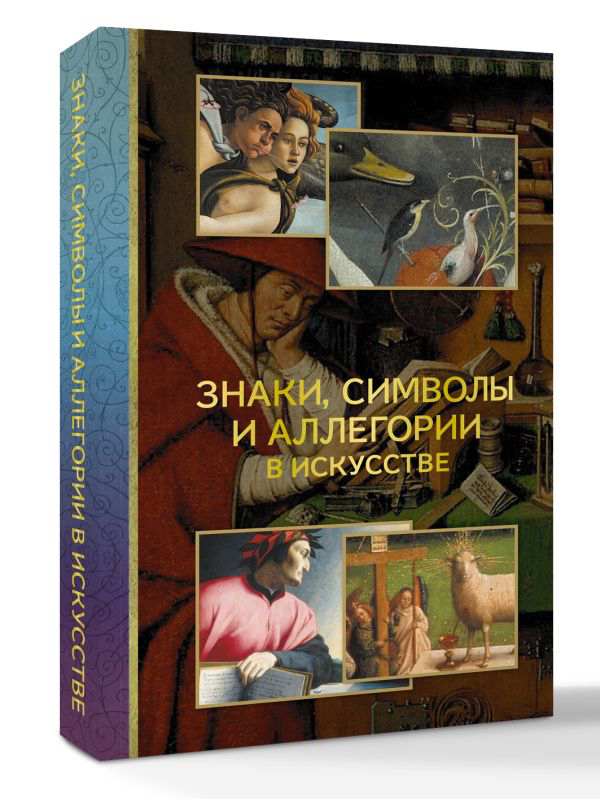
The book by Natalia Kortunova, a senior researcher at the Pushkin State Museum of Fine Arts, is made in the genre of a compact popular guide for modern connoisseurs of fine art who, despite their desire to perceive a particular canvas as deeply as possible, face an objective obstacle. Critic Lidia Maslova presents the book of the week specifically for Izvestia.
Natalia Kortunova
"Signs and symbols"
Moscow: AST Publishing House, 2026 — 192 p.
"Hundreds of years, and sometimes millennia, separate us from the creators of the now famous works of fine art. These people existed in a different system of life coordinates and believed in different gods, especially when it comes to the art of the Ancient World," the art critic writes in the introduction, trying to give the reader at least briefly, as a first approximation, some basic clues to the interpretation of symbols that abound in paintings and sculptures of Antiquity, the Middle Ages and the Renaissance.
However, later artists also sometimes turn out to be useful to an art historian to confirm her thoughts, and just for a certain variety of visual series. For example, the post-impressionist Paul Gauguin, whose painting "Where did we come from? Who are we? Where are we going?" is one of the first illustrations in the book, with a brief statement in the margins that this canvas "should be read from right to left, and the three main groups of figures correspond to the issues outlined in the title of the painting."
But mostly Kortunova still focuses on the old masters and their favorite symbols as having a more universal and systematic character. It has been reflected and organized in the relevant treatises, to which the reader can refer for more detailed information. Most often, Kortunova mentions the famous book of 1593, the fundamentality of which is indicated only by its full name: "Iconology, or a Description of universal images extracted from antiquity and other places by Cesare Ripa from Perugia. The work is no less useful than it needs to be for poets, painters and sculptors, for representing virtues, the flow of lives, attachments and human passions."

Ripa's work had a significant impact on the art of the 17th century, but later his encyclopedia of allegories began to be increasingly used out of habit, and the symbolic language common to most artists gave way to individual symbolism, "related to the worldview of a particular master or his personal life." As examples of such individualism, Kortunova cites, in addition to Gauguin, Marc Chagall and Salvador Dali, and a little later Pablo Picasso will appear on the pages of the book, in the second chapter of Fauna, when it comes to the symbolic image of a pigeon. The famous dove with an olive branch in its beak, which Picasso placed on the poster of the 1949 World Congress of Peace Supporters, was far from the first time used as a symbol of peace, recalls Kortunova, returning to early Christian art, the history of Noah's Ark, as well as to the Renaissance, when mythological paintings featuring Venus and the god of war Mars pigeon as The Venusian attribute served as a symbol of peace opposed to war.

However, like many of the symbols discussed in the book, the pigeon had a certain ambivalence: being a symbol of love and constancy, this bird simultaneously managed to symbolize lust and voluptuousness, since the mating season in pigeons lasts all year, and the male kisses the female before mating, as all lovers do. Ambivalent in paintings are not only birds (the peacock, which in early Christian art personified the immortality of the soul, and later with its defiant tail began to symbolize the sin of pride), but also plants.

For example, strawberries, which originally had the venerable status of one of the berries of the Garden of Eden and were perceived along with strawberries as a symbol of righteousness and procreation, in the 12th century came under suspicion by abbess, visionary, composer and poetess Hildegard of Bingen ("A wonderful inflorescence of all possible virtues," one literary monk would note), who "urged to avoid eating these fruits, as they grow too close to the ground and devilish creatures such as snakes and frogs can crawl on them." By the time Hieronymus Bosch, who was working on the Garden of Earthly Delights, took over the strawberry in the XVI century, its reputation had been thoroughly tarnished.: "In Bosch's work, giant berries become an allegory of promiscuity, primarily sexual. In the foreground of the central door of the Garden of Earthly Delights, there is a naked man biting into a huge strawberry, and similar images are literally scattered throughout this mysterious and phantasmagorical composition."

Hieronymus Bosch, "The Garden of Earthly Delights"
However, such a grandiose triptych as the Garden of Earthly Delights deserves a separate book with an analysis of every square centimeter of this visually oversaturated work. Almost the same information density is inherent in the famous composition "Flemish Proverbs" by Bosch's compatriot and contemporary Pieter Brueghel the Elder, whom Kortunova mentions in the sub—chapter "Fish", first in a narrow nutritional aspect: "In the art of the Northern Renaissance and in Dutch painting of the 17th century, fish, and especially herring, symbolized lean food. So, in the painting "The Battle of Maslenitsa and Lent" (1559), two fish can be seen on a wooden shovel, which the figure representing the Fast holds in his hand." But in "Flemish Proverbs" Brueghel interprets fish much more broadly — it is a detailed, detailed pictorial encyclopedia of a huge number of phraseological units that existed at that time. A diligent painter has one fish or one pig capable of hinting at several catch phrases at once, but in her guide Kortunova highlights the most succinct and concise saying: "For example, the phrase "There is more than just a herring here" meant that everything is not as simple as it might seem at first glance."
In principle, this herring with a double (at least) bottom can serve as a kind of epigraph to the entire book by Kortunova, encouraging one to learn to see "something more" everywhere, getting not only purely aesthetic, direct and sensual pleasure from masterpieces, but also additional, mental pleasure. To do this, it is necessary to mentally lift the outer shell of the simplest and most familiar objects, each of which can contain an encrypted message from people who once existed "in a completely different system of vital coordinates."
Переведено сервисом «Яндекс Переводчик»
