Pastel scenes: where Larionov and Goncharova started


The Pushkin State Museum of Fine Arts invited the audience to a kind of creative laboratory of the great avant-gardists. The exhibition "Larionov / Goncharova. The Beginning" brought together several dozen works made in pastels and related to the first decade of the 20th century. Many of them have not been exhibited before. Impressionistic landscapes, expressive urban views and chamber interior scenes allow us to see the origins of the artistic language of this couple and try to learn how to distinguish their manner. However, even specialists do not always succeed in the latter.: As Izvestia found out, there are still a lot of mysteries here.
Before the avant-garde
Museum projects that touch on the early work of representatives of the Russian avant—garde — not only Mikhail Larionov and Natalia Goncharova, but also Kazimir Malevich, David Burlyuk, Mikhail Matyushin and many others - take place with enviable regularity. It is enough to recall the large-scale exhibition "Impressionism in the avant-garde" in 2018 or the recent blockbuster of the Russian Museum "Our Avant-garde", where a separate hall was allocated for this topic.
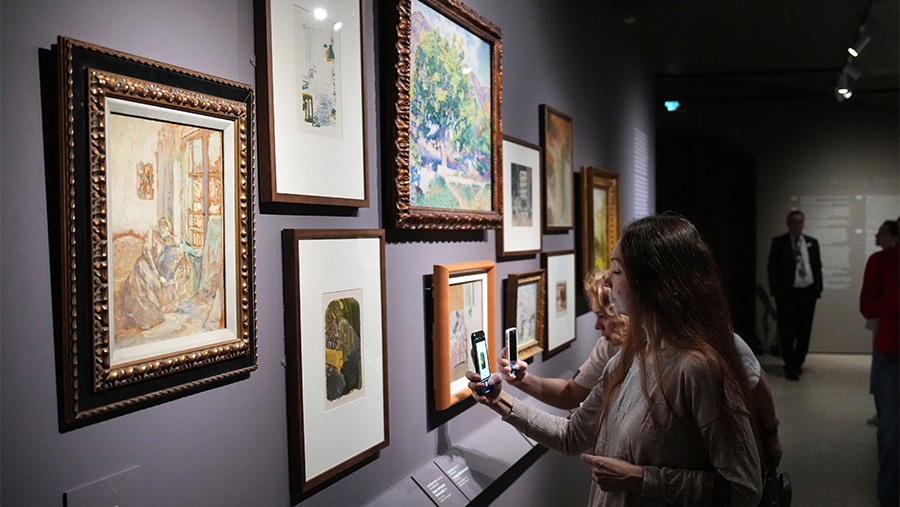
For the general public, this is primarily an opportunity to take a fresh look at artists who are associated with a completely different art. And, in the end, to make sure that they did not create primitivist venuses and other black squares because they did not know how to draw. But the main thing is that there are almost no familiar images here: not only for neophytes, but also for connoisseurs, the Impressionist period of these geniuses is full of surprises. The exhibition at the State Museum of Fine Arts is a clear proof of this.

Most of the exhibited works were donated to the museum by Alexandra Tomilina, Larionov's second wife and his executor. At the same time, the works were submitted under the authorship of Goncharova, and with such attribution they were shown at the 1968 chamber exhibition at the State Museum of Fine Arts. Since then, few people have seen the pastels, except for specialists and curators. And now they've come out into the light again. Of course, it's muted: the graphics can only be shown in semi-darkness.
French and Kaluga
The project is located in the 31st hall, near the Greek Courtyard. So the viewer will first have to look at the casts of statues and reliefs of the Parthenon, and only then he will be able to dive into the XX century. But even in the exhibition space, the first thing that catches your eye is not the pastels of a married couple, but paintings by French Impressionists and post-impressionists: from Claude Monet ("Lilac in the Sun", 1872-1873) to Paul Signac ("Spring in Provence", 1903) and Henri-Edmond Cross ("Around my House", 1906).
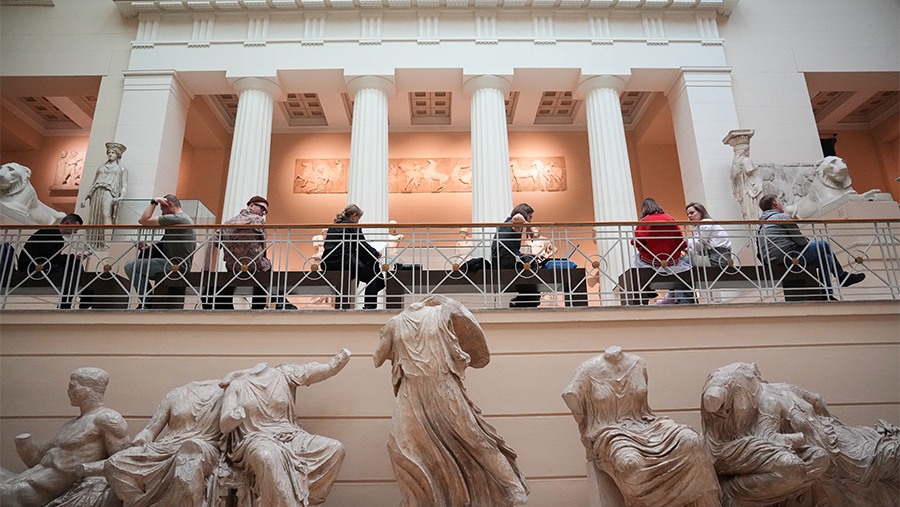
The decision is quite logical: French art, which has been enthusiastically bought in Paris by Moscow collectors Sergei Shchukin and Ivan Morozov since the early 1900s, directly influenced future avant-gardists, including Larionov and Goncharova. But no less important for the formation of spouses was the dialogue with the Russian predecessors — the symbolist Borisov-Musatov, the impressionist Konstantin Korovin and others (in particular, Larionov studied at the Moscow School of Painting, Sculpture and Architecture under Korovin). Their works are placed on the other side of the same wall installed in the center of the hall. And, admittedly, two Borisov-Musatov watercolors — reminiscent of the Japanese engraving "In the Park" and the melancholic "Trees (Birches)" — can be named among the main gems of the exhibition.
Well, the works of Larionov and Goncharova themselves are located around the perimeter, and here you can trace the path from the first steps of Mikhail Fedorovich, who began with eccentric theatrical sketches, to the last pre—avant-garde landscapes of Goncharova, the largest of which is a view of a Linen factory in the Kaluga region, the ancestral home of the family (by the way, Pushkin's wife Goncharova is from there, from-for whom he died in a duel, a distant relative of Natalia Sergeevna).
He or she
The couple's works are grouped by subjects and themes. And the transition from Larionov to Goncharova and vice versa is not always obvious to the viewer. This, however, has its own charm. By carefully reading the labels, which often tell you why a given work used to be listed under one authorship, and now under another, you can slowly learn to distinguish them. Larionov is more spontaneous, light, airy, Goncharova is more focused, thorough, but at the same time decorative; he likes to depict carriages, urban scenes and views of southern Tiraspol, she — architecture and Central Russian landscapes…
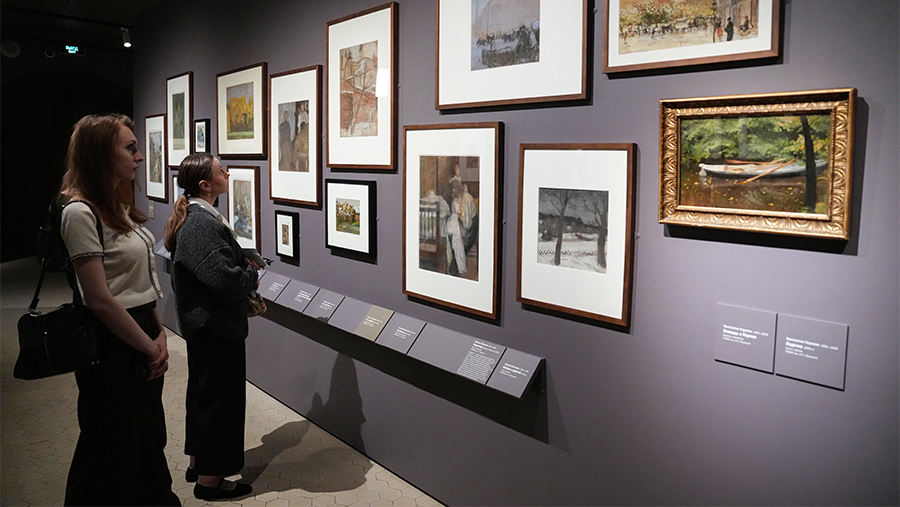
But sometimes even museum specialists cannot say with certainty whose handiwork this or that work is. For example, "On the Veranda": the manner of the image and the motif (perhaps the thing was painted in Tiraspol) point more to Larionov than to Goncharova, under whose name the pastel was listed when it entered the collection of the State Museum of Fine Arts. However, attribution is still questionable. Or the "White House" — on the contrary, it was considered a work of Larionov, although architectural subjects are not peculiar to it. However, the same structure is found in two drawings from the Russian Museum, and one is listed for Goncharova, and the other for Larionov.

The exhibition not only provides answers, demonstrating the latest art achievements, but also raises questions. Among them, in addition to the authorship, there is also the dating of pastels. In most cases, the year of creation is only approximate. However, this does not prevent us from enjoying the images as such, even if we know less about them than we would like.
Sometimes they portend future artistic revolutions: for example, Larionov's small landscape "The Sea" is already practically pointless, only a barely outlined boat in the foreground keeps him from abstraction. Well, in Goncharov's "Landscape with a bridge. Tsaritsyno" is conspicuous by its partial abandonment of perspective. One more step and the image will become completely two—dimensional, opening the way for the conventionality of the Russian avant-garde.
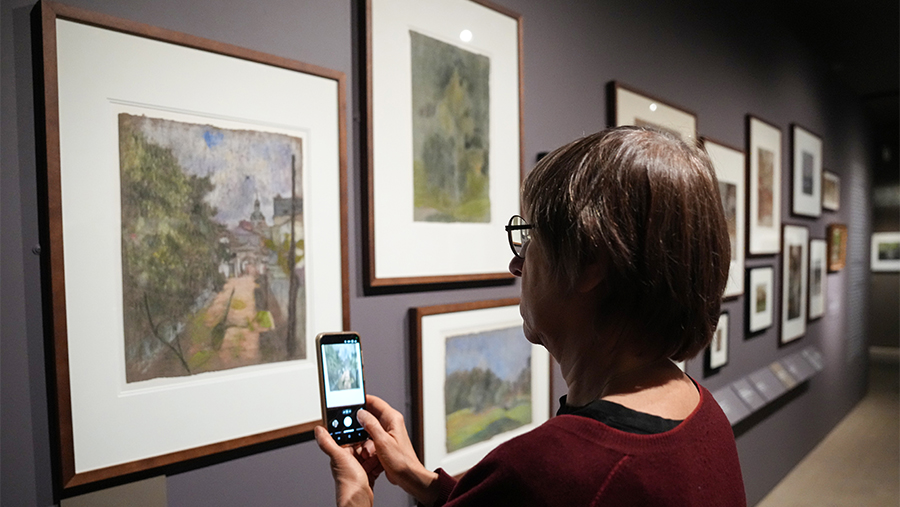
But there is no less traditional beauty here: admiring Russian nature, charming paintings of pre-revolutionary life. The kind of beauty that artists will soon leave in their own work (replacing it with a different, more conventional beauty), and then they will leave physically, emigrating to France in 1915. In the meantime, they are young, in love, and all the most important things are still ahead of them...
Переведено сервисом «Яндекс Переводчик»
